Yellow Revolution - Agriculture Notes
The Yellow Revolution was started in order to enhance edible oilseed production in the nation and satisfy domestic demand. It is an important component of India's agricultural revolution. India is the world's fourth largest producer of oilseeds, accounting for roughly 20% of total area and 10% of total production. In the last 30 years, the area and production of oilseed crops have increased significantly. However, when compared to cereals such as paddy and wheat, the growth rate of area and production of oilseeds is insignificant, with wide variability in yield across the country. Reducing the yield gap and implementing new technology can boost India's oilseed production and make the country Atmanirbhar (self-sufficient) in oilseeds. This article will explain Yellow Revolution which will be helpful in preparing the Agriculture Syllabus for the UPSC Civil Service exam.
|
Table of Contents |
Yellow Revolution
What is Yellow Revolution?
- The Yellow Revolution, which aimed to boost the production of edible oil, particularly from mustard and sesame seeds, was started in the years 1986-87.
- In India, Sam Pitroda is considered the father of the Yellow Revolution.
- Groundnut, mustard, soybean, safflower, sesame, sunflower, niger, linseed, and castor are the nine oilseeds the Yellow Revolution targets.

Sam Pitroda - Father of Yellow Revolution
Yellow Revolution in India
- In order to guarantee the success of this particular initiative, India established the Oil Technological Mission in 1986.
- The introduction of hybrid mustard and sesame seeds during the Yellow Revolution greatly enhanced the output of edible oil.
- Additionally, it was also due to the adoption of more advanced technologies in the nation's oil output.
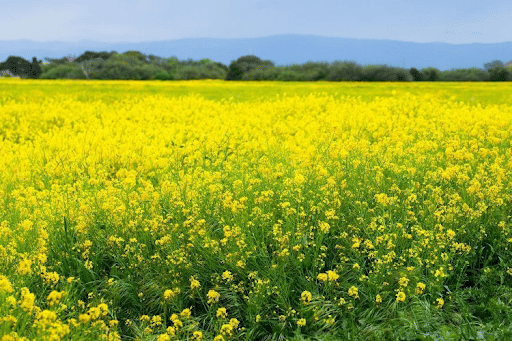
- In the state of Punjab, the Revolution ushered in a new age marked by blooming sunflowers.
- The opportunities in the nation were endless. Not only that, but it also aided in reducing India's socioeconomic disparities.
- The oil production, which was just 12 million tonnes when the revolution began but increased to 24 million tonnes in ten years, represented a tremendous shift.
- There were other additional steps done to increase productivity in addition to using the hybrid seed.
- The amount of land used for agriculture increased to roughly 26 million hectares.
- Additionally, there was a significant amount of utilization of contemporary technical inputs.
Yellow Revolution - Features
- As part of the yellow revolution, farmers received incentives in addition to processing facilities like irrigation, fertilizer, insecticides, transportation facility, minimum support price (MSP), warehousing, etc.
- Many organizations, like the National Dairy Board (NDB), were given duties to encourage the production of oilseeds during the revolution.
- It is the NDB's duty to increase Gujarat's production of groundnut oil.
- Similar to this, the National Oilseeds and Vegetable Oils Development Board were in charge of improving oilseed production in non-traditional locations.
- To increase consumer awareness of the four main oilseeds—mustard, groundnut, soybean, and sunflower—Oilseeds Production Thrust was founded.
- Additionally, in different states of the nation, about 3000 oilseed societies with 13 lakh farmers and 25 hectares of arable land were founded.
- Despite becoming self-sufficient in oil production in the following 10 years, India's production tragically falls short of its needs.
- India began importing oilseeds from other nations to meet the demand. In 2007, India imported 5 million tonnes from numerous nations including Malaysia, Argentina, Brazil, etc.
Present Status of Oilseed Crops in India
- Around 15% to 20% of the world's oilseeds are grown in India, along with 6% of the vegetable oils produced there and 9% to 10% of all edible oils used worldwide.
- Oilseed output, acreage, and economic importance are only surpassed by food grains.
- The acreage and output of nine oilseed crops are 25.5 million hectares (Mha) and 32.26 million tonnes (MT), respectively, according to the fourth advance projections for 2018–19. Compared to 2008–09, it shows a 1.04 % rise in production.
- The majority of oilseeds are grown in India (70% of the country) is using a rain-fed ecosystem. Irrigation hardly covers 28% of the land used for oilseeds.
- Due to their comparative lower profitability compared to rival crops like maize, cotton, chickpea, etc., under the current crop growing and marketing conditions, the area under oilseeds has generally suffered a deceleration.
- In the central and southern regions of India, specifically in the states of Madhya Pradesh (27.89%), Rajasthan (21.49%), and Maharashtra (14.84%), Gujarat, Andhra Pradesh, and Karnataka, oilseed production and area are concentrated.
- According to the most recent sowing data, the area planted with mustard increased by 24% to a record 90.45 lakh hectares, surpassing even the government's goal.
- Prior to the start of planting for the rabi season in 2021–2022, the government aimed to increase production from 75.8 to 122.4 lakh tonnes (lt). In 2020–2021, it has produced 101.12 (lt).
- Even if the output is 1.5 tonnes per hectare on average, the production from the most recent sowing regions will be 135 (lt).
Challenges to Oilseed Production in India
- The expansion of the crop area is particularly challenging at the moment. There is lack of edible oil as a result.
- Oilseed output is difficult to grow because of these crops' numerous limitations. As an illustration, a shift in cropping patterns and a lack of awareness caused a considerable reduction in the area used to grow oilseeds.
- Because oilseeds are more vulnerable to disease and pest infestation (eg: white rust), production is also reduced.
- Oilseed production is declining as a result of the unhealthy crops that are being generated as a result of the unfavorable environment.
- The area that can be used for oilseed cultivation can no longer be expanded because it has reached its limit.
- Oilseeds are still in low supply. Thus, the OTM (Oilseeds Technology Mission) and the development of oil palms, two different parts of the Yellow Revolution, had little to no influence.
Strategies to Enhance Productivity of Oilseeds
- Increasing seed production and distribution of new varieties.
- Low-cost technologies with a high impact on productivity will result in increased income, encouraging farmers to pursue oilseed farming.
- Strategies emphasising quality improvement and value addition by leveraging technologies with an impact on employment via skill/entrepreneurship development
- The Government of India (GOI) launched the Integrated Scheme for Oilseeds, Oil Palm, Pulses, and Maize Development Programme (ISOPOM) to give states flexibility in implementation based on a regionally differentiated approach to promote crop diversification.
- The government launched the Pradhan Mantri Annadata Aay Sanrakshan Abhiyan (PM-AASHA) scheme to promote a robust procurement mechanism and ensure farmers receive fair prices. This programme will encourage farmers to grow oilseed crops.
- Large processing plants should be mandated and incentivized under Make in India to establish backward linkages in order to produce more oilseeds in the country.
- These processing plants can collaborate with farmer producers organisations (FPOs) to increase the output of oilseeds (raw material). FPOs can play an important role in increasing domestic oilseed production.
Conclusion
The Yellow Revolution increased productivity but did not significantly increase oilseed production due to a lack of awareness and a change in cropping patterns that resulted in a significant decrease in area under oilseed production. With better planning, the Technology Mission on Oilseeds II and Yellow Revolution 2.0 can help India achieve self-sufficiency in oilseeds and increase agri-exports.
FAQs
Q1: What is the Yellow Revolution?
Answer: The Yellow Revolution refers to the growth and increase in the production of edible oilseeds in India to achieve self-reliance in the production of cooking oils. It was launched to reduce India's dependence on imported edible oils.
Q2: When did the Yellow Revolution begin in India?
Answer: The Yellow Revolution in India started in the 1980s and gained momentum during the late 1980s and 1990s with the focus on increasing the production of oilseeds such as mustard, sunflower, soybean, and groundnut.
Q3: What were the main objectives of the Yellow Revolution?
Answer: The main objectives of the Yellow Revolution were to achieve self-sufficiency in edible oil production, reduce import dependency, enhance farmers' income through oilseed cultivation, and promote sustainable agriculture practices.
Q4: Which crops are associated with the Yellow Revolution?
Answer: The Yellow Revolution is primarily associated with the production of oilseed crops such as mustard, sunflower, groundnut, soybean, and safflower. These crops contribute to the production of edible oils.
Q5: What role did technology and government initiatives play in the Yellow Revolution?
Answer: Technology and government initiatives played a critical role in the Yellow Revolution by introducing high-yielding varieties of oilseeds, providing subsidies for fertilizers and irrigation, promoting modern agricultural practices, and implementing policies like the Technology Mission on Oilseeds to boost production.
MCQs
- What does the Yellow Revolution in India primarily focus on?
A) Increasing wheat production
B) Enhancing the production of oilseeds and edible oils
C) Boosting rice cultivation
D) Improving the textile industry
Answer: (B) See the Explanation
- Which crop is most commonly associated with the Yellow Revolution?
A) Rice
B) Wheat
C) Mustard
D) Cotton
Answer: (C) See the Explanation
- When did the Yellow Revolution gain momentum in India?
A) 1970s
B) 1980s and 1990s
C) 2000s
D) 1960s
Answer: (B) See the Explanation
- What was a key objective of the Yellow Revolution?
A) Promoting the use of chemical pesticides
B) Achieving self-sufficiency in edible oil production
C) Increasing sugarcane production
D) Enhancing dairy production
Answer: (B) See the Explanation
- Which government mission supported the Yellow Revolution?
A) National Mission on Pulses
B) Technology Mission on Oilseeds
C) Green Revolution Mission
D) Operation Flood
Answer: (B) See the Explanation
GS Mains Questions and Model Answers
Q1: Discuss the significance of the Yellow Revolution in achieving self-reliance in edible oil production in India.
Answer: The Yellow Revolution was significant in transforming India from a major importer to a more self-reliant producer of edible oils. Launched in the late 1980s and 1990s, it aimed to boost the production of oilseeds such as mustard, sunflower, soybean, and groundnut. Government initiatives, including the Technology Mission on Oilseeds, introduced high-yielding varieties, provided financial support, and promoted modern agricultural practices. As a result, farmers' incomes improved, and the country's dependency on imported edible oils reduced. However, achieving complete self-reliance remains a challenge due to fluctuating production, changing dietary demands, and competition from imported oils.
Q2: Analyze the challenges and successes of the Yellow Revolution in India.
Answer: The Yellow Revolution achieved notable success by enhancing the production of oilseeds, reducing dependency on imported edible oils, and increasing farmers' incomes. High-yielding varieties, better agricultural practices, and government policies played crucial roles. However, the revolution faced challenges such as fluctuating weather conditions, limited irrigation facilities, market price volatility, and competition from cheaper imported oils. Addressing these challenges requires continued investment in research, improved storage and processing infrastructure, and policies that balance imports with domestic production to sustain the gains achieved during the Yellow Revolution.
Q3: Explain the role of government initiatives and technology in driving the Yellow Revolution in India.
Answer: Government initiatives and technology were pivotal in driving the Yellow Revolution in India. The launch of the Technology Mission on Oilseeds focused on increasing oilseed production through research and development, subsidies, and improved infrastructure. High-yielding varieties of crops such as mustard, sunflower, and soybean were introduced, and modern agricultural practices like crop rotation and integrated pest management were promoted. Financial incentives, market support, and extension services provided to farmers further boosted production. These efforts collectively increased productivity, enhanced farmers' incomes, and contributed to self-reliance in edible oil production, although further advancements are needed to meet current demand.
Previous Year Questions on Yellow Revolution
1. UPSC CSE 2020
Question: Evaluate the impact of the Yellow Revolution on India's edible oil sector.
Answer: The Yellow Revolution had a significant impact on India's edible oil sector by increasing the production of oilseeds, reducing dependency on imports, and improving the incomes of oilseed farmers. Government initiatives such as the Technology Mission on Oilseeds introduced modern practices and high-yield varieties, boosting productivity. This transformation helped reduce India's import bill and promoted rural development. However, challenges such as fluctuating production, climate variability, and market competition from imported oils persist. Continued policy support, innovation in crop varieties, and investment in processing infrastructure are needed to further strengthen the edible oil sector.
2. UPSC CSE 2019
Question: Discuss the role of oilseed production in India’s agricultural economy and its relationship with the Yellow Revolution.
Answer: Oilseed production plays a crucial role in India's agricultural economy by contributing to rural livelihoods, food security, and the overall agricultural sector's growth. The Yellow Revolution marked a focused effort to increase oilseed production through government initiatives, research, and modern practices. By promoting crops such as mustard, sunflower, and soybean, it aimed to achieve self-reliance in edible oil production. This effort boosted farmers' incomes and reduced the country's dependency on imports. However, challenges like fluctuating yields, market volatility, and limited processing capacity highlight the need for ongoing investment in technology, infrastructure, and policy support to sustain and enhance oilseed production's contribution to the economy.
Download the PREPP App and attempt FREE IAS Exam Mock Tests and get complete study material!

Full Test - 04: UPSC CSE Prelims CSAT (Paper-II)
Full Test - 03: UPSC CSE Prelims CSAT (Paper-II)
UPSC CSE Prelims 2026 GS Paper 1 Question Paper (24-May-2026)
UPSC CSE Prelims 2026 CSAT Paper 2 Question Paper (24-May-2026)

17 February 2025 | The Hindu Must Read Articles | Current Affairs

16 February 2026 | The Hindu Must Read Articles | Current Affairs

13 February 2026 | The Hindu Must Read Articles | Current Affairs









Comments