Golden Revolution - Agriculture Notes
In India, the years 1991 to 2003 are referred to as the "Golden Revolution Period." Honey production and horticulture are connected to the Golden Revolution. It is a component of India's significant agricultural revolutions. India's "Golden Revolution" is credited to Nirpakh Tutej, who made a significant contribution to directing this vital agrarian initiative. He is regarded as the father of the Golden Revolution. This article will explain to you about Golden Revolution which will be helpful in preparing the Agriculture Syllabus for the UPSC Civil Service exam.
What is Golden Revolution in India?
- The years 1991 to 2003 were known as the "Golden Revolution Period" because of how productive the planned investments in the horticulture segment were during this time.
- India rose to become the global leader in the production of numerous fruits, including cashew nuts, coconuts, and mangoes.
- The industry took off as a viable means of subsistence and grew to be the second-largest producer of fruits and vegetables.
- The economic circumstances of many farmers who engaged in horticulture improved, enhancing the standard of living for numerous underprivileged classes.
- There has never been a better time to start a business, especially for rural women.
- The establishment of greenhouses, which allow farmers to shield themselves from natural disasters, is another aspect of the Golden Revolution that aims to improve alternative techniques of production in rural areas of India.
What is Horticulture?
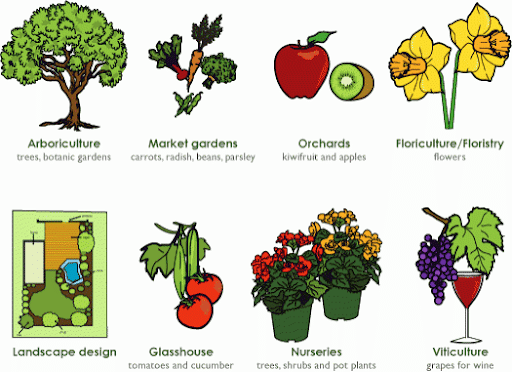 Horticulture activiites |
Golden Revolution - Objectives
- To become self-sufficient in horticulture-related goods.
- To increase farmer income and create new rural employment possibilities.
- To create a market for organic products and raise awareness of the advantages of organic farming by focusing on the need for safe food that has little to no chemical residue.
- To create cold chains along the value chain and promote value addition in horticulture goods in accordance with international standards.
- To establish India as a leader in the export of high-quality horticultural goods worldwide.
- To guarantee small farmers' access to markets both domestically and overseas when there is a rising demand for healthy foods, particularly in the wake of population growth and rapid urbanization.
Golden Revolution - Components
- The Golden Revolution is broken into two components:
- Alternative agricultural practices, such as organic farming, bio-fertilizers, organic manures, biopesticides, etc.,
- The export of organic goods is made easier by horticultural infrastructure including modern packaging buildings and cold storage facilities.
Rise of Horticulture Sector During Golden Revolution
- The following are some of the elements that contributed to the rise of India's horticulture industry during the Golden Revolution:
- The adjustment of farming practices in favor of higher-yielding crops.
- Improvements in farming methods and an increase in harvesting areas.
- Exports of horticulture during India's Golden Revolution.
- Despite challenges like a shortage of cold storage facilities and low productivity, India's horticulture industry is now a thriving commercial endeavor because of changing dietary habits brought on by rising incomes and more public knowledge of health issues.
- India's exports of horticulture increased, rising from 6308.53 crores in 2004–2005 to 28,62861 crores in 2014–2015.
- The organized and planned policies of the horticulture sector under the Golden Revolution are unquestionably responsible for this considerable expansion in the sector.
Need to Promote Organic and Low-cost Farming in India
- Environmentally friendly farming practices must be used by farmers.
- The best approach to safeguard crops from natural disasters is in greenhouses.
- Due to the following factors, farming has grown more challenging today:
- Water, fertilizers, and good seeds are in short supply.
- Reduced rainfall.
- The rising incidence of famines and droughts.
- The rising frequency of floods and animal assaults on crops.
- Transforming agricultural land into non-governed areas.
Golden Revolution - National Horticulture Mission
- The National Horticulture Mission was established by the Indian government in 2005–2006 with the goal of boosting horticulture production.
- The National Horticulture Mission will receive the required funding from the government in order to launch the nation's "golden revolution" in horticulture.
- Utilizing the National Horticultural Mission, the States were required to develop effective and pertinent plans for the development of their own horticulture industries.
- In 2005, there were 11.72 million hectares of land planted with fruits and vegetables, and there were 150.73 million tonnes produced overall.
- The National Horticulture Mission caused a large growth surge in the industry, horticulture production increased to 281 million tonnes from a space of 23.2 million hectares in 2015-2016.
- India is now the second-largest producer of fruits and vegetables in the world, behind China.
Golden Revolution - Advantages
- Prior to 1990, there was little emphasis on enhancing India's horticultural sector.
- The Green Revolution, which improved the production of food grains, was primarily the focus at that time.
- After 1990, the government gave horticulture more attention, leading to the designation of the period as the Golden Revolution.
- Cropping patterns shifted, with an emphasis on crops that produced higher yields.
- Agriculture techniques have improved significantly.
- There was a noticeable increase in the harvesting field.
- Many horticultural farmers' economic situations improved, improving the livelihoods of many underprivileged groups.
- The schemes under horticulture research will focus on technology generation that is specific to each state or province due to their unique agro-climatic and socioeconomic conditions.
- The effective transfer of technologies in a crop that is already available in India and abroad will be prioritized.
- The horticultural development program aims to increase the production and productivity of all horticultural crops by implementing improved crop production techniques.
- Special emphasis will be placed on territorially separated crops that are generally suitable for the state/district under the program.
- This program will be carried out by the stated government's horticultural branch, which may also include cooperative associations, self-improvement groups, non-governmental organizations (NGOs), and organizations for achieving the targeted production and productivity of recognized crops.
- Risk management in the form of crop insurance is also proposed as post-harvest management.
- It would include creating appropriate infrastructure for effective post-harvest management and advertising of horticulture produce such as taking care of, handling, transfer, storage, and markets, among other things.
- It would also include taking upmarket special practices such as the distribution of market information to farmers, processors, merchants, and consumers.
Conclusion
In the past, Horticulture development was used to produce food and raw materials; today, it is considered to be a means of achieving employment-driven economic goals, reducing poverty, and promoting self-sufficiency through its connections, but with a multiplier impact. Agriculture has undergone globalization, which has created both new opportunities and tougher competition. In order for this experiment to be successful, the economy's structure must be altered to conform to internal requirements.
FAQs
Question: What was the Golden Revolution in India?
Answer: The Golden Revolution in India refers to the significant increase in the production of horticultural crops, primarily fruits, vegetables, and flowers, during the period between 2001-2010. This revolution was a result of various initiatives by the government, such as the introduction of the National Horticulture Mission (NHM) and advances in agricultural practices, technology, and export potential. It helped India become one of the world leaders in horticultural production.
Question: What are the key crops involved in the Golden Revolution?
Answer: The Golden Revolution primarily involved the cultivation of fruits, vegetables, and flowers. Key crops included mangoes, citrus fruits, apples, bananas, and vegetables such as tomatoes, cucumbers, and peas. These crops contributed significantly to the growth of India's horticultural sector and its position in the global market.
Question: How did the government contribute to the Golden Revolution?
Answer: The Indian government played a crucial role in the success of the Golden Revolution by launching the National Horticulture Mission (NHM) in 2005. This initiative provided financial assistance to farmers for the adoption of modern horticulture techniques, irrigation systems, and post-harvest technologies. It also facilitated research and development in horticulture, which improved the quality and yield of crops.
Question: What is the significance of the Golden Revolution for India's economy?
Answer: The Golden Revolution had a substantial impact on India's economy by increasing the production and export of horticultural products. It helped diversify the agricultural sector, making it less dependent on traditional crops like wheat and rice. This led to higher incomes for farmers, the creation of new employment opportunities, and an overall boost to the rural economy. It also contributed to India's global trade by positioning the country as a major exporter of fruits and vegetables.
Question: What challenges did India face during the Golden Revolution?
Answer: Despite the success of the Golden Revolution, India faced several challenges such as inadequate cold storage and transportation facilities, post-harvest losses, and fluctuations in market prices. Additionally, the focus on high-value horticultural crops increased the vulnerability of farmers to climate change, pest attacks, and disease outbreaks. Addressing these challenges required continuous investment in infrastructure, technology, and farmer education.
MCQs
1. Which of the following crops was NOT a key focus of the Golden Revolution in India?
A) Mangoes
B) Apples
C) Rice
D) Tomatoes
Answer: (C) See the Explanation
Explanation: Rice was not a key focus of the Golden Revolution, as it mainly focused on the production of fruits, vegetables, and flowers such as mangoes, apples, and tomatoes.
2. What is the National Horticulture Mission (NHM)?
A) A program to promote the cultivation of cereals
B) A scheme to boost rice production
C) A government initiative to improve horticulture practices
D) A plan to improve soil fertility
Answer: (C) See the Explanation
Explanation: The NHM is a government initiative launched in 2005 to improve horticultural practices in India, offering support for infrastructure, technology adoption, and training for farmers.
3. Which of the following was one of the key challenges faced during the Golden Revolution?
A) Excessive rainfall
B) Inadequate storage and transportation facilities
C) Decline in soil fertility
D) Lack of skilled labor
Answer: (B) See the Explanation
Explanation: One of the major challenges of the Golden Revolution was the lack of proper cold storage and transportation infrastructure, which led to significant post-harvest losses in fruits and vegetables.
4. Which sector of agriculture did the Golden Revolution primarily focus on?
A) Cereals and pulses
B) Livestock farming
C) Horticulture
D) Agricultural machinery
Answer: (C) See the Explanation
Explanation: The Golden Revolution primarily focused on horticulture, particularly the production of fruits, vegetables, and flowers, transforming India's agricultural sector.
5. Which of the following was a key factor behind the success of the Golden Revolution?
A) Increased wheat production
B) Adoption of modern horticultural techniques
C) Government subsidies on rice production
D) Decline in export demand
Answer: (B) See the Explanation
Explanation: The success of the Golden Revolution can be attributed to the adoption of modern horticultural techniques, including better irrigation methods, pest control, and improved cultivation practices.
GS Mains Questions and Model Answers
Q1: Examine the impact of the Golden Revolution on India's economy and agriculture. How did it contribute to the diversification of the agricultural sector?
Answer: The Golden Revolution played a pivotal role in the diversification of India's agricultural sector by boosting the production of horticultural crops such as fruits, vegetables, and flowers. The expansion of these crops helped reduce India's reliance on traditional crops like wheat and rice. The introduction of the National Horticulture Mission (NHM) led to the adoption of modern agricultural techniques, improving productivity and export potential. The revolution enhanced farmers' incomes, generated rural employment, and positioned India as a leading exporter of horticultural products, which contributed to the nation's economic growth.
Q2: Discuss the challenges that India faced during the Golden Revolution and the steps taken to overcome them.
Answer: Despite the success of the Golden Revolution, several challenges persisted. These included inadequate cold storage and transportation infrastructure, which led to post-harvest losses, and vulnerability to climate change, pests, and diseases. To address these issues, the government invested in the development of cold storage facilities and improved transportation networks. Additionally, efforts were made to enhance farmers' access to technology and modern farming practices through the NHM. Although these measures helped, the revolution’s full potential was not realized until these infrastructure and logistical issues were further addressed.
Q3: Analyze the role of the National Horticulture Mission (NHM) in the success of the Golden Revolution. What are its key contributions to the agricultural sector?
Answer: The NHM was a key factor in the success of the Golden Revolution, providing crucial support to farmers in terms of financial assistance, technology transfer, and training. The mission focused on improving horticulture infrastructure, such as irrigation systems, cold storage, and processing units. It also emphasized the use of high-yielding varieties of crops, pest management, and post-harvest management. Through these efforts, the NHM helped India increase its horticultural production, enhance the quality of crops, and boost exports, contributing significantly to the agricultural economy.
Previous Year Questions on the Golden Revolution
1. UPSC CSE Prelims 2020:
Question: The Golden Revolution is associated with the growth of which of the following sectors in India?
A) Horticulture
B) Livestock Farming
C) Fisheries
D) Cereal Crops
Answer: (A)
Explanation: The Golden Revolution is primarily associated with the growth of horticulture, including the cultivation of fruits, vegetables, and flowers.
2. UPSC CSE Mains 2019 (GS Paper 3):
Question: "Evaluate the impact of the Golden Revolution on the agricultural and economic landscape of India." Discuss with reference to the role of the National Horticulture Mission (NHM).
Answer: The Golden Revolution had a transformative impact on India’s agricultural sector by significantly boosting the production of horticultural crops. The National Horticulture Mission (NHM) played a pivotal role by providing farmers with financial support, advanced technology, and training, leading to increased productivity and export potential. This revolution helped diversify India's agricultural economy, reduced dependency on traditional crops, and improved the livelihoods of farmers. The success of the Golden Revolution positioned India as a global leader in horticultural exports and contributed to rural employment generation.
Download the PREPP App and attempt FREE IAS Exam Mock Tests and get complete study material!

Full Test - 04: UPSC CSE Prelims CSAT (Paper-II)
Full Test - 03: UPSC CSE Prelims CSAT (Paper-II)
UPSC CSE Prelims 2026 CSAT Paper 2 Question Paper (24-May-2026)
UPSC CSE Prelims 2026 GS Paper 1 Question Paper (24-May-2026)

17 February 2025 | The Hindu Must Read Articles | Current Affairs

16 February 2026 | The Hindu Must Read Articles | Current Affairs

13 February 2026 | The Hindu Must Read Articles | Current Affairs









Comments