Golden Fiber Revolution - Agriculture Notes
Jute is a natural fiber that is smooth, long, silky, and golden in color with a golden sheen. From the plant's stem skin, it is the least expensive fiber that can be obtained. Due to its bright colours and great market value, jute is referred to as a "golden fiber." As a result, jute manufacturing is connected to India's Golden Fibre Revolution. This article will explain to you about Golden Fiber Revolution which will be helpful in preparing the Agriculture Syllabus for the UPSC Civil Service exam.
|
Table of Contents |
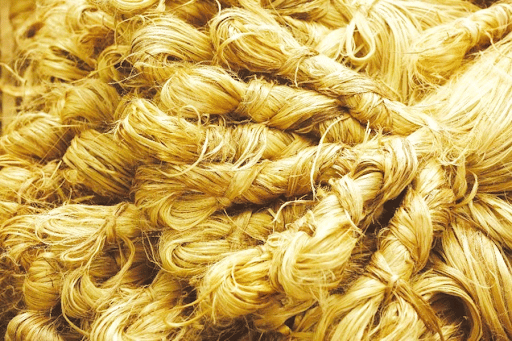
Golden Fibre Revolution
What is Golden Fiber Revolution?
- Golden Fiber Revolution is attributed to Jute and related products. It started in India during the 1990s.
- After cotton, jute is the vegetable fiber that is consumed, manufactured, used, and readily available.
- During the industrial revolution, jute was originally used as a raw material in the fabric industry.
- Today, it is still used to produce strong threads and other jute-based products.
Need for Golden Fiber Revolution
- Prior to our independence, India was the sole significant contributor to the manufacture of jute.
- The industry suffered damage after independence for several causes, including:
- Several jute-producing regions in India were incorporated into Bangladesh after India was partitioned. India was therefore running out of raw materials.
- New machines were urgently required because all of the equipment used to process jute had become outdated.
- The jute industry in India has declined in output and appeal as a result of the nation's excessive jute dependence and failure to change the way jute is grown.
- These factors collectively led to the beginning of the Golden Fibre Revolution.
Background of the Indian Jute Industry
- Bengal enjoyed considerable popularity when it was a part of unbroken India because it had numerous jute crops.
- As a result, jute was utilized in some capacity by the whole Bengali community.
- Bengal was a perfect area for jute growing because several of the rivers are nearby.
- Jute's promise as a fabric was recognized by British colonists who traveled to India with the East India Company.
- For the purpose of creating jute advertising, they began to cultivate jute trees everywhere. To deliver necessary grains to the population, they used jute bags.
- Due to its high cost, jute played a vital role in the development of the industries in the state of Bengal.
- Jute's importance grew to the point where Bengal's economy began to rely heavily on it.
- The country's management of jute needed a system, and that was the main goal of the Golden Fibre Revolution.
- India is regarded as the largest jute producer in the world, producing over 1.98 million tonnes yearly.
- Using a variety of methods, India has established a reputation as one of the most sophisticated manufacturers of jute.
- More than half of the nation's jute is produced in West Bengal. Other important jute-producing states in India include Uttar Pradesh, Bihar, Assam, Meghalaya, and Orissa.
- India continues to be the main producer of jute and is noted for consuming the most jute products every year. As the country's need for jute goods expanded in 2011, roughly 337,000 tonnes of jute was imported.
Golden Fiber Revolution - Significance
- Jute enhances the soil's fertility and quality, which benefits other plants growing there as well.
- Jute growers who plan their crops receive carbon credits, and they can use these credits to make some savings.
- Farmers' savings on inorganic fertilizer purchases determine the amount of the carbon credit for jute growing.
- Jute is a valuable resource for the paper industry since it can be used as a renewable resource.
Conclusion
Although numerous committees have long advocated for a "Golden Fibre Revolution," the sector urgently needs fundamental changes. The sector is plagued by two main issues: out-of-date processing technology and a lack of product diversity beyond handicrafts and packaging. Jute should be pushed out of the emporium and into every home through a larger range of products, reclaiming the position that polluting synthetic fibers have robbed it of. Jute may be India's future fabric.
FAQs
Question. What is the Golden Fiber Revolution?
Answer: The Golden Fiber Revolution refers to the significant growth and development of jute cultivation and its processing in India. Jute, often called the "golden fiber" due to its economic importance and natural golden color, became a vital agricultural and industrial sector, particularly in West Bengal, during the late 20th century.
Question. Which regions of India are most affected by the Golden Fiber Revolution?
Answer: West Bengal, Bihar, Assam, and Odisha are the primary regions where jute cultivation flourished under the Golden Fiber Revolution. These states have the suitable agro-climatic conditions for growing jute, and they continue to be the major producers of this fiber in India.
Question. What are the main benefits of jute cultivation?
Answer: Jute cultivation provides various socio-economic benefits, including employment generation in rural areas, particularly for women, and contributes to the agricultural economy. Jute is also an eco-friendly fiber, being biodegradable and an alternative to synthetic materials, which helps in reducing environmental pollution.
Question. How did the Golden Fiber Revolution impact the economy of India?
Answer: The Golden Fiber Revolution boosted India's export sector, particularly through the export of jute products like bags, ropes, and carpets. It also contributed to rural development by creating numerous jobs in the farming, processing, and manufacturing sectors related to jute.
Question. What challenges does jute cultivation face today?
Answer: Despite its historical importance, jute cultivation faces several challenges, such as fluctuating market prices, inadequate infrastructure for processing, competition from synthetic fibers, and environmental issues like soil degradation and water scarcity. The sector requires modernization and better support from the government.
MCQs
- What is the primary use of jute in India?
A) Textile production
B) Paper manufacturing
C) Food industry
D) Construction
Answer: (A) See the Explanation
Jute is primarily used in the textile industry to manufacture products like bags, ropes, and carpets due to its durability and eco-friendly nature.
- Which state is considered the leading producer of jute in India?
A) Maharashtra
B) Punjab
C) West Bengal
D) Uttar Pradesh
Answer: (C) See the Explanation
West Bengal is the leading producer of jute in India, contributing significantly to the Golden Fiber Revolution due to its favorable agro-climatic conditions.
- Why is jute known as the "golden fiber"?
A) Because of its color
B) Because of its high market price
C) Because of its association with agriculture
D) Due to its role in the export sector
Answer: (A) See the Explanation
Jute is called the "golden fiber" due to its natural golden-brown color, which makes it an attractive material for various products.
- What is one of the major challenges faced by the jute industry today?
A) High demand
B) Soil degradation
C) Excessive water usage
D) Pesticide resistance
Answer: (B) See the Explanation
Soil degradation is a significant challenge in jute cultivation, impacting the long-term sustainability of production.
- Which of the following is NOT a major product made from jute?
A) Ropes
B) Sacks
C) Carpets
D) Plastics
Answer: (D) See the Explanation
Jute is used to make products like ropes, sacks, and carpets, but it is not used in the production of plastics, which are synthetic materials.
GS Mains Questions and Model Answers
Q1: Explain the importance of the Golden Fiber Revolution in the context of Indian agriculture and rural economy.
Answer: The Golden Fiber Revolution, centered around the cultivation of jute, played a vital role in the agricultural and rural economy of India, particularly in states like West Bengal, Bihar, Assam, and Odisha.
- Economic Significance: Jute became a major cash crop, providing an important source of income for millions of farmers. The sector also contributed to India's export economy, with jute products such as bags, ropes, and carpets being in high demand internationally.
- Rural Employment: The cultivation, harvesting, and processing of jute created numerous jobs in rural areas, often in economically disadvantaged regions. It was particularly important for women, who were involved in harvesting and processing activities.
- Environmental Benefits: Jute is biodegradable and eco-friendly, making it a sustainable alternative to synthetic fibers like plastic. This contributed to the global push for reducing plastic waste, further promoting jute's importance in sustainable agriculture.
- Challenges and Modernization Needs: However, the jute sector faces challenges such as outdated processing techniques, fluctuations in market prices, and competition from synthetic fibers. To ensure its continued contribution to the rural economy, the industry requires modern infrastructure, improved farming techniques, and better government support.
Q2: Discuss the factors that led to the success of the Golden Fiber Revolution in India.
Answer: The success of the Golden Fiber Revolution in India can be attributed to several factors:
- Agro-Climatic Conditions: India’s climatic conditions, particularly in regions like West Bengal, are highly conducive to jute cultivation. The crop thrives in the humid, tropical climate, with adequate rainfall and fertile soil, which helped expand its cultivation.
- Government Support: The Indian government provided significant support to the jute industry, particularly post-independence, with policies aimed at promoting the cultivation and processing of jute. This included subsidies, research on improving crop yield, and the establishment of jute mills.
- Market Demand: The growing demand for jute products, especially for packaging materials, ropes, and other textiles, boosted the industry. The international market also recognized jute as a valuable eco-friendly alternative to synthetic fibers, further promoting its use.
- Technological Improvements: Over time, improvements in jute processing technologies, such as mechanized harvesting and modern jute mills, helped increase efficiency and reduce the labor intensity of the industry, thereby fostering growth.
Q3: Evaluate the environmental and economic sustainability of the Golden Fiber Revolution in India.
Answer: The Golden Fiber Revolution has both environmental and economic sustainability aspects, but it also faces several challenges that need addressing for its long-term viability.
- Environmental Sustainability: Jute is a biodegradable and eco-friendly fiber, making it a sustainable alternative to synthetic fibers, particularly plastics. Its cultivation requires less pesticide usage compared to other cash crops, making it more environmentally friendly. The use of jute in packaging and other products reduces plastic waste, aligning with global sustainability goals.
- Economic Sustainability: Jute cultivation has been economically significant for millions of farmers, providing a source of income in rural India. The jute industry also supports a variety of allied industries, including jute mills, manufacturing units, and exports, contributing significantly to India’s GDP.
Previous Year Questions on Golden Fiber Revolution
1. UPSC CSE 2023
Question: How has the Golden Fiber Revolution impacted rural employment and economic growth in India?
Answer: The Golden Fiber Revolution significantly impacted rural employment by generating jobs in the cultivation, processing, and manufacturing of jute products. It provided a source of livelihood to millions, especially in rural areas, including women who were involved in harvesting and processing. Economically, it contributed to India's GDP through exports of jute products and created a sustainable, eco-friendly industry that supported rural development.
2. UPSC CSE 2022
Question: Discuss the challenges faced by the jute industry in India and suggest measures for its revitalization.
Answer: The jute industry in India faces several challenges, including fluctuating market prices, outdated processing infrastructure, and competition from synthetic fibers. These challenges undermine the industry’s growth potential. To revitalize the sector, there is a need for modernization of jute mills, improved research on crop yield, enhanced government support in terms of subsidies, and the promotion of jute-based products as eco-friendly alternatives to plastics.
Download the PREPP App and attempt FREE IAS Exam Mock Tests and get complete study material!

Full Test - 04: UPSC CSE Prelims CSAT (Paper-II)
Full Test - 03: UPSC CSE Prelims CSAT (Paper-II)
UPSC CSE Prelims 2026 CSAT Paper 2 Question Paper (24-May-2026)
UPSC CSE Prelims 2026 GS Paper 1 Question Paper (24-May-2026)

17 February 2025 | The Hindu Must Read Articles | Current Affairs

16 February 2026 | The Hindu Must Read Articles | Current Affairs

13 February 2026 | The Hindu Must Read Articles | Current Affairs









Comments