Weeds - Agriculture Notes
Weeds account for 45% of the entire yearly loss in agricultural produce, followed by insects 30%, diseases 20%, and other pests 5%. Plants that are undesirable or unwanted in human-controlled environments, such as farmland, orchards, gardens, lawns, parks, residential, and industrial areas are called weeds. Examples: Amaranth, Bermuda grass, Bindweed, Broadleaf plantain, etc. In agriculture, where the goal is to develop crops or pastures of a single species or a mixture of a few chosen species, the notion of weeds is particularly critical. These weeds consume the nutrients given to the crops, reducing the nutrients available to the crops and impeding their growth. To promote the growth of the plants, the growth of these weeds must be restrained. This article will explain to you about Weeds which will be helpful in preparing the Agriculture Syllabus for the UPSC Civil Service exam.
|
Table of Contents |
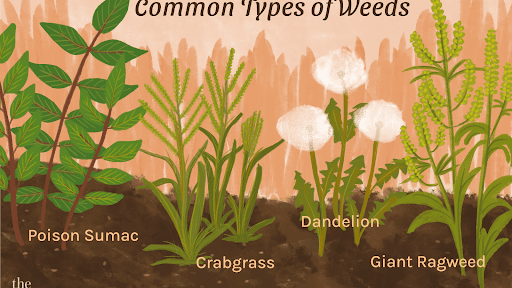
Most Common Weeds
What are Weeds?
- Weeds are unwanted and undesired plants that negatively impact human welfare by interfering with the use of land and water resources. They may alternatively be called "plants out of place".
- In agricultural lands, forests, aquatic systems, etc., weeds compete with desirable and beneficial plants.
- They pose a serious problem in non-cropped areas like industrial sites, road and rail lines, airfields, landscape plantings, water tanks, waterways, etc.
- Weeds generate more losses to agriculture than any other type of agricultural pest.
- Around 3%, or 8000 species, of the approximately 250,000 plant species that exist in the globe act as weeds.
- The management of weeds is thus crucial in agriculture.
|
|
|
|---|---|
| Cropping | Crop Rotation |
| Manures | Permaculture |
| Micro Irrigation | Crop and its Classifications |
| Watershed Management | Soil |
| Elements Required In Plant Growth | Permaculture |
Dispersal of Weeds
- As a result of global trade and human migration, many weed species have migrated outside of their original geographic bounds and proliferated everywhere.
- After the harvesting of grains, weed seeds are frequently gathered and transported with crops.
- As a result, humans are seen as both a source of the disrupted settings that weed species are well adapted to, as well as a vector of transmission.
- This could lead to a strong connection between many weeds and human activity.
- Government officials have designated some weed species as noxious weeds because, if left unchecked, they frequently compete with natural or crop plants or harm livestock.
- They are frequently alien species that have been carelessly or unintentionally introduced into an area with few natural barriers to control their expansion.
Weeds - Negative Impacts
- Reduces Crop Production: If no restrictions are put in place, they will compete with crop plants, reducing the production of various crops and the cropping system by 5 to 50%.
- Affects Crop Quality: They contaminate the product, lowering crop quality.
- Lowers the Effectiveness of Machinery: They hinder harvesting and lessen the effectiveness of agricultural machinery.
- Lowers Carrying Capacity: Weeds lower the pastures' and grazing fields' carrying capacity.
- Act as Hosts for Diseases: They act as hosts for plant diseases or serve as a wintertime haven for insects.
- Hinder Diversity of Crops: They hinder the diversity of agricultural methods and crop rotation schedules.
- Fake Appearance: Once mixed, some weed seeds are remarkably similar to crop seeds and are very challenging to distinguish. Example: Argemone mexicana (Prickly poppy)
- Need for Expensive Means: The expense of agriculture rises when weeds are present, and work is more difficult to complete. The need for irrigation rises as a result.
- Effect on Milch Breeds: When milch animals eat certain weeds (Cleome viscosa), the milk will develop an unfavorable odor. Sometimes there may be death, illness, or deformity.
- Competition with Main Crop: Weeds compete with the main crop for space, light, moisture, and soil nutrients, resulting in yield loss.
- Other harmful effects include:
- Affect the quality of farm produce, livestock products like milk, and skin.
- Serve as a secondary host for pests and pathogens.
- Parthenium, for example, causes allergic reactions in humans.
- Increased cultivation costs due to weeding issues.
- Aquatic weeds transpire a large amount of water and obstruct water flow.
- Reduce the value of the land.
- Some weeds are toxic to livestock.
What is a Weeding?
- Weeding is the process of removing weeds from a field. It is a productive pre-harvest technique for managing crop yield and crop protection.
- Weeds can be allowed to decay on the soil in dry, sunny conditions. The weeds must be eliminated from the soil during wet weather in order to prevent their regrowth.
- Primarily, weeding is done in new agricultural fields or right after winter when the soil needs to be disturbed anyway to get rid of large amounts of weeds and plants.
- Although mechanical control is the primary priority during weeding, another suitable approach is chemical weed control (which may be needed in specific cases).
Methods of Weed Control
- Chemical Control: Herbicides are used in chemical control methods. Herbicides work to suppress weeds by defoliating, desiccating (drying out) the leaves or stems, or speeding up, pausing, or altering the plant's normal growth patterns (making it drop its leaves).
- Mechanical Control: Mechanical control is the management of weeds with powered equipment and tools. It is appropriate for more extensive infestations since it requires less manual labor to minimize the weed bulk. To the greatest extent possible, the soil should not be disturbed.
- Biological Control: Biological management makes use of infections (diseases) or insects that harm the weed's health. These bio-control agents typically come from the same region as the weed species.
- Manual Control: Manual control refers to the removal of weeds using the hands or small tools. A benefit of manual management is that it causes the least amount of soil disturbance, which reduces the chance of erosion and weed seed germination.
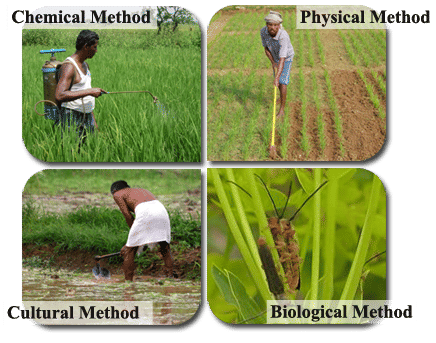
Methods of Weed Control
Weeds - Benefits
Despite the negative connotation that the word "weed" typically carries, many weeds really have beneficial properties.
- As Food And Medicine: The leaves or roots of a number of weeds, including the dandelion and lamb's quarter, can be utilized as food or herbal medicine.
- Many weeds have medicinal properties and are used in medicine. Eg: Phyllanthus niruri (jaundice), Eclipta alba (Scorpion sting), Cynodon dactylon (Asthma, piles).
- As Soups: Burdock is widespread over much of the world and is occasionally used in East Asian soups and medicines.
- Attract Beneficial Insects: Some weeds draw helpful insects, which can shield crops from damaging pests.
- Acts as mulch: Additionally, weeds can serve as "living mulch," covering the ground to stop erosion and lessen moisture loss.
- Improves Soil Fertility: Weeds can also increase the fertility of the soil; dandelions, for instance, draw up nutrients like calcium and nitrogen from the earth's depths, while clover has nitrogen-fixing bacteria living in its roots, which directly fertilize the ground.
- Aesthetic Purposes: Some garden flowers were selectively selected for their garden-worthy flowers or leaves after emerging as weeds in farmed areas.
- The corncockle is occasionally grown as a garden plant and is an example of a crop weed that is grown in gardens.
- Weeds as indicators: Weeds can be used to identify good and bad soils. Colonum grows in rich soils, whereas Cymbopogon grows in poor light soils and Sedges grow in poorly drained soils.
Conclusion
Weeds are a significant biotic constraint to crop production in various cropping systems. A single method of control will not provide adequate long-term weed management, often leading to resistance development. Weeds are the source of significant yield loss, even after using a specific control method. There is an increasing need to reduce yield loss in order to feed a growing human population. As a result, effective and long-term Integrated Weed Management programs are required.
|
|
|
|---|---|
| Agriculture Notes | Tillage |
| Farming Systems | Sustainable Agriculture |
| Organic Farming | Integrated Farming System |
| Factors determining cropping pattern in India | Major Crops of India |
FAQs
Question: What are weeds in agriculture, and how do they affect crop production?
Answer: Weeds are unwanted plants that grow in agricultural fields, often competing with crops for nutrients, water, sunlight, and space. They can significantly reduce crop yield by hindering growth and development. Weeds can also harbor pests and diseases, which can further damage crops. Managing weeds is a critical aspect of agricultural production to ensure that crops receive the required resources for optimal growth and yield. Effective weed control methods are necessary to maintain crop productivity and ensure the sustainability of farming systems.
Question: What are the common types of weeds found in agricultural fields?
Answer: Weeds can be broadly classified into three categories:
- Grasses: These include species like crabgrass, foxtail, and barnyard grass that grow in crop fields and compete for resources.
- Broadleaves: Examples include dandelions, lambsquarters, and pigweed, which can be particularly harmful to crops like soybeans and vegetables.
- Sedges: Weeds like purple nutsedge are often found in wet areas and are difficult to manage due to their persistent underground tubers.
Question: What are the main methods of weed control in agriculture?
Answer: There are several methods of weed control in agriculture:
- Chemical control: Herbicides are commonly used to kill or inhibit the growth of weeds without harming crops.
- Mechanical control: Tillage and plowing are used to uproot or destroy weeds, but this method can be labor-intensive and may also disturb soil structure.
- Biological control: The use of natural predators or diseases to control weed populations, such as introducing specific insects that feed on particular weeds.
- Cultural control: Crop rotation, mulching, and maintaining proper planting density can help reduce weed growth by disrupting their growth cycle.
Question: How do weeds impact the environment beyond agriculture?
Answer: Weeds can have a significant impact on the environment by outcompeting native plants and disrupting local ecosystems. Some invasive weed species can spread rapidly and reduce biodiversity by dominating landscapes, which negatively affects wildlife habitats. Weeds can also alter soil composition and water quality by affecting nutrient cycling. Moreover, they can increase the risk of wildfires in certain regions by creating dense vegetation that serves as fuel.
Question: How does climate change affect weed growth in agriculture?
Answer: Climate change, with its increasing temperatures, altered precipitation patterns, and more extreme weather events, can influence the growth and spread of weeds. Weeds that are more resistant to heat or drought conditions may thrive under these changing climates, leading to increased competition with crops. Additionally, higher CO2 levels can accelerate weed growth, as many weeds are more efficient at utilizing carbon dioxide compared to crops. These changes may require farmers to adapt their weed control strategies to address new challenges posed by climate change.
MCQs
1. What is the main effect of weeds on agricultural crops?
A) They provide nutrients to the soil
B) They help in pollination
C) They compete with crops for resources like water and nutrients
D) They reduce the acidity of the soil
Answer: (C) See the Explanation
Explanation: Weeds compete with crops for essential resources such as water, nutrients, sunlight, and space, which can lead to reduced crop yield.
2. Which of the following is NOT a common method of weed control in agriculture?
A) Herbicides
B) Crop rotation
C) Mulching
D) Planting genetically modified crops
Answer: (D) See the Explanation
Explanation: While herbicides, crop rotation, and mulching are common weed control methods, planting genetically modified crops is not specifically used for weed control.
3. What type of weeds is difficult to control due to their underground tubers?
A) Broadleaves
B) Grasses
C) Sedges
D) Flowering plants
Answer: (C) See the Explanation
Explanation: Sedges, such as purple nutsedge, are difficult to manage because they produce persistent underground tubers that can regenerate the plant.
4. Which of the following is a biological method of weed control?
A) Using herbicides
B) Crop rotation
C) Introducing natural predators of weeds
D) Increasing irrigation
Answer: (C) See the Explanation
Explanation: Biological control involves introducing natural predators or diseases to control weed populations, such as insects that target specific weed species.
5. How does climate change affect weed growth?
A) Climate change reduces weed growth
B) Weeds grow at a slower rate with climate change
C) Weeds may thrive due to changes in temperature and CO2 levels
D) Climate change has no effect on weed growth
Answer: (C) See the Explanation
Explanation: Climate change, particularly higher temperatures and increased CO2 levels, can accelerate weed growth, as many weeds are more efficient at utilizing carbon dioxide compared to crops.
GS Mains Questions and Model Answers
Q1: Evaluate the impact of weeds on agricultural productivity and the environment.
Answer: Weeds negatively affect agricultural productivity by competing with crops for essential resources such as water, nutrients, and light. This leads to reduced crop yields and economic losses for farmers. Additionally, weeds can harbor pests and diseases, further exacerbating crop damage. In terms of environmental impact, invasive weeds can outcompete native plant species, leading to a decrease in biodiversity. Weeds can also alter soil composition and disrupt local ecosystems, contributing to environmental degradation. Therefore, effective weed management is essential for maintaining both agricultural productivity and ecological balance.
Q2: Discuss the various methods of weed control used in modern agriculture and their effectiveness.
Answer: Modern agriculture employs several methods of weed control, including chemical, mechanical, biological, and cultural practices. Chemical control, through the use of herbicides, is widely used for its effectiveness in killing or inhibiting weed growth. However, excessive use can lead to resistance and environmental harm. Mechanical control, such as tilling and mowing, can be effective but may disrupt soil structure and be labor-intensive. Biological control involves the use of natural predators to control weed populations and is an eco-friendly approach. Cultural practices like crop rotation, mulching, and proper irrigation can prevent weed growth by disrupting their life cycles. Each method has its pros and cons, and an integrated approach is often the most effective solution.
Q3: How can climate change influence weed management strategies in agriculture?
Answer: Climate change can exacerbate weed growth by providing more favorable conditions, such as increased temperatures and higher CO2 concentrations. Weeds that are resistant to heat and drought conditions may thrive, outcompeting crops and further challenging farmers. This necessitates the adaptation of weed management strategies, including the development of more resilient crops, the use of more targeted herbicides, and the implementation of sustainable agricultural practices like conservation tillage and mulching. Additionally, the increased unpredictability of weather patterns requires farmers to be more proactive in their weed control efforts to maintain crop productivity.
Previous Year Questions on Weeds and Agriculture
1. UPSC CSE Prelims 2021:
Question: Weeds affect agricultural crops primarily by
A) Increasing soil fertility
B) Providing shelter for beneficial insects
C) Competing for resources like water and nutrients
D) Reducing the need for fertilizers
Answer: (C)
Explanation: Weeds compete with crops for essential resources such as water, sunlight, and nutrients, which negatively affects crop growth and reduces yield.
2. UPSC CSE Mains 2019 (GS Paper 3):
Question: Analyze the importance of sustainable weed management practices in modern agriculture.
Answer: Sustainable weed management practices are crucial for reducing the environmental impact of chemical herbicides, preserving soil health, and maintaining biodiversity. Practices like crop rotation, mulching, and integrated pest management not only reduce weed populations but also support long-term agricultural productivity. Moreover, minimizing herbicide use reduces the risk of herbicide resistance and environmental contamination. Sustainable weed management is key to ensuring food security and environmental health in the face of growing climate challenges.
Download the PREPP App and attempt FREE IAS Exam Mock Tests and get complete study material!

Full Test - 04: UPSC CSE Prelims CSAT (Paper-II)
Full Test - 03: UPSC CSE Prelims CSAT (Paper-II)
UPSC CSE Prelims 2026 CSAT Paper 2 Question Paper (24-May-2026)
UPSC CSE Prelims 2026 GS Paper 1 Question Paper (24-May-2026)

17 February 2025 | The Hindu Must Read Articles | Current Affairs

16 February 2026 | The Hindu Must Read Articles | Current Affairs

13 February 2026 | The Hindu Must Read Articles | Current Affairs









Comments