Organic vs Inorganic Fertilizers - Agriculture Notes
Fertilizers are substances that are applied to crops in order to boost their yield. An inorganic fertilizer or a chemical fertilizer is defined as any inorganic substance that is given to soil to support plant growth and is completely or partially synthetic in nature. Examples include potassium sulphate, ammonium nitrate, and ammonium phosphate. Organic fertilizers are substances that are made from the byproducts or remains of living things and are rich in the nutrients needed for plant growth. Blood meal, compost, seaweed, and worm castings are a few examples. This article will explain to you about Organic Vs Inorganic Fertilizers which will be helpful in preparing the Agriculture Syllabus for the UPSC Civil Service exam.
|
Table of Contents |
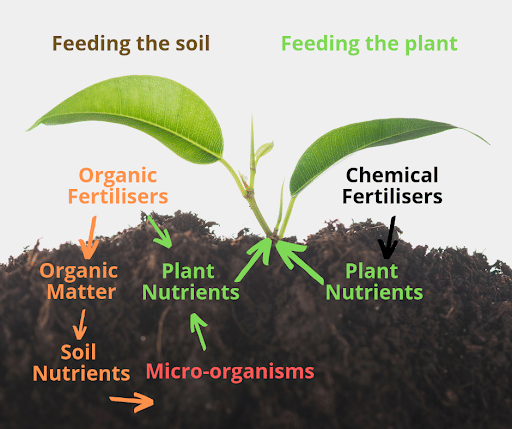
Organic Vs Inorganic Fertilizers
What is a Fertilizer?
- A fertilizer is a natural or artificial substance that contains the chemical components necessary to increase plant growth and productivity.
- The fertilizers include nitrogen, potassium, and phosphorus, which are necessary minerals for plants.
- Fertilizers may restore chemical elements that previous crops removed from the soil or increase the land's inherent fertility.
- When other conditions (such as light, moisture, temperature, and soil structure) are favorable, soil fertility is the property of a soil that permits it to provide chemicals in appropriate numbers and proper balance to encourage plant growth.
- Urea, Ammonia are some of the most commonly used fertilizers around the world.
What are Organic Fertilizers?
- Fertilizers made from plant or animal debris, as well as human waste, are known as organic fertilizers.
- It has all the necessary plant nutrients, and the soil's heat and moisture content help the nutrients to release more readily.
- In order to create organic fertilizers, naturally degradable plant- or animal-based products go through a decomposition process.
- When the decomposition process begins, the components of the organic manure break down into primary nutrients first, followed by secondary nutrients.
- When using organic fertilizers, it's crucial to stay away from substances with a high C:N ratio because they're not good for plant growth and should instead be applied and buried in the soil to gain the most benefit.
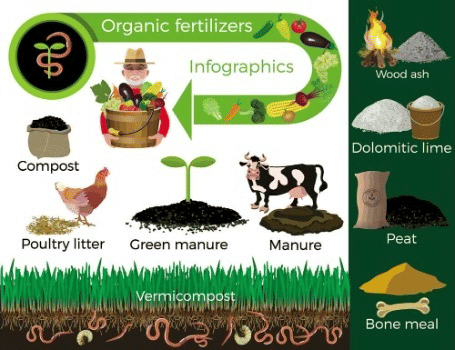
Various Organic Fertilizers
What are Inorganic Fertilizers?
- Inorganic fertilizers, commonly referred to as synthetic fertilizers, are prepared for readymade use in plants.
- These artificial fertilizers are available in single- or multi-nutrient formulations.
- There are 16 nutrients that are considered to be crucial for plant development. They can be divided into primary nutrients and secondary nutrients.
- The three most crucial fundamental elements found in modern chemical fertilizers are nitrogen, phosphorus, and potassium.
- Due to the increased risk of the plant burning from an excessive application, it is crucial to take the concentration into account while applying inorganic fertilizers.
- The quick release of nutrients that penetrate deeply into the soil and water yet are inaccessible to plants is another drawback of inorganic fertilizer.
- Inorganic fertilizer has several benefits, like being less expensive in the long run and adding less to the ground. It is also simpler to use and prepare.
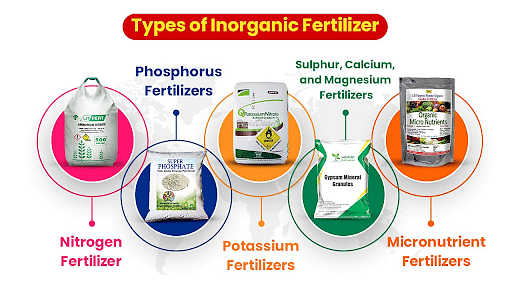
Inorganic Fertilizers
Difference Between Organic and Inorganic Fertilizers
| Particulars | Organic Fertilizers | Inorganic Fertilizers |
|---|---|---|
| Ease of Use | It is frequently messier to use, and it could even smell bad. | Easy to use yet extremely concentrated, thus caution is required to prevent overuse. |
| Storage | Potentially deteriorating and more difficult to store. | Have a long shelf life and are typically simple to store. |
| Nutritional Value | Although less accurate, the nutritional content frequently contains a greater variety of micronutrients. | It has greater precision, focused concentrations, and is available in a large number of choices. |
| Rate of Nutrient Release | Nutrients are released as a result of delayed soil breakdown. The rate of nutrient release is difficult to predict. | Although there are slow-release choices, the majority offer instant nutrient availability. |
| Impact on Soil | It can strengthen the soil's microbiome and boost its structure and quality. | There is little benefit to the soil and potential harm to the soil microbiology. |
| Price | More expensive and less concentrated typically. | Usually significantly less expensive. |
| Safety | Pets, people, and plants are all generally safe. | Plants are easily harmed by overapplication. Important to store securely out of the reach of kids and animals. |
| Examples | Ammonium Sulphate, Ammonium Phosphate, Ammonium Nitrate, Urea, Ammonium Chloride, etc. | Cottonseed Meal, Blood Meal, Fish Emulsion, Sewage Sludge, Seaweed, Worm Castings, etc. |
Conclusion
Applying both organic and inorganic fertilizers at once increases the physical and microbiological qualities of the soil and offers more advantages than applying them separately. Additionally, this will improve nutrient availability. However, regardless of whether a farmer opts to use organic, inorganic, or a combination of the two types of fertilizers, it's crucial to adhere to the recommendations about the timing of application, fertilizer placement, and the right amount of fertilizer to apply.
FAQs
Question: What are organic fertilizers?
Answer: Organic fertilizers are derived from natural sources such as plant and animal matter. Examples include compost, manure, bone meal, and green manure. These fertilizers improve soil health by adding essential nutrients and enhancing its structure and water retention capacity.
Question: How do inorganic fertilizers differ from organic fertilizers?
Answer: Inorganic fertilizers are synthetic or mineral-based products designed to provide specific nutrients to plants quickly. Unlike organic fertilizers, they are manufactured through chemical processes and can offer immediate nutrient availability, but prolonged use may lead to soil degradation and environmental concerns.
Question: What are the benefits of using organic fertilizers?
Answer: Organic fertilizers provide a slow release of nutrients, improve soil health, increase microbial activity, and reduce the risk of chemical buildup. They also contribute to sustainable farming by recycling natural materials and minimizing environmental impact.
Question: Why are inorganic fertilizers commonly used despite their potential environmental impact?
Answer: Inorganic fertilizers are popular due to their rapid nutrient availability, affordability, and convenience. They allow farmers to meet crop nutrient requirements quickly and improve yields, making them essential for intensive agricultural practices. However, their use should be balanced with soil health management to mitigate negative effects.
Question: Can organic and inorganic fertilizers be used together?
Answer: Yes, organic and inorganic fertilizers can be used together in an integrated approach to leverage the benefits of both. This practice, known as Integrated Nutrient Management (INM), optimizes crop yields while maintaining soil health by combining the immediate benefits of inorganic fertilizers with the long-term advantages of organic amendments.
MCQs
1. What is a common source of organic fertilizers?
A) Urea
B) Compost
C) Ammonium nitrate
D) Potassium chloride
Answer: (B) See the Explanation
Explanation: Compost is an example of an organic fertilizer made from decomposed plant and animal matter, providing essential nutrients to the soil.
2. Which type of fertilizer provides immediate nutrient availability to plants?
A) Organic fertilizers
B) Inorganic fertilizers
C) Bone meal
D) Vermicompost
Answer: (B) See the Explanation
Explanation: Inorganic fertilizers provide immediate nutrient availability to plants because they are chemically synthesized and designed for quick absorption.
3. What is one disadvantage of prolonged use of inorganic fertilizers?
A) Improved soil structure
B) Reduced microbial activity
C) Enhanced water retention
D) Increased organic matter
Answer: (B) See the Explanation
Explanation: Prolonged use of inorganic fertilizers can reduce soil microbial activity and lead to soil degradation, impacting long-term soil health.
4. Which approach combines the use of both organic and inorganic fertilizers?
A) Intensive farming
B) Integrated Nutrient Management (INM)
C) Monoculture
D) Organic-only farming
Answer: (B) See the Explanation
Explanation: Integrated Nutrient Management (INM) is an approach that combines the use of organic and inorganic fertilizers to optimize crop production while maintaining soil health.
5. What is an environmental concern associated with excessive use of inorganic fertilizers?
A) Increased biodiversity
B) Soil acidification
C) Enhanced plant resilience
D) Improved soil texture
Answer: (B) See the Explanation
Explanation: Excessive use of inorganic fertilizers can lead to soil acidification and other environmental issues, affecting long-term soil fertility and water quality.
GS Mains Questions and Model Answers
Q1: Compare the advantages and disadvantages of using organic and inorganic fertilizers in modern agriculture.
Answer: Organic and inorganic fertilizers play vital roles in modern agriculture, each with its advantages and disadvantages. Organic fertilizers, such as compost and manure, enrich the soil with nutrients and improve its structure and microbial health, leading to long-term sustainability. They release nutrients slowly, reducing the risk of leaching and environmental contamination. However, their nutrient content is often lower and less predictable, requiring large quantities to meet crop needs. In contrast, inorganic fertilizers, such as urea and ammonium nitrate, provide immediate nutrient availability and are cost-effective for boosting yields in the short term. Nonetheless, their prolonged use can lead to soil degradation, reduced microbial activity, and environmental issues such as water pollution. A balanced approach that combines both types—Integrated Nutrient Management (INM)—can optimize crop productivity while maintaining soil health and sustainability.
Q2: Analyze the environmental implications of excessive reliance on inorganic fertilizers. What sustainable practices can mitigate these impacts?
Answer: Excessive reliance on inorganic fertilizers poses significant environmental challenges, including soil acidification, reduced soil biodiversity, and contamination of water bodies due to runoff. This runoff can cause eutrophication, leading to algal blooms that deplete oxygen levels in water and harm aquatic life. To mitigate these impacts, sustainable practices such as Integrated Nutrient Management (INM) and crop rotation should be adopted. INM combines organic and inorganic inputs, enhancing soil health and reducing dependency on synthetic fertilizers. Precision farming techniques, which involve the accurate application of fertilizers based on soil and crop needs, can further reduce wastage and environmental harm. Promoting the use of biofertilizers and enhancing soil organic matter through practices like cover cropping also contribute to sustainability.
Q3: Discuss the role of Integrated Nutrient Management (INM) in promoting sustainable agriculture. What benefits does this approach offer over traditional methods?
Answer: Integrated Nutrient Management (INM) plays a crucial role in promoting sustainable agriculture by combining the use of organic and inorganic fertilizers to balance crop nutrient requirements. Unlike traditional methods that often rely solely on inorganic fertilizers, INM leverages the benefits of both organic and synthetic inputs. This approach improves soil health by maintaining microbial activity and organic matter while ensuring that crops receive adequate nutrients for optimal growth. The result is enhanced productivity without depleting soil fertility or causing environmental harm. INM also helps in reducing input costs and minimizing nutrient runoff, which protects water quality and prevents soil degradation. By adopting INM, farmers can achieve higher yields sustainably, contributing to long-term agricultural productivity and environmental stewardship.
Previous Year Questions on Fertilizers
1. UPSC CSE Prelims 2021:
Question: Which of the following practices can help minimize the negative environmental impacts of fertilizer use?
A) Monoculture
B) Integrated Nutrient Management (INM)
C) Slash-and-burn agriculture
D) Intensive use of chemical fertilizers only
Answer: (B)
Explanation: Integrated Nutrient Management (INM) helps balance the use of organic and inorganic fertilizers, reducing negative environmental impacts and promoting sustainable soil health.
2. UPSC CSE Mains 2020 (GS Paper 3):
Question: "Evaluate the impact of chemical fertilizers on soil health and suggest measures for their sustainable use in agriculture."
Answer: The extensive use of chemical fertilizers has significant impacts on soil health, including reduced microbial activity, nutrient imbalance, and soil acidification. These changes can lead to long-term soil degradation and diminished productivity. To ensure sustainable use, measures such as Integrated Nutrient Management (INM) should be adopted, combining the use of organic fertilizers with synthetic ones to maintain soil fertility. Precision farming techniques that tailor fertilizer application to crop and soil needs can prevent overuse. Enhancing organic matter through practices like composting, cover cropping, and crop rotation helps sustain soil health. Implementing these measures ensures that agricultural productivity is balanced with environmental sustainability, safeguarding soil health for future generations.
Download the PREPP App and attempt FREE IAS Exam Mock Tests and get complete study material!

Full Test - 04: UPSC CSE Prelims CSAT (Paper-II)
Full Test - 03: UPSC CSE Prelims CSAT (Paper-II)
UPSC CSE Prelims 2026 GS Paper 1 Question Paper (24-May-2026)
UPSC CSE Prelims 2026 CSAT Paper 2 Question Paper (24-May-2026)

17 February 2025 | The Hindu Must Read Articles | Current Affairs

16 February 2026 | The Hindu Must Read Articles | Current Affairs

13 February 2026 | The Hindu Must Read Articles | Current Affairs









Comments