India-Japan Look To Restart Trilateral Cooperation With Sri Lanka, But With Caution
Relevance: GS 2 - India and its neighbourhood- relations; Bilateral, regional and global groupings and agreements involving India and/or affecting India’s interests.
(Source: The Hindu, 08/11/23)
Click here for Daily Current Affairs
Why in the news?
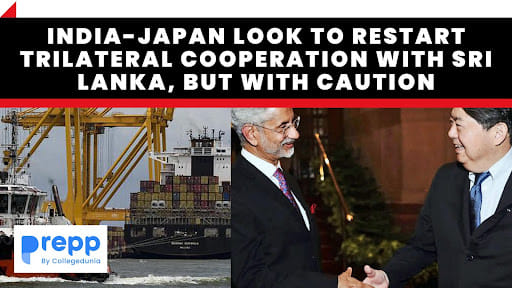
- The article discussed the potential revival of trilateral cooperation between India, Japan, and Sri Lanka after the cancellation of a joint India-Japan MoU for the East Container Terminal (ECT) project and the suspension of the Japanese-funded light rail transit project in Sri Lanka.
Table of Contents
Exploring New Avenues of Collaboration
- Shared Vision for Indo-Pacific Stability: India and Japan share a vision of a Free Open and Inclusive Indo-Pacific (FOIIP), which they believe benefits all nations in the region. This common vision has provided a basis for renewed cooperation and joint initiatives.
- Potential Areas for Collaboration: The Pathfinder Foundation's paper highlights potential areas of collaboration, including renewable energy projects, grid connectivity, development of Trincomalee as an oil pipeline hub, and people-centric initiatives like tourism and education.
- Joint Economic Vision Statement: Leaders from India and Sri Lanka have issued a Joint Economic Vision Statement, setting the stage for collaborative efforts to catalyze economic growth.
- While governments will play a role in kickstarting projects, they intend to involve the private sector in investment and execution.
- Debt restructuring process:India, Japan, and France's collaborative effort in co-chairing a committee for Sri Lanka's debt restructuring process demonstrates the commitment to stabilizing the country's financial situation. This initiative aims to address debt-related challenges and foster economic recovery.
Challenges and Future Prospects
- Balancing Interests and Lessons from the Past: Officials acknowledge the challenges faced in executing joint projects, given past setbacks. The need to align interests and strategies between India, Japan, and Sri Lanka remains a crucial factor in determining the success of future collaborations.
- Toward a Resilient Indo-Pacific Partnership: Japan underscores the significance of Japan's partnership with India and Sri Lanka in realizing a Free and Open Indo-Pacific.
- Japan emphasizes creditor parity, transparency, and debt sustainability in Sri Lanka's debt restructuring process.
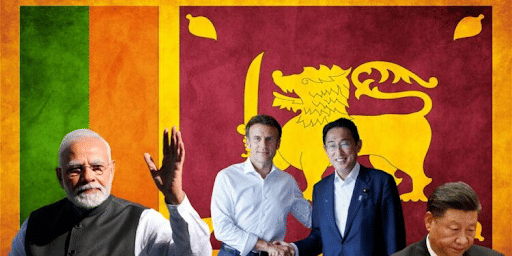
- Role of China: China's involvement in Sri Lanka's infrastructure projects and its status as the country's largest bilateral lender add complexity to the trilateral dynamics. China's investments in Sri Lanka have prompted concerns about debt sustainability and transparency.
- While India and Japan aim to include China in the creditors' platform for Sri Lanka's debt restructuring process, China's decision to remain an observer highlights the complexities of fostering inclusive cooperation.
Conclusion
The revival of trilateral cooperation marks a crucial step toward promoting stability and development in the Indo-Pacific region. By overcoming challenges and leveraging their collective strengths, India, Japan, and Sri Lanka have the potential to contribute to a more interconnected and prosperous future for the region.
(*Click this link to read prelims specific weekly current affairs articles)
FAQs
Question: Where is Sri Lanka Located?
Answer:
Sri Lanka is an island country in South Asia. It lies in the Indian Ocean, southwest of the Bay of Bengal, separated from the Indian peninsula by the Gulf of Mannar and the Palk Strait. Sri Lanka shares a maritime border with the Maldives in the south-west and India in the north-west.
Question: What is Debt-trap diplomacy?
Answer:
Debt-trap diplomacy is when a richer country lends to poorer countries – that are resource-rich or strategically placed – overwhelming them with debts that are not sustainable. This leads the poorer countries to give up their strategic assets or give in to political leverage.
Question: What is Meant by Debt restructuring?
Answer:
The Debt Restructuring is the process undertaken to re-establish debt sustainability and the decision to restructure is undertaken when no other option to re-gain debt sustainability is considered politically or socially acceptable.
UPSC Mains Practice Question:
|
Download the PREPP App and attempt FREE IAS Exam Mock Tests and get complete study material!

Full Test - 04: UPSC CSE Prelims CSAT (Paper-II)
Full Test - 03: UPSC CSE Prelims CSAT (Paper-II)
UPSC CSE Prelims 2026 GS Paper 1 Question Paper (24-May-2026)
UPSC CSE Prelims 2026 CSAT Paper 2 Question Paper (24-May-2026)

17 February 2025 | The Hindu Must Read Articles | Current Affairs

16 February 2026 | The Hindu Must Read Articles | Current Affairs

13 February 2026 | The Hindu Must Read Articles | Current Affairs









Comments