Citizenship by Registration - Indian Polity Notes
Citizenship in India can also be acquired by registration. Citizenship by Registration means the citizenship given to persons who have Indian ancestry but don't qualify under the citizenship by descent rules/ are married to an Indian citizen. They can register with the Indian government by meeting certain conditions for the same as required in the Citizenship Act 1955 and subsequent amendments. For example: If an Israeli citizen marries an Indian citizen and has lived in India for the past 8 years, he/she is eligible to acquire Indian citizenship by registration.
|
Table of Contents |
|
“There can be no daily democracy without daily citizenship.” - Ralph Nader |
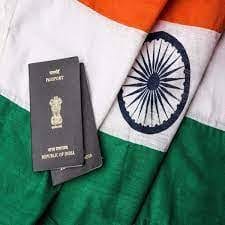
Conditions for Citizenship by Registration
Citizenship can also be acquired by registration with the Indian government. A few mandatory rules are
- A person of Indian ancestry who has lived in India for at least seven years before filing for registration.
- A person of Indian ancestry who lives in a nation other than India's undivided states.
- A person who is married to an Indian citizen and has lived in India for at least seven years prior to registration.
- Children under the age of 18 who are Indian citizens.
Conclusion
The Indian lawmakers considered various scenarios where people of Indian origin and people married to Indian citizens for a period of time to be given an option to register for citizenship by meeting certain criteria. Though that individual is not a citizen of India at birth or descent, by registration also he/she can acquire citizenship of India.
FAQs
Question: What is Citizenship by Registration in India?
Answer: Citizenship by Registration in India is a legal process through which certain categories of individuals can acquire Indian citizenship. This provision allows individuals who meet specific criteria, such as persons of Indian origin or their descendants, to apply for Indian citizenship after residing in India for a prescribed period. The process involves submitting an application to the appropriate authority, along with required documentation, and fulfilling any additional requirements stipulated by the Citizenship Act.
Question: Who is eligible for Citizenship by Registration?
Answer: The eligibility criteria for Citizenship by Registration under the Citizenship Act, 1955, include:
- Individuals of Indian origin who are citizens of other countries and have resided in India for a specific duration.
- Persons who are married to Indian citizens and have resided in India for a defined period.
- Minor children of citizens who are registered under this provision.
Question: What is the procedure for applying for Citizenship by Registration?
Answer: The procedure for applying for Citizenship by Registration involves several steps:
- Filling out the application form, which can be obtained from designated government offices or online.
- Providing necessary documentation, including proof of residence, identity, and eligibility.
- Submitting the application to the relevant authority, typically the Ministry of Home Affairs or local registration offices.
- Paying the prescribed application fee.
- Awaiting verification and approval from the authorities, which may include interviews or further assessments.
Question: How does Citizenship by Registration differ from other forms of citizenship in India?
Answer: Citizenship by Registration differs from other forms of citizenship, such as Citizenship by Birth and Citizenship by Descent, primarily in terms of the process and eligibility criteria. While Citizenship by Birth automatically grants citizenship to individuals born in India, Citizenship by Registration requires individuals to actively apply and meet specific residency and eligibility requirements. Additionally, Citizenship by Naturalization is another route that entails a longer process, requiring applicants to fulfill more stringent residency and character assessments.
Question: What role does the Ministry of Home Affairs play in the Citizenship by Registration process?
Answer: The Ministry of Home Affairs plays a pivotal role in overseeing the Citizenship by Registration process in India. It is responsible for formulating policies, implementing the Citizenship Act, and providing guidelines for application procedures. The ministry evaluates applications, conducts necessary verifications, and grants citizenship status to eligible individuals. Moreover, it addresses any grievances or appeals related to citizenship applications.
MCQs
1. What is the primary law governing Citizenship by Registration in India?
A) The Indian Constitution
B) The Citizenship Act, 1955
C) The Foreigners Act, 1946
D) The Indian Penal Code
Answer: See the Explanation
Explanation: The primary law governing Citizenship by Registration in India is The Citizenship Act, 1955, which outlines the eligibility and procedures for acquiring citizenship.
2. Who can apply for Citizenship by Registration?
A) Anyone born in India
B) Individuals of Indian origin residing abroad
C) Only children of Indian citizens
D) Foreign nationals only
Answer: See the Explanation
Explanation: Individuals of Indian origin residing abroad, among others, can apply for Citizenship by Registration under specific conditions set by the Citizenship Act.
3. What is a key requirement for applying for Citizenship by Registration?
A) Birth certificate
B) Proof of Indian origin or marriage to an Indian citizen
C) Employment in India
D) Residency in India for less than six months
Answer: See the Explanation
Explanation: A key requirement for applying for Citizenship by Registration is providing proof of Indian origin or, in the case of spouses, evidence of marriage to an Indian citizen.
4. Which government authority primarily handles applications for Citizenship by Registration?
A) Ministry of External Affairs
B) Ministry of Home Affairs
C) Ministry of Law and Justice
D) National Human Rights Commission
Answer: See the Explanation
Explanation: The Ministry of Home Affairs primarily handles applications for Citizenship by Registration, overseeing the process and implementation of citizenship laws.
5. How does Citizenship by Registration differ from Citizenship by Birth?
A) It requires a specific application process
B) It is automatically granted
C) It does not require residency
D) It is granted only to minors
Answer: See the Explanation
Explanation: Citizenship by Registration requires a specific application process and eligibility criteria, while Citizenship by Birth is automatically granted to individuals born in India.
GS Mains Questions and Model Answers
Q1: Analyze the implications of Citizenship by Registration on India's demographic landscape.
Answer: Citizenship by Registration has significant implications for India's demographic landscape, particularly in terms of integrating individuals of Indian origin living abroad. This provision facilitates the return of those seeking to reconnect with their heritage and contribute to the socio-economic fabric of the country. By welcoming this demographic, India benefits from diverse skills, investments, and cultural exchanges. However, it also raises questions about resource allocation, social integration, and the balancing of rights between citizens and registered individuals. The impact of this policy on regional demographics, particularly in areas with high concentrations of returnees, can alter local dynamics, necessitating effective governance and community engagement strategies.
Q2: Discuss the challenges faced by applicants seeking citizenship through registration.
Answer: Applicants seeking citizenship through registration face several challenges, including bureaucratic hurdles, lengthy processing times, and potential language barriers. The requirement for comprehensive documentation can pose difficulties for individuals who may not have access to certain records, such as birth certificates or proof of Indian origin. Additionally, applicants may encounter inconsistencies in the interpretation of eligibility criteria, leading to confusion and frustration. Furthermore, the lack of awareness about the process among potential applicants can deter eligible individuals from applying. To address these challenges, the government must streamline application processes, enhance public outreach, and provide clear guidelines to ensure that the system is accessible and efficient.
Q3: Evaluate the impact of the Citizenship Act on the rights and responsibilities of citizens in India.
Answer: The Citizenship Act plays a crucial role in defining the rights and responsibilities of citizens in India. By delineating the pathways to citizenship, including Citizenship by Registration, the Act establishes a framework for individuals to acquire legal status and enjoy the associated rights, such as voting and accessing public services. However, it also imposes responsibilities, including adherence to the laws and regulations of the country. The Act's provisions aim to balance the interests of the state with the rights of individuals, fostering a sense of national identity while acknowledging diversity. Nonetheless, debates around citizenship laws, especially concerning registration processes, highlight the need for continuous evaluation to ensure that citizens' rights are protected and that the responsibilities align with evolving societal dynamics.
Previous Year Questions on Citizenship by Registration
1. UPSC CSE Prelims 2021:
Question: What is the main purpose of Citizenship by Registration under the Citizenship Act, 1955?
A) To provide citizenship to foreign nationals
B) To allow individuals of Indian origin to acquire citizenship
C) To revoke citizenship
D) To facilitate illegal immigration
Answer: (B)
Explanation: The main purpose of Citizenship by Registration under the Citizenship Act, 1955, is to allow individuals of Indian origin and their descendants to acquire Indian citizenship legally.
2. UPSC CSE Mains 2019 (GS Paper 1):
Question: "Discuss the implications of Citizenship by Registration on national integration." Analyze its impact on societal cohesion.
Answer: Citizenship by Registration has implications for national integration, as it encourages individuals of Indian origin to return and contribute to the country's development. This process can foster societal cohesion by promoting shared cultural values and enhancing social ties. However, it also necessitates addressing the challenges of integrating diverse populations, including potential tensions arising from differing cultural backgrounds. Ensuring equitable access to resources and opportunities for all citizens is crucial for fostering harmonious relations. By facilitating dialogues and community engagement, the government can leverage the benefits of diversity while mitigating potential conflicts, ultimately strengthening national unity.
*email: contactus@prepp.in
Download the PREPP App and attempt FREE IAS Exam Mock Tests and get complete study material!

Live Test : UPSC CSE Prelims CSAT (Paper-II) (Oct 20 - 23)
Full Test - 04: UPSC CSE Prelims CSAT (Paper-II)
Full Test - 03: UPSC CSE Prelims CSAT (Paper-II)
UPSC CSE Prelims 2026 GS Paper 1 Question Paper (24-May-2026)
UPSC CSE Prelims 2026 CSAT Paper 2 Question Paper (24-May-2026)

17 February 2025 | The Hindu Must Read Articles | Current Affairs

16 February 2026 | The Hindu Must Read Articles | Current Affairs

13 February 2026 | The Hindu Must Read Articles | Current Affairs









Comments