Importance of citizenship - Indian Polity Notes
Citizens of a country are given numerous benefits and rights. Without Citizenship an individual would be stateless. Being an accepted citizen of a country provides benefits such as the right to vote, the right to contest elections, the right to hold constitutional posts, the right to social security, the right to health care, the right to permanent residency, the right to own land, etc. The topic “Importance of Citizenship” is an important part of the UPSC/IAS Exam Indian Polity and Governance Syllabus which is discussed in this article in detail.
|
Table of Contents |
What is Citizenship?
- Citizenship is a legal relationship between an individual and a state to which he or she owes allegiance and is subjected to protection.
- Citizenship involves a state of liberty as well as obligations.
- By fulfilling the legal requirements of a national, state, or local government, one can become a citizen.
- Article 5 to 11 of the Indian Constitution deals with the concept of Indian citizenship.
|
"Citizenship is the bond that unites individuals under the protection and privileges of a nation, conferring rights, duties, and a sense of belonging within the legal and social framework of the state." |
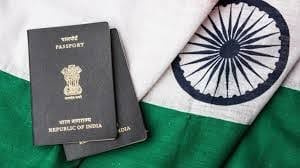
Importance of Citizenship
- Voting: Only citizens can vote in Elections.
- Contesting in Elections: Only Citizens can contest in Elections.
- Constitutional Posts: Only citizens can hold any constitutional posts of the country, like The President, Vice-President, Governor, ministers, judges, etc.
- Benefits from Government Schemes: Only citizens can get any benefits from the government schemes meant for citizens of India.
- Specific Fundamental Rights: Only citizens can enjoy certain fundamental rights:
| Fundamental rights available to both citizens and foreigners(except enemy aliens) | Fundamental Rights available only to citizens and not to foreigners |
|---|---|
| Equality before the law and equal protection of laws (Article 14) | Prohibition of discrimination on grounds of religion, race, sex, caste or place of birth (Article 15) |
| Protection in respect of conviction for offenses (Article 20) | Equality of opportunity in matters of public employment (Article 16) |
| Protection of life and personal liberty (Article 21) | Protection of six rights regarding freedom (Article 19) |
| Right to elementary education (Article 21A) | Protection of language, script, and culture of minorities (Article 29) |
| Protection against arrest and detention in certain cases (Article 22) | Right of minorities to establish and administer educational institutions (Article 30) |
Conclusion
Citizenship is a cornerstone of any nation. It confers a sense of identity and belonging, granting individuals not only rights and protections but also responsibilities and duties. Citizenship fosters social cohesion, political participation, and economic stability, enabling people to contribute to and benefit from their society. It is essential for the functioning of democracy, ensuring that citizens have a voice in governance and access to justice. Ultimately, citizenship is vital for building inclusive, resilient, and prosperous communities, where individuals are empowered to realize their potential and work towards the collective good.
FAQs
Question: What is citizenship in the context of Indian Polity?
Answer: In India, citizenship refers to the legal status granted to individuals, allowing them rights and responsibilities under the Constitution. Citizenship provides access to rights like voting, protection, and participation in governance, ensuring national loyalty and identity.
Question: How can citizenship be acquired in India?
Answer: Indian citizenship can be acquired by birth, descent, registration, naturalization, or incorporation of territory. These pathways allow individuals to gain citizenship, following the regulations established under the Citizenship Act, 1955.
Question: What are the responsibilities of Indian citizens?
Answer: Indian citizens are expected to uphold the Constitution, respect diversity, promote national unity, and participate in democratic processes. These duties reinforce societal cohesion and contribute to India’s development.
Question: Why is citizenship important?
Answer: Citizenship provides individuals with legal rights, security, and opportunities to engage in a nation’s political and economic systems. It creates a sense of belonging and accountability, which is essential for social stability and national progress.
Question: How does citizenship differ from nationality?
Answer: Citizenship is a legal status granting rights and duties within a nation, while nationality indicates a person’s cultural, ethnic, or national origin. Citizenship entails specific legal benefits and responsibilities, unlike nationality, which is broader.
MCQs
1. Which act governs citizenship in India?
A) The Citizenship Act, 1955
B) Indian Constitution Act
C) National Registration Act
D) Indian Rights Act
Answer: (A) See the Explanation
Explanation: The Citizenship Act, 1955, governs the acquisition and termination of citizenship in India, detailing the rights, duties, and various forms of acquiring citizenship.
2. Citizenship by birth is granted under which condition in India?
A) Only if born after 1990
B) Based on residence
C) Born to Indian parents
D) Through naturalization
Answer: (C) See the Explanation
Explanation: Citizenship by birth is provided to individuals born in India to Indian parents, as regulated by the Citizenship Act, 1955, with specific conditions regarding parental citizenship.
3. What is one responsibility of an Indian citizen?
A) Participate in foreign politics
B) Uphold sovereignty
C) Seek dual citizenship
D) Maintain anonymity
Answer: (B) See the Explanation
Explanation: Citizens are required to uphold the sovereignty, unity, and integrity of India, reflecting their commitment to national values.
4. Citizenship can be terminated under which condition?
A) Obtaining foreign nationality
B) By birth
C) By voting
D) Through descent
Answer: (A) See the Explanation
Explanation: Indian citizenship may be terminated if an individual voluntarily acquires a foreign nationality, ensuring single national allegiance.
5. Which of the following is a benefit of Indian citizenship?
A) Diplomatic immunity
B) Right to vote
C) Right to foreign employment
D) No tax obligations
Answer: (B) See the Explanation
Explanation: The right to vote is a key benefit of Indian citizenship, allowing citizens to participate in democratic elections and shape governance.
GS Mains Questions and Model Answers
Q1: Discuss the significance of citizenship in fostering national unity and social responsibility in India.
Answer: Citizenship establishes a legal bond between individuals and the state, ensuring rights and duties. In India, citizenship fosters unity by integrating diverse communities under shared responsibilities, like respecting the Constitution and promoting communal harmony. It instills a sense of belonging and accountability, encouraging citizens to contribute actively to societal progress. The legal benefits of citizenship, including the right to vote and protection by the state, reinforce personal and collective responsibility, essential for a stable democracy.
Q2: Explain the role of the Citizenship Act, 1955, in defining and regulating citizenship in India. How does it safeguard national interests?
Answer: The Citizenship Act, 1955, outlines criteria for acquiring, renouncing, and terminating citizenship, protecting national identity and unity. By regulating naturalization and descent-based citizenship, it ensures a controlled and stable population structure. The Act prevents multiple allegiances by restricting dual citizenship and upholding single national loyalty. These provisions balance rights with obligations, enabling India to safeguard its sovereignty and legal boundaries against foreign influence while promoting social cohesion.
Q3: Analyze the differences between citizenship by birth, descent, registration, and naturalization under the Citizenship Act, 1955.
Answer: Citizenship by birth is granted to individuals born in India to Indian parents. Descent-based citizenship applies to children born abroad to Indian parents, ensuring overseas linkage. Registration allows eligible foreign spouses or persons of Indian origin to acquire citizenship, strengthening familial and ethnic ties. Naturalization, a longer process, applies to foreigners residing in India who meet specific criteria. Each path diversifies citizen profiles while maintaining India's constitutional principles and controlled integration.
Previous Year Questions on Citizenship
1. UPSC CSE Prelims 2020:
Question: Citizenship can be terminated if a person:
A) Acquires citizenship of another country
B) Engages in peaceful protests
C) Is elected as an MP
D) Marries a foreign national
Answer: (A)
Explanation: Citizenship can be terminated if a person voluntarily acquires citizenship in a foreign country, in line with India’s single-citizenship policy.
2. UPSC CSE Mains 2019 (GS Paper 2):
Question: "Explain the constitutional provisions for citizenship in India. How does the Citizenship Act, 1955, maintain India’s national identity?"
Answer: Indian citizenship, governed by the Citizenship Act, 1955, is based on birth, descent, registration, and naturalization. The Act prevents dual citizenship, emphasizing national allegiance. By defining acquisition and termination processes, it controls population composition and ensures national integrity. This legal framework reinforces India's identity, promoting unity and regulating foreign influence.
*email: contactus@prepp.in
Download the PREPP App and attempt FREE IAS Exam Mock Tests and get complete study material!

Full Test - 04: UPSC CSE Prelims CSAT (Paper-II)
Full Test - 03: UPSC CSE Prelims CSAT (Paper-II)
UPSC CSE Prelims 2026 GS Paper 1 Question Paper (24-May-2026)
UPSC CSE Prelims 2026 CSAT Paper 2 Question Paper (24-May-2026)

17 February 2025 | The Hindu Must Read Articles | Current Affairs

16 February 2026 | The Hindu Must Read Articles | Current Affairs

13 February 2026 | The Hindu Must Read Articles | Current Affairs









Comments