Citizenship Act, 1955 - Indian Polity Notes
The Citizenship Act, 1955 provides for the acquisition and determination of Indian Citizenship. The act was enacted by Parliament in the Sixth year of the Republic of India. The Citizenship Act of 1955 also includes Overseas Citizenship and the termination of Indian Citizenship. Originally, the Citizenship Act of 1955 provided for Commonwealth Citizenship as well. However, the Citizenship (Amendment) Act of 2003 repealed this provision. The topic “Citizenship Act, 1955” is an important part of the UPSC/IAS Exam Polity syllabus which is discussed in this article in detail.
| To Read update on this topic: |
|
Table of Contents |

Citizenship - Constitutional Provisions
- Citizenship is a legal relationship between an individual and a state to which he or she owes allegiance and is subjected to protection.
- Citizenship is listed in the Union List of the Constitution. This list falls solely under the competence of Parliament.
- The term "citizen" is not defined in the Constitution, although details on the various types of people who are eligible for citizenship are provided in Part 2, (Articles 5 to 11).
| Article 5 | Citizenship at the commencement of the Constitution. |
| Article 6 | Rights of citizenship of certain persons who have migrated to India from Pakistan. |
| Article 7 | Rights of citizenship of certain migrants to Pakistan. |
| Article 8 | Rights of citizenship of certain persons of Indian origin residing outside India. |
| Article 9 | Persons voluntarily acquiring citizenship of a foreign State not to be citizens. |
| Article 10 | Continuance of the rights of citizenship. |
| Article 11 | Parliament to regulate the right of citizenship by law. |
The following are some of the other constitutional provisions related to citizenship:
- No one shall be deemed to be a citizen of India if he has voluntarily acquired the citizenship of any foreign state.
- Every person who is or is deemed to be a citizen of India shall continue to be so, subject to the provisions of any law made by Parliament.
- Parliament shall have the authority to make any provision regarding the acquisition and termination of citizenship, as well as all other matters pertaining to citizenship.
|
Citizenship of India is governed by the Citizenship Act of 1955 and can be acquired through birth, descent, registration, or naturalization. |
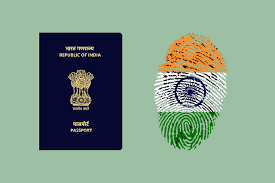
Acquisition of Citizenship
The Citizenship Act of 1955 provides for the following ways to acquire citizenship:
- Citizenship by birth - for people born in Indian territory
- Citizenship by descent - for persons born outside India with Indian parents
- Citizenship by registration - for persons whose ancestors were Indian citizens
- Citizenship by naturalization - for persons staying in India for a long time
- Citizenship by incorporation of territory (by the Government of India)
- Special provisions as to the citizenship of persons covered by the Assam Accord
Termination of Citizenship
- The Citizenship Act 1955 provided provisions for renunciation, termination, and deprivation of citizenship.
- Renunciation of Citizenship: If an Indian citizen who is also a national of another country renounces his Indian citizenship in a legal manner, he loses his Indian citizenship.
- When a man ceases to be an Indian citizen, his minor children cease to be Indian citizens as well. However, such a child may become an Indian citizen within one year of reaching full age by filing a statement of intent to return to India.
- Termination of Citizenship: If an Indian citizen knowingly or voluntarily accepts the citizenship of another nation, his or her Indian citizenship can be revoked.
- Deprivation of Citizenship: In some situations, the Indian government can strip a person of his citizenship.
- However, this does not apply to all citizens. It only applies to citizens who have obtained citizenship through registration, naturalization, or Article 5 Clause (c) of the Constitution (which is citizenship at commencement for a domicile in India and who has ordinarily been a resident of India for not less than 5 years immediately preceding the commencement of the Constitution).
Overseas Citizenship
- The 1955 act even gave certain provisions for Overseas Citizens such as registration of overseas citizen cards, rights of the overseas citizen, renunciation, and cancellation of overseas citizen cards.
- The Citizenship (Amendment) Act, 2015, replaced the term "Overseas Citizen of India" with "Overseas Citizen of India Cardholder". It includes the following:
a) Registration: Registration of Overseas Citizen of India Cardholder.
b) Conferment of Rights: Conferment of rights on Overseas Citizens of India Cardholder.
c) Renunciation: Renunciation of Overseas Citizen of India Card.
d) Cancellation: Cancellation of registration as an Overseas Citizen of India Cardholder.
Amendments to the Citizenship Act
The Citizenship Act 1955 was amended five times till now in 1986, 2003, 2005, 2015, and 2019.
The Citizenship Amendment Act 1986
- The 1986 amendment to Section 3 was less broad than the constitutional clause and the original Citizenship Act, which conferred citizenship to everyone born in India on the basis of jus soli.
- The amendment introduced the requirement that people born in India on or after January 26, 1950, but before July 1, 1987, be citizens of India.
- Citizenship is only available to those born after July 1, 1987, and before December 4, 2003, if either of their parents was an Indian citizen at the time of their birth.
The Citizenship Amendment Act 2003
- With infiltration from Bangladesh in mind, the revision made the aforementioned criteria more strict.
- For people born on or after December 4, 2004, the legislation now stipulates that, in addition to their own birth, both parents must be Indian citizens, or one parent must be an Indian citizen and the other must not be an illegal migrant.
- With these restricted revisions, India is on the verge of adopting the narrow jus sanguinis (blood relationship) basis.
- This states that even if an illegal migrant has been in India for seven years, he cannot claim citizenship by naturalization or registration.
The Citizenship Amendment Act 2005
- It incorporated the dual citizenship system.
- This was applicable to citizens of all countries, except for the persons who are citizens of Pakistan and Bangladesh.
The Citizenship Amendment Act 2015
- Citizenship by registration and naturalization: The government can relax for up to 30 days for people working in the government of India and staying in the country for 12 months.
- The merger of Overseas Citizens of India and Persons of Indian Origin schemes.
- Renunciation and cancellation of overseas citizenship: Provisions to cancel the Overseas Citizenship of India card where it is obtained by the spouse of an Indian citizen or Overseas Citizen of India in case of marriage dissolved by court or spouse enters into another marriage.
The Citizenship Amendment Act 2019
- The Amendment permits members of six communities Hindus, Sikhs, Buddhists, Jains, Parsis, and Christians from Pakistan, Bangladesh, and Afghanistan to continue to live in India if they entered India before December 14, 2014.
- As a special prerequisite for applicants belonging to these six religions, the amendment reduces the naturalization period from 11 to 5 years.
- According to the Act, upon obtaining citizenship, such people would be regarded to be citizens of India from the day of their admission into India, and all legal procedures against them in relation to their illegal migration or citizenship will be closed.
- It also states that those with Overseas Citizen of India (OCI) cards, which allow a foreign citizen of Indian ancestry to live and work in India permanently, might lose their status if they breach local laws for major and small offenses and transgressions.
- Two notifications also exempted such migrants from the Passport Act and the Foreigners Act.
- A vast number of organizations in Assam denounced this Bill because it may provide citizenship to illegal Bangladeshi Hindu migrants.
- The bill's argument is that Hindus and Buddhists are minorities in Bangladesh and migrated to India to fear religious persecution, while Muslims are the majority in Bangladesh, thus the same cannot be claimed of them.
Criticism of the Act
- Religious Discrimination:It has been criticized for excluding Muslims from its provisions, raising concerns about religious discrimination and a departure from the secular principles of the Indian Constitution.
- Violation of Secularism: Critics argue that the act undermines India's secular identity by prioritizing citizenship based on religious lines.
- Exclusion of Other Minority Groups: The act only focuses on specific religious minorities from Afghanistan, Bangladesh, and Pakistan, leaving out persecuted minority groups from other neighbouring countries.
- Arbitrary Cut-off Date: The December 31, 2014 cut-off date is seen as arbitrary, leading to questions about the fairness and rationale behind the selection of this particular date.
- Potential Impact on Demographics: Critics express concerns that the CAA, coupled with the National Register of Citizens (NRC), could be used to target and marginalize specific communities, affecting the demographic composition of the country.
- Undermining Unity in Diversity: The act is criticized for eroding the idea of "Unity in Diversity" by singling out specific religious groups for preferential treatment, potentially fostering divisions among communities.
Conclusion
Citizenship refers to complete participation in any society or state in which a citizen possesses civil and political rights. It is described as an individual's legal relationship with a certain state, represented by promising his devotion to the state. The Citizenship Act of 1955 governs the acquisition and determination of citizenship following the adoption of the Constitution. Furthermore, it allows for the renunciation and termination of citizenship in specific circumstances. It also includes provisions for the registration of Overseas Indian Citizens and their privileges.
FAQs
Question: What is the Citizenship Act of 1955?
Answer: The Citizenship Act of 1955 governs how individuals can acquire, regulate, and lose Indian citizenship through birth, descent, registration, and naturalization.
Question: How can a person lose Indian citizenship?
Answer: Citizenship can be lost through renunciation (voluntary), termination (upon acquiring foreign citizenship), and deprivation (in cases of fraud or disloyalty).
Question: Who qualifies for Indian citizenship by naturalization?
Answer: Foreigners who have resided in India for at least 12 years and meet additional requirements can apply for citizenship through naturalization.
Question: What changes did the Citizenship Amendment Act of 2019 introduce?
Answer: The CAA grants citizenship to persecuted minorities from Pakistan, Bangladesh, and Afghanistan who arrived in India before December 31, 2014, provided they belong to certain non-Muslim communities.
Question: What is citizenship by descent?
Answer: Citizenship by descent applies to individuals born outside India to Indian parents, with certain registration conditions based on the date of birth.
MCQs
1. Which Act governs citizenship in India?
A. Citizenship Act, 1950
B. Citizenship Act, 1955
C. Constitution of India
D. Indian Nationality Act
Answer: (B) See the Explanation
The Citizenship Act of 1955 governs how citizenship is acquired and regulated in India.
2. How can a foreigner acquire Indian citizenship?
A. By birth
B. By naturalization
C. By termination
D. By renunciation
Answer: (B) See the Explanation
A foreigner can acquire Indian citizenship through naturalization if they meet certain residency and eligibility criteria.
3. What is the minimum residency requirement for naturalization in India?
A. 5 years
B. 10 years
C. 12 years
D. 20 years
Answer: (C) See the Explanation
The minimum residency requirement for naturalization in India is 12 years.
4. Under which provision can a person lose Indian citizenship?
A. Citizenship by birth
B. Renunciation
C. Descent
D. Registration
Answer: (B) See the Explanation
A person can lose Indian citizenship through renunciation, voluntarily giving it up.
5. The Citizenship Amendment Act of 2019 applies to which countries?
A. Pakistan, Sri Lanka, and Bhutan
B. Bangladesh, Afghanistan, and Pakistan
C. Myanmar, Sri Lanka, and Nepal
D. Bhutan, Maldives, and Nepal
Answer: (B) See the Explanation
The Citizenship Amendment Act of 2019 applies to persecuted minorities from Pakistan, Bangladesh, and Afghanistan.
GS Mains Questions and Model Answers
Q1: Analyze the key provisions of the Citizenship Act of 1955 and discuss its significance in defining Indian citizenship.
Answer: The Citizenship Act of 1955 lays down the framework for acquiring citizenship through birth, descent, registration, and naturalization. It also details the loss of citizenship through renunciation, termination, and deprivation. This Act is critical in ensuring legal clarity regarding who qualifies as an Indian citizen and balances India’s commitment to accommodating diverse communities while maintaining its sovereignty.
Q2: Discuss the impact of the Citizenship Amendment Act (CAA) 2019 on India’s citizenship policies.
Answer: The CAA 2019 modifies the Citizenship Act by granting citizenship to persecuted minorities from Pakistan, Bangladesh, and Afghanistan who belong to specific religious communities and entered India before December 31, 2014. While it is viewed as a humanitarian measure, it has also sparked debates on its exclusion of Muslim refugees and its potential impact on India's secular fabric.
Q3: Examine the challenges in implementing the Citizenship Act in the context of India’s diverse demographic landscape.
Answer: Implementing the Citizenship Act in a country as diverse as India presents challenges such as managing applications from various communities, addressing concerns about illegal immigration, and maintaining communal harmony. The provisions for naturalization and registration must be applied consistently, while amendments like the CAA require careful handling to prevent alienation of certain groups.
Previous Year Questions on Citizenship Act
1. UPSC CSE Prelims 2020
Question: Under the Citizenship Act of 1955, how can an Indian citizen voluntarily give up their citizenship?
A. Termination
B. Renunciation
C. Deprivation
D. None of the above
Answer: B
Explanation: Citizenship can be voluntarily given up through renunciation, a process in which an individual declares their intention to relinquish Indian citizenship.
2. UPSC CSE Mains 2017 (GS Paper 2)
Question: “The Citizenship Amendment Act (CAA) of 2019 has reshaped the citizenship debate in India.” Analyze the implications of this statement.
Answer: The CAA 2019 redefined India's citizenship criteria by allowing persecuted minorities from Pakistan, Bangladesh, and Afghanistan to seek citizenship, provided they arrived before December 31, 2014. This amendment has raised concerns about its exclusion of Muslims, sparking debates about secularism, national identity, and India's refugee policy. The CAA’s selective application is seen by critics as discriminatory, while supporters argue it is a humanitarian gesture toward persecuted religious minorities.
*email: contactus@prepp.in
Download the PREPP App and attempt FREE IAS Exam Mock Tests and get complete study material!

Full Test - 04: UPSC CSE Prelims CSAT (Paper-II)
Full Test - 03: UPSC CSE Prelims CSAT (Paper-II)
UPSC CSE Prelims 2026 GS Paper 1 Question Paper (24-May-2026)
UPSC CSE Prelims 2026 CSAT Paper 2 Question Paper (24-May-2026)

17 February 2025 | The Hindu Must Read Articles | Current Affairs

16 February 2026 | The Hindu Must Read Articles | Current Affairs

13 February 2026 | The Hindu Must Read Articles | Current Affairs









Comments