Overseas Citizenship of India – Indian Polity Notes
Overseas Citizens of India (OCI) are of Indian origin but hold foreign passports and are not Indian citizens. The Overseas Citizenship of India (OCI) Scheme was established in August 2005 by amending the Citizenship Act, 1955 in response to the Indian diaspora's demand for dual citizenship, particularly in developed countries. It was unveiled in 2006 at the Pravasi Bharatiya Divas convention in Hyderabad. In 2015, the Government of India merged the Person of Indian Origin (PIO) category with the OCI category through the Citizenship (Amendment) Act. This article explains the Overseas Citizenship of India which is important for UPSC Indian Polity Preparation.
|
Table of Contents |
Background
- The Government of India established a High Level Committee on the Indian Diaspora in September 2000, chaired by L.M. Singhvi.
- The Committee's mandate was to conduct a comprehensive study of the global Indian Diaspora and to recommend measures to foster a positive relationship with them.
- The committee's report was due in January 2002.
- It proposed amending the Citizenship Act (1955) to allow for the grant of dual citizenship to Persons of Indian Origin (PIOs) from certain countries.
- As a result, the Citizenship (Amendment) Act, 2003, provided for the acquisition of Overseas Citizenship of India (OCI) by PIOs from 16 specified countries other than Pakistan and Bangladesh.
- It also removed from the Principal Act all provisions recognising or relating to Commonwealth Citizenship.
- Later, the Citizenship (Amendment) Act of 2005 broadened the scope of OCI grant to PIOs from all countries except Pakistan and Bangladesh, as long as their home countries allow dual citizenship under local law.
- It should be noted that the OCI is not a dual citizenship because the Indian Constitution prohibits dual citizenship or dual nationality (Article 9).
- Again, the Citizenship (Amendment) Act, 2015, modified the provisions of the Principal Act pertaining to OCI.
- By combining the PIO card scheme and the OCI card scheme, it has created a new scheme called "Overseas Citizen of India Cardholder."
- The PIO card scheme was implemented on August 19, 2002, and the OCI card scheme was implemented on December 2, 2005.
- Despite the fact that the OCI card scheme had become more popular, both schemes were running concurrently. This was causing applicants unnecessary confusion.
- Keeping in mind some of the issues that applicants were experiencing, the Government of India decided to create a single scheme by combining the PIO and OCI schemes.
- As a result, the Citizenship (Amendment) Act, 2015, was enacted to achieve this goal.
- The PIO scheme was cancelled on January 9, 2015, and it was also announced that all existing PIO card holders would be considered OCI card holders as of that date.
|
"Overseas Citizenship of India bridges the gap between identity and opportunity, allowing individuals to honour their Indian heritage while enjoying the benefits of global citizenship." |
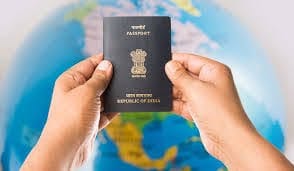
Concept of Overseas Citizenship of India
- An Overseas Citizen of India (OCI) is a person who is technically a citizen of another country but whose ancestors are Indian.
- They were citizens of India on January 26, 1950, or later, unless they are or were citizens of Pakistan, Bangladesh, or such other country.
- Registered Overseas Citizens of India are granted multi-purpose and life-long visas for visits to India.
- They are also exempt from registration with the Foreign Regional Registration Officer or the Foreign Registration Officer for any length of stay in India.
Important Provisions
I. OCI - Registration
- The Central Government may register as an overseas citizen of India cardholder:
- any person of full age and capacity,
- who is a citizen of another country, but was a citizen of India at the time of, or at any time after, the commencement of the Constitution;
- who is a citizen of another country, but was eligible to become a citizen of India at the time of, or at any time after, the commencement of the Constitution; or
- who is a citizen of another country but was born in a territory that became a part of India after August 15, 1947; or
- a person who is a minor child of a person mentioned in clause (a); or
- a person who is a minor child and whose both parents are citizens of India or one of the parents is a citizen of India; or
- spouse of a citizen of India or spouse of an Overseas Citizen of India Cardholder, whose marriage has been registered and subsisted for a continuous period of not less than two years immediately preceding the submission of the application.
- any person of full age and capacity,
- No person shall be eligible for registration as an Overseas Citizen of India Cardholder if he or she, or either of his or her parents, grandparents, or great grandparents, is or was a citizen of Pakistan, Bangladesh, or any other country specified by the Central Government.
- The Central Government may specify the date as of which existing persons of Indian origin cardholders will be considered overseas citizens of India cardholders.
- Notwithstanding anything in point (1), the Central Government may, if it is satisfied that special circumstances exist, register a person as an Overseas Citizen of India Cardholder after recording the circumstances in writing.
II. OCI - Conferment of Rights
- An overseas citizen of India cardholder is entitled to the rights specified by the Central Government in this regard.
- A cardholder who is an overseas citizen of India is not entitled to the following rights (which are conferred on a citizen of India)–
- He shall not be entitled to the right to equal opportunity in public employment.
- He is ineligible for election as President.
- He is ineligible for election as Vice President.
- He is ineligible for appointment as a Supreme Court Judge.
- He shall be ineligible for appointment as a High Court Judge.
- He is not eligible for voter registration.
- He shall be ineligible to serve in the House of People or the Council of States.
- He is ineligible to serve in the State Legislative Assembly or the State Legislative Council.
- He shall be ineligible for appointment to public services and posts in connection with Union or State affairs, except in such services and posts as the Central Government may specify.
III. OCI - Renunciation
- If any overseas citizen of India cardholder makes a declaration in the prescribed manner renouncing the card registering him as an overseas citizen of India cardholder.
- the declaration shall be registered by the Central Government, and that person shall cease to be an overseas citizen of India cardholder upon such registration.
- When a person ceases to be an overseas citizen of India cardholder,
- the spouse of that person of foreign origin and each minor child of that person registered as an OCI card holder ceases to be an overseas citizen of India cardholder.
IV. OCI - Cancellation of Registration
The Central Government may cancel a person's registration as an overseas citizen of India cardholder if the Central Government is satisfied that–
- the registration as an overseas citizen of India cardholder was obtained through fraud, false representation, or concealment of any material fact;
- the overseas citizen of India cardholder has shown disaffection towards the Indian Constitution; or
- the overseas citizen of India cardholder unlawfully traded or communicated with an enemy during any war in which India may be engaged;
- the overseas citizen of India cardholder has been sentenced to imprisonment for a term of not less than two years within five years of registration;
- it is necessary to do so in the interests of India's sovereignty and integrity, security, friendly relations with any foreign country, or in the interests of the general public; or
- the marriage of an overseas citizen of India cardholder–
- has been dissolved by a competent court of law or otherwise; or
- has not been dissolved but he has solemnised marriage with any other person during the subsistence of such marriage.
Overseas Citizenship Of India - Significance
- OCI should not be confused with "dual citizenship." The OCI does not grant political rights.
- CI cardholders are allowed to enter India multiple times, receive a multipurpose lifelong visa, and are exempt from registering with the Foreigners Regional Registration Office (FRRO).
- Individuals who have been registered as an OCI for five years are eligible to apply for Indian citizenship.
- OCI card holders have access to special immigration counters at all Indian international airports.
- OCI cardholders in India can open special bank accounts, purchase non-farm property, exercise ownership rights, and apply for a Permanent Account Number (PAN) card.
- Foreign nationals who are in India on a Tourist Visa, Missionary Visa, or Mountaineering Visa cannot apply for OCI.
- Furthermore, the foreigner must be a regular resident of India in order to apply for OCI registration in India.
Conclusion
The Overseas Citizens of India (OCI) card was introduced in 2005, under the Citizenship (Amendment) Act, to meet the demand for dual citizenship among Indians living in various developed countries. The Citizenship (Amendment) Act of 2005 established the OCI scheme in response to the Indian diaspora's demand for dual citizenship. It gives overseas citizens many of the same rights as resident citizens.
FAQs
Question: What is the Overseas Citizenship of India (OCI)?
Answer: The Overseas Citizenship of India (OCI) is a scheme launched by the Government of India in 2005 to facilitate the people of Indian origin living abroad to maintain a connection with India. It allows them to travel to India without the need for a visa, provides certain economic and educational benefits, and allows them to own property and invest in India, though it does not grant full political rights such as voting or holding office.
Question: Who is eligible for OCI status?
Answer: Persons of Indian origin who have acquired foreign citizenship, except for citizens of Pakistan and Bangladesh, are eligible to apply for OCI. Additionally, foreign spouses of Indian citizens and OCI holders are also eligible for this status, provided they meet the required conditions.
Question: What are the benefits of OCI status?
Answer: OCI holders enjoy several benefits, including visa-free travel to India, the ability to own property in India, and the right to open bank accounts. They are also eligible for educational benefits in India, such as admission to certain educational institutions under the general category, and they can invest in India without restrictions.
Question: What are the limitations of OCI status?
Answer: OCI status does not grant political rights such as the right to vote, hold public office, or contest elections in India. OCI holders are also not entitled to Indian passports or the ability to travel as Indian citizens. Additionally, OCI holders cannot work in certain government jobs and may face certain restrictions in terms of employment in specific sectors.
Question: How does OCI differ from the Person of Indian Origin (PIO) card?
Answer: The Overseas Citizenship of India (OCI) is more comprehensive than the Person of Indian Origin (PIO) card, offering more privileges and benefits. While both provide benefits like visa-free travel and property ownership in India, OCI holders have more rights in terms of economic and educational privileges. The PIO card was phased out in 2015, and its holders were encouraged to convert their PIO cards into OCI status.
MCQs
- Who is eligible to apply for the Overseas Citizenship of India (OCI)?
A) Only Indian citizens living abroad
B) Persons of Indian origin who have acquired foreign citizenship
C) Foreign nationals of any origin
D) Foreign nationals married to Indian citizens only
Answer: (B) See the Explanation
The OCI is available to persons of Indian origin who have acquired foreign citizenship, with certain exclusions such as citizens of Pakistan and Bangladesh.
- What is the main difference between the Overseas Citizenship of India (OCI) and the Person of Indian Origin (PIO) card?
A) OCI holders can vote in Indian elections, while PIO holders cannot
B) OCI holders have more rights in terms of education, property ownership, and investment than PIO holders
C) The PIO card is valid for life, while OCI needs renewal
D) PIO holders are eligible for Indian passports, whereas OCI holders are not
Answer: (B) See the Explanation
OCI status offers more privileges, including greater economic and educational benefits, compared to the PIO card, which was phased out in 2015.
- Which of the following rights is NOT available to OCI holders?
A) Visa-free travel to India
B) The right to own property in India
C) The right to vote in Indian elections
D) The right to invest in India
Answer: (C) See the Explanation
OCI holders do not have the right to vote or hold public office in India. They also do not have Indian passports or full citizenship rights.
- Can foreign spouses of Indian citizens apply for OCI status?
A) Yes, but only if they are of Indian origin
B) No, foreign spouses are not eligible for OCI
C) Yes, foreign spouses of Indian citizens and OCI holders are eligible
D) Yes, but only if they are citizens of countries in South Asia
Answer: (C) See the Explanation
The foreign spouses of Indian citizens and OCI holders are eligible for OCI status, provided they meet the necessary criteria.
- Which of the following is a benefit of holding an OCI card?
A) The right to hold public office in India
B) The right to vote in Indian elections
C) The right to own property in India
D) The right to contest elections in India
Answer: (C) See the Explanation
OCI holders can own property in India and invest in certain sectors, but they do not have the rights to vote or hold public office.
GS Mains Questions and Model Answers
Q1: Explain the significance of the Overseas Citizenship of India (OCI) in strengthening India's ties with the Indian diaspora.
Answer: The Overseas Citizenship of India (OCI) is an important tool for strengthening the connection between India and its diaspora. By providing persons of Indian origin with a mechanism to stay connected with their roots, the OCI status promotes stronger cultural, social, and economic ties between India and its overseas citizens. It offers a range of benefits such as visa-free travel to India, the ability to own property, and the right to invest in various sectors, making it easier for the Indian diaspora to engage with India in both personal and business capacities. Through the OCI scheme, India can tap into the potential of its overseas citizens by encouraging remittances, facilitating trade, and promoting investment in sectors that are key to India’s growth. Additionally, the initiative enhances India's global standing by showcasing its inclusivity and ability to maintain strong connections with its people, no matter where they reside.
Q2: Analyze the limitations and benefits of the Overseas Citizenship of India (OCI) status for Indian-origin individuals living abroad.
Answer: The Overseas Citizenship of India (OCI) status offers a number of benefits for Indian-origin individuals living abroad, including visa-free travel to India, the ability to own property, and participation in economic activities such as investment in Indian markets. Furthermore, it provides access to certain educational opportunities in India, making it an attractive option for individuals with Indian roots who wish to maintain a connection with their homeland. However, there are notable limitations to the OCI status. Despite its advantages, OCI holders do not enjoy full citizenship rights, such as the right to vote, hold political office, or participate in the political process in India. They are also not eligible for an Indian passport and cannot hold government jobs in India. These limitations restrict their ability to influence policy or partake in governance. Furthermore, OCI status does not grant the holder the same rights as a full Indian citizen, creating a distinction between those living in India and those living abroad.
Q3: How has the introduction of OCI status helped India in its foreign policy and diplomatic efforts?
Answer: The introduction of the Overseas Citizenship of India (OCI) status has been instrumental in enhancing India’s foreign policy and diplomatic relations with countries having significant Indian diaspora populations. The OCI status acts as a bridge between India and its global citizens, reinforcing India’s diplomatic reach and strengthening bilateral ties with countries in the West, the Gulf, and Southeast Asia. It facilitates cultural exchanges, encourages investment in India, and fosters a sense of global citizenship among those of Indian origin. The expanded privileges of OCI holders, such as participation in economic activities and investment, have helped in the flow of remittances and capital into India, contributing to its economic growth. Additionally, the OCI status serves as a platform for Indian-origin individuals to contribute to India’s development, while simultaneously fostering goodwill and diplomatic cooperation between India and countries with large Indian communities.
Previous Year Questions on Overseas Citizen of India
1. UPSC CSE 2021
Question: Examine the role of the Overseas Citizenship of India (OCI) scheme in enhancing India’s global influence.
Answer: The Overseas Citizenship of India (OCI) scheme has played a vital role in enhancing India’s global influence by strengthening the connection between India and its diaspora. By offering the Indian-origin population abroad a sense of belonging and active participation in India’s development, the OCI scheme promotes greater economic, social, and cultural engagement. OCI holders can invest in India, contribute to the nation’s economic growth, and promote cultural diplomacy, which further enhances India’s influence globally. Additionally, OCI holders play a critical role in fostering international trade, technology transfer, and global networking that benefits India. The scheme also helps India maintain strong diplomatic ties with countries where the Indian diaspora is influential, such as in the United States, the United Kingdom, and the Gulf countries. Overall, the OCI status has been an important aspect of India’s soft power strategy, promoting engagement and cooperation on various fronts.
2. UPSC CSE 2018
Question: Discuss the advantages and challenges of granting Overseas Citizenship of India (OCI) to people of Indian origin.
Answer: The Overseas Citizenship of India (OCI) scheme offers several advantages, including fostering closer ties between India and its diaspora. OCI holders can travel to India visa-free, own property, and invest in the Indian economy, promoting trade, remittances, and investment flows. Moreover, the scheme strengthens India’s cultural diplomacy by encouraging Indian-origin individuals abroad to stay connected with their roots. This helps enhance India’s soft power and influence across the globe. However, the scheme also presents challenges. OCI holders, despite enjoying several privileges, do not have full political rights, such as the right to vote or hold public office. This creates a gap between full Indian citizens and OCI holders, who may feel excluded from the political process. Additionally, the system may cause complications in areas such as taxation, legal rights, and access to certain government services, as OCI holders are not considered full citizens. Nevertheless, the benefits of the scheme in terms of economic growth and diplomatic ties outweigh these challenges, making it a crucial component of India's engagement with its global diaspora.
*email: contactus@prepp.in
Download the PREPP App and attempt FREE IAS Exam Mock Tests and get complete study material!

Live Test : UPSC CSE Prelims CSAT (Paper-II) (Oct 20 - 23)
Full Test - 04: UPSC CSE Prelims CSAT (Paper-II)
Full Test - 03: UPSC CSE Prelims CSAT (Paper-II)
UPSC CSE Prelims 2026 GS Paper 1 Question Paper (24-May-2026)
UPSC CSE Prelims 2026 CSAT Paper 2 Question Paper (24-May-2026)

17 February 2025 | The Hindu Must Read Articles | Current Affairs

16 February 2026 | The Hindu Must Read Articles | Current Affairs

13 February 2026 | The Hindu Must Read Articles | Current Affairs









Comments