Citizenship Amendment Act, 2019 – Indian Polity Notes
Citizenship (Amendment) Act, 2019, was passed by Indian Parliament, amending the Citizenship Act, 1955. The Act amended the law to facilitate citizenship for religious minorities, especially Hindus, Sikhs, Buddhists, Jains, Parsis, and Christians, who entered India before 2015. It was for the first time, religion was openly utilised as a factor for citizenship under Indian law, and it drew international condemnation. This article explains the Citizenship (Amendment) Act, 2019 which is important for UPSC Indian Polity Preparation.
Table of Contents
Citizenship Act, 1955
- The Citizenship Act (1955) governs the acquisition and loss of citizenship following the adoption of the Constitution.
- Originally, the Citizenship Act of 1955 provided for Commonwealth Citizenship as well. However, the Citizenship (Amendment) Act of 2003 repealed this provision.
- The Citizenship Act of 1955 specifies five methods for obtaining citizenship: birth, descent, registration, naturalization, and incorporation of territory.
- The Citizenship Act (1955) specifies three methods for losing citizenship, whether obtained under the Act or prior to it under the Constitution: renunciation, termination, and deprivation.
Key Provisions - Citizenship Amendment Act, 2019
- The Citizenship Amendment Act 2019 seeks to amend the Citizenship Act, the Passport Act, and the Foreigners Act if unlawful migrants are members of religious minority populations in three neighbouring countries: Bangladesh, Pakistan, and Afghanistan.
- The Act is amended by the Bill to provide that Hindus, Sikhs, Buddhists, Jains, Parsis, and Christians from Afghanistan, Bangladesh, and Pakistan who entered India on or before December 31, 2014, are not considered illegal migrants.
- To be eligible for this benefit, they must also have been exempted by the central government from the Foreigners Act of 1946 and the Passport (Entry into India) Act of 1920.
- The 1920 Act requires foreigners to carry a passport, while the 1946 Act governs foreigners' entry and exit from India.
- It exempts specific localities in the North-East from this act.
|
The Citizenship (Amendment) Act, 2019, offers a pathway to citizenship for persecuted minorities while sparking discussions on citizenship on the basis of religious identity. |
Citizenship by registration or naturalization
- If a person meets certain criteria, the Act allows them to apply for citizenship by registration or naturalization.
- For example, if a person spends a year in India and one of his parents is a former Indian citizen, he may apply for citizenship through registration.
- One of the requirements for obtaining citizenship by naturalization is that the applicant must have lived in India or worked for the central government for at least 11 years prior to applying for citizenship.
- With regard to this qualification, the Bill makes an exception for Hindus, Sikhs, Buddhists, Jains, Parsis, and Christians from Afghanistan, Bangladesh, and Pakistan.
- The 11-year requirement will be reduced to five years for these individuals.
- When a person obtains citizenship,
- they are deemed to be citizens of India from the date of their entry into India, and
- all legal proceedings against them relating to their illegal migration or citizenship are terminated.
Applicability of the Amended Act
- These provisions on citizenship for illegal migrants will not apply to the tribal areas of Assam, Meghalaya, Mizoram, and Tripura, which are listed in the Constitution's Sixth Schedule.
- These tribal areas include Assam's Karbi Anglong, Meghalaya's Garo Hills, Mizoram's Chakma District, and Tripura's Tripura Tribal Areas District.
- It will also not apply to the "Inner Line" areas designated by the Bengal Eastern Frontier Regulation of 1873.
- Indian visits to these areas are governed by the Inner Line Permit.
- This permit system is currently only available in Arunachal Pradesh, Mizoram, and Nagaland.
- Manipur was also brought under the Inner Line Permit (ILP) regime on the same day the bill was passed in parliament, via a Gazette Notification.
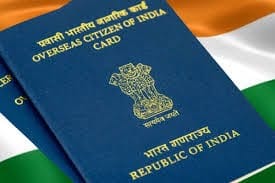
Cancellation of registration of OCIs
- The Act states that the central government has the authority to revoke the registration of OCIs for certain reasons. These include:
- if the OCI registered through fraud,
- if the OCI was sentenced to two years or more in prison within five years of registration, or
- if it becomes necessary in the interest of India's sovereignty and security.
- Another reason for canceling the registration is if the OCI violated the provisions of the Act or any other law as notified by the central government.
- Orders for OCI cancellation should not be issued until the OCI cardholder has been given an opportunity to be heard.
Citizenship Amendment Act 2019 - Need
- Many people of Indian origin, including members of minority communities, had applied for citizenship under the Citizenship Act of 1955 but had been denied because they could not provide proof of their Indian ancestry.
- These refugees have had difficulty obtaining Long Term Visas (LTV) or Citizenship.
- It is necessary to provide assistance to the victims of the partition (Hindu-Bengalis) who were trapped in East-Pakistan (Bangladesh) in the early years.
- Many people have illegally crossed borders and settled in Border States, and they have been stateless for years.
- As a result, the amendment would be a huge relief to those people.
- Pakistan, Afghanistan, and Bangladesh all have constitutions that specify a state religion. As a result, many members of the Hindu, Sikh, Buddhist, Jain, Parsi, and Christian communities have faced religious persecution in those countries.
Citizenship Amendment Act 2019 - Concerns
- Issues on Assam Accord: It contradicts the Assam Accord of 1985, which states that illegal migrants, regardless of religion, arriving from Bangladesh after March 25, 1971 will be deported.
- National Register of Citizens (NRC): Critics also claim that the extensive exercise of updating the National Register of Citizens (NRC) will be rendered null and void as a result of this Amendment act.
- There are an estimated 20 million illegal Bangladeshi migrants in Assam, and they have irreversibly altered the state's demography while also putting a severe strain on the state's resources and economy.
- Violation of the Right to Equality: The bill violates the Right to Equality (Article 14) by granting citizenship to illegal migrants based on their religion.
- For example, religious persecution has been ignored for Rohingya Muslims in Myanmar, Ahmadiyya and Shia Muslims in Pakistan, and Uighur Muslims in China.
- Against the Constitution's Basic Structure: Critics argue that the bill undermines secularism and thus violates the Constitution's Basic Structure.
- The Supreme Court reiterated secularism as a fundamental structure in S R Bommai vs. Union of India (1994).
- Uncertain procedure: The amendment allows for the cancellation of OCI registration for any law violation.
- However, the offences covered by this have not been specified; thus, OCI can be revoked for minor infractions. For example, failing to pay a parking ticket when issued one.
- Fails to adhere to the tenets of international refugee law: Although India is not a signatory to the 1951 UN Refugee Convention, granting refuge based on humanitarian grounds is arguably a norm of customary international law.
- The bill classifies persecuted minorities as migrants, whereas the term migration refers to the voluntary movement of people, primarily in search of better economic opportunities. Refuge, on the other hand, is an uninvited act of forced movement.
- Concerns about insurgency: The North Eastern states have vehemently opposed the amendment, citing fears that granting citizenship to illegal migrants would jeopardise their cultural and linguistic identities, as well as place a strain on resources and economic opportunities. Protests have already been widespread in NE states, raising concerns about insurgency.
Citizenship Amendment Act 2019 - Arguments Favour
- The Citizenship Amendment Act does not weaken the Assam Accord in terms of the March 24, 1971, cut-off date for the detection/deportation of unlawful immigrants.
- The Citizenship Amendment Act is not limited to Assam. It is applicable throughout the country.
- The Citizenship Amendment Act is in no way opposed to the National Register of Citizens (NRC), which is now being updated to safeguard indigenous communities from illegal immigrants.
- Naturalization is still an option for Ahmadis and Rohingyas seeking Indian citizenship (if they enter with valid travel documents).
- In any event, because India adheres to the principle of non-refoulement (even without ratifying the 1951 Refugee Convention), they would not be turned back.
- If a Shia Muslim is persecuted and seeks sanctuary in India, his application to remain in India as a refugee will be examined on its merits and circumstances.
- Concerning Balochi refugees, Balochistan has long sought independence from Pakistan, and including Balochis in the CAA could be interpreted as meddling in Pakistan's internal affairs.
Citizenship Amendment Act 2019 - Government’s stand
- The government noted previous examples of similar devolution of power.
- According to the affidavit, the government used Section 16 in 2016 to delegate its powers to collectors of 16 districts and home secretaries of governments of seven states to grant citizenship by registration or naturalisation to migrants belonging to six specified minority communities of Afghanistan, Pakistan, and Bangladesh for a period of two years.
- This, it added, was done to expedite the determination on this category of foreigners' citizenship applications.
- According to the government, the notification "does not provide any relaxations to foreigners and applies only to foreigners who have entered the country legally."
- It also opposed the notification challenge, stating that "it is inconceivable" that an intervention application could be filed in the original writ petition against the CAA.
- The government has cited religious partition of India and the subsequent failure of the Nehru-Liaqat pact of 1950 in protecting the rights and dignity of minorities in Pakistan and Bangladesh as reasons for introducing this Bill.
Conclusion
When it comes to Citizenship, the parliament has unrestricted authority to enact laws for the country. However, the opposition and other political parties claim that the Government's Act contradicts fundamental constitutional principles such as secularism and equality. In this sense, India needs to strike a balance. Citizenship laws in India are founded on the country's image as a secular republic. The constitution of independent India prohibited religious discrimination. In order to protect those who are prosecuted in the neighborhood, we must also balance civilization's responsibilities.
FAQs
Question: What is the Citizenship Amendment Act (CAA), 2019?
Answer: The Citizenship Amendment Act (CAA), 2019, is an amendment to the Indian Citizenship Act of 1955, which seeks to provide citizenship to non-Muslim religious minorities – Hindus, Sikhs, Buddhists, Jains, Parsis, and Christians – from Afghanistan, Bangladesh, and Pakistan, who entered India on or before December 31, 2014. The Act has been controversial, as it grants fast-track citizenship to refugees from these countries but excludes Muslims from this provision. The government argues that the law aims to protect religious minorities facing persecution in these neighboring countries, while critics view it as discriminatory and unconstitutional, particularly with respect to Article 14 of the Indian Constitution, which ensures equality before the law.
Question: How does the Citizenship Amendment Act affect Indian Muslims?
Answer: The Citizenship Amendment Act does not directly affect Indian Muslims, but it has sparked concerns about the exclusion of Muslims from the fast-track citizenship process provided by the Act. Critics argue that the exclusion of Muslims from the Act’s provisions violates the principle of equality under Article 14 of the Indian Constitution. The Act does not revoke the citizenship of Indian Muslims, but the controversy lies in its potential impact on the secular nature of India’s citizenship laws. Some fear that it may lead to the marginalization of the Muslim community, particularly when combined with the proposed National Register of Citizens (NRC), which seeks to identify undocumented migrants.
Question: What is the rationale behind the Citizenship Amendment Act?
Answer: The government introduced the Citizenship Amendment Act to provide refuge and citizenship to religious minorities from Pakistan, Bangladesh, and Afghanistan who are facing persecution in their home countries. The law was designed to offer a safe haven to these communities, including Hindus, Sikhs, Buddhists, Jains, Parsis, and Christians, who have faced religious discrimination and violence in their countries. The government argues that these communities were discriminated against based on their religion and were denied basic rights in their home countries. The Act aims to grant them Indian citizenship as an act of humanitarian aid.
Question: How does the Citizenship Amendment Act differ from the National Register of Citizens (NRC)?
Answer: The Citizenship Amendment Act (CAA) and the National Register of Citizens (NRC) are often discussed together, but they serve different purposes. The CAA provides a path to Indian citizenship for non-Muslim religious minorities from Afghanistan, Bangladesh, and Pakistan who entered India before December 31, 2014. The NRC, on the other hand, is a register of Indian citizens, which is used to identify and exclude illegal immigrants. The NRC, if implemented nationwide, would require all residents to prove their citizenship status. The combination of both the CAA and NRC has led to concerns among various groups, particularly Muslims, who fear that the NRC could be used to discriminate against them, as the CAA excludes Muslims from its provisions.
Question: Why has the Citizenship Amendment Act sparked protests in India?
Answer: The Citizenship Amendment Act has sparked widespread protests across India due to concerns that it discriminates against Muslims by providing citizenship only to non-Muslim religious minorities from Afghanistan, Bangladesh, and Pakistan. Critics argue that the Act violates the secular principles enshrined in the Indian Constitution, particularly the right to equality under Article 14. Many believe that the Act is part of a broader agenda to marginalize the Muslim community in India, especially when combined with the proposed National Register of Citizens (NRC), which could potentially exclude millions of Muslims from the list of citizens. The protests have been widespread, with students, political leaders, and civil society groups voicing their opposition to the law.
MCQs
1. What does the Citizenship Amendment Act (CAA), 2019, provide for?
A) Fast-track citizenship for Muslims from neighboring countries
B) Citizenship for non-Muslim religious minorities from Afghanistan, Bangladesh, and Pakistan
C) Equal citizenship rights for all refugees
D) Revocation of citizenship for Muslim refugees
Answer: (B) See the Explanation
Explanation: The Citizenship Amendment Act (CAA) provides fast-track citizenship for non-Muslim religious minorities such as Hindus, Sikhs, Buddhists, Jains, Parsis, and Christians from Afghanistan, Bangladesh, and Pakistan, who entered India on or before December 31, 2014.
2. Which of the following communities is excluded from the Citizenship Amendment Act (CAA) of 2019?
A) Hindus
B) Sikhs
C) Christians
D) Muslims
Answer: (D) See the Explanation
Explanation: The Citizenship Amendment Act (CAA) excludes Muslims from its provisions, granting fast-track citizenship only to non-Muslim religious minorities such as Hindus, Sikhs, Buddhists, Jains, Parsis, and Christians.
3. Which of the following is the primary criticism of the Citizenship Amendment Act (CAA)?
A) It violates the fundamental right to freedom of speech
B) It provides citizenship to all refugees
C) It discriminates against Muslims by excluding them
D) It revokes citizenship from existing Indian citizens
Answer: (C) See the Explanation
Explanation: The primary criticism of the CAA is that it discriminates against Muslims by excluding them from the fast-track citizenship process for refugees from Afghanistan, Bangladesh, and Pakistan.
4. Which constitutional article is cited by critics as being violated by the Citizenship Amendment Act (CAA)?
A) Article 15
B) Article 14
C) Article 21
D) Article 19
Answer: (B) See the Explanation
Explanation: Critics argue that the CAA violates Article 14 of the Indian Constitution, which guarantees the right to equality before the law, by granting special treatment to non-Muslim religious minorities and excluding Muslims.
5. What is the main concern about combining the Citizenship Amendment Act (CAA) with the National Register of Citizens (NRC)?
A) Increased national security
B) Possible exclusion of Muslims from citizenship
C) Protection of minority rights
D) Boost to economic development
Answer: (B) See the Explanation
Explanation: The main concern with combining the CAA with the NRC is the potential for Muslims to be excluded from citizenship, as the CAA provides citizenship only to non-Muslim minorities, and the NRC could be used to target those unable to prove their citizenship status.
GS Mains Questions and Model Answers
Q1: Discuss the provisions of the Citizenship Amendment Act (CAA), 2019. What are the legal and constitutional challenges raised against the Act?
Answer: The Citizenship Amendment Act (CAA), 2019, amends the Indian Citizenship Act of 1955 by granting citizenship to non-Muslim religious minorities—Hindus, Sikhs, Buddhists, Jains, Parsis, and Christians—from Afghanistan, Bangladesh, and Pakistan who entered India on or before December 31, 2014. The Act has been widely criticized for being discriminatory, as it excludes Muslims from the provisions of fast-track citizenship. Critics argue that the law violates the secular principles enshrined in the Indian Constitution, particularly Article 14, which ensures equality before the law. The Act has raised concerns regarding its potential impact on the National Register of Citizens (NRC), as Muslims may be left out of citizenship lists, especially if they are unable to provide documentation. These legal and constitutional challenges have sparked nationwide protests, and some petitioners have argued that the CAA is inconsistent with India’s secular ethos and discriminates against Muslims on the basis of religion.
Q2: How does the Citizenship Amendment Act (CAA) impact India's secularism and the relationship between the Union and the States?
Answer: The Citizenship Amendment Act (CAA) has raised serious concerns regarding the secular nature of the Indian Constitution. The Act explicitly provides for the naturalization of non-Muslim religious minorities from three neighboring countries, while excluding Muslims from its provisions. This exclusion based on religion challenges the secular principles enshrined in the Constitution, where citizenship is not supposed to be based on religion. Critics argue that this undermines India's commitment to equal treatment for all citizens, irrespective of their religion. Additionally, the Act has implications for the relationship between the Union and the States, as state governments have voiced opposition to its implementation. The CAA may lead to tensions between the central government, which is pushing for its implementation, and state governments that may resist it, citing concerns about its constitutional validity and its impact on social harmony.
Q3: Evaluate the implications of the Citizenship Amendment Act (CAA) in the context of India's refugee policy. How does it affect India's international obligations under the UN Refugee Convention?
Answer: The Citizenship Amendment Act (CAA) has significant implications for India’s refugee policy, as it provides expedited citizenship to religious minorities from Afghanistan, Bangladesh, and Pakistan who entered India before December 31, 2014. However, it explicitly excludes Muslims from this provision, which raises questions about the fairness of India's refugee policy. Critics argue that the CAA undermines India’s commitment to the Universal Declaration of Human Rights and the UN Refugee Convention, which prohibits discrimination based on religion, race, and nationality in the treatment of refugees. By offering preferential treatment based on religion, the Act has raised concerns about the protection of religious freedom and the equitable treatment of refugees. India's stance on refugee protection, especially regarding Muslim refugees, is being scrutinized on the international stage, and the law may affect India’s relations with neighboring countries and its global image as a sanctuary for refugees.
Previous Year Questions on CAA
1. UPSC CSE Prelims 2020:
Question: Which of the following is the primary purpose of the Citizenship Amendment Act (CAA) of 2019?
A) To provide citizenship to all refugees
B) To fast-track citizenship for non-Muslim refugees from three countries
C) To revoke citizenship for illegal migrants
D) To create a national citizens register
Answer: (B)
Explanation: The primary purpose of the Citizenship Amendment Act (CAA) is to provide fast-track citizenship to non-Muslim refugees from Afghanistan, Bangladesh, and Pakistan, who entered India before December 31, 2014.
2. UPSC CSE Mains 2020 (GS Paper 2):
Question: "Examine the constitutional validity of the Citizenship Amendment Act (CAA), 2019, and discuss the key criticisms against it."
Answer: The Citizenship Amendment Act (CAA), 2019, is constitutionally controversial because it discriminates against Muslims, which critics argue violates Article 14 of the Indian Constitution, guaranteeing equality before the law. The law fast-tracks citizenship for non-Muslim religious minorities from Afghanistan, Bangladesh, and Pakistan, but excludes Muslims, thereby raising questions about its secular credentials. Many argue that it undermines India’s commitment to non-discrimination and equality. The CAA’s combination with the NRC could further marginalize Muslims, leading to widespread protests and legal challenges. Critics claim that the law creates a religious basis for citizenship, which is contrary to the secular principles of the Indian state.
*email: contactus@prepp.in
Download the PREPP App and attempt FREE IAS Exam Mock Tests and get complete study material!

Full Test - 04: UPSC CSE Prelims CSAT (Paper-II)
Full Test - 03: UPSC CSE Prelims CSAT (Paper-II)
UPSC CSE Prelims 2026 GS Paper 1 Question Paper (24-May-2026)
UPSC CSE Prelims 2026 CSAT Paper 2 Question Paper (24-May-2026)

17 February 2025 | The Hindu Must Read Articles | Current Affairs

16 February 2026 | The Hindu Must Read Articles | Current Affairs

13 February 2026 | The Hindu Must Read Articles | Current Affairs









Comments