Single Citizenship - Indian Polity Notes
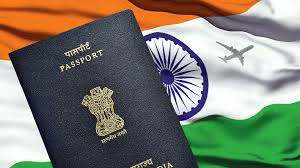
Single citizenship refers to all Indians, regardless of where they live, are citizens of India as a whole and not the states separately. The Indian constitution is federal in nature, yet it grants Indians single citizenship. Because of single citizenship, all citizens, regardless of where they live, have the same political and civil rights. There is no distinction made between them. The Indian Constitution, like the Canadian Constitution, established a system of single citizenship and provided uniform rights (except in a few cases) to the people of India in order to foster a sense of fraternity and unity among them and to build an integrated Indian nation.
|
Table of Contents |

Single Citizenship-Concept
- The concept of single citizenship has been adopted in India from the British Constitution of the United Kingdom.
- Despite the fact that the Indian Constitution is federal and envisions a dual polity (Centre and states), it only provides for one citizenship, namely Indian citizenship.
- Indian citizens owe allegiance only to the Union.
- There is no such thing as separate state citizenship. Other federal states, such as the United States and Switzerland, have adopted the system of dual citizenship.
- In India, all citizens irrespective of the state in which they are born or reside enjoy the same political and civil rights of citizenship all over the country and no discrimination is made between them.
- The Citizenship Act, of 1955 has provisions for the acquisition and loss of citizenship after the enactment of the Indian Constitution.
- It has been amended several times over the years. It provides citizenship based on birth, descent, registration, naturalisation and incorporation of territory.
|
“There can be no daily democracy without daily citizenship” Ralph Nader
|
Reasons for Adoption of Single Citizenship
- Each person in the United States is not only a citizen of the United States but also of the state to which he belongs.
- Thus, he owes allegiance to both and enjoys dual sets of rights–one set conferred by the national government and another by the state government.
- This system introduces the issue of discrimination, i.e., a state may discriminate in favour of its citizens in matters such as the right to vote, the right to hold public office, the right to practice professions, and so on.
- This problem is avoided in India's system of single citizenship.
- The provision of dual citizenship will, in general, undermine emotional and national unity.
- The people of the state are more concerned with the state than with the country as a whole.
Significance in India's Context
- In India, all citizens, regardless of their state of birth or residence, enjoy the same political and civil rights of citizenship throughout the country, and there is no discrimination between them.
- It fosters a sense of nationalism and patriotism while promoting unity among regional and cultural differences.
- It also promotes fundamental rights such as the freedom to move and reside in any part of the country.
- Single citizenship has fostered a sense of unity among Indians, and this reflects the image of a united India.
Exceptions
- The Parliament (under Article 16) has the authority to make residence within a state or union territory a requirement for certain employment or appointments in that state or union territory, as well as for local authority or other authority within that state or union territory.
- As a result, the Parliament passed the Public Employment (Requirement as to Residence) Act, 1957, authorizing the Government of India to impose a residency requirement only for non-gazetted posts in Andhra Pradesh, Himachal Pradesh, Manipur, and Tripura.
- As of now, except for Andhra Pradesh and Telangana, no state has such a provision because the Act expired in 1974.
- The Constitution (Article 15) prohibits discrimination against any citizen based on religion, race, caste, gender, or place of birth, but not on residence.
- This means that the state can provide special benefits or give preference to its residents in matters that do not fall under the purview of the rights granted to Indian citizens by the Constitution.
- For example, a state may offer education fee concessions to its residents.
- The freedom of movement and residence (under Article 19) is subject to the protection of any scheduled tribe's interests.
- In other words, outsiders' right to enter, reside, and settle in tribal areas is restricted.
- This is done to protect scheduled tribes' distinct culture, language, customs, and manners, as well as to protect their traditional vocation and property from exploitation.
- Until 2019, the legislature of the former state of Jammu and Kashmir was empowered to:
- define the persons who are permanent residents of the state; and
- confer any special rights and privileges on such permanent residents in respect of:
- employment with the state government;
- acquisition of immovable property in the state;
- settlement in the state; and
- right to scholarships and other forms of government aid.
- The above-mentioned provision was based on Article 35-A of the Indian Constitution.
- Article 35A of the Indian Constitution was an article that empowered the Jammu and Kashmir state legislature to define "permanent residents" of the state and provide special rights and privileges to them.
Conclusion
The idea of single citizenship in India draws inspiration from the British Parliament. Single citizenship emphasizes an individual's identity solely as a native of their country. The objective is to foster a heightened sense of unity and patriotism among Indians. Through the adoption of single citizenship, the esteemed aim of the founding fathers and the framers of the Constitution was to prevent the emergence of regionalism and other divisive tendencies, safeguarding the nation's unity and integrity. This approach was favoured over the provision of double citizenship, which could potentially exacerbate disintegrating forces.
FAQs
Question: Does the Indian Constitution allow single citizenship?
Answer:
The Constitution of India provides single citizenship for the entire country. The Citizenship Act enacted by the Parliament in 1955 provides for the acquisition, renunciation, termination, deprivation, and determination of Indian citizenship.
Question: How is single citizenship considered in the Indian Constitution?
Answer:
Indian Constitution which is one of the largest written Constitutions in the world provides Single Citizenship to its citizens where the citizen of a particular country is allowed a single country's citizenship at a time.
Question: Is Indian single citizenship or dual?
Answer:
The Constitution of India does not allow holding Indian citizenship and citizenship of a foreign country simultaneously. Based on the recommendation of the High-Level Committee on the Indian Diaspora, the Government of India decided to grant Overseas Citizenship of India (OCI) commonly known as 'dual citizenship.
Question: What is the significance of Single Citizenship in India?
Answer:
It promotes unity among regional and cultural differences while instilling a sense of nationalism and patriotism. It also promotes fundamental rights such as the right to move and reside freely throughout the country. Indians have developed a sense of unity as a result of single citizenship, which reflects the image of a united India.
Question: Where did India borrow the concept of citizenship?
Answer:
The concept of single citizenship was adopted in India from the United Kingdom's British Constitution. Despite the fact that the Indian Constitution is federal in nature and envisions a dual polity (Centre and states), it only provides for one type of citizenship: Indian citizenship.
UPSC Mains Practice Question:
|
FAQs
Question: What is the concept of single citizenship in India?
Answer: Single citizenship in India means that all Indians, regardless of the state or territory they belong to, are citizens of India. This concept is enshrined in Article 5 of the Indian Constitution, which provides for the rights of citizenship for those born in the territory of India or who have resided in India for a specified period. The single citizenship model promotes national unity and equality among citizens, eliminating the complexity of multiple citizenship statuses within the country.
Question: How does single citizenship differ from the concept of dual citizenship?
Answer: Single citizenship differs from dual citizenship in that it grants individuals only one citizenship status, which is that of their country of residence—in this case, India. Dual citizenship allows individuals to hold citizenship in two different countries simultaneously, which can lead to conflicting legal obligations and rights. India does not allow dual citizenship, as it could complicate the administration of laws, particularly concerning rights, duties, and the allegiance of citizens to the nation.
Question: What are the advantages of having a single citizenship in India?
Answer: The advantages of having single citizenship in India include the promotion of national integration and unity among the diverse population. It simplifies the legal framework for citizenship, as all citizens are governed by the same laws and enjoy equal rights, regardless of their state of origin. This uniformity helps in fostering a sense of belonging and loyalty to the nation as a whole, rather than to individual states. Additionally, it facilitates the movement of individuals across state boundaries for employment, education, and residence without the complexities of varying citizenship laws.
Question: What provisions are made for the acquisition and termination of citizenship in India?
Answer: The acquisition and termination of citizenship in India are governed by the Citizenship Act of 1955, which outlines various ways through which individuals can acquire citizenship. These include birth, descent, registration, and naturalization. The Act also stipulates conditions under which citizenship can be terminated, such as voluntary renunciation, cancellation due to criminal activities, or if a citizen acquires citizenship of another country. This framework ensures a clear understanding of citizenship status and rights.
Question: How does single citizenship align with the principles of equality and non-discrimination in the Indian Constitution?
Answer: Single citizenship aligns with the principles of equality and non-discrimination as enshrined in the Indian Constitution, particularly under Article 14, which guarantees equality before the law. By providing a uniform citizenship status to all Indians, the concept reinforces the idea that every citizen, regardless of their geographical origin, is entitled to the same rights and privileges. This promotes social cohesion and reinforces the commitment to justice and equality, essential components of a democratic society.
MCQs
1. What does single citizenship in India imply?
A) Citizens can hold multiple citizenships
B) All Indians are citizens of India, regardless of state
C) Only certain states have citizenship rights
D) Citizenship is based on ethnicity
Answer: (B) See the Explanation
Explanation: Single citizenship implies that all Indians are citizens of India, irrespective of the state or territory they belong to, promoting national unity.
2. Which article of the Indian Constitution pertains to citizenship?
A) Article 14
B) Article 5
C) Article 15
D) Article 21
Answer: (B) See the Explanation
Explanation: Article 5 of the Indian Constitution pertains to citizenship, defining who is a citizen of India.
3. What is a disadvantage of dual citizenship?
A) Simplicity in legal matters
B) Conflicting obligations
C) Increased national loyalty
D) Enhanced global mobility
Answer: (B) See the Explanation
Explanation: A disadvantage of dual citizenship is the potential for conflicting obligations, as individuals may face differing legal requirements from two countries.
4. Which Act governs the acquisition and termination of citizenship in India?
A) Citizenship Act of 1955
B) Citizenship Amendment Act
C) Indian Constitution
D) Foreigners Act
Answer: (A) See the Explanation
Explanation: The Citizenship Act of 1955 governs the acquisition and termination of citizenship in India, outlining the processes involved.
5. How does single citizenship promote national unity?
A) By creating regional identities
B) By ensuring equal rights for all citizens
C) By restricting movement between states
D) By allowing different citizenship statuses
Answer: (B) See the Explanation
Explanation: Single citizenship promotes national unity by ensuring equal rights for all citizens, regardless of their state of origin, fostering a sense of belonging to the nation.
GS Mains Questions and Model Answers
Q1: Analyze the implications of single citizenship on the unity and integrity of India. How does it enhance social cohesion?
Answer: Single citizenship in India plays a crucial role in promoting unity and integrity among its diverse population. By establishing a uniform citizenship status for all Indians, it fosters a sense of belonging and identity that transcends regional and ethnic differences. This legal framework supports the principle of equality, ensuring that all citizens enjoy the same rights and privileges, which is essential for social cohesion. Single citizenship mitigates the risk of divisive regional identities that could threaten national unity, promoting a collective national consciousness. Furthermore, it facilitates the movement of individuals across states for employment and education, enhancing inter-state interactions and relationships. Overall, the implications of single citizenship contribute significantly to maintaining the social fabric of the country, essential for democratic stability and progress.
Q2: Discuss the legal framework governing citizenship in India. What challenges does this framework face?
Answer: The legal framework governing citizenship in India is primarily established under the Citizenship Act of 1955, which outlines the provisions for acquiring and terminating citizenship. The Act defines various ways through which citizenship can be obtained, including birth, descent, registration, and naturalization. Despite its comprehensive nature, the framework faces several challenges, such as bureaucratic hurdles in the registration process and complexities in the laws governing illegal immigrants. Additionally, issues surrounding dual citizenship and the rights of refugees remain contentious. There is also a need to update the legal framework to address contemporary challenges, such as the movement of populations due to conflicts and climate change, ensuring that the citizenship laws remain relevant and just. Addressing these challenges is vital for protecting the rights of all individuals and promoting inclusivity within the Indian society.
Q3: Evaluate the role of the 73rd Amendment in promoting local governance in relation to single citizenship.
Answer: The 73rd Amendment to the Indian Constitution, enacted in 1992, has been instrumental in promoting local governance through the establishment of Panchayati Raj institutions, while single citizenship ensures that all citizens participate equally in this governance framework. By empowering local bodies like Gram Panchayats, the amendment fosters grassroots democracy, enabling citizens to engage directly in decision-making processes that affect their communities. This local governance structure is reinforced by the principle of single citizenship, which guarantees that every Indian citizen, regardless of their regional background, has the right to participate in local governance. Consequently, the combination of single citizenship and the 73rd Amendment promotes inclusive and representative governance, ensuring that diverse voices are heard at the grassroots level and enhancing the overall democratic fabric of the nation.
Previous Year Questions on Single Citizenship
1. UPSC CSE Prelims 2021:
Question: Which article of the Indian Constitution deals with citizenship?
A) Article 5
B) Article 14
C) Article 21
D) Article 19
Answer: (A)
Explanation: Article 5 of the Indian Constitution deals with the citizenship of persons born in India and outlines the criteria for citizenship.
2. UPSC CSE Mains 2019 (GS Paper 1):
Question: Assess the impact of single citizenship on the social fabric of India. What challenges does it face?
Answer: Single citizenship has a profound impact on the social fabric of India by promoting equality and national integration among its diverse populace. It fosters a collective national identity, allowing citizens to transcend regional affiliations and fostering a sense of belonging to a unified nation. However, challenges such as regional disparities, cultural differences, and occasional identity politics can pose threats to the ideals of single citizenship. Additionally, the complexities of illegal immigration and the status of refugees present legal and humanitarian challenges that need addressing. For single citizenship to be effective, it is essential to ensure that all citizens feel included and that their rights are protected, promoting harmony and cohesiveness within the Indian society.
*email: contactus@prepp.in
Download the PREPP App and attempt FREE IAS Exam Mock Tests and get complete study material!

Full Test - 04: UPSC CSE Prelims CSAT (Paper-II)
Full Test - 03: UPSC CSE Prelims CSAT (Paper-II)
UPSC CSE Prelims 2026 GS Paper 1 Question Paper (24-May-2026)
UPSC CSE Prelims 2026 CSAT Paper 2 Question Paper (24-May-2026)

17 February 2025 | The Hindu Must Read Articles | Current Affairs

16 February 2026 | The Hindu Must Read Articles | Current Affairs

13 February 2026 | The Hindu Must Read Articles | Current Affairs









Comments