Emergency Provisions - Indian Polity Notes
The Emergency Provisions are detailed in Part XVIII (Article 352-360) of the Indian Constitution. Its goal is to safeguard the state's sovereignty, unity, and integrity, as well as its security. During a national emergency, the federal government assumes absolute authority, and the states are entirely under its control. It converts the federal government into a unitary government without the need for a formal constitutional amendment.
|
Table of Contents |

The Constitution stipulates three types of emergencies-
| Type | Article |
|---|---|
| National Emergency | Article 352 |
| Constitutional Emergency/President’s Rule | Article 356 |
| Financial Emergency | Article 360 |
National Emergency
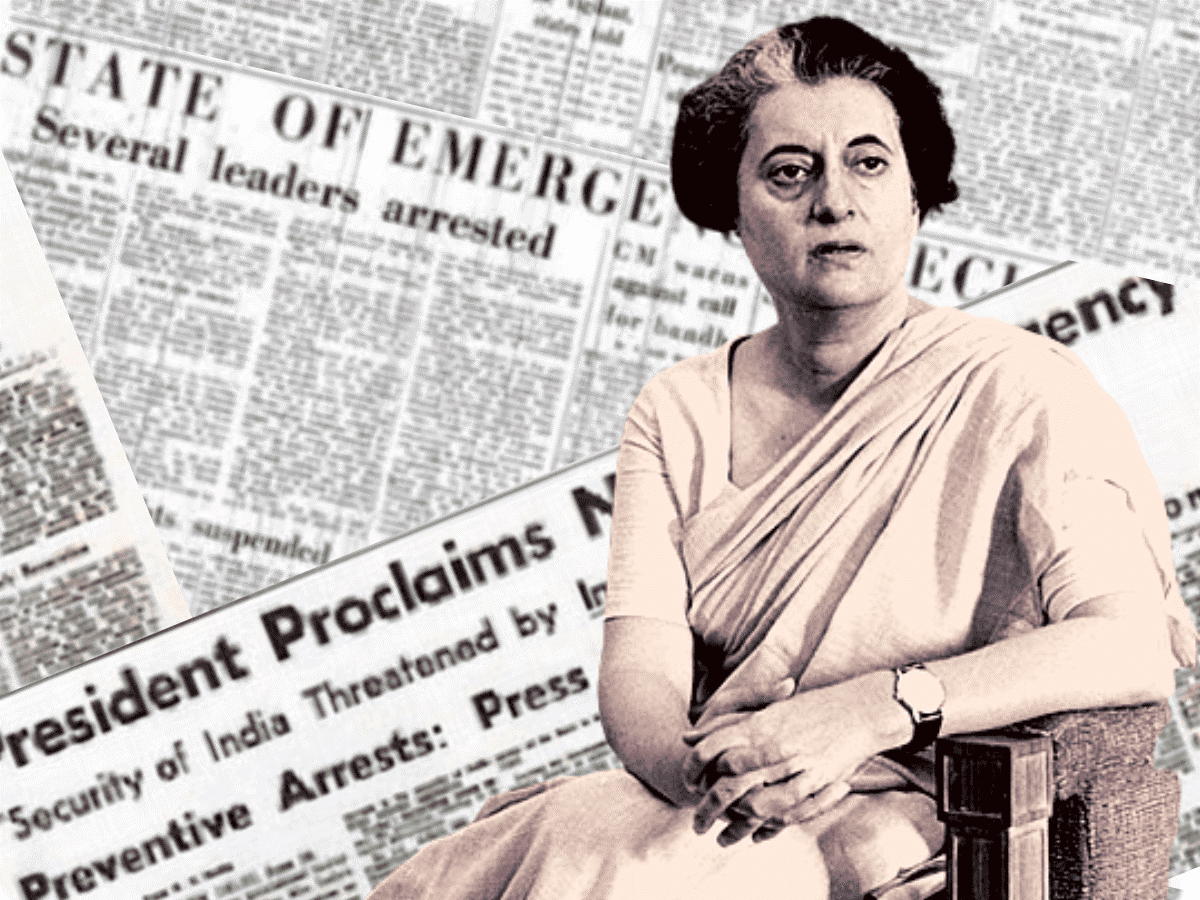
- A national emergency can be declared based on war, external aggression, or armed rebellion. The term 'proclamation of emergency' is used in the Constitution to describe such a situation.
- Article 352 states that the President can declare a national emergency when the security of India or a part of it is threatened by war or external aggression or armed rebellion.
- The President has the authority to issue a proclamation for the entire country or for a specific region. (This was inserted by the 42nd Constitutional Amendment Act in 1976)
- Every proclamation made under Article 352 (except a proclamation revoking the previous proclamation) should be laid before each house of parliament and must be approved by them with the special majority,
- i.e., by a majority of the total membership of that house and by a majority of not less than 2/3rd of the members of that house present and voting.
- Emergency under Article 352 was proclaimed 3 times so far (in 1962, 1971, and 1975)
- In 1962 and 1971 due to external aggression
- In 1975 due to internal disturbance
*For detailed notes on National Emergency click here.
|
|
|
|---|---|
| National Emergency | President’s Rule |
| Financial Emergency | Salient Features of Indian Constitution |
Constitutional Emergency/President’s Rule
- Section 93 of the Government of India Act, 1935 is the foundation for Article 356 of the Indian Constitution.
- If the President is satisfied that the state government administration is not in accordance with the provisions of the constitution, then he can declare President's rule in any part of the country under Article 356. Some instances when the President’s rule is imposed are:
- Council of Ministers lost the majority in the assembly
- State administration fail to maintain peace and public order
- State administration against secular values [S.R Bommai case]
- Failure to comply with directions given under Article 365 is also a ground to invoke Article 356
- A proclamation of this nature must be presented to both Houses of Parliament for approval, just as a declaration of national emergency must be.
- Unless revoked, a proclamation that has been approved will cease to be effective six months after it was issued.
- An RTI reply by the Ministry of Home Affairs revealed that President's rule was imposed 115 times till 2018
- Since 1950, President's Rule has been imposed a total of 134 times across 29 states and UTs.
- The recent usage of Article 356 was in Puducherry in February 2021 due to the loss of the majority by the Congress government.
*For detailed notes on President’s Rule click here.
Financial Emergency
- Article 360 empowers the president to proclaim a Financial Emergency if he is satisfied that a situation has arisen due to which the financial stability or credit of India or any part of its territory is threatened.
- It is inspired by the United States’ National Recovery Act, 1933 which was passed as a measure to mitigate the economic consequences of the Great Depression.
- Under such a situation, the executive and legislative powers will go to the center. This, too, must be approved by Parliament, just like the other two forms of emergencies.
- Financial Emergency has never been imposed.
*For detailed notes on Financial Emergency click here.
Reasons for Adoption of Emergency Provisions
In the constitutional assembly debates, many intellectuals provided various reasons for the adoption of the Emergency.
- T. T. Krishnamachari cited the Emergency Powers Act of 1920's historical context in arguing that such a provision was intended to 'meet one purpose, namely that all our efforts all these years spent in Constitution-making may not be in vain, and those who will be in power in the future would be adequately empowered to save the Constitution.'
- To protect the sovereignty, unity, and integrity and also security of the state
- To ensure that the governance of the states is carried out ‘in accordance with the provisions of the Constitution.’
- To mitigate the economic consequences such as the Great Depression in the United States and France.
| Emergency Type | National Emergency | President’s Rule | Financial Emergency |
|---|---|---|---|
| Article | Article 352 | Article 356 & 365 | Article 360 |
| Grounds of Declaration | External Aggression or Armed Rebellion | Failure of Constitutional Machinery | Threat to Financial stability or Credit of India |
| Parliamentary Approval | Must be Approved by Both the houses of the Parliament | ||
| Time Duration for Approval | Must be approved by both the houses within one month | Must be approved by both the houses within two months | Must be approved by both the houses within two months |
| Majority required | Special Majority | Simple Majority | Simple Majority |
| Duration of Emergency | Continues for 6 months Can be extended to an Indefinite period with Parliament approval every 6 months | Continues for 6 months Can be extended to a maximum period of 3 years with Parliament approval every 6 months | Continues indefinitely until revoked. No maximum limit was prescribed. No repeated approval is required. |
| Revocation | By Resolution of the House or President Order. | By Resolution of the House or President Order. | By Resolution of the House or President Order. |
Criticism
- It destroys the federal character of the Constitution.
- Union executives can become all-powerful vis-à-vis the state.
- It could lead to authoritarian rule.
- The financial autonomy of the states could be threatened.
- It seriously imperils the observance of FRs in the country.
- No modern democratic country has these provisions included in its constitution.
- Dr. B R Ambedkar in the constitutional assembly debates said that Article 356 will be the least used and will be a dead letter. Unfortunately, it's the most used provision among the three and used as a deadly weapon.
Conclusion
India's emergency provisions, enshrined in the Constitution, serve as a crucial mechanism to address exceptional circumstances that threaten the nation's integrity and security. While providing the government with the necessary powers to respond decisively to crises, it is imperative to strike a delicate balance to prevent potential misuse. A judicious application of emergency provisions is essential to uphold democratic values and ensure the protection of citizens' rights even in times of extraordinary challenges.
FAQs
Question: What are the emergency provisions in the Indian Constitution?
Answer: The emergency provisions in the Indian Constitution are detailed in Articles 352, 356, and 360. These provisions allow the central government to assume greater powers during times of national crisis, ensuring the stability of the state and the continuity of governance. Article 352 empowers the President to declare a national emergency in situations of war, external aggression, or armed rebellion. Article 356 provides for the imposition of President's Rule in a state if the government cannot function according to the provisions of the Constitution. Article 360 allows the President to declare a financial emergency if the financial stability of the country is threatened.
Question: What conditions warrant the declaration of a national emergency under Article 352?
Answer: A national emergency under Article 352 can be declared when there is a threat to the security of India or any part thereof, due to war, external aggression, or armed rebellion. The declaration must be approved by both Houses of Parliament within one month. Once declared, the central government gains the authority to legislate on matters that are normally within the jurisdiction of the states, which may lead to the suspension of fundamental rights for the duration of the emergency.
Question: How does Article 356 differ from Article 352?
Answer: Article 356 differs from Article 352 in its application and the circumstances under which it is invoked. While Article 352 deals with national emergencies related to external threats or armed rebellion, Article 356 is invoked when a state government is unable to function according to the Constitution. This often occurs due to a breakdown of law and order or political instability. Under Article 356, the President can assume control over the state government and impose President's Rule, whereas Article 352 allows for central intervention during crises that threaten the nation as a whole.
Question: What safeguards are in place regarding the proclamation of a national emergency?
Answer: Safeguards regarding the proclamation of a national emergency include the requirement for approval from both Houses of Parliament within one month of the declaration. Additionally, the emergency can be revoked at any time by the President, and the period of the emergency is limited to six months unless extended with parliamentary approval. Furthermore, during a national emergency, certain fundamental rights can be suspended, but this suspension is also subject to parliamentary oversight, ensuring a check on the exercise of executive power.
Question: How do emergency provisions impact the federal structure of India?
Answer: Emergency provisions can significantly impact the federal structure of India by allowing the central government to assume greater powers over the states. During a national emergency, the central government can legislate on subjects that typically fall under state jurisdiction, undermining the autonomy of state governments. This centralization of power can lead to tensions between the center and states, particularly if states feel that their constitutional rights are being encroached upon. However, these provisions are designed to maintain stability and ensure effective governance during times of crisis, reflecting the balance between central authority and state autonomy in India's federal system.
MCQs
1. Under which Article of the Indian Constitution can a national emergency be declared?
A) Article 352
B) Article 356
C) Article 360
D) Article 370
Answer: See the Explanation
Explanation: A national emergency can be declared under Article 352 of the Indian Constitution.
2. What triggers the imposition of President's Rule in a state?
A) Economic instability
B) Failure of the constitutional machinery
C) Natural disasters
D) National security threats
Answer: See the Explanation
Explanation: President's Rule is imposed in a state under Article 356 due to the failure of the constitutional machinery in that state.
3. How long can a national emergency remain in effect without parliamentary approval?
A) One month
B) Three months
C) Six months
D) Indefinitely
Answer: See the Explanation
Explanation: A national emergency can remain in effect for a maximum of six months without parliamentary approval; it must be reviewed and approved for extension thereafter.
4. Which fundamental rights can be suspended during a national emergency?
A) Right to Equality
B) Right to Freedom of Speech
C) Right to Life and Personal Liberty
D) All of the above
Answer: See the Explanation
Explanation: During a national emergency, all fundamental rights may be suspended, but the right to life and personal liberty cannot be suspended even under emergency conditions.
5. What is the primary purpose of Article 360 in the Indian Constitution?
A) To declare a national emergency
B) To impose President's Rule
C) To declare a financial emergency
D) To amend the Constitution
Answer: See the Explanation
Explanation: Article 360 is primarily concerned with the declaration of a financial emergency when the financial stability or credit of India is threatened.
GS Mains Questions and Model Answers
Q1: Analyze the implications of emergency provisions in the Indian Constitution on the balance of power between the center and the states.
Answer: The emergency provisions in the Indian Constitution, specifically Articles 352, 356, and 360, have significant implications for the balance of power between the central government and the states. During a national emergency, the central government is empowered to legislate on matters typically reserved for the states, which can undermine state autonomy and lead to centralization of power. This centralization is often justified as necessary for maintaining stability and security; however, it can create tensions between the two levels of government. The imposition of President's Rule under Article 356 further extends central control, as it allows the central government to assume direct governance over a state, potentially disregarding the will of the state's electorate. Thus, while these provisions are designed to address crises effectively, they can disrupt the federal structure and provoke conflicts regarding the distribution of powers and responsibilities between the center and states.
Q2: Discuss the role of parliamentary oversight in the proclamation of a national emergency under Article 352.
Answer: Parliamentary oversight plays a crucial role in the proclamation of a national emergency under Article 352 of the Indian Constitution. When the President declares a national emergency, it must be approved by both Houses of Parliament within one month. This requirement ensures that the declaration is not unilateral and that there is a check on the executive's power to impose emergency measures. The need for parliamentary approval promotes democratic accountability and allows for debate and discussion regarding the necessity and appropriateness of the emergency. Furthermore, the Parliament has the authority to revoke the emergency at any time, reinforcing the principle of parliamentary sovereignty in the governance of the country. This oversight is essential in maintaining the balance between national security and individual rights, preventing potential abuses of power during times of crisis.
Q3: Evaluate the effectiveness of the emergency provisions in ensuring national security and public order.
Answer: The effectiveness of emergency provisions in ensuring national security and public order is a topic of significant debate. On one hand, these provisions allow the government to respond swiftly to threats, whether from external aggression, internal disturbances, or financial instability. They provide the necessary legal framework for taking extraordinary measures to maintain law and order during crises. However, the effectiveness of these provisions is often hampered by the potential for misuse, as seen in historical instances where emergency powers were exploited to suppress dissent and curtail civil liberties. Moreover, the imposition of emergency measures can lead to public distrust and resistance, undermining the legitimacy of the government. To enhance the effectiveness of emergency provisions, it is crucial to implement robust safeguards, ensure transparency in their application, and maintain a balance between security needs and the protection of fundamental rights.
Previous Year Questions on Emergency Provisions
1. UPSC CSE Prelims 2021:
Question: Under which Article can the President of India declare a national emergency?
A) Article 356
B) Article 360
C) Article 352
D) Article 370
Answer: (C)
Explanation: The President of India can declare a national emergency under Article 352 of the Constitution.
2. UPSC CSE Mains 2019 (GS Paper 2):
Question: "Critically examine the impact of emergency provisions on the fundamental rights of citizens in India." Discuss with examples.
Answer: Emergency provisions in the Indian Constitution have a profound impact on the fundamental rights of citizens. During a national emergency, certain rights can be suspended, particularly the right to freedom of speech and expression, as well as the right to assemble peacefully. Historical instances, such as the Emergency declared in 1975, demonstrate how these provisions can lead to significant curtailment of civil liberties, where dissenting voices were silenced and political opponents faced imprisonment without trial. While the rationale behind these measures is to maintain national security and public order, the potential for abuse raises critical questions about the balance between state security and individual rights. It underscores the necessity for strong safeguards and oversight mechanisms to prevent misuse of emergency powers and protect the democratic fabric of the nation.
*email: contactus@prepp.in
Download the PREPP App and attempt FREE IAS Exam Mock Tests and get complete study material!

Full Test - 04: UPSC CSE Prelims CSAT (Paper-II)
Full Test - 03: UPSC CSE Prelims CSAT (Paper-II)
UPSC CSE Prelims 2026 GS Paper 1 Question Paper (24-May-2026)
UPSC CSE Prelims 2026 CSAT Paper 2 Question Paper (24-May-2026)

17 February 2025 | The Hindu Must Read Articles | Current Affairs

16 February 2026 | The Hindu Must Read Articles | Current Affairs

13 February 2026 | The Hindu Must Read Articles | Current Affairs









Comments