Secular State - Indian Polity Notes
Secular state treats all its citizens equally regardless of religion and does not give any preferential treatment to citizens based on their religious beliefs. It also means a wall of separation between state and religion. Secularism in the state has extreme importance. A society tends to be equal, homogeneous and peaceful with secularism. This article explains the idea of a Secular State which is important for the UPSC exam.
|
Table of Contents |
Historical Background of Secularism
- The ideas of secularism were first expressed by the thinkers and philosophers of the Age of Enlightenment in France during the eighteenth century.
- However, it was in the twentieth century that secular States came into being in Europe and America.
- The first to use the term secularism in a modern sense, was the British philosopher George Jacob Holyoake in 1851.
- Finding atheism too extreme he sought a term that would describe a stance advocating to conduct life based on secular considerations only, but without necessarily rejecting religion, thus enabling cooperation with believers.
- In 1802, Thomas Jefferson stated that there must be a “wall of separation” that limits the involvement of religious denominations and religious leaders in matters related to national governance.
- The First Amendment of the United States Constitution introduced such separation, it also protects the right to freedom of religion and freedom of expression from government interference.
- French law on the Separation of the Churches and the State(1905) made secularism the official policy of the state.It introduced the concept of laïcité which denotes the freedom of public institutions from the influence of the Catholic Church.
- Following that, as newly independent states in Asia and Africa were liberated from centuries of Western imperialist dominance, the concept of a secular state spread.
- Secularism or the secular concept of the state refers to the separation of the state from religion.
- It means that the State has nothing to do with religion, while religion is not to interfere in matters of politics and State.
Secular State – Definition
- A secular state guarantees religious freedom to individuals and businesses.
- It addresses the individual as a citizen, regardless of religion.
- It is not constitutionally linked to any particular religion, and it neither promotes nor interferes with religion.
- As can be seen, the concept of a secular state entails three distinct but interconnected sets of relationships involving the state, religion, and the individual.
- The state shall have no religion of its own, and all citizens shall have equal access to the freedom of conscience and the right to freely profess, practise, and propagate any religion.
- To be truly secular, a state must not only refuse to be theocratic but also have no formal, legal ties to any religion.
- The separation of religion and state, on the other hand, is a necessary but not sufficient component of a secular state.
- A secular state is not necessarily an irreligious state, but it believes that religion is a personal matter with which the state cannot and should not interfere.
- A secular state must be committed to principles and goals derived in part from non-religious sources.
|
“Secularism is not the absence of religion, secularism is the absence of religious intolerance”
|
Western Secularism
- One thing all secular states have in common is that they are neither theocratic nor religiously established.
- Principle of Neutrality: The state will not intervene in religious affairs, and religion will not intervene in state affairs.
- Each has its sphere of influence with its own set of rules.
- No state policy can be justified solely on religious grounds. No religious classification can serve as the foundation for any public policy.
- The state cannot assist any religious institution. It cannot provide financial assistance to religiously affiliated educational institutions.
- It cannot obstruct religious communities' activities as long as they stay within the broad parameters set by the law of the land.
- Religion is a personal matter, not a matter of public policy or the law. Individualism is used to interpret freedom and equality in this popular view.
- There is no room for the notion that a community has the freedom to pursue practices of its own choosing. There is little room for community-based or minority-based rights.
- In history, except for the presence of the Jews, most Western societies were marked by a great deal of religious homogeneity.
- While strict separation of the state from the church is emphasized, individual freedom, issues of inter-religious equality are often neglected.
- The concept of state-supported religious reform has no place in this version of mainstream secularism.
- This feature stems directly from its understanding that the separation of state and church/religion entails a mutual exclusion relationship.
Indian Secularism
- The concept of inter-religious equality is central to Indian secularism, which does not focus solely on church-state separation.
- Indian secularism is based on the pillars of diversity, toleration and assimilation.
- The Indian ideology of secularism is connected to "Sarva Dharma Sambhava" (meaning, the endpoint of all faiths' roads is the same, even though the paths themselves may differ), which emphasises equal respect for all religions.
- Indian secularism took on a distinct form as a result of an interaction between what was already present in a religiously diverse society and ideas brought from the West.
- It opposes both intra-religious and interreligious domination.
- Intra-religious domination: Domination by one group over another in the same religious community. Eg. Within Hinduism, it opposes the oppression of Dalits and Women.
- Interreligious domination: Domination of one religious community over another. Eg. Indian state opposes the oppression of minorities and incidences of communal riots.
- Indian secularism supports individual as well as community religious rights.
- It supports the idea of state-supported religious reforms.
- Secularism implies religious equality as well as religious tolerance. It can be appreciated in two ways: in the state context and in the individual context.
- In the context of the state, this means that India does not have a formal state religion.
- Any religion must not be favoured or discriminated against by the government. It must respect all religions equally.
- In the eyes of the law, all citizens, regardless of religious beliefs, are equal.
- There is no religious instruction imparted in government or government-aided schools.
- In the Individual context, it refers to sarva dharma sambhava, or equal respect for all religions.
- Everyone has the right to preach, practise, and spread any religion they want.
- Every citizen must treat all religions with the same reverence that he or she has for his or her own.
- No religion allows people to ignore or hate others.
Reasons for Adopting Indian Form of Secularism
- The Indian Constitution declares the country to be a secular one.
- Despite the fact that the original Constitution included many provisions to promote secularism, communalism's resurgence necessitated reassertion.
- As a result, it became one of the fundamental pillars of Indian democracy, and the word "secular" was inserted into the Constitution's Preamble by the Forty-Second Amendment in 1976.
- The Indian state's secular character is established by the fact that it is neither theocratic nor has it established any single or multiple religions.
- Aside from that, it has implemented a highly sophisticated policy in pursuit of religious equality. This enables it to either disengage from religion in the manner of the United States or to engage with it if necessary.
- To oppose religious tyranny, the Indian state may engage in negative religious engagement. This is reflected in actions such as the prohibition on untouchability.
- The Indian government has passed several laws prohibiting child marriage and lifting the ban on inter-caste marriage.
- It may also choose to engage in a positive manner. As a result, the Indian Constitution grants all religious minorities the right to establish and maintain their own educational institutions, which may receive state assistance.
Relevant Constitutional Articles
- The Indian constitution, particularly its chapters on Fundamental Rights and Directive Principles, established a secular state based on the principles of equality and non-discrimination.
- Secularism, along with the principles of social and economic democracy, has been regarded as part of the 'Basic Structures' of the Indian Constitution.
- The term "secular" was added to the preamble by the Forty-second Amendment Act of 1976. (India is a sovereign, socialist, secular, democratic, republic).
- Article 14: It grants equality before the law and equal protection of the laws to all.
- Article 15: It broadens the concept of secularism to the greatest extent possible by prohibiting discrimination on the basis of religion, race, caste, gender, or place of birth.
- Article 16 (1): It ensures equal opportunity for all citizens in public employment and reiterates that there will be no discrimination based on religion, race, caste, sex, descent, place of birth, or residence.
- Article 25 guarantees 'Freedom of Conscience,' which means that all people have the same right to freedom of conscience and the freedom to freely profess, practice, and propagate religion.
- Article 26: Every religious group or individual has the right to establish and maintain religious and charitable institutions, as well as to manage its own religious affairs.
- Article 27: The state shall not compel any citizen to pay taxes in order to promote or maintain any particular religion or religious institution.
- Article 28: It allows educational institutions maintained by different religious groups to impart religious instruction.
- Articles 29 and 30 provide minorities with cultural and educational rights.
- Article 51A: The Fundamental Duties obligates all citizens to promote harmony and the spirit of common brotherhood, as well as to value and preserve our composite culture's rich heritage.
Challenges to Indian Secularism
- While the Indian Constitution mandates the state to be religiously neutral, our society is entrenched with religion.
- The mingling of religion and politics, or the mobilisation of votes based on primal identities such as religion, caste, and ethnicity, has put Indian secularism in jeopardy.
- Communal politics functions through criminalizing social space, disseminating myths and stereotypes about minorities, attacking rational ideals, and engaging in divisive ideological propaganda and politics.
- The politicisation of one religious organisation leads to the competitive politicisation of other religious groups, culminating in inter-religious strife.
- Communal riots are one form of communalism. In recent years, communalism has proven to be a major danger to India's secular fabric.
- In recent years, the rise of Hindu nationalism has resulted in mob lynchings based on the mere suspicion of killing cows and consuming beef.
- Furthermore, forced slaughterhouse closures, efforts against 'love jihad,' reconversion or ghar- wapsi (forcing Muslims to convert to Hinduism), and so on foster communal tendencies in society.
- Islamic fundamentalism or revivalism advocates for the establishment of an Islamic state based on Sharia law, which clearly contradicts secular and democratic state concepts.
- In recent years, there have been isolated incidents of Muslim youngsters becoming inspired and radicalised by organisations such as ISIS, which is extremely terrible for both India and the rest of the globe.
Way Forward
- In a multicultural society, expanding religious freedom rather than simply adopting official neutrality is the greatest way to foster secularism.
- It is our responsibility to guarantee that the next generation knows and appreciates not just its own religious traditions, but also those of the country's other religions.
- There is also a need to develop a common framework or set of principles that permits disparate groups to coexist.
- Creating a suitable atmosphere and creating socio-political agreement are conditions for implementing social reform initiatives such as the Uniform Civil Code.
Conclusion
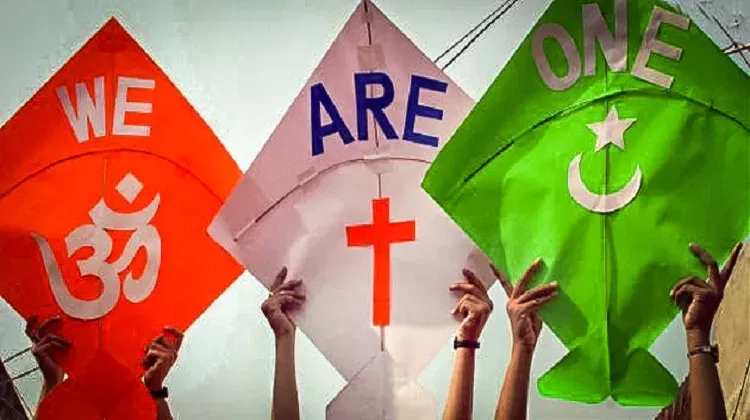
Secularism in India does not entail the separation of religion and state. In India, secularism refers to a state that is impartial toward all religious groups. India is the home of numerous religions, and its people are allowed to celebrate their festivals with zeal and equality. People respect each other's religions, conveying the message of oneness across borders. India is a multi-religious, multi-lingual, multi-ethnic, and multi-regional civilization unlike any other. As a result, secularism is the only viable path ahead for all religions and religious communities to coexist and respect one another.
FAQs
Question: What is a secular state?
Answer: A secular state ensures the separation of religion and state, treats all citizens equally regardless of their religion, and does not promote or favor any particular religion in its governance.
Question: How does Indian secularism differ from Western secularism?
Answer: Unlike Western secularism, which strictly separates state and religion, Indian secularism focuses on the principle of equal respect for all religions, promoting religious tolerance and addressing both intra-religious and interreligious issues.
Question: What does 'Sarva Dharma Sambhava' mean in the context of Indian secularism?
Answer: 'Sarva Dharma Sambhava' translates to equal respect for all religions and is a guiding principle of Indian secularism, emphasizing religious tolerance and the coexistence of diverse faiths.
Question: What constitutional articles reflect India’s secular ethos?
Answer: Articles such as Article 25-28 of the Indian Constitution guarantee freedom of religion, prohibit discrimination on religious grounds, and ensure secularism by preventing the state from favoring or discriminating against any religion.
Question: Why did India adopt a secular state model?
Answer: India adopted secularism to promote unity in a religiously diverse society, prevent religious domination, and ensure equal treatment and freedom of religion for all citizens, fostering a harmonious and inclusive society.
MCQs
- What does the Indian concept of secularism emphasize?
A) Total separation of religion from state
B) Equal respect and treatment for all religions
C) Favoring one religion over others
D) Religious domination by the majority community
Answer: (B) See the Explanation
Indian secularism promotes equality and respect for all religions, unlike Western secularism’s strict church-state separation.
- Which of the following articles in the Indian Constitution guarantees freedom of religion?
A) Article 14
B) Article 25
C) Article 32
D) Article 44
Answer: (B) See the Explanation
Article 25 guarantees freedom of religion in India, allowing individuals to freely profess, practice, and propagate their religion.
- The principle of 'Sarva Dharma Sambhava' is most closely associated with:
A) Western secularism
B) Indian secularism
C) Theocratic governance
D) Military rule
Answer: (B) See the Explanation
This principle of equal respect for all religions is a core component of Indian secularism, promoting religious harmony.
- What does a secular state prohibit in government-funded schools?
A) Equal treatment of students
B) Religious instruction
C) Teaching of constitutional values
D) Teaching science and mathematics
Answer: (B) See the Explanation
A secular state, such as India, does not permit religious instruction in government or government-aided schools to maintain impartiality in education.
- What distinguishes Indian secularism from Western secularism in terms of state policies?
A) Total exclusion of religion from public life
B) Providing equal respect and state-supported religious reforms
C) Only allowing religious laws to govern
D) Encouraging religious hierarchies
Answer: (B) See the Explanation
Indian secularism emphasizes equal respect and supports religious reforms within communities to promote equity.
GS Mains Questions and Model Answers
Q1: Discuss the relevance of secularism in India’s multicultural society.
Answer: Secularism ensures equality, religious tolerance, and social harmony in India's diverse society. By preventing religious domination, it protects minority rights and upholds the Constitution's promise of equality. Indian secularism promotes mutual respect among communities and fosters unity in a pluralistic society, making it crucial for national integration and democratic governance.
Q2: Compare and contrast the principles of Indian and Western secularism.
Answer: Western secularism focuses on strict separation of state and religion, while Indian secularism emphasizes equal respect for all religions and their coexistence in public life. Indian secularism addresses interreligious and intra-religious issues, promoting reforms and minority rights, unlike Western models, which often avoid direct engagement with religion.
Q3: Explain the constitutional provisions that uphold the secular character of the Indian state.
Answer: Articles 25-28 guarantee religious freedom, prohibit discrimination based on religion, and restrict state involvement in religious activities. The Preamble declares India as a secular state, ensuring that no religion is favored or discriminated against by the government, thereby upholding equality and promoting social harmony.
Previous Year Questions on Secular State
1. UPSC CSE 2017
Question: Evaluate the challenges faced by the secular state model in India.
Answer: The secular state model in India faces challenges such as communalism, politicization of religion, and the misuse of religious sentiments for political gain. Ensuring equal treatment of all religions while addressing intra- and interreligious conflicts requires careful policy and judicial oversight. Secularism must balance freedom of religion with social reforms to prevent communal tensions, making it a dynamic and ongoing process.
2. UPSC CSE 2020
Question: How does the Indian secular model promote religious harmony and tolerance?
Answer: The Indian secular model promotes religious harmony by ensuring state neutrality and equal respect for all religions. Constitutional provisions guarantee freedom of religion and prevent discrimination. By fostering interreligious and intra-religious tolerance, supporting reforms, and upholding equal rights for all citizens, the model seeks to maintain unity in a diverse society, fostering peaceful coexistence.
*email: contactus@prepp.in
Download the PREPP App and attempt FREE IAS Exam Mock Tests and get complete study material!
UPSC IAS : CSAT - Mini Live Test

Live Test : UPSC CSE Prelims CSAT (Paper-II) (Oct 20 - 23)
Full Test - 04: UPSC CSE Prelims CSAT (Paper-II)
Full Test - 03: UPSC CSE Prelims CSAT (Paper-II)
UPSC CSE Prelims 2026 GS Paper 1 Question Paper (24-May-2026)
UPSC CSE Prelims 2026 CSAT Paper 2 Question Paper (24-May-2026)

17 February 2025 | The Hindu Must Read Articles | Current Affairs

16 February 2026 | The Hindu Must Read Articles | Current Affairs

13 February 2026 | The Hindu Must Read Articles | Current Affairs









Comments