What is Written and Unwritten Constitution? - Indian Polity Notes
Written constitution means a constitution that has been carefully and methodically written. Constitutions are classified as either written (such as the American Constitution) or unwritten (such as the British Constitution). The Indian Constitution is the longest of any written constitution in the world. The topic “Written and Unwritten Constitution” is an important part of the UPSC/IAS Exam Polity and Governance syllabus which is discussed in this article in detail.
|
Table of Contents |
Meaning Of Written And Unwritten Constitution
Written Constitution
- Any constitution that has been written and contains all the details in a book form that can be referenced at to anytime is called a written constitution.
- It comprises the duties and rights of governments and citizens, the type of constitutional order, and the laws that govern and regulate the system.
- Such constitutions are flexible, meaning they can be changed over time.
- The judiciary is more powerful and can have judicial review powers to ensure the supremacy of the constitution.
Unwritten Constitution
- The unwritten constitution is defined as the constitution in which the legal decisions, fundamental laws, and rules governing the nation are not systematically written down or incorporated into a single document.
- An unwritten constitution can be rigid, flexible, or both.
- Parliament is the supreme power in a country with an unwritten constitution.
|
"The written nature of a constitution is the eloquent script that defines a nation's principles, ensuring that justice and governance speak through the enduring language of law."
|
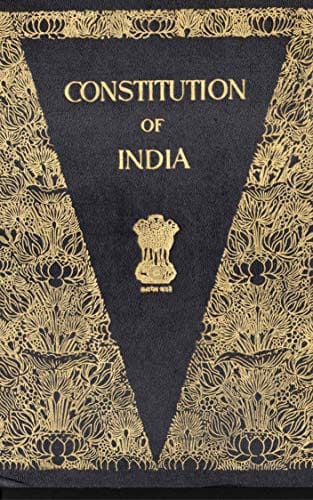
Examples Of Written And Unwritten Constitutions
Written Constitution
- The oldest written constitution is that of the United States of America.
- It was drafted on September 17, 1787, ratified on June 21, 1788, and entered into force on March 4, 1789.
- James Madison wrote the document that served as a model for the US Constitution. He is known as one of the Founding Fathers of America.
Unwritten Constitution
- The Magna Carta is considered the oldest unwritten form of the constitution.
- It was a Bill of Rights for Nobles signed by King John of England, which came into force on June 15, 1215.
- It promised to protect the rights of the nobles from the interference of the crown.
- The Magna Carta later evolved and became the unwritten constitution of the United Kingdom.
Limitations
Limitations Of Written Constitution
- Written constitutions are often rigid, with cumbersome modification procedures, which raises the issue of how to easily modify it to suit the changing needs and times.
- Where its provisions are inadequate, it may not be to the advantage of certain sections of the country and may lead to dissatisfaction and violent outbursts as its provisions may not be amended immediately to address grievances.
- It is subject to frequent litigation, as people can easily find out when their rights have been violated.
- This slows down the activities of the government and may lead to inefficiency as it has to respond to all the actions taken against it by the citizens of the state.
Limitations Of Unwritten Constitution
- An unwritten constitution is unclear and ambiguous.
- It also contains some elements of contradiction and undermines the performance of the government.
- Since it is very simple to make changes in a political system with an unwritten constitution, many unfavorable changes occur, resulting in a great deal of instability.
- Individuals' fundamental rights are not clearly expressed in an unwritten constitution.
- They are unable to enjoy their liberties or actively participate in the democratic process.
- An unwritten constitution is bad for a federal system because it does not provide for proper power distribution between the center and federal units – states or provinces.
Relation To Indian Constitution
- The written constitution has been fully drafted and passed, and the main purpose of the written constitution is its implementation.
- The written constitution is assigned to a special body that formulates and adopts the constitution and clearly defines the basic organs and institutions of government.
- Though India has a written constitution; the Indian constitution is not as rigid as the American constitution. It has incorporated a flexible nature in the procedures for amendments.
- It is the largest in the world. It has 385 articles,12 schedules and is divided into 22 parts.
- All provisions are present in writing and are laid out with great care, so they cannot be twisted and modified based on the circumstances and emotions, ensuring consistency in decisions.
Conclusion
No constitution is completely written or completely unwritten. A written constitution respects certain conventions, while a so-called unwritten constitution contains some written rules.
FAQs
Question: What is the main difference between a written and an unwritten constitution?
Answer: A written constitution is a single, formal document that codifies the rules and principles of governance, while an unwritten constitution is based on customs, conventions, and laws that are not consolidated into a single text.
Question: What are the advantages of a written constitution?
Answer: A written constitution provides clarity, legal certainty, and a structured framework for governance. It clearly defines the roles of different government institutions and protects the rights of citizens.
Question: How does an unwritten constitution evolve?
Answer: An unwritten constitution evolves through precedents, conventions, judicial decisions, and statutes. It adapts to changing political and social circumstances without the need for formal amendments.
Question: Which countries have an unwritten constitution?
Answer: Countries like the United Kingdom, New Zealand, and Israel have unwritten constitutions based on customs, conventions, and a collection of statutes and judicial rulings.
Question: Can a written constitution be amended easily?
Answer: No, a written constitution is usually rigid, meaning that it requires a special procedure—often involving supermajorities or referendums—to amend. For example, amending the Indian Constitution requires a two-thirds majority in Parliament.
MCQs
1. Which of the following countries has a written constitution?
A. United Kingdom
B. United States
C. New Zealand
D. Israel
Answer: (B) See the Explanation
Explanation: The United States has a written constitution that was adopted in 1787 and is considered the oldest written constitution still in use.
2. What is the primary source of laws in a country with an unwritten constitution?
A. A codified legal document
B. Judicial precedents, statutes, and conventions
C. International treaties
D. Presidential decrees
Answer: (B) See the Explanation
Explanation: In a country with an unwritten constitution, laws are primarily derived from judicial precedents, statutes, and conventions that have evolved over time.
3. Which of the following is a key characteristic of a written constitution?
A. Flexibility in amendments
B. It is based on customs and conventions
C. Codified in a single document
D. It cannot be amended
Answer: (C) See the Explanation
Explanation: A written constitution is codified in a single document, outlining the fundamental laws, rights, and structure of governance.
4. Which of the following is a country with an unwritten constitution?
A. India
B. France
C. United Kingdom
D. United States
Answer: (C) See the Explanation
Explanation: The United Kingdom has an unwritten constitution, which is based on conventions, statutes, and judicial decisions rather than a single codified document.
5. Which of the following best describes the nature of a written constitution?
A. Rigid and formal
B. Flexible and informal
C. Based on traditions
D. Derived from local laws
Answer: (A) See the Explanation
Explanation: A written constitution is typically rigid and formal, as it requires special procedures for amendment and is a detailed, structured legal document.
GS Mains Questions and Model Answers
1. Compare and contrast the written and unwritten constitutions with examples.
Answer: A written constitution is a codified legal document that outlines the structure of governance, powers of various institutions, and the rights of citizens. Countries like India and the United States have written constitutions that provide a clear and structured framework for governance. These constitutions are rigid, meaning they require a specific legal procedure for amendment.
An unwritten constitution, on the other hand, is based on customs, conventions, and judicial decisions. The United Kingdom is an example, where the constitution evolves through precedents and laws passed by Parliament, without being codified in a single document. This makes the unwritten constitution more flexible and adaptable to change.
While written constitutions provide legal certainty, unwritten constitutions allow for greater flexibility, as they can evolve with society’s needs without formal amendments.
2. Analyze the advantages and disadvantages of having a written constitution.
Answer: A written constitution offers several advantages. First, it provides clarity by outlining the structure of governance, division of powers, and the rights of citizens in a codified document. It ensures legal certainty as everyone can refer to a single document to understand the laws of the land. Additionally, a written constitution often has provisions for the protection of fundamental rights and ensures the separation of powers between the executive, legislature, and judiciary.
However, the rigidity of a written constitution can be a disadvantage, as it requires complex procedures to amend, which may hinder adaptability to changing circumstances. It may also lead to judicial interpretation, where courts must clarify ambiguities, leading to potential conflicts in interpretation.
3. Discuss how an unwritten constitution functions in modern governance, with examples from the United Kingdom.
Answer: An unwritten constitution functions through a combination of statutes, conventions, judicial decisions, and historical documents. In the United Kingdom, the constitution is based on various sources, including Magna Carta, Acts of Parliament, and judicial precedents. The flexibility of an unwritten constitution allows the UK to adapt to political and social changes without the need for formal amendments. For instance, the role of the monarch has evolved over time based on conventions, rather than constitutional changes.
The flexibility of the unwritten constitution ensures that it can quickly adjust to modern needs, but it may also lack the legal clarity and certainty of a written constitution. Critics argue that the absence of a singular reference point can lead to ambiguity and reliance on political customs, which may not always be consistent or legally binding.
Previous Year Questions on Written and Unwritten Constitutions
1. UPSC CSE Prelims 2021
Question: Which of the following statements is true regarding the constitution of the United Kingdom?
A. It is a written constitution codified in a single document
B. It is an unwritten constitution based on statutes and conventions
C. It was adopted after World War II
D. It guarantees the right to bear arms
Answer: B
Explanation: The United Kingdom has an unwritten constitution, which is based on statutes, conventions, and judicial decisions, rather than a single codified document.
2. UPSC CSE Mains 2016 (GS Paper 2)
Question: "The United Kingdom operates under an unwritten constitution, while India has a written constitution. Discuss the implications of both systems on governance and legal clarity."
Answer: The United Kingdom operates under an unwritten constitution, which allows for greater flexibility and adaptation to changing circumstances without formal amendments. This system relies on customs, conventions, and judicial decisions to govern, making it dynamic but also sometimes ambiguous. The lack of a codified document means that legal disputes are often resolved based on precedent and statutes, which can lead to inconsistent interpretations.
In contrast, India has a written constitution, which provides legal certainty and a clear reference point for governance. It outlines the structure of government, fundamental rights, and the division of powers. While it offers stability, the written constitution can be rigid, requiring complex procedures for amendments. This ensures that changes to the constitution are carefully considered but may also hinder quick adaptation to new challenges in governance.
*email: contactus@prepp.in
Download the PREPP App and attempt FREE IAS Exam Mock Tests and get complete study material!

Full Test - 04: UPSC CSE Prelims CSAT (Paper-II)
Full Test - 03: UPSC CSE Prelims CSAT (Paper-II)
UPSC CSE Prelims 2026 GS Paper 1 Question Paper (24-May-2026)
UPSC CSE Prelims 2026 CSAT Paper 2 Question Paper (24-May-2026)

17 February 2025 | The Hindu Must Read Articles | Current Affairs

16 February 2026 | The Hindu Must Read Articles | Current Affairs

13 February 2026 | The Hindu Must Read Articles | Current Affairs









Comments