National Register of Citizens (NRC) – Indian Polity Notes
National Register of Citizens (NRC) is basically a register of all Indian citizens which was mandated by the 2003 amendment of the Citizenship Act, 1955. Its purpose is to document all the legal citizens of India so that illegal immigrants can be identified and deported. Its implementation started for the state of Assam in 2013. In 2021, Central Government announced plans to implement it for the rest of the country, but it has not yet been implemented. This article explains the National Register of Citizens (NRC) which is important for UPSC Indian Polity Preparation.
| To Read update on this topic: |
Table of Contents
What is NRC?
- The NRC, at its core, is an official record of those who are legal Indian citizens.
- It contains demographic information on all individuals who meet the criteria for Indian citizenship under the Citizenship Act of 1955.
- The register was created following the 1951 Census of India, and it has not been updated since.
- The NRC will now be updated to include the names of those persons (or their descendants) who appear in the NRC, 1951, or
- in any of the Electoral Rolls up to midnight on March 24, 1971, or
- in any of the other admissible documents issued up to midnight on March 24, 1971
- Legacy Data refers to all of the names appearing in the NRC, 1951, or any of the Electoral Rolls up to midnight on March 24, 1971.
- The Registrar General of India will manage this database in collaboration with state chief registrars.
- It will be updated on a regular basis with the organisations in charge of Aadhaar, ration cards, voting rolls, passports, and driving licences.
- The Centre has been advocating for NRCs in all states. Nagaland has already begun work on a comparable citizen database called the Register of Indigenous Inhabitants.
- In addition, the Centre has announced plans for a National Population Register (NPR), which would include demographic and biometric information on residents.
|
National Register of Citizens (NRC) is meant to be a register of all Indian citizens whose creation was mandated by the 2003 amendment of the Citizenship Act, 1955. |
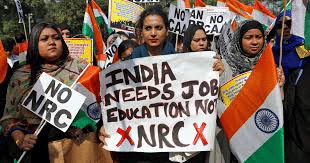
NRC in Assam
- The register is intended to be a list of Indian citizens who reside in Assam.
- For decades, the presence of migrants often referred to as "bahiragat" or "outsiders," has been a contentious issue in this country.
- Assam experienced waves of migration during its tenure as a colonial province and then as a border state in independent India.
- First National Register of Citizens: The first National Register of Citizens was compiled in 1951, following the completion of the Census that year.
- The subcontinent's partition and communal riots had just triggered massive population exchanges at the border.
- Since 2015, the state has been working to update the 1951 register.
- One of the stated goals of the exercise is to identify "illegal immigrants" in the state, many of whom are thought to have poured into Assam following the 1971 Bangladesh War.
- Around eight years after the war, the state witnessed anti-foreigner agitation in 1979. Assamese ethnic nationalists claimed that illegal immigrants had entered electoral rolls and were robbing indigenous communities of their right to determine their political future.
- Assam Accord, 1985: With the signing of the Assam Accord in 1985, the anti-foreigner agitation led by the All Assam Students' Union came to an end.
- Those who entered the state between 1966 and 1971 would have their names removed from the electoral rolls and their voting rights suspended for ten years, after which their names would be restored to the rolls.
- Those who arrived on or after March 25, 1971, the eve of the Bangladesh War, would be labeled foreigners and deported.
- Definition of Illegal Migrants: The National Register of Citizens now uses the Assam Accord to define illegal immigrants:
- Anyone who cannot prove that they or their ancestors entered the country before midnight on March 24, 1971, will be declared a foreigner and deported.
- This means that even if you were born in India in 1971 to parents who crossed the border that year, you could still be considered an illegal immigrant at the age of 48.
- Illegal Migrants (Determination by Tribunals) Act of 1983: The Illegal Migrants (Determination by Tribunals) Act of 1983 had previously defined the mechanism for detecting so-called foreigners.
- The Supreme Court overturned this in 2005 after a petition argued that the law's provisions were so stringent that they made "detection and deportation of illegal migrants almost impossible."
- Updation of the National Register of Citizens: The decision to begin updating the National Register of Citizens was made that same year at a tripartite meeting attended by the Centre, the Assam government, and the All Assam Students' Union.
- In 2014, the Supreme Court ordered that Assam's NRC be updated in accordance with the provisions of the Citizenship Act of 1955 and the Citizenship (Registration of Citizens and Issue of National Identity Cards) Rules of 2003.
- The process began in 2015, and the updated final NRC list was released on August 31, with over 1.9 million applicants failing to make the NRC list.
- Those who do not make the final cut will have to appear before the Assam Foreigners' Tribunals.
- Those deemed to be foreigners in the past have been transferred to state detention centers.
National Register of Citizens - Eligibility Criteria
- NRC of 1972 or Electoral Rolls: Individuals listed in the NRC of 1972 or any Electoral Rolls up to March 24, 1971, and their descendants.
- FRRO Registration: Persons registered with the Foreigners Registration Regional Officer (FRRO) as per Central Government rules and not deemed illegal migrants or foreigners.
- Arrival between January 1, 1966, and March 25, 1971: Individuals who arrived in Assam during this period.
- Original Assamese Residents: Original Assamese residents and their descendants, if their Indian citizenship is proven beyond a reasonable doubt.
- Documents for Citizenship: Persons who can provide admissible documents issued up to March 24, 1971, to prove citizenship.
National Register of Citizens - Need
- Identify infiltrators: It essentially proposes laws that would allow the government to identify infiltrators who have been residing in India illegally, imprison them, and eventually deport them back to their home country.
- It will specifically target illegal immigrants in India.
- Hindus, Christians, Sikhs, Buddhists, Jains, and Parsis from Afghanistan, Pakistan, and Bangladesh, on the other hand, will not be harmed if they claim to have come to India to escape religious persecution.
- Three countries: It effectively indicates that if the proposed countrywide NRC is implemented, every illegal immigrant from a country other than Pakistan, Afghanistan, or Bangladesh will be impacted.
- People from those three countries who are Muslim will be affected as well, because they are not covered in the Citizenship Amendment Act.
How is NRC related to CAA?
- In Assam, where the NRC process has been implemented, there are concerns that the CAA might undermine the NRC by granting citizenship to non-Muslim individuals who would otherwise be excluded by the NRC.
- NRC focuses on identifying and verifying the citizenship status of residents whereas the CAA provides a specific group of illegal immigrants a pathway to citizenship based on their religious identity. The interplay between these two has significant implications for the citizenship and rights of various communities in India.
Conclusion
National Register of Citizens (NRC) represents efforts by government to document and verify the citizenship status of individuals, primarily aimed at identifying and addressing the issue of illegal immigration. While the NRC aims to establish clear records and enhance national security, its implementation, particularly in Assam, has been fraught with challenges and controversies. The process has raised concerns about inclusivity, documentation burdens, and the potential marginalization of vulnerable populations. As India considers expanding the NRC nationwide, it is crucial to ensure that the process is transparent, fair, and sensitive to individual circumstances to uphold the principles of justice and equality enshrined in the Constitution.
FAQs
Question: What is the National Register of Citizens (NRC)?
Answer: The National Register of Citizens (NRC) is a register containing names of all legal citizens of India. Its primary objective is to identify and document genuine Indian citizens and differentiate them from illegal immigrants, particularly in Assam. The NRC was first prepared in 1951, but the process of updating the register started in 2015, with a focus on the state of Assam due to concerns about illegal immigration from Bangladesh.
Question: Why is the NRC specifically focused on Assam?
Answer: Assam has been a focal point for the NRC due to historical migration patterns, particularly from Bangladesh. The state shares a long border with Bangladesh, which has led to concerns about illegal immigration into Assam, particularly after the partition of India in 1947 and the subsequent independence of Bangladesh in 1971. The NRC process in Assam aims to detect illegal immigrants and ensure that only genuine Indian citizens are included in the electoral rolls and other government databases.
Question: How does the NRC process work?
Answer: The NRC process involves the collection and verification of documents from citizens to prove their Indian origin. Individuals are required to submit proof of their ancestry and residency in India, dating back to 1971, which is the cut-off year specified under the Assam Accord. The documents submitted are then verified by the authorities, and individuals whose names are included in the final list are recognized as legal citizens, while those excluded are given an opportunity to appeal.
Question: What are the main concerns regarding the NRC process?
Answer: The NRC process has raised several concerns, including fears of exclusion of genuine citizens, especially marginalized communities such as ethnic minorities, indigenous groups, and economically disadvantaged individuals who may lack the necessary documents. There are also concerns about the lack of transparency in the process and the potential for the NRC to be misused for political purposes. The exclusion of names from the final list can lead to legal, social, and economic hardships for individuals and families.
Question: What happens to individuals excluded from the NRC list?
Answer: Individuals excluded from the NRC list are given the right to appeal their exclusion in a Foreigners' Tribunal. They can present further evidence to prove their citizenship. If they fail to prove their citizenship, they may be declared "foreigners" and may be subject to deportation or detention. However, the process also provides safeguards to ensure that no individual is unjustly declared an illegal immigrant.
MCQs
1. What is the primary objective of the National Register of Citizens (NRC)?
A) To list all foreign nationals in India
B) To identify and register legal citizens of India
C) To promote population control
D) To provide welfare benefits to citizens
Answer: (B) See the Explanation
Explanation: The primary objective of the NRC is to identify and register the legal citizens of India, specifically in areas like Assam, to distinguish them from illegal immigrants.
2. Which state is the focus of the NRC process in India?
A) West Bengal
B) Assam
C) Uttar Pradesh
D) Gujarat
Answer: (B) See the Explanation
Explanation: Assam is the primary focus of the NRC process due to concerns over illegal immigration from Bangladesh, particularly after the 1971 war of independence.
3. What is the cut-off year for the Assam Accord, which is used for NRC verification?
A) 1951
B) 1961
C) 1971
D) 1981
Answer: (C) See the Explanation
Explanation: The cut-off year for the NRC verification process in Assam, as per the Assam Accord, is 1971. This is the year that marks the beginning of the influx of refugees from Bangladesh.
4. What happens to individuals excluded from the NRC list?
A) They are automatically granted citizenship
B) They can appeal their exclusion in Foreigners' Tribunals
C) They are deported immediately
D) They are provided with alternative documentation
Answer: (B) See the Explanation
Explanation: Individuals excluded from the NRC list can appeal their exclusion in Foreigners' Tribunals, where they can present additional evidence to prove their citizenship.
5. What is the main challenge in implementing the NRC process?
A) Lack of political support
B) Difficulty in verifying citizenship due to inadequate documentation
C) Inadequate funding
D) Too many people applying for NRC
Answer: (B) See the Explanation
Explanation: The main challenge in implementing the NRC process is the difficulty in verifying citizenship due to inadequate or missing documentation, especially among marginalized and economically disadvantaged groups.
GS Mains Questions and Model Answers
Q1: Discuss the socio-political implications of the NRC in Assam. How does it affect the demographic landscape and the social fabric of the state?
Answer: The NRC process in Assam has significant socio-political implications, particularly with respect to its impact on the demographic landscape and the social fabric of the state. While the NRC aims to distinguish between legal citizens and illegal immigrants, it has raised concerns regarding the exclusion of genuine Indian citizens, particularly from marginalized communities like the Bengali-speaking Muslim population and indigenous groups. The uncertainty surrounding the NRC process has led to fears of social unrest, with many alleging that it may be used to target certain ethnic and religious communities. This has the potential to further exacerbate social divisions and may impact the communal harmony in Assam. Moreover, the exclusion of large numbers of people from the final list could lead to legal and economic hardships, particularly for people without the required documentation.
Q2: Critically analyze the role of the Assam Accord in shaping the NRC process. How does it address the issue of illegal immigration in Assam?
Answer: The Assam Accord, signed in 1985, played a critical role in shaping the NRC process by setting a cut-off date for identifying illegal immigrants. According to the Accord, anyone who entered Assam after March 24, 1971, would be considered an illegal immigrant and would be excluded from the electoral rolls. The NRC process was initiated to implement this provision, with the aim of ensuring that only genuine Indian citizens are included in the national register. While the Accord successfully addressed the issue of illegal immigration from Bangladesh, it has been criticized for its narrow focus and the challenges it poses for certain communities that may have migrated before the cut-off date but lack proper documentation. Moreover, the implementation of the NRC has raised questions about its broader impact on the socio-political fabric of Assam and its potential to cause communal tensions.
Q3: Evaluate the ethical and human rights concerns associated with the NRC process in India. How can these concerns be addressed in the future?
Answer: The NRC process in India has raised several ethical and human rights concerns, particularly with respect to the exclusion of individuals from the final list. One of the major concerns is the potential for large-scale exclusion of genuine Indian citizens, especially from marginalized groups, who may lack the necessary documents to prove their citizenship. This could lead to the denial of basic rights, such as access to education, healthcare, and government services. There are also concerns that the process could be used to target specific religious or ethnic communities, exacerbating social divisions. To address these concerns, it is essential to ensure transparency in the process, provide sufficient time for individuals to appeal their exclusion, and ensure that the legal framework is sensitive to the socio-economic realities of affected communities. Additionally, the government should ensure that the NRC process does not result in the creation of stateless individuals or refugees within the country.
Previous Year Questions on NRC
1. UPSC CSE Prelims 2020:
Question: The NRC process is primarily associated with which of the following states?
A) Uttar Pradesh
B) Assam
C) West Bengal
D) Kerala
Answer: (B)
Explanation: The NRC process has been primarily focused on Assam, where it was implemented to identify illegal immigrants, particularly from Bangladesh.
2. UPSC CSE Mains 2018 (GS Paper 2):
Question: Analyze the implications of the NRC process in Assam for India's federal structure and the integration of various ethnic communities.
Answer: The NRC process in Assam has significant implications for India's federal structure, as it directly involves state governments in national security and citizenship issues. It also highlights the challenges in balancing central and state authority, especially in a region with complex ethnic and linguistic diversity. The NRC process has the potential to affect the integration of various ethnic communities, particularly indigenous groups and Bengali-speaking Muslims. While it aims to address illegal immigration, it also risks marginalizing communities that may lack documentation but have deep historical ties to the state.
*email: contactus@prepp.in
Download the PREPP App and attempt FREE IAS Exam Mock Tests and get complete study material!

Full Test - 04: UPSC CSE Prelims CSAT (Paper-II)
Full Test - 03: UPSC CSE Prelims CSAT (Paper-II)
UPSC CSE Prelims 2026 GS Paper 1 Question Paper (24-May-2026)
UPSC CSE Prelims 2026 CSAT Paper 2 Question Paper (24-May-2026)

17 February 2025 | The Hindu Must Read Articles | Current Affairs

16 February 2026 | The Hindu Must Read Articles | Current Affairs

13 February 2026 | The Hindu Must Read Articles | Current Affairs









Comments