Loss of Citizenship - Indian Polity Notes
Loss of Citizenship refers to any method of losing one's status as a citizen of a country, whether willingly or involuntarily, automatically or by an act of the government. Indian citizens will automatically lose their citizenship if they accept the citizenship of another country. The Citizenship Act of 1955 specifies three methods for losing citizenship, whether obtained under the Act or prior to it under the Constitution, namely renunciation, termination, and deprivation. This article explains the Loss of Citizenship which is important for UPSC Indian Polity Preparation
|
Table of Contents |
Loss of Citizenship
- The Citizenship Act (1955) provides for acquisition and loss of citizenship after the commencement of the Constitution.
- The Citizenship Act (1955) prescribes three ways of losing citizenship whether acquired under the Act or prior to it under the Constitution,
- Renunciation
- Termination
- Deprivation
|
“There can be no daily democracy without daily citizenship.” - Ralph Nader |
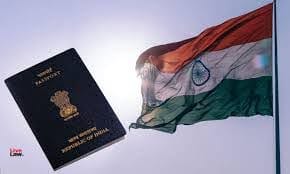
Renunciation of Citizenship
- Any Indian citizen of full age and capacity may file a declaration renouncing his Indian citizenship.
- That person loses his or her Indian citizenship once the declaration is registered.
- However, if such a declaration is made during a war in which India is involved, the Central Government will refuse to register it.
- Furthermore, when a person renounces his Indian citizenship, his or her minor children lose their Indian citizenship as well.
- When such a child reaches the age of eighteen, he may reclaim his Indian citizenship.
Termination of Citizenship
- When an Indian citizen acquires the citizenship of another country voluntarily (consciously, knowingly, and without duress, undue influence, or compulsion), his Indian citizenship automatically terminates.
- This provision, however, does not apply while India is engaged in a war.
- If a question arises as to whether, when, or how a person obtained the citizenship of another country, it is to be resolved by such authority and in such manner as the rules may prescribe.
Deprivation of Citizenship
- Deprivation is the compulsory termination of Indian citizenship.
- In some situations, the Indian government can strip a person of his citizenship. However, this does not apply to all citizens.
- It is a compulsory termination of Indian citizenship by the Central government if:
- the citizen obtained the citizenship through fraud
- the citizen demonstrated disloyalty to the Indian Constitution
- the citizen unlawfully traded or communicated with the enemy during a war
- the citizen was imprisoned in any country for two years within five years after registration or naturalisation
- the citizen was ordinarily resident outside of India.
Conclusion
Citizenship, once obtained, exists as a right of citizens that cannot be taken away. Of course, Parliament has ultimate power, and it can terminate the citizenship of any citizen through a law, but it must be done through a valid Act of Parliament. Any person who wants to voluntarily give up his citizenship can make a request to the concerned authority to terminate their citizenship based on valid reasons.
FAQs
Q1: What are the main grounds for the loss of Indian citizenship?
Answer: The main grounds for losing Indian citizenship include voluntary renunciation, acquiring citizenship of another country, disloyalty to India, and continuous absence from the country for more than seven years without registration.
Q2: Can an Indian citizen hold dual citizenship?
Answer: No, Indian law does not allow dual citizenship. If an Indian citizen acquires citizenship of another country, they automatically lose their Indian citizenship.
Q3: How does the Citizenship Act, 1955, regulate citizenship?
Answer: The Citizenship Act, 1955, outlines the provisions for acquiring and losing Indian citizenship. It specifies the conditions under which citizenship can be gained or lost and details the legal framework governing these processes.
Q4: What is the procedure for renouncing Indian citizenship?
Answer: To renounce Indian citizenship, a citizen must submit a declaration to the government, indicating their intention to renounce citizenship, usually at the time of acquiring another nationality.
Q5: Are there any exceptions for losing citizenship?
Answer: Yes, certain exceptions exist, such as for individuals who may lose citizenship involuntarily due to government action. However, the general grounds for loss are outlined in the Citizenship Act.
MCQs
- Which of the following is NOT a ground for loss of Indian citizenship?
A) Acquiring citizenship of another country
B) Continuous absence for more than seven years
C) Serving in the Indian Armed Forces
D) Voluntary renunciation
Answer: (C) See the Explanation
- What action can result in the automatic loss of Indian citizenship?
A) Gaining a government job
B) Voting in elections
C) Acquiring foreign nationality
D) Marriage to a foreign national
Answer: (C) See the Explanation
- Under what condition can a person lose Indian citizenship due to absence?
A) Absence from India for over three years
B) Absence from India for over seven years
C) Absence from India during a national emergency
D) Absence from India for less than five years
Answer: (B) See the Explanation
- Which document is essential for renouncing Indian citizenship?
A) Passport
B) Birth Certificate
C) Declaration of renunciation
D) Voter ID
Answer: (C) See the Explanation
- Which article of the Indian Constitution relates to citizenship?
A) Article 14
B) Article 15
C) Article 19
D) Article 11
Answer: (D) See the Explanation
GS Mains Questions and Model Answers
Q1. Discuss the impact of losing Indian citizenship on an individual's rights and status in the country.
Answer: Losing Indian citizenship significantly impacts an individual’s rights and status within the country. It results in the forfeiture of fundamental rights guaranteed by the Constitution, including the right to vote, hold public office, and access government services. A former citizen becomes a foreign national, subjecting them to different laws, regulations, and potential restrictions in their interactions with Indian authorities. The individual may also face challenges related to residency, employment, and education, as their legal status in India becomes precarious. Furthermore, loss of citizenship can lead to social stigma and alienation, complicating their reintegration into society. Thus, the implications of losing citizenship extend beyond legal status to affect an individual's social identity and personal relationships.
Q2. Analyze the role of the Citizenship Act, 1955, in shaping the citizenship landscape in India.
Answer: The Citizenship Act, 1955, plays a pivotal role in defining and regulating citizenship in India. It establishes clear guidelines for acquiring and losing citizenship, ensuring a structured approach to citizenship matters. By providing various pathways for naturalization and provisions for loss of citizenship, the Act addresses the complexities of migration and nationality in a diverse nation. The Act has been crucial in maintaining national integrity while accommodating the rights of citizens. It has also prompted discussions regarding the balance between individual rights and national security. Furthermore, recent amendments to the Act, such as the Citizenship Amendment Act (CAA), have sparked debates about religious discrimination in citizenship, highlighting the ongoing relevance of the Act in contemporary political discourse.
Q3. Evaluate the significance of dual citizenship in the context of Indian laws.
Answer: Dual citizenship remains a contentious issue in India, as Indian laws do not permit it. The significance of this restriction lies in its implications for national identity and sovereignty. By disallowing dual citizenship, India emphasizes the loyalty of its citizens to the nation, reinforcing a singular national identity. This stance aims to prevent conflicts of allegiance that could arise if individuals held citizenship in multiple countries. However, this policy poses challenges for Indian citizens living abroad, who may wish to retain their Indian citizenship while acquiring citizenship in their host countries. The lack of dual citizenship can hinder their ability to fully participate in the socio-political and economic life of both nations. As global migration patterns evolve, the debate over dual citizenship is likely to gain prominence, necessitating a reevaluation of India's citizenship policies to balance national interests with the realities of a globalized world.
Previous Year Questions on Loss of Citizenship
1. UPSC CSE 2019
Question: Discuss the implications of losing Indian citizenship and the legal provisions surrounding it.
Answer: The implications of losing Indian citizenship are multifaceted, affecting an individual's legal rights, status, and social identity. As per the Citizenship Act, 1955, a person may lose citizenship through voluntary renunciation, acquiring citizenship of another country, or continuous absence from India for over seven years without registration. Legally, losing citizenship results in the forfeiture of fundamental rights, such as the right to vote, hold public office, and access government services, thus marginalizing individuals within their own country. The legal framework surrounding loss of citizenship is crucial, as it must balance individual rights against national security concerns. The significance of these provisions is further underscored in the context of contemporary debates surrounding citizenship, particularly with the introduction of the Citizenship Amendment Act (CAA) 2019, which has been contentious due to its implications for secularism and equality before the law. Understanding the legal provisions is essential for assessing the broader impact on social justice and individual rights within India.
2. UPSC CSE 2020
Question: Examine the role of the Citizenship Amendment Act (CAA) 2019 in altering the landscape of Indian citizenship laws.
Answer: The Citizenship Amendment Act (CAA) 2019 represents a significant alteration in the landscape of Indian citizenship laws. The CAA aims to provide a pathway for citizenship to persecuted minorities from Pakistan, Bangladesh, and Afghanistan who entered India before December 31, 2014. This move has been justified as a means of providing refuge to those facing religious persecution. However, the CAA has sparked considerable controversy, particularly regarding its exclusion of certain religious groups, which critics argue undermines the secular nature of the Indian Constitution. The Act has led to widespread protests and debates about its implications for existing citizens and the potential for discrimination. It raises important questions about the criteria for citizenship and the role of religion in national identity, challenging the foundational principles of equality and non-discrimination enshrined in the Indian Constitution. The ongoing discussions surrounding the CAA highlight the complexities of citizenship laws in a diverse society and the need for inclusive policies that respect the rights of all individuals.
*email: contactus@prepp.in
Download the PREPP App and attempt FREE IAS Exam Mock Tests and get complete study material!

Full Test - 04: UPSC CSE Prelims CSAT (Paper-II)
Full Test - 03: UPSC CSE Prelims CSAT (Paper-II)
UPSC CSE Prelims 2026 GS Paper 1 Question Paper (24-May-2026)
UPSC CSE Prelims 2026 CSAT Paper 2 Question Paper (24-May-2026)

17 February 2025 | The Hindu Must Read Articles | Current Affairs

16 February 2026 | The Hindu Must Read Articles | Current Affairs

13 February 2026 | The Hindu Must Read Articles | Current Affairs









Comments