Citizenship by Naturalization - Indian Polity Notes
Citizenship by Naturalization means the citizenship given to persons who do not have any Indian ancestry but are residing in India for a long time and want to get Indian Citizenship. For example: If a person from Vietnam comes to India as a student and lives here for 15 years, he/she can apply for citizenship by naturalization. They can register with the Indian government by meeting certain conditions as required in the Citizenship Act 1955 and other amendments and can attain citizenship by naturalization.
|
Table of Contents |
Conditions for Citizenship by Naturalization
- If a person has been a normal resident of India for 12 years (during the 12 months preceding the date of application and 11 years in total in an aggregate of 14 years) and meets all of the requirements in the Citizenship Act's third schedule, he or she can apply for citizenship by naturalization.
- The Citizenship Amendment Act 2019, has created an exception to certain minority communities in neighboring countries of Afghanistan, Pakistan, and Bangladesh like the Hindus, Sikhs, Parsis, Jains, Buddhists, and Christians.
- The act reduced the mandatory 11 years requirement to 5 years.
- Any legal proceedings with respect to illegal migration and citizenship would be closed.
Note: In the USA a naturalized citizen cannot become the President. However in India any citizen, even the naturalized citizen can become a President.
|
Citizenship is the chance to make a difference to the place where you belong.” -Charles Handy |
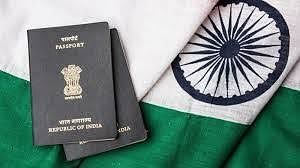
Qualifications for Citizenship by Naturalization
On application, the Central Government may grant a certificate of naturalization to any person (other than an illegal migrant) if he/she has the following qualifications:
- He/she is not a subject or citizen of any country where citizens of India are barred from becoming subjects or citizens of that country through naturalization;
- If he/she is a citizen of any country, they should undertake to renounce that citizenship in the event that their citizenship application for India gets accepted.
- He/she has either resided in India or served in the service of a government in India, or a combination of the two, for the twelve months preceding the date of the application;
- During the fourteen years immediately preceding the said period of twelve months, he/she has either resided in India or been in the service of a government in India, or partly the one and partly the other, for periods totaling not less than eleven years;
- He/she is of good character;
- He/she has adequate knowledge of a language specified in the Eighth Schedule to the Constitution;
- If a certificate of naturalization is granted to him/her, he/she intends to reside in India or to enter or continue in service with a government in India, an international organization of which India is a member, or a society, company, or body of persons established in India.
Conclusion
The Indian government has given an option for people who are residing in India for a long period of time meeting certain criteria to register for citizenship by naturalization. Though that individual is not a citizen of India at birth or descent they can use this option to attain Indian citizenship.
FAQs
Q1: What is citizenship by naturalization in India?
Answer: Citizenship by naturalization is the process through which a foreign national can acquire Indian citizenship after fulfilling certain eligibility criteria, including residency and knowledge of Indian culture.
Q2: What are the eligibility criteria for naturalization?
Answer: Applicants must have resided in India for at least 12 years, be of good character, possess adequate knowledge of the Indian language, and have an understanding of Indian culture.
Q3: How does the naturalization process work?
Answer: The process involves submitting an application to the Ministry of Home Affairs, after which an investigation is conducted to verify the applicant's credentials before citizenship is granted.
Q4: What is the role of the President in the naturalization process?
Answer: The President of India has the authority to grant citizenship by naturalization based on the recommendations from the Ministry of Home Affairs.
Q5: Can citizenship by naturalization be revoked?
Answer: Yes, the government can revoke citizenship if it is found that the person obtained it by fraud or if they engage in activities against the sovereignty and integrity of India.
MCQs
- Which article of the Indian Constitution provides for citizenship by naturalization?
a) Article 5
b) Article 9
c) Article 15
d) Article 12
Answer: (A) See the Explanation
- What is the minimum residency requirement for naturalization in India?
a) 5 years
b) 10 years
c) 12 years
d) 15 years
Answer: (C) See the Explanation
- Who has the final authority to grant citizenship by naturalization in India?
a) The Prime Minister
b) The Home Minister
c) The President
d) The Chief Justice
Answer: (C) See the Explanation
- Which of the following is NOT a criterion for naturalization?
a) Good character
b) Knowledge of Indian culture
c) Financial stability
d) Adequate knowledge of an Indian language
Answer: (C) See the Explanation
- What can lead to the revocation of citizenship obtained by naturalization?
a) Non-residency
b) Engaging in anti-national activities
c) Change of address
d) None of the above
Answer: (B) See the Explanation
GS Mains Questions and Model Answers
Q1: Discuss the significance of naturalization in Indian citizenship laws.
Answer: Naturalization plays a crucial role in Indian citizenship laws, enabling foreign nationals to become citizens after fulfilling specific requirements. It reflects India's commitment to inclusivity while ensuring that new citizens are integrated into the social fabric of the nation. The process balances national interests with humanitarian considerations, allowing individuals who have established ties to India to gain citizenship. However, it also underscores the importance of maintaining security and sovereignty, as seen in the stringent eligibility criteria that govern naturalization.
Q2: Analyze the challenges faced by individuals seeking citizenship by naturalization in India.
Answer: Individuals seeking citizenship by naturalization in India often encounter numerous challenges, including complex bureaucratic procedures, lengthy waiting periods, and the need to provide extensive documentation. Language barriers can pose additional obstacles, as proficiency in an Indian language is required. Moreover, applicants may face socio-political scrutiny, especially in contexts where nationalism is a sensitive issue. The evolving legal framework also affects the naturalization process, making it imperative for applicants to stay informed about changes in citizenship laws and procedures.
Q3: Evaluate the role of the government in regulating citizenship through naturalization.
Answer: The government's role in regulating citizenship through naturalization is multifaceted, involving the establishment of clear guidelines and procedures to ensure a fair process. The Ministry of Home Affairs oversees applications, conducts background checks, and assesses the eligibility of candidates based on legal criteria. This regulatory framework aims to maintain national security while fostering inclusivity. However, the balance between stringent vetting and the humane treatment of applicants remains a contentious issue, highlighting the need for continuous evaluation of policies to adapt to changing socio-political contexts.
Previous Year Questions on Citizenship By Naturalisation
1. UPSC CSE 2018
Question: "Discuss the procedure and criteria for acquiring Indian citizenship by naturalization."
Answer: The procedure for acquiring Indian citizenship by naturalization involves submitting an application to the Ministry of Home Affairs, which includes documentation proving the applicant's residency, character, and knowledge of the Indian culture. The applicant must have resided in India for a minimum of 12 years and demonstrate proficiency in an Indian language. Upon review, if the application is satisfactory, the President grants citizenship. This process reflects India's balanced approach to integrating individuals who contribute positively to society while safeguarding national interests.
2. UPSC CSE 2020
Question: "Examine the implications of citizenship laws on immigrants in India."
Answer: Citizenship laws in India significantly impact immigrants, shaping their ability to settle, integrate, and participate in society. The laws delineate clear pathways for acquiring citizenship, such as naturalization, while ensuring national security and social cohesion. However, the stringent requirements can pose barriers, leading to uncertainty for many immigrants. The recent discourse around citizenship laws has also sparked debates on inclusion and exclusion, particularly concerning marginalized communities. Thus, citizenship laws must balance humanitarian considerations with the principles of national security and identity, reflecting India's diverse socio-political landscape.
*email: contactus@prepp.in
Download the PREPP App and attempt FREE IAS Exam Mock Tests and get complete study material!

Full Test - 04: UPSC CSE Prelims CSAT (Paper-II)
Full Test - 03: UPSC CSE Prelims CSAT (Paper-II)
UPSC CSE Prelims 2026 GS Paper 1 Question Paper (24-May-2026)
UPSC CSE Prelims 2026 CSAT Paper 2 Question Paper (24-May-2026)

17 February 2025 | The Hindu Must Read Articles | Current Affairs

16 February 2026 | The Hindu Must Read Articles | Current Affairs

13 February 2026 | The Hindu Must Read Articles | Current Affairs









Comments