Schedule 5 of Indian Constitution - Indian Polity Notes
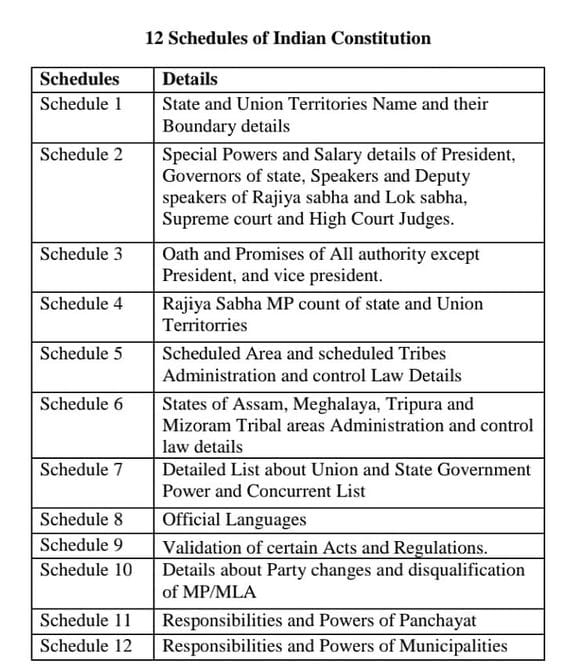
Fifth schedule of the Indian Constitution deals with the administration and control of Scheduled Areas and Scheduled Tribes residing in states other than Assam, Meghalaya, Tripura and Mizoram. Article 244(1) is directly related to Schedule 5. Ten states currently have Fifth Schedule Areas: Andhra Pradesh, Chhattisgarh, Gujarat, Himachal Pradesh, Jharkhand, Madhya Pradesh, Maharashtra, Odisha, Rajasthan, and Telangana.UPSC aspirants must focus on the key details regarding the administration and powers of the President and Governor regarding the Scheduled Areas and Scheduled Tribes.
|
Table of Contents |

Main Provisions
The entire Schedule is divided into 4 parts which are explained in detail below:
Part A:
- It provides general provisions such as interpretation of the Scheduled Areas.
- A state's executive power extends to the Scheduled Areas inside its borders.
- The governor of the state is required to report to the President on the management of Scheduled Areas on an annual basis, and the Centre gives the state instructions on how to administer these areas.
Part B:
- It provides details regarding the Administration and Control of Scheduled Areas and Scheduled Tribes.
- States with Scheduled Areas must have a Tribal Advisory Council.
- It comprises 20 members, with three-fourths of them representing Scheduled Tribes in the state legislature.
- The Governor has the authority to decide if any central or state legislation has implications for the state's Scheduled Areas.
- The Governor can also repeal or amend any regulations concerning the state having Scheduled Areas but only with the assent of the President of India.
Part C:
- It provides provisions for the declaration of Scheduled Areas.
- The President is empowered to declare an area as a Scheduled Area.
- The President can change, increase, or alter the boundary of a Scheduled Area with the approval of the state governor.
Part D:
- It provides details regarding the Amendment of the Schedule.
- Any of the provisions of this Schedule may be amended, altered, or repealed by Parliament from time to time by law.
Criteria For Declaring Schedule Areas
The criteria for declaring an area as Scheduled Area are as follows:
- a preponderance of tribal population;
- compactness and reasonable size of the area;
- under-developed nature of the area; and
- the marked disparity in the economic standard of the people.
Note:
- These criteria are not spelled out in the Indian Constitution, but they have become widely accepted.
- They embody the principles that guided the declaration of 'Excluded' and 'Partially-Excluded' Areas under the Government of India Act 1935, Schedule B of recommendations from the Constituent Assembly's Excluded and Partially Excluded Areas Sub Committee, and the UN Dhebar Commission's Scheduled Areas and Scheduled Tribes Commission (UN Dhebar Commission) 1961.
Conclusion
Although special constitutional protections for marginalised groups is necessary to ensure historical injustices against them. To deal with this sensitive subject, the government and other agencies must gain the trust of tribals and non-tribals in the region and instil a sense of security and belonging among them. Fifth Schedule, it is believed, can be transformed into a useful tool for the uplift of STs with a few crucial adjustments.
FAQs
Question: What is Schedule 5 of the Indian Constitution?
Answer: Schedule 5 of the Indian Constitution specifically deals with the administration and control of Scheduled Areas and Scheduled Tribes. It provides a framework for the governance of areas predominantly inhabited by tribal populations and aims to protect their interests and cultural identity. This schedule empowers the President of India to declare certain areas as Scheduled Areas and outlines the special provisions that can be made for these regions to ensure their development and self-governance.
Question: What are Scheduled Areas under Schedule 5?
Answer: Scheduled Areas are regions identified in the Fifth Schedule of the Indian Constitution that are predominantly inhabited by Scheduled Tribes. These areas are marked for special administrative treatment to preserve the cultural identity and rights of tribal communities. The criteria for declaring an area as Scheduled include its tribal population's economic and educational backwardness, ecological characteristics, and the need for special governance to protect tribal rights over land and resources. The states and union territories can have specific Scheduled Areas designated as per this schedule.
Question: How does Schedule 5 protect the rights of Scheduled Tribes?
Answer: Schedule 5 offers several protections and provisions for Scheduled Tribes, including:
- Land Rights: It safeguards the rights of tribal communities over their land and resources, preventing exploitation by non-tribals.
- Governance: It allows for the establishment of autonomous councils in Scheduled Areas, giving tribes greater control over their governance.
- Development Policies: The schedule mandates that development policies in these areas should consider the interests and welfare of tribal populations.
- Consultation and Participation: Any legislation affecting Scheduled Areas requires consultation with tribal leaders and communities to ensure their participation in decision-making processes.
Question: Which states in India have Scheduled Areas under Schedule 5?
Answer: Several states in India have Scheduled Areas as per Schedule 5 of the Constitution. These include:
- Chhattisgarh
- Jharkhand
- Madhya Pradesh
- Maharashtra
- Odisha
- Rajasthan
- Telangana
- Uttar Pradesh
- Gujarat
Question: What are the provisions for governance in Scheduled Areas as per Schedule 5?
Answer: Schedule 5 allows for specific governance provisions in Scheduled Areas, including:
- Tribal Advisory Councils: Each state with Scheduled Areas must establish a Tribal Advisory Council to advise the Governor on matters related to the welfare and advancement of Scheduled Tribes.
- Autonomous District Councils: Some states may establish Autonomous District Councils with legislative powers to govern Scheduled Areas more effectively.
- Special Laws: The Governor can make regulations for the governance of Scheduled Areas, including land acquisition, the management of resources, and the preservation of tribal customs and practices.
MCQs
1. What does Schedule 5 of the Indian Constitution primarily address?
A) Urban development
B) Scheduled Areas and Scheduled Tribes
C) Electoral processes
D) Fundamental Rights
Answer: (B) See the Explanation
Explanation: Schedule 5 addresses the administration of Scheduled Areas and the rights and welfare of Scheduled Tribes in India.
2. Which of the following is a criterion for declaring an area as a Scheduled Area?
A) High urban population
B) Predominantly tribal population
C) Industrial development
D) Tourist attractions
Answer: (B) See the Explanation
Explanation: An area is declared a Scheduled Area primarily based on the presence of a predominantly tribal population and its socio-economic conditions.
3. Who has the authority to declare Scheduled Areas under Schedule 5?
A) The Prime Minister
B) The President of India
C) The Chief Minister
D) The Governor of the state
Answer: (B) See the Explanation
Explanation: The President of India has the authority to declare areas as Scheduled Areas under Schedule 5 of the Constitution.
4. Which of the following states has Scheduled Areas as per Schedule 5?
A) Haryana
B) Punjab
C) Jharkhand
D) Delhi
Answer: (C) See the Explanation
Explanation: Jharkhand is one of the states in India that has Scheduled Areas designated under Schedule 5 of the Constitution.
5. What is the role of the Tribal Advisory Council as per Schedule 5?
A) To manage urban areas
B) To advise the Governor on welfare of Scheduled Tribes
C) To conduct elections
D) To oversee industrial development
Answer: (B) See the Explanation
Explanation: The Tribal Advisory Council advises the Governor on matters related to the welfare and advancement of Scheduled Tribes in the Scheduled Areas.
GS Mains Questions and Model Answers
Q1: Discuss the importance of Schedule 5 in the context of Scheduled Areas and Scheduled Tribes in India.
Answer: Schedule 5 of the Indian Constitution plays a crucial role in the governance and protection of Scheduled Areas and Scheduled Tribes. It recognizes the unique needs of tribal populations and provides a framework for their political representation and rights. By empowering the President to declare Scheduled Areas, it ensures that regions predominantly inhabited by tribes receive special attention and governance structures that respect their cultural identity and traditional practices. This schedule mandates the establishment of Tribal Advisory Councils, which facilitate communication between tribal communities and the government, enabling policies that align with their welfare. Overall, Schedule 5 serves as a significant tool for promoting the rights of tribal populations and fostering inclusive development in India.
Q2: Analyze the challenges faced by Scheduled Tribes in the context of Schedule 5 and propose solutions.
Answer: Scheduled Tribes face several challenges, including land alienation, loss of cultural identity, and inadequate access to education and healthcare. Schedule 5 aims to protect their rights, but the effective implementation of its provisions often falls short. To address these challenges, solutions must include:
- Strengthening Legal Frameworks: Enforcing laws that prevent land alienation and protect tribal rights over their ancestral lands.
- Enhancing Educational Access: Implementing targeted educational programs that are culturally relevant and accessible to tribal communities.
- Promoting Economic Development: Developing sustainable livelihood programs that empower tribal populations without compromising their cultural heritage.
- Community Engagement: Involving tribal leaders in decision-making processes to ensure that policies reflect their needs and aspirations.
These measures can help improve the living conditions of Scheduled Tribes and reinforce their rights as outlined in Schedule 5.
Q3: Evaluate the role of Schedule 5 in promoting tribal autonomy and self-governance.
Answer: Schedule 5 plays a significant role in promoting tribal autonomy and self-governance by providing a legal framework that recognizes the rights of Scheduled Tribes to govern themselves. It empowers the President to delineate Scheduled Areas and allows for the establishment of Autonomous District Councils with legislative powers. These councils enable tribal communities to make decisions regarding their governance, resources, and development. By promoting local governance, Schedule 5 fosters a sense of ownership among tribal populations and encourages participatory decision-making. However, for tribal autonomy to be fully realized, there is a need for greater political will, effective implementation of policies, and a commitment to respect the traditional governance systems of tribal communities.
Previous Year Questions on Schedule 5
1. UPSC CSE Prelims 2021:
Question: What does Schedule 5 of the Indian Constitution primarily deal with?
A) Fundamental Rights
B) Scheduled Areas and Scheduled Tribes
C) Fundamental Duties
D) Directive Principles of State Policy
Answer: (B)
Explanation: Schedule 5 primarily deals with the administration of Scheduled Areas and the rights of Scheduled Tribes in India.
2. UPSC CSE Mains 2019 (GS Paper 1):
Question: "Assess the significance of Schedule 5 in protecting the rights of Scheduled Tribes in India." Discuss its implications for governance.
Answer: Schedule 5 is significant in protecting the rights of Scheduled Tribes by recognizing their unique socio-economic conditions and providing a framework for self-governance. It empowers tribal communities to participate in decision-making through Tribal Advisory Councils and allows the President to designate Scheduled Areas, ensuring that tribal rights over land and resources are safeguarded. The implications for governance include a greater focus on inclusive policies that respect tribal culture and traditions. However, effective implementation remains crucial to address challenges faced by these communities and promote equitable development.
*email: contactus@prepp.in
Download the PREPP App and attempt FREE IAS Exam Mock Tests and get complete study material!

Live Test : UPSC CSE Prelims CSAT (Paper-II) (Oct 20 - 23)
Full Test - 04: UPSC CSE Prelims CSAT (Paper-II)
Full Test - 03: UPSC CSE Prelims CSAT (Paper-II)
UPSC CSE Prelims 2026 GS Paper 1 Question Paper (24-May-2026)
UPSC CSE Prelims 2026 CSAT Paper 2 Question Paper (24-May-2026)

17 February 2025 | The Hindu Must Read Articles | Current Affairs

16 February 2026 | The Hindu Must Read Articles | Current Affairs

13 February 2026 | The Hindu Must Read Articles | Current Affairs









Comments