Schedule 10 of Indian Constitution - Anti-Defection & Role Of Speaker - Indian Polity Notes
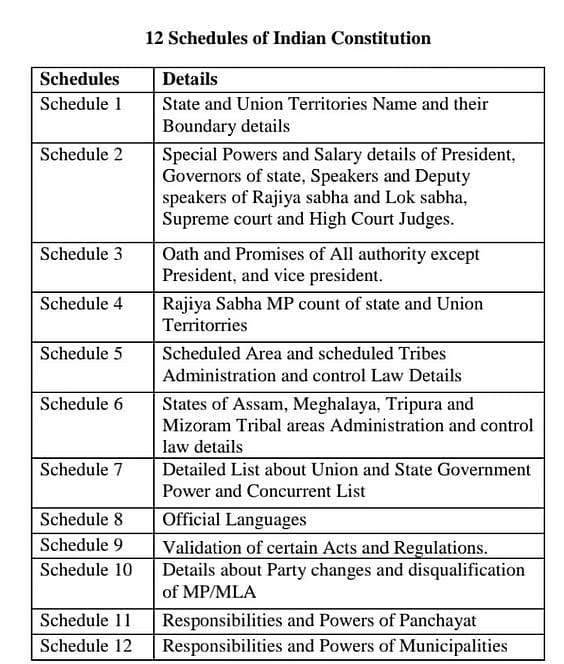
Tenth Schedule of the Indian Constitution, also called as the 'Anti-Defection Law' contains provisions relating to the disqualification of MPs and MLAs on the grounds of defection. It was added by 52nd Constitutional Amendment ,1985. This topic is an important part of UPSC Indian Polity Syllabus.
| To Read update on this topic: |
|
Table of Contents |
Historical Background
- In India, there were many defections in the late 1970s, which reflected an utter disregard for the voters' will who had elected those politicians.
- Furthermore, in 1967, a number of state governments collapsed as a result of "party-hopping" MLAs.
- The situation quickly got worse, and in the end, the Parliament unanimously agreed to appoint a committee under the chairmanship of Y.B. Chavan to look into and report on this increasingly serious issue.
- The Committee made recommendations, and the 32nd Constitutional Amendment Bill, which intended to bar defecting lawmakers from serving in ministerial positions, was subsequently filed to the Parliament.
- Then came the introduction of the 48th Constitution Amendment Bill, which was comparable to the previous one.
- Finally, the 52nd Constitutional Amendment Act, 1985, which is commonly referred to as the Anti-Defection law, was enacted by the Rajiv Gandhi government.
Important Provisions
- The Tenth Schedule to the Constitution was added by the Fifty-second Amendment Act 1985.
- The purpose of this amendment was to prevent political defections motivated by the lure of office or other similar considerations from jeopardizing the foundations of our democracy.
- The proposed remedy was to remove from office any member of either House of Parliament or the State Legislature who was found to have defected.
- The grounds for disqualification are specified in the Tenth Schedule (Paragraph 2).
- Members of a political party: A Member of Parliament or a State Legislature may be disqualified on the following grounds:
- When he voluntarily resigns from his party or disobeys the direction of the party leadership on the ballot.
- When not voting / abstaining according to the party whip.
- However, if the member has obtained prior permission from the party within 15 days of such voting or absence, the member will not be disqualified.
- Independent Members: If a member is elected as an "Independent", he or she will be disqualified if they or join a political party.
- Nominated Members: Nominated members who were not members of the party can choose to join the party within six months.
- Joining a political party after 6 months will lead to their disqualification.
- Members of a political party: A Member of Parliament or a State Legislature may be disqualified on the following grounds:
- The Constitution Bench of the Supreme Court in Kihoto Hollohan v Zachillhu and Others (1992) held that Speaker/Chairman while exercising powers and discharging functions under the Tenth Schedule act as Tribunal.
- According to Paragraph 6 of the Tenth Schedule, the order passed by the Speaker is final, but it can be subject to judicial review on four grounds:
- mala fides, perversity, violation of constitutional mandate, and order passed in violation of natural justice.
Conclusion
The introduction of the Tenth Schedule in the Indian Constitution was aimed at curbing political defections. Though the law has succeeded in a reasonable way but due to some of its loopholes, it has not been able to achieve the best it can. Over the years the law has been examined by various committees and several recommendations have been given in their reports e.g. Dinesh Goswami committee report (1990), National Commission to review the working of the Constitution of India (2002), 255th report of the Law Commission of India (2015). The government should relook at these suggestions and make suitable amendments to the existing law to help it to develop to the best possible extent.
FAQs
Question: What is the primary purpose of the Tenth Schedule of the Indian Constitution?
Answer: The primary purpose of the Tenth Schedule, added by the 52nd Amendment Act of 1985, is to prevent political defections by legislators. It lays down the process for disqualification of members of Parliament and State Legislatures on grounds of defection. This provision was introduced to ensure political stability and maintain the integrity of elected bodies.
Question: What constitutes defection under the Tenth Schedule?
Answer: Defection, as defined under the Tenth Schedule, occurs when a member of a legislature voluntarily gives up membership of their political party or votes/abstains from voting against the party’s directives without prior permission. The intention behind these rules is to discourage opportunistic political shifts that compromise party stability.
Question: Can an independent member be disqualified under the Tenth Schedule?
Answer: Yes, an independent member can be disqualified if they join a political party after being elected. The Tenth Schedule explicitly states that any independent legislator who joins a party after election will be considered to have defected and can be disqualified from the legislature.
Question: Are there any exceptions to disqualification under the Tenth Schedule?
Answer: Yes, there are exceptions. A member will not be disqualified if their political party merges with another party, provided that at least two-thirds of its members consent to the merger. This provision prevents the unjust removal of legislators when a significant faction of their party agrees to a merger.
Question: Who is the final authority in deciding disqualification cases under the Tenth Schedule?
Answer: The final authority for deciding cases of disqualification under the Tenth Schedule is the Speaker of the House or the Chairman of the Council, as applicable. However, their decisions can be subject to judicial review, ensuring a check on arbitrary decisions.
MCQs
1. Which amendment introduced the Tenth Schedule to the Indian Constitution?
A) 44th Amendment
B) 42nd Amendment
C) 52nd Amendment
D) 61st Amendment
Answer: (C) See the Explanation
Explanation: The Tenth Schedule, which addresses anti-defection laws, was introduced by the 52nd Amendment Act of 1985 to curb political defections and promote stability in legislative bodies.
2. What is one of the main triggers for disqualification under the Tenth Schedule?
A) Switching constituencies
B) Voluntarily giving up party membership
C) Filing a lawsuit
D) Refusing government benefits
Answer: (B) See the Explanation
Explanation: Under the Tenth Schedule, one of the main reasons for disqualification is when a member voluntarily gives up the membership of their political party or acts against party directives without prior approval.
3. Which of the following members is exempt from disqualification under the Tenth Schedule?
A) A member voting against their party without permission
B) An independent member joining a party post-election
C) A member whose party merges with another party with two-thirds support
D) A member forming a new party unilaterally
Answer: (C) See the Explanation
Explanation: Members are exempt from disqualification if their political party merges with another and at least two-thirds of the members agree to the merger, ensuring protection against arbitrary expulsion.
4. Who decides on disqualification cases under the Tenth Schedule?
A) The President
B) The Chief Justice of India
C) The Speaker or Chairman
D) The Election Commission
Answer: (C) See the Explanation
Explanation: The Speaker or Chairman of the legislative house decides on disqualification cases under the Tenth Schedule. However, their decisions can be reviewed by the judiciary for fairness.
5. Under what condition can a member be disqualified even if they haven't given up their party membership?
A) Absence from sessions
B) Voting/abstaining against party directives without approval
C) Criticizing the party publicly
D) Holding another office
Answer: (B) See the Explanation
Explanation: A member can be disqualified if they vote or abstain from voting against their party’s directives without prior approval. This ensures party discipline and prevents defections for personal gain.
GS Mains Questions and Model Answers
Q1: Analyze the importance of the Tenth Schedule in maintaining political stability in India. How does it impact the functioning of democracy?
Answer: The Tenth Schedule of the Indian Constitution, introduced by the 52nd Amendment Act, plays a vital role in maintaining political stability by preventing defection among legislators. It ensures that elected representatives remain loyal to their party's mandate, thus preserving the integrity of the legislature. By curbing opportunistic political shifts, the anti-defection law fosters party discipline and supports cohesive policy-making. However, the law also invites criticism for stifling dissent and reducing a legislator’s independence. The power vested in the Speaker or Chairman to decide on disqualification has raised concerns regarding potential bias, though the judiciary’s oversight serves as a corrective measure. Overall, while the Tenth Schedule strengthens democracy by mitigating instability, it must be balanced to avoid undermining democratic freedoms and constructive debate within legislative bodies.
Q2: What are the challenges associated with the implementation of the Tenth Schedule, and how can these be addressed to enhance its effectiveness?
Answer: The Tenth Schedule faces challenges such as delays in disqualification decisions and potential bias by the Speaker or Chairman due to their political affiliation. These issues compromise the objective application of anti-defection laws and can affect the impartiality of legislative procedures. Addressing these challenges requires a more transparent process and, possibly, an independent tribunal for deciding disqualification cases to mitigate biases. Judicial review acts as a safeguard, but timely interventions are necessary to maintain legislative integrity. Strengthening mechanisms for fair and quick decision-making can ensure that the Tenth Schedule remains a robust tool for maintaining political stability without hindering democratic principles.
Q3: Discuss the impact of the Tenth Schedule on the independence of legislators in India. Does it support or restrict their role in representing their constituencies?
Answer: The Tenth Schedule impacts the independence of legislators by enforcing strict party loyalty to prevent defection. While this promotes stability and coherence in policy-making, it can restrict a legislator’s ability to act in the best interest of their constituency if party directives conflict with public sentiment. The anti-defection law, therefore, creates a dilemma between upholding party discipline and maintaining the true spirit of representation. To balance this, reforms could include clearer provisions that differentiate between dissent and defection, allowing lawmakers to voice their opinions on critical issues without facing disqualification. Ensuring that the Tenth Schedule does not undermine the representative nature of democracy is essential for its successful implementation.
Previous Year Questions on the Tenth Schedule
1. UPSC CSE Prelims 2021:
Question: Which of the following authorities is responsible for deciding on disqualification cases under the Tenth Schedule?
A) The President
B) The Election Commission
C) The Speaker or Chairman
D) The Chief Justice of India
Answer: (C)
Explanation: The authority responsible for deciding on disqualification cases under the Tenth Schedule is the Speaker of the House or the Chairman of the Council, depending on the legislature. However, their decisions can be subject to judicial review.
2. UPSC CSE Mains 2020 (GS Paper 2):
Question: "Evaluate the effectiveness of the Tenth Schedule in curbing political defections while preserving the democratic values of debate and dissent. Discuss the role of the judiciary in this context."
Answer: The Tenth Schedule has been effective in curbing political defections, thereby promoting political stability and discipline within legislative bodies. However, it has also faced criticism for stifling legitimate dissent, as legislators may be constrained to vote in line with party directives, even when they disagree. The judiciary plays a crucial role in upholding democratic values by reviewing cases of disqualification to prevent arbitrary decisions by the Speaker or Chairman. Judicial oversight ensures that anti-defection laws are implemented fairly, balancing the need for party discipline with the protection of legislators’ rights to represent their constituencies. Enhancing procedural transparency and setting clear guidelines for differentiating dissent from defection could strengthen the Tenth Schedule’s role in supporting democracy.
*email: contactus@prepp.in
Download the PREPP App and attempt FREE IAS Exam Mock Tests and get complete study material!

Live Test : UPSC CSE Prelims CSAT (Paper-II) (Oct 20 - 23)
Full Test - 04: UPSC CSE Prelims CSAT (Paper-II)
Full Test - 03: UPSC CSE Prelims CSAT (Paper-II)
UPSC CSE Prelims 2026 GS Paper 1 Question Paper (24-May-2026)
UPSC CSE Prelims 2026 CSAT Paper 2 Question Paper (24-May-2026)

17 February 2025 | The Hindu Must Read Articles | Current Affairs

16 February 2026 | The Hindu Must Read Articles | Current Affairs

13 February 2026 | The Hindu Must Read Articles | Current Affairs









Comments