Right to Constitutional Remedies (Article 32) - Indian Polity Notes
Articles 32 and 226 of the Indian Constitution provide for the right to Constitutional Remedies. It is a fundamental right and is often referred to as the "heart and soul" of the Constitution. The Supreme Court can issue writs such as habeas corpus, mandamus, prohibition, quo warranto, and certiorari to enforce these rights.
The UPSC Indian Polity and Governance Syllabus include the Right to Constitutional Remedies (Article 32) which is described in this article.
Table of Contents
Right To Constitutional Remedies
- The main objective of Article 32 is to provide a guaranteed, effective, and cost-effective remedy for the protection of fundamental rights.
- The Supreme Court has original but not exclusive jurisdiction over the enforcement of Fundamental Rights. It runs concurrently with the high court's Article 226 authority. It vests original powers in the high court to issue directions, orders, and writs of all kinds for the enforcement of the Fundamental Rights.
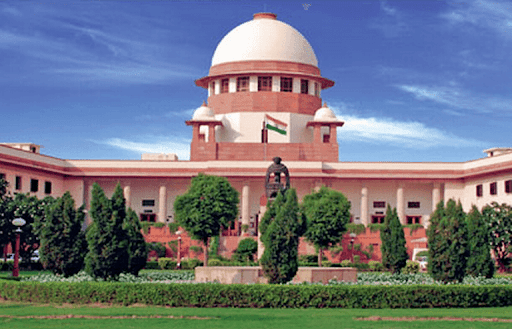
- Article 32 establishes the Supreme Court as the protector and insurer of fundamental rights. Furthermore, the Apex Court has original jurisdiction over the power to issue writs. This means that rather than appealing, a person can approach SC directly for a remedy.
|
If I was asked to name any particular article in the Constitution as the most important, I would consider it Article 32. It is the very heart and soul of the Constitution. - Dr.B.R.Ambedkar |
Dr Ambedkar’s Comment On Right to Constitutional Remedies
- Dr. B R Ambedkar stated during the Constituent Assembly debates in December 1948 that the rights conferred on the Supreme Court by this Article could not be taken away unless the Constitution was amended, and thus it was "one of the greatest safeguards that can be provided for the individual's safety and security."
- Others in the drafting committee also said that since it gives a person the right to approach the Supreme Court as a remedy if fundamental rights are violated, 'it is a right fundamental to all the fundamental rights guaranteed under the Constitution.
Important judgments related to Article 32
- Romesh Thappar vs State of Madras (1950) case: The Supreme Court emphasized that Article 32 of the Indian Constitution provides a guaranteed remedy for the enforcement of fundamental rights. The Court asserted its role as the protector and guarantor of fundamental rights, stating that it cannot refuse to entertain applications seeking protection against infringements of such rights, in line with its constitutional responsibility.
- L. Chandra Kumar v Union Of India and Others case: Article 32 was an intrinsic and necessary function of the Constitution and constituted its basic structure.
- S.P.Sampath Kumar v. Union Of India case: Powers of the Supreme Court under Article 32 formed part of the basic structure of the constitution.
Recent observations related to Article 32
- The court inquired why the petitioners in the case of journalist Siddique Kappan couldn't move to the High Court. It has requested replies from both the federal government and the state government of Uttar Pradesh
- The same Bench instructed a Nagpur-based man detained in three instances for alleged defamatory material against Maharashtra's Chief Minister and others to first seek the High Court, invoking Article 32.
- Recently, the Chief Justice of India (CJI), during a hearing of a plea, said that the court is trying to discourage petitions filed under Article 32.
- The Supreme Court feels that high courts, under Article 226, are well-equipped to deal with such matters.
- In civil or criminal matters, the first remedy available to an aggrieved person is that of trial courts, followed by an appeal in the High Court and then the Supreme Court.
Writ - Concept
- A writ can be defined as a written order issued by a court of higher authority. It is granted to a lower-level court or to an individual in the event of a breach of a citizen's basic rights. The Supreme Court of India has the power to issue a writ under Article 32 of the Indian Constitution.
- A writ petition is generally filed in case of violation of the fundamental rights or injustice served to any individual/aggrieved. It is basically a remedial measure that is provided by the constitution against the law and order regulating authority in the country for the reasons mentioned below:
- To help citizens protect their fundamental rights against court orders.
- To offer an alternative to the aggrieved in case of impugnment is not objected by the appeals made to the authorized higher authorities in the legal system.
- To make sure that justice is served and not denied.
Different Kinds of Writs in the Indian Constitution
- Article 32 and Article 226 of the Indian Constitution provide two separate but parallel provisions regarding the Writ jurisdiction with the Supreme Court and High Court respectively.
- The incorporation of Article 32 provides for a constitutional remedy against the violation of fundamental rights. The remedy under this article is limited to the violation of fundamental rights only. There are five types of the writ petition
- Writ of Habeas Corpus
- Writ of Mandamus
- Writ of Prohibition
- Writ of Certiorari
- Writ of Quo Warranto
| Habeas Corpus |
|
| Mandamus |
|
| Prohibition |
|
| Certiorari |
|
| Quo-Warranto |
|
Habeas Corpus
- The Habeas Corpus is also known as "Great Writ" which protects fundamental rights guaranteed by the Indian constitution against wrongful and indefinite detention.
- It means "show me the body" when translated from Latin.
- To protect individual freedom from arbitrary executive power
- As per Habeas Corpus, the court considers the reason for the detention as well as the legality of the detention.
- If the detention is found to be illegal, the detainee will be released. As a result, this writ protects individual liberty from arbitrary detention.
- Can be issued against both public authorities and private individuals.
- The writ, on the other hand, is not issued where:
- the detention is lawful,
- the proceeding is for contempt of a legislature or a court,
- the detention is by a competent court, and
- The detention is outside the court's jurisdiction.
Mandamus
- Mandamus is a court-issued directive to a public official, requesting that he perform his official duties which he failed to perform or refused to do so.
- It can also be used against any public figure, corporation, lower court, tribunal, or government for the purpose of the same goal.
- It literally translates to 'we command.'
- A writ of mandamus cannot be issued when:
- Against a private individual or group;
- To enforce departmental policy that does not have statutory force;
- When the duty is discretionary and not mandatory;
- To compel the execution of a contractual obligation;
- It cannot be issued against the President of India, State Governors and against Chief Justice of the High Court acting in a judicial capacity.
- Example: When the respondent did not obey the orders of the tribunal, the petitioner approached the Supreme Court for the enforcement of the orders of the tribunal. The Supreme Court issued a Mandamus ordering the respondent to abide by the orders of the tribunal.
Prohibition
- Writ of Prohibition literally means 'to forbid'.
- Writ of Prohibition is issued by a higher court to a lower court or tribunal to prevent the latter from exceeding its jurisdiction or usurping jurisdiction that it lacks.
- In contrast to mandamus, which directs activity, the prohibition directs inactivity.
- Only judicial and quasi-judicial authorities can be served with a prohibition writ.
- It cannot be used against administrative authorities, legislative bodies, or private individuals or organisations.
- Example: The Supreme Court directed the lower courts and tribunals to stay the proceedings on the grounds of excess and lack of jurisdiction.
Certiorari
- Write of certiorari literally means 'to be certified' or 'to be informed.'
- Certiorari is issued by a higher court to a lower court or tribunal to either transfer a case pending with the latter or to overturn the latter's order in a case.
- It is issued due to an excess of jurisdiction, a lack of jurisdiction, or a legal error.
- As a result, unlike prohibition, which is only preventative, certiorari is both preventive and curative.
- Previously, the writ of certiorari could only be issued against judicial and quasi-judicial authorities, not administrative ones.
- However, the Supreme Court ruled in 1991 that certiorari can be issued even against administrative authorities affecting individual rights.
- Certiorari, like prohibition, is not available against legislative bodies or private individuals or bodies.
- Example: There is a case before the District Court, and the court lacks jurisdiction to hear such matters. Nonetheless, the District Court Judge hears the matter and renders his judgement, and the aggrieved party (by such decision) petitions the High Court. As a result, the High Court issued a Writ of Certiorari on the District Court's order, and the District Court's order will be invalidated.
Quo-Warranto
- Quo-Warranto means 'by what authority or warrant'.
- Quo-Warranto is issued by the court to investigate the legality of a person's claim to a public office. As a result, it prevents a person from illegally usurping public office.
- The writ can only be issued in the case of a substantive public office of permanent character established by statute or by the Constitution.
- It cannot be issued in the case of a ministerial or private office.
- Unlike the other four writs, this can be sought by anyone who is interested, not just the aggrieved party.
- Example: A 62-year-old has been appointed to a public office, despite the fact that the retirement age is 60. The competent High Court now has the authority to issue a writ of Quo Warranto against the individual and declare the office vacant.
Conclusion
By providing citizens with a direct avenue to seek legal recourse in the case of rights violations, Article 32 of the Indian Constitution not only reinforces individual liberties but also acts as a formidable check on government actions. Its significance lies in its capacity to empower citizens, ensuring that the principles enshrined in the Constitution remain accessible, fostering a legal framework that champions justice and protects the rights of every individual.
FAQs
Q1: What is the Right to Constitutional Remedies?
Answer: The Right to Constitutional Remedies, guaranteed under Article 32 of the Indian Constitution, allows individuals to approach the Supreme Court or High Courts if their Fundamental Rights are violated.
Q2: Who termed the Right to Constitutional Remedies as the "heart and soul" of the Constitution?
Answer: Dr. B.R. Ambedkar referred to the Right to Constitutional Remedies as the "heart and soul" of the Constitution, as it empowers individuals to directly approach the judiciary for the enforcement of their Fundamental Rights.
Q3: What are the types of writs that can be issued under the Right to Constitutional Remedies?
Answer: The five types of writs that can be issued under the Right to Constitutional Remedies are: Habeas Corpus, Mandamus, Prohibition, Certiorari, and Quo-Warranto.
Q4: Can the Right to Constitutional Remedies be suspended?
Answer: Yes, the Right to Constitutional Remedies can be suspended during a National Emergency, except for rights under Articles 20 and 21.
Q5: Which Article of the Indian Constitution provides the Right to Constitutional Remedies?
Answer: Article 32 of the Indian Constitution provides the Right to Constitutional Remedies, enabling individuals to approach the Supreme Court for the enforcement of Fundamental Rights.
MCQs
- Under which Article is the Right to Constitutional Remedies provided?
a) Article 19
b) Article 32
c) Article 14
d) Article 21
Answer: (B) See the Explanation
The Right to Constitutional Remedies is provided under Article 32 of the Indian Constitution, which empowers citizens to approach the Supreme Court if their Fundamental Rights are violated.
- Which of the following writs is issued to release a person unlawfully detained?
a) Habeas Corpus
b) Mandamus
c) Certiorari
d) Quo-Warranto
Answer: (A) See the Explanation
Habeas Corpus is a writ that commands the detaining authority to produce the person before the court and justify the detention. If the detention is found unlawful, the person is released.
- Who called the Right to Constitutional Remedies the "heart and soul" of the Indian Constitution?
a) Jawaharlal Nehru
b) Mahatma Gandhi
c) Dr. B.R. Ambedkar
d) Sardar Patel
Answer: (C) See the Explanation
Dr. B.R. Ambedkar referred to Article 32 as the "heart and soul" of the Indian Constitution, emphasizing its importance in protecting citizens' Fundamental Rights.
- Which writ can be issued by a court to prevent a public authority from acting beyond its jurisdiction?
a) Mandamus
b) Certiorari
c) Prohibition
d) Quo-Warranto
Answer: (C) See the Explanation
The writ of Prohibition is issued to stop a lower court or public authority from acting beyond its jurisdiction or exceeding its powers.
- Which Article allows citizens to directly approach the Supreme Court for enforcement of Fundamental Rights?
a) Article 226
b) Article 368
c) Article 21
d) Article 32
Answer: (d) See the Explanation
Article 32 empowers citizens to directly approach the Supreme Court for the enforcement of their Fundamental Rights, making it a powerful remedy against the violation of rights.
GS Mains Questions and Model Answers
Q1. Discuss the significance of Article 32 in upholding the Fundamental Rights of citizens in India.
Answer: Article 32 of the Indian Constitution provides the Right to Constitutional Remedies, allowing individuals to approach the Supreme Court if their Fundamental Rights are violated. This provision acts as a powerful safeguard, ensuring that the Fundamental Rights enshrined in the Constitution are not merely theoretical but are enforceable. Dr. B.R. Ambedkar called it the "heart and soul" of the Constitution because it empowers individuals to seek justice. The availability of writs like Habeas Corpus, Mandamus, Prohibition, Certiorari, and Quo-Warranto ensures that the state does not overstep its boundaries, and citizens are protected against arbitrary actions by the authorities.
Q2. Explain the different types of writs issued by the courts under the Right to Constitutional Remedies.
Answer: The Right to Constitutional Remedies allows the courts to issue five types of writs:
- Habeas Corpus: Ensures that no one is unlawfully detained by ordering the authorities to produce the detained person before the court.
- Mandamus: Directs public authorities to perform a duty that they are obligated to carry out.
- Prohibition: Prevents lower courts or authorities from acting beyond their jurisdiction.
- Certiorari: Quashes the orders of lower courts if they have acted beyond their jurisdiction.
- Quo-Warranto: Inquires into the legality of a person’s claim to hold a public office.
These writs ensure that Fundamental Rights are protected from arbitrary actions by the state.
Q3. Analyze the limitations imposed on the Right to Constitutional Remedies during a National Emergency.
Answer: The Right to Constitutional Remedies, while fundamental to protecting citizens' rights, can be suspended during a National Emergency, except for rights under Articles 20 (protection in respect of conviction for offences) and 21 (protection of life and personal liberty). During an emergency, the President has the power to suspend the enforcement of other Fundamental Rights under Article 32. This limitation is controversial because it allows the government to curtail civil liberties in times of national crisis. However, the safeguards provided for Articles 20 and 21 ensure that the basic rights to life and protection from retrospective punishment remain inviolable.
Previous Year Questions on Right to Constitutional Remedies Article 32
1. UPSC CSE Prelims 2015
Question. Under which Article can a citizen directly approach the Supreme Court for the enforcement of Fundamental Rights?
Answer: Article 32
Explanation: Article 32 provides individuals with the right to approach the Supreme Court for the enforcement of their Fundamental Rights, making it a fundamental legal remedy. This article ensures that Fundamental Rights are not just ideals but are legally enforceable.
2. UPSC CSE Mains 2017
Question. Which writ is issued by a higher court to a lower court or tribunal to quash an order passed by it?
Answer: Certiorari
Explanation: The writ of Certiorari is issued by a higher court to a lower court or tribunal to quash an order passed by the latter if it acted without or beyond its jurisdiction. This writ is essential for maintaining the rule of law and preventing judicial or administrative overreach.
*email: contactus@prepp.in
Download the PREPP App and attempt FREE IAS Exam Mock Tests and get complete study material!
UPSC IAS : CSAT - Mini Live Test

Live Test : UPSC CSE Prelims CSAT (Paper-II) (Oct 20 - 23)
Full Test - 04: UPSC CSE Prelims CSAT (Paper-II)
Full Test - 03: UPSC CSE Prelims CSAT (Paper-II)
UPSC CSE Prelims 2026 GS Paper 1 Question Paper (24-May-2026)
UPSC CSE Prelims 2026 CSAT Paper 2 Question Paper (24-May-2026)

17 February 2025 | The Hindu Must Read Articles | Current Affairs

16 February 2026 | The Hindu Must Read Articles | Current Affairs

13 February 2026 | The Hindu Must Read Articles | Current Affairs









Comments