Rabi - Agriculture Notes
Rabi is one of the three major cropping seasons in India. Rabi Crops, also known as Winter crops, are crops that are generally sown in the winter and harvested in the spring in parts of India, Pakistan, and Bangladesh. The Kharif crop, which is planted after the rabi and Zaid crops are harvested one after the other, complements the rabi crop. In this article, we will discuss Rabi which will be helpful for UPSC exam preparation.
| To Read update on this topic: |
|
Table of Contents |
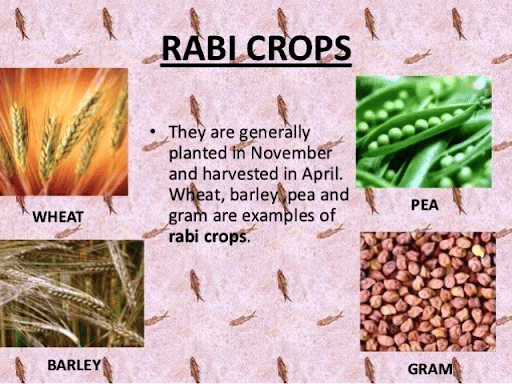
Common Rabi Crops
What is a Rabi Crop?
- The Arabic word for spring, Rabi, is commonly used to refer to the winter months of October through December when seeds are sowed, and the springs months of April through May when harvesting takes place.
- Rabi Crops are those that are harvested during this season. In short, rabi crops are agricultural crops that are planted in the winter and harvested in the spring.
- The Rabi crops are an important source of income for the agricultural economy.
- Rainfall patterns have no effect on rabi crops. Some of the major rabi crops are wheat, barley, peas, gram, and mustard.
Common Rabi Crops
The types of crops grown and harvested during the Rabi season are:
Wheat
- Wheat, which is sown and harvested during the rabi season, is one of the staple crops farmed in the nation.
- Wheat is a crop that is primarily eaten in the country's northern region and is high in protein, vitamins, and carbs.
- Wheat production in the nation was multiplied by multiple during the green revolution.
- States like Punjab, Haryana, and western Uttar Pradesh produce the most wheat nationally.
Barley
- Barley is often cultivated in cool, semi-arid climates and is sown and harvested in the Rabi season.
- India is one of the world's top producers of barley.
- Barley is a nutrient-rich food that is consumed around the world as a serial.
Gram
- Gram is an important Rabi crop that typically requires 90 to 120 days to grow.
- India is also one of the significant producers of gram crops in the world. Gram is a multi-purpose crop.
- The leaves of a gram can be eaten as vegetables and the chickpea straw is used as animal feed.
What is the Rabi Season?
- Rabi is one of the three major cropping seasons in India. The Rabi season starts in November and ends in April/ May and it varies from crop to crop and from region to region.
- Rabi crops are planted in mid-November, preferably after the monsoon rains have passed, and harvesting begins in April/May.
- Crops are grown using either rainwater that has percolated into the ground or irrigation. Winter rain damages rabi crops but benefits Kharif crops.
- Wheat is India's most important rabi crop, followed by barley, mustard, sesame, and peas. Peas are harvested early because they are ready early: Indian markets are flooded with green peas from January to March, with a peak in February.
- Many crops are grown during both the Kharif and rabi seasons. Agriculture crops in India are seasonal and heavily reliant on these two monsoons.
Rabi Crops And the Producing States
| Rabi Crop | Producing States |
|---|---|
| Wheat | Punjab, Haryana, and Western UP |
| Barley | UP, Rajasthan, Punjab, Haryana, Bihar, Himachal Pradesh, West Bengal and J&K |
| Gram | Madhya Pradesh, UP, Rajasthan, Maharashtra, Andhra Pradesh, and Karnataka |
| Peas | Uttar Pradesh, Madhya Pradesh, Bihar and Maharashtra |
| Mustard | Rajasthan, Haryana, Madhya Pradesh, and Uttar Pradesh |
Difference Between Kharif Crops and Rabi Crops
| Kharif Crops | Rabi Crops |
|---|---|
| Kharif or monsoon crops are crops that are planted during the southwest monsoon season. | Rabi or winter crops are those that are sown during the Retreating Monsoon and Northeast Monsoon season, which begins in October. |
| These crops are planted in the late spring to early summer and harvested after the monsoon rains begin in October. | These crops are typically harvested between April and May, during the summer season. |
| Kharif crops are reliant on rainfall patterns. | Rainfall has little impact on these crops. |
| Rice, maize, and pulses such as urad, moong dal, and millets are examples of Kharif Crops. | Wheat, gram, peas, and barley are examples of Rabi Crops. |
| It requires a lot of water and hot weather to grow. | A warm climate is required for seed germination, and a cold climate is required for crop growth. |
Conclusion
Rabi season, which accounts for nearly half of all food grain production, begins in November and lasts until April of the following year. Wheat is the main crop of the Rabi season and the country's staple food grain. Aside from paddy and wheat, maize is India's third largest cereal crop during the Rabi season.
FAQs
Question: What are Rabi crops?
Answer: Rabi crops, also known as winter crops, are sown in the winter season and harvested in the spring. In India, these crops are typically planted from October to December and harvested between April and June. They rely on the residual moisture in the soil from the monsoon rains and may require additional irrigation.
Question: What are some examples of Rabi crops in India?
Answer: Common Rabi crops in India include wheat, barley, peas, gram (chickpeas), mustard, and linseed. These crops are essential for the country's food security and agricultural economy.
Question: How do Rabi crops differ from Kharif crops?
Answer: Rabi crops are sown in winter and harvested in spring, relying on irrigation and residual soil moisture. In contrast, Kharif crops are sown with the onset of the monsoon (June-July) and harvested in autumn (September-October), depending heavily on monsoon rains. Examples of Kharif crops include rice, maize, and cotton.
Question: Which regions in India are major producers of Rabi crops?
Answer: The northern and northwestern states of India, such as Punjab, Haryana, Uttar Pradesh, and Madhya Pradesh, are major producers of Rabi crops, particularly wheat and barley. These regions have favorable climatic conditions and irrigation facilities that support Rabi cultivation.
Question: What climatic conditions are ideal for Rabi crops?
Answer: Rabi crops thrive in cool and dry weather conditions. They require a mild winter for optimal growth and a warm, dry environment during the harvesting period. Excessive rainfall or unseasonal weather during the growing season can adversely affect these crops.
MCQs
1. Which of the following is a Rabi crop?
A) Rice
B) Maize
C) Wheat
D) Cotton
Answer: (C) See the Explanation
Explanation: Wheat is a Rabi crop, sown in winter and harvested in spring.
2. Rabi crops are typically sown in which months in India?
A) June-July
B) September-October
C) October-December
D) January-February
Answer: (C) See the Explanation
Explanation: In India, Rabi crops are usually sown between October and December.
3. Which of the following states is a major producer of Rabi crops in India?
A) Kerala
B) Punjab
C) Assam
D) Tamil Nadu
Answer: (B) See the Explanation
Explanation: Punjab is a major producer of Rabi crops, especially wheat.
4. Which climatic condition is unfavorable for Rabi crops?
A) Mild winter
B) Excessive rainfall during growth
C) Warm and dry harvesting period
D) Cool and dry weather
Answer: (B) See the Explanation
Explanation: Excessive rainfall during the growth period is unfavorable for Rabi crops.
5. Which of the following is NOT a Rabi crop?
A) Barley
B) Mustard
C) Gram
D) Rice
Answer: (D) See the Explanation
Explanation: Rice is a Kharif crop, not a Rabi crop.
GS Mains Questions and Model Answers
Q1: Discuss the significance of Rabi crops in India's agricultural economy.
Answer: Rabi crops play a crucial role in India's agricultural economy by providing food security and contributing to the livelihoods of millions of farmers. Crops like wheat, barley, and mustard are essential for domestic consumption and export. The Rabi season allows for the optimal utilization of land and resources, ensuring a continuous supply of agricultural produce throughout the year. The success of Rabi crops also influences the pricing and availability of essential commodities in the market, thereby impacting economic stability. Moreover, their cultivation during the winter months complements the Kharif season, enabling Indian agriculture to function as a year-round activity.
Q2: How do climatic conditions impact the yield of Rabi crops in India?
Answer: Climatic conditions have a significant impact on the yield of Rabi crops. These crops thrive in cool and dry weather, with a mild winter being ideal for their growth. Excessive rainfall or unseasonal weather during the growing season can lead to waterlogging, pests, and crop diseases, reducing yield. Similarly, an overly warm winter can disrupt the growth cycle. Proper irrigation and temperature control are crucial for maintaining high productivity. Regions with favorable climatic conditions and efficient irrigation systems, such as Punjab and Haryana, consistently produce high Rabi yields.
Q3: Compare and contrast the Rabi and Kharif cropping seasons in India, highlighting their economic and agricultural significance.
Answer: The Rabi and Kharif cropping seasons are crucial for India's agricultural cycle. Rabi crops are sown in winter (October-December) and harvested in spring (April-June), while Kharif crops are sown with the onset of the monsoon (June-July) and harvested in autumn (September-October). Rabi crops, such as wheat and mustard, rely on residual soil moisture and irrigation, whereas Kharif crops, like rice and maize, depend heavily on monsoon rains. Together, these seasons ensure year-round agricultural production, stabilizing food supply and contributing to economic stability. The complementary nature of these cropping cycles maximizes land utilization, providing diverse produce for consumption and trade.
Previous Year Questions on Rabi Crops
1. UPSC CSE Prelims 2018:
Question: Which of the following is a characteristic feature of Rabi crops?
A) Dependence on monsoon rains
B) Sown in winter and harvested in spring
C) High water requirement
D) Short growing period
Answer: (B)
Explanation: Rabi crops are sown in winter and harvested in spring, relying primarily on irrigation and residual moisture.
2. UPSC CSE Mains 2017 (GS Paper 3):
Question: "Examine the challenges faced by Indian farmers during the Rabi season and suggest measures to improve productivity."
Answer: Indian farmers face several challenges during the Rabi season, including erratic weather patterns, insufficient irrigation facilities, and the rising cost of inputs such as seeds and fertilizers. Climate change has led to unpredictable rainfall and temperature fluctuations, which can adversely affect crop yields. To improve productivity, the government must invest in efficient irrigation systems, provide timely access to quality seeds, and promote climate-resilient farming practices. Additionally, crop insurance schemes and subsidies can offer financial relief to farmers, enhancing their capacity to adopt modern agricultural technologies and practices.
Download the PREPP App and attempt FREE IAS Exam Mock Tests and get complete study material!

Full Test - 04: UPSC CSE Prelims CSAT (Paper-II)
Full Test - 03: UPSC CSE Prelims CSAT (Paper-II)
UPSC CSE Prelims 2026 GS Paper 1 Question Paper (24-May-2026)
UPSC CSE Prelims 2026 CSAT Paper 2 Question Paper (24-May-2026)

17 February 2025 | The Hindu Must Read Articles | Current Affairs

16 February 2026 | The Hindu Must Read Articles | Current Affairs

13 February 2026 | The Hindu Must Read Articles | Current Affairs









Comments