Macronutrients - Elements Required in Plant Growth - Agriculture Notes
Macronutrients are nutrients that plants and other living things need in larger quantities. Some of the major macronutrients include the following elements: Carbon, hydrogen, nitrogen, oxygen, potassium, calcium, sulphur, and magnesium. Macronutrients are crucial for the growth and development of plants. They can act as redox-sensitive agents and structural components. The application of macronutrients generally improves crop output, growth, and quality. This article will explain to you about Macronutrients which will be helpful in preparing the Agriculture Syllabus for the UPSC Civil Service exam.
|
Table of Contents |
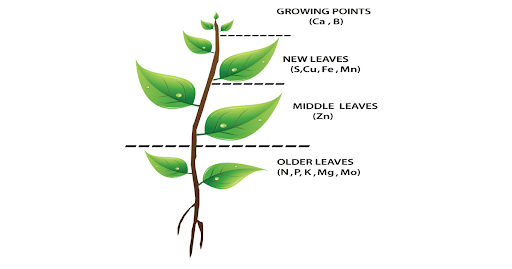
Macronutrients
What are Macronutrients in Plants?
- Since plants are living things, they need nutrients to live, grow, reproduce, and develop just like humans do.
- Macronutrients are nutrients that provide plants energy and are needed in huge amounts to maintain development and growth.
- Examples of these essential elements for crops are nitrogen (N), potassium (K), calcium (Ca), phosphorous (P), magnesium (Mg), sulphur (S), oxygen (O), carbon (C), and hydrogen (H).
- The most significant of them are nitrogen, phosphorus, and potassium because they have a direct impact on plant growth and really help to form different portions of the plant.
Major Macronutrients in Plants
Carbon
- All organic molecules require carbon as a crucial component. When a plant is dried, it is found that between 40 and 50 % of its mass is composed of carbon.
- Additionally, carbon is required to produce molecules known as macromolecules.
- Large molecules known as macromolecules, including proteins, lipids, carbohydrates, and nucleic acids, are crucial for a variety of biological functions.
- Each form of macromolecule has a distinct purpose in plants. For instance, carbohydrates are used by plant cells to store energy and provide structural support.
Nitrogen
- Nitrogen is a crucial component of proteins and is also found in a variety of other chemicals with significant physiological significance to plant metabolism.
- Nitrogen is a crucial component of chlorophyll, which serves as the main observer of the light energy required for photosynthesis.
- Nitrogen also gives plants their vibrant dark green colour and robust vegetative development.
- Nitrogen metabolism plays an important role in stem and leaf growth (vegetative growth).
- Nitrogen, as a primary component of proteins, is found in every living cell. As a result, this nutrient is usually more responsible for increasing plant growth than any other.
- Nitrogen is converted inside the plant into amino acids, which are the building blocks for proteins.
- Nitrogen is required for enzymatic reactions in plants because all enzymes are proteins.
Phosphorus
- Plants employ a process called photosynthesis to transform light energy into chemical molecules that can be utilised.
- The process of photosynthesis, which creates macromolecules and other plant chemicals, is assisted by phosphorus in plants.
- It is crucial for promoting root growth and is an essential component of nucleic acids, which are the transmitters of genetic information.
- During photosynthesis, phosphorus is also used to make ATP, a plant energy molecule.
Potassium
- To regulate the amount of water that enters plant cells, plants require a water regulator.
- They depend on potassium's presence to assist regulate a plant's water intake and loss.
- Potassium is also necessary for the mechanisms that maintain carbon absorption, transport photosynthates throughout the plant for growth, and store sugars and proteins.
- Furthermore, the ability to withstand frost, drought, and some diseases is ensured by the presence of potassium in suitable quantities.
- It improves stem rigidity and cold hardiness, improves flavour and colour on fruit and vegetable crops, increases fruit oil content, and is important for leafy crops.
Calcium
- Calcium is an enzyme activator, a structural component of cell walls, influences water movement in cells, and is required for cell growth and division.
- Some plants require calcium to absorb nitrogen and other minerals.
- Calcium, a component of cell membranes, also affects the growth of root and shoot tips and storage organs.
- Additionally, pollen growth and leaf fall prevention depend on calcium.
- It indirectly increases yield by decreasing the toxicity of aluminium and manganese in the soil.
Magnesium
- Magnesium is a critical structural component of the chlorophyll molecule and is required for plant enzymes to function in the production of carbohydrates, sugars, and fats.
- It is necessary for seed germination and the formation of fruits and nuts.
- Phosphorus absorption and transportation are aided by magnesium.
- It helps with the storage of sugars within the plant.
- Magnesium is an enzyme activator and, in fact, activates more enzymes than any other nutrient.
Sulphur
- Sulfur is a structural component of amino acids, proteins, vitamins, and enzymes and is required for chlorophyll production.
- It adds flavour to a variety of vegetables.
- In addition, it is present in a number of crucial enzymes and vitamin B1.
Deficiency of Macronutrients
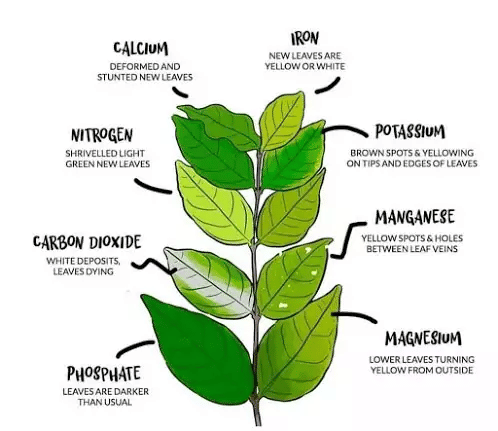
Deficiency Symptoms of Macronutrients
| Macronutrient | Deficiency Symptoms |
|---|---|
| Nitrogen |
|
| Phosphorus |
|
| Potassium |
|
| Calcium |
|
| Magnesium |
|
| Sulphur |
|
Conclusion
Every macronutrient has its unique character and is consequently involved in diverse metabolic processes of plant life. However, due to the fact that macronutrients are essential at every stage of plant life, ecophysiologists, biotechnologists, and plant physiologists have recently been trying to examine several other hidden aspects of these elements and their future prospects.
|
|
|
|---|---|
| Agriculture Notes | Cropping |
| Tillage | Watershed Management |
| Scope and Importance of Agriculture | Problems of Indian Agriculture |
FAQs
Question: What are macronutrients in plants, and why are they important?
Answer: Macronutrients are elements that are essential for plant growth in relatively large quantities. These include nitrogen, phosphorus, potassium, calcium, magnesium, and sulfur. They are required for processes like photosynthesis, protein synthesis, and cellular division, making them crucial for overall plant health and crop productivity.
Question: Which macronutrient is primarily responsible for the development of plant proteins?
Answer: Nitrogen is the macronutrient primarily responsible for the synthesis of plant proteins. It is a key component of amino acids, which are the building blocks of proteins, and is crucial for the development of plant tissues and overall growth.
Question: How does phosphorus contribute to plant growth?
Answer: Phosphorus is vital for energy transfer and storage within plants. It plays a key role in photosynthesis, root development, and flower and fruit production. Phosphorus is a component of ATP (adenosine triphosphate), which is essential for energy metabolism in plants.
Question: Why is potassium crucial for plant health?
Answer: Potassium helps in regulating water balance, enzyme activation, and protein synthesis in plants. It is also important for the plant’s ability to resist diseases, and it helps in the development of roots and flowers, ensuring overall vitality and yield.
Question: What role does sulfur play in plant nutrition?
Answer: Sulfur is a vital element for plants, essential for the synthesis of amino acids, vitamins, and enzymes. It also contributes to chlorophyll production, which is necessary for photosynthesis, thereby supporting the plant’s growth and health.
MCQs
1. Which macronutrient is most critical for the development of chlorophyll in plants?
A) Nitrogen
B) Phosphorus
C) Potassium
D) Sulfur
Answer: (D) See the Explanation
Explanation: Sulfur is essential for chlorophyll production. It also plays a key role in the synthesis of amino acids and other important plant compounds that are crucial for growth.
2. Which of the following macronutrients is mainly responsible for enhancing root development in plants?
A) Nitrogen
B) Phosphorus
C) Potassium
D) Calcium
Answer: (B) See the Explanation
Explanation: Phosphorus is particularly important for root development. It encourages strong root systems and helps plants in establishing themselves, especially during early growth stages.
3. Which macronutrient helps in regulating the opening and closing of stomata?
A) Potassium
B) Calcium
C) Nitrogen
D) Magnesium
Answer: (A) See the Explanation
Explanation: Potassium helps in regulating the opening and closing of stomata, which controls water loss and gas exchange during photosynthesis and respiration.
4. Which macronutrient is associated with improving disease resistance in plants?
A) Potassium
B) Nitrogen
C) Phosphorus
D) Calcium
Answer: (A) See the Explanation
Explanation: Potassium is vital for improving the plant's disease resistance. It strengthens the plant's cell walls and improves its ability to withstand environmental stress and diseases.
5. Which macronutrient is necessary for the synthesis of amino acids in plants?
A) Nitrogen
B) Phosphorus
C) Sulfur
D) Magnesium
Answer: (A) See the Explanation
Explanation: Nitrogen is required for the synthesis of amino acids, the building blocks of proteins. It plays a major role in plant growth and development.
GS Mains Questions and Model Answers
Q1: Discuss the role of macronutrients in plant growth and their impact on crop yield.
Answer: Macronutrients are essential for the healthy growth and development of plants. Nitrogen, phosphorus, potassium, calcium, magnesium, and sulfur are required in large quantities for various plant processes such as photosynthesis, protein synthesis, and cellular growth. Nitrogen is primarily involved in protein synthesis and overall growth. Phosphorus enhances root development and energy transfer, while potassium regulates water and nutrient transport within plants. Magnesium is crucial for chlorophyll formation, and sulfur aids in amino acid and vitamin synthesis. The availability of these nutrients directly impacts crop yield, as deficiencies can result in stunted growth, poor root development, and low productivity. Effective nutrient management is essential for maximizing crop yields and sustaining soil fertility.
Q2: How does nitrogen affect plant metabolism, and what are the consequences of its deficiency?
Answer: Nitrogen is a critical component of amino acids, proteins, and chlorophyll in plants. It plays an essential role in the formation of proteins, enzymes, and other vital plant compounds. Nitrogen is also involved in the regulation of plant metabolism, affecting photosynthesis and growth rates. A deficiency in nitrogen leads to yellowing of leaves (chlorosis), stunted growth, and poor fruit development. Plants with insufficient nitrogen may also exhibit poor root growth, making them more susceptible to disease and environmental stress. To ensure optimal plant growth, it is important to monitor nitrogen levels in the soil and apply fertilizers as needed.
Q3: Explain the significance of macronutrients for sustainable agriculture and soil management.
Answer: Macronutrients are essential for maintaining soil health and promoting sustainable agricultural practices. Proper management of nitrogen, phosphorus, potassium, and other macronutrients ensures healthy plant growth and enhances crop productivity. Sustainable agriculture practices involve the careful use of fertilizers to avoid nutrient depletion in soil. Crop rotation, organic farming, and the use of bio-fertilizers are methods to maintain soil fertility. Overuse of chemical fertilizers can lead to soil degradation, nutrient imbalances, and pollution of water sources. Therefore, balanced nutrient management is crucial for sustainable agricultural productivity and long-term soil health.
Previous Year Questions on Macronutrients
1. UPSC CSE Prelims 2021:
Question: Which of the following macronutrients is crucial for the formation of chlorophyll in plants?
A) Nitrogen
B) Magnesium
C) Phosphorus
D) Sulfur
Answer: (B)
Explanation: Magnesium is an essential component of chlorophyll, the green pigment in plants responsible for photosynthesis. A deficiency in magnesium can lead to chlorosis and reduced photosynthetic capacity in plants.
2. UPSC CSE Mains 2020 (GS Paper 2):
Question: Assess the importance of macronutrients in agricultural production and sustainable farming practices.
Answer: Macronutrients like nitrogen, phosphorus, and potassium are the foundation of agricultural productivity. These elements are essential for plant growth, energy production, and overall health. Nitrogen promotes vegetative growth, phosphorus aids root development, and potassium helps with disease resistance and stress tolerance. The balanced use of these nutrients is critical for maintaining soil fertility and preventing environmental degradation. Sustainable farming practices, such as organic farming and crop rotation, aim to maintain the natural nutrient balance of the soil, thereby ensuring long-term agricultural productivity and ecosystem health.
Download the PREPP App and attempt FREE IAS Exam Mock Tests and get complete study material!

Full Test - 04: UPSC CSE Prelims CSAT (Paper-II)
Full Test - 03: UPSC CSE Prelims CSAT (Paper-II)
UPSC CSE Prelims 2026 GS Paper 1 Question Paper (24-May-2026)
UPSC CSE Prelims 2026 CSAT Paper 2 Question Paper (24-May-2026)

17 February 2025 | The Hindu Must Read Articles | Current Affairs

16 February 2026 | The Hindu Must Read Articles | Current Affairs

13 February 2026 | The Hindu Must Read Articles | Current Affairs









Comments