JVP Committee - Indian Polity Notes
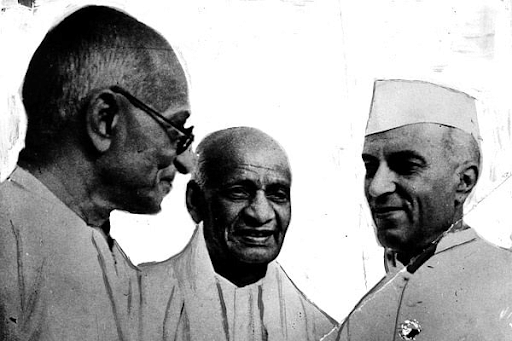
JVP committee is appointed to study the recommendations of the Dhar Commission. The name “JVP Committee” was derived from the initials of the three leaders who served as its head. They were Pandit Jawaharlal Nehru, Vallabhai Patel, and Pattabhisitaramayya. The JVP Committee also known as the “Three Ministers Committee.
|
Table of Contents |
Historical Background
- The Indian National Congress established a three-member committee at the Jaipur session, consisting of Nehru, Patel, and Pattabhi Sitaramayya.
- The committee was set up to examine the Dhar Commission report and make recommendations to the government since it caused widespread dissatisfaction, prompting Congress to appoint another Linguistic Provinces Committee in December 1948.
|
"Redistribution of provinces on a linguistic basis is not in the larger interests of the Indian nation. Such a step may disintegrate India into several narrow-minded, distinct units, weakening the bond of national unity and weakening the state itself."- JVP committee |
Recommendations
- The committee rejected the linguistic factor of reorganization of the states.
- The Committee reaffirmed the Dhar Commission's position in its report in 1949.
- The committee recommended the reorganization of States on the basis of security, unity and economic prosperity of the nation.
- The Committee also recommended that the creation of new provinces be delayed for a few years so that they could focus on other important issues and not be distracted by this one.
Significance
- While the Committee's Report did not advocate for large-scale linguistic reorganisation, it did make special mention of Andhra.
- It recommended its creation but on the condition that its protagonists abandon their claims to the city of Madras.
- However, in October 1953, the Government of India was forced to establish the first linguistic state, known as Andhra state, by separating Telugu-speaking areas from Madras state.
- This was due to a prolonged agitation and the death of Potti Sriramulu, a Congressperson of standing, after a 56-day hunger strike for the cause.
- The JVP Committee’s report underscored the need for the Union to bow to public sentiments on reorganisation of states on linguistic lines.
Conclusion
- The formation of the Andhra State increased demand from other regions for the formation of linguistically distinct states.
- As a result, there were similar calls from other parts of the country for the formation of linguistic states.
- In December 1953, the Government announced the creation of a three-member State Reorganization Commission, chaired by Fazal Ali, to examine the whole problem.
FAQs
Question: What was the JVP Committee?
Answer: The JVP Committee was formed in 1948 to address the issue of the reorganization of states based on linguistic lines. It was named after its three members – Jawaharlal Nehru, Vallabhbhai Patel, and Pattabhi Sitaramayya. The committee was tasked with examining the feasibility of creating states based on linguistic considerations and submitted its report in 1949, rejecting immediate linguistic reorganization.
Question: What was the primary recommendation of the JVP Committee?
Answer: The JVP Committee recommended that the linguistic reorganization of states should not be pursued at that time due to the potential risk of endangering national unity and integrity. The committee advised postponing the issue of linguistic states until the country had achieved greater political stability.
Question: Why was the JVP Committee formed?
Answer: The JVP Committee was formed in response to growing demands for the reorganization of states along linguistic lines, particularly from regions like Andhra Pradesh. The committee was established to assess whether such reorganization would be beneficial or harmful to the nascent Indian Republic.
Question: Did the JVP Committee recommend linguistic states?
Answer: No, the JVP Committee did not recommend the creation of linguistic states immediately. It advised caution and suggested that linguistic reorganization could wait until India had stabilized politically and economically.
Question: What impact did the JVP Committee report have on state reorganization in India?
Answer: The JVP Committee’s report delayed the linguistic reorganization of states. However, growing public pressure led to the formation of the State Reorganization Commission (SRC) in 1953, which ultimately recommended the formation of linguistic states. The recommendations of the SRC were eventually implemented in 1956.
MCQs
1. When was the JVP Committee formed?
A) 1953
B) 1948
C) 1956
D) 1947
Answer: B See the Explanation
Explanation: The JVP Committee was formed in 1948 to address the demands for linguistic reorganization of states in India.
2. Who were the members of the JVP Committee?
A) Jawaharlal Nehru, Vallabhbhai Patel, and Rajendra Prasad
B) Jawaharlal Nehru, Vallabhbhai Patel, and Pattabhi Sitaramayya
C) Jawaharlal Nehru, Dr. B.R. Ambedkar, and Rajendra Prasad
D) Sardar Patel, Dr. B.R. Ambedkar, and Rajendra Prasad
Answer: B See the Explanation
Explanation: The JVP Committee was named after its three members: Jawaharlal Nehru, Vallabhbhai Patel, and Pattabhi Sitaramayya.
3. What was the main conclusion of the JVP Committee?
A) To reorganize states on linguistic lines immediately
B) To delay linguistic reorganization
C) To divide India into provinces based on economic factors
D) To merge smaller states into larger ones
Answer: B See the Explanation
Explanation: The JVP Committee recommended delaying the linguistic reorganization of states, citing concerns about national unity and stability.
4. In which year did the JVP Committee submit its report?
A) 1956
B) 1949
C) 1953
D) 1947
Answer: B See the Explanation
Explanation: The JVP Committee submitted its report in 1949, recommending that the linguistic reorganization of states be delayed.
5. Which event followed the JVP Committee report in relation to state reorganization?
A) Formation of the State Reorganization Commission
B) Abolition of the Zamindari system
C) Creation of the Planning Commission
D) Adoption of the Indian Constitution
Answer: A See the Explanation
Explanation: Following the JVP Committee report, public pressure led to the formation of the State Reorganization Commission (SRC) in 1953, which eventually recommended the formation of linguistic states.
GS Mains Questions and Answers
Q1: Discuss the significance of the JVP Committee in the context of linguistic reorganization of states in India.
Answer: The JVP Committee, formed in 1948, played a significant role in delaying the linguistic reorganization of states in post-independence India. At a time when demands for linguistic states were growing, particularly from regions like Andhra Pradesh, the committee advised caution, arguing that linguistic reorganization could endanger national unity. The JVP Committee recommended postponing the reorganization until India had achieved greater political and economic stability.
Although the committee’s recommendation delayed the linguistic reorganization, it set the stage for future debates on the subject. By the early 1950s, public pressure led to the formation of the State Reorganization Commission, which eventually recommended the formation of linguistic states in 1956. The JVP Committee’s significance lies in its pragmatic approach to maintaining national unity during a volatile period in India’s history.
Q2: Analyze the impact of the JVP Committee’s recommendations on the political landscape of India in the years following its report.
Answer: The JVP Committee’s recommendations had a profound impact on the political landscape of India. By advising against immediate linguistic reorganization, the committee helped prevent the country from fragmenting along linguistic lines during a time of political instability. However, the committee’s stance did not quell the demand for linguistic states, particularly in Andhra Pradesh, where agitation for a separate state based on language continued.
The political pressure from various regions eventually led to the formation of the State Reorganization Commission (SRC) in 1953. The SRC’s recommendations, which were more favorable to linguistic reorganization, resulted in the formation of states along linguistic lines in 1956. While the JVP Committee delayed this process, its recommendations contributed to a more measured approach to state reorganization.
Q3: Evaluate the reasons behind the JVP Committee’s opposition to immediate linguistic reorganization of states.
Answer: The JVP Committee opposed the immediate linguistic reorganization of states for several reasons. First and foremost, the committee was concerned about the potential threat to national unity and integrity if states were reorganized along linguistic lines too soon after independence. India was still grappling with the aftermath of partition, and the committee feared that linguistic states could further divide the country.
Additionally, the committee believed that India needed political and economic stability before embarking on a major reorganization of states. The committee argued that linguistic reorganization could lead to administrative difficulties and tensions between different linguistic groups. By postponing the issue, the committee aimed to maintain national cohesion and prevent regionalism from undermining the unity of the country.
Previous Year Questions on JVP Committee
1. UPSC CSE Prelims 2021:
Question: The JVP Committee was established to address which of the following issues?
A) The abolition of Zamindari system
B) The linguistic reorganization of states
C) The drafting of the Indian Constitution
D) The creation of the Planning Commission
Answer: B
Explanation: The JVP Committee was established to address the growing demands for the reorganization of states based on linguistic lines.
2. UPSC CSE Mains 2019 (GS Paper 2):
Question: "The formation of the JVP Committee delayed the linguistic reorganization of states but could not stop it." Discuss.
Answer: The JVP Committee, formed in 1948, delayed the linguistic reorganization of states by advising caution and postponing the creation of linguistic states until India had achieved greater political stability. However, the committee’s recommendations did not quell public demand, particularly from regions like Andhra Pradesh, where people agitated for linguistic states. The political pressure eventually led to the formation of the State Reorganization Commission (SRC) in 1953, which recommended the creation of linguistic states. The recommendations of the SRC were implemented in 1956, marking a significant moment in India’s political history. While the JVP Committee delayed the process, it could not prevent the eventual reorganization of states along linguistic lines.
*email: contactus@prepp.in
Download the PREPP App and attempt FREE IAS Exam Mock Tests and get complete study material!

Full Test - 04: UPSC CSE Prelims CSAT (Paper-II)
Full Test - 03: UPSC CSE Prelims CSAT (Paper-II)
UPSC CSE Prelims 2026 GS Paper 1 Question Paper (24-May-2026)
UPSC CSE Prelims 2026 CSAT Paper 2 Question Paper (24-May-2026)

17 February 2025 | The Hindu Must Read Articles | Current Affairs

16 February 2026 | The Hindu Must Read Articles | Current Affairs

13 February 2026 | The Hindu Must Read Articles | Current Affairs









Comments