Unicameral and Bicameral legislature - Indian Polity Notes
Unicameral and Bicameral legislature are the classification of legislature depending on the number of units or chambers that make up the legislature. The organisation of the legislature is a key feature of every constitution. It could be a unicameral (one chamber) or bicameral (two chambers) body. Small countries with unitary governments are likely to have unicameral legislatures. Bicameral legislatures are common in federal states, whether large or small, with one house representing the main territorial subdivisions. This article explains the Unicameral and Bicameral legislature which is important for UPSC Indian Polity Preparation.
|
Table of Contents |
What is Legislature?
- The legislature is a part of the government that has the authority to enact laws and regulate how they are carried out.
- The two most common types of legislatures worldwide are:
- Unicameral
- Bicameral.
- A unicameral legislature is a form of government in which only one central body has the authority to enact laws and make policy decisions.
- On the other hand, a bicameral legislature has two houses of parliament, the Lower house representing the people of the country and the Upper house representing the States.
- The two houses of this sort of legislature have the same powers.
- The major function of the legislature is to enact laws. It is the basis upon which the other two institutions, the executive and the judiciary, are built.
- It is also typically accorded top priority among the three organs since there can be no law implementation or application unless and until laws are established.
| Other Relevant Links | |
|---|---|
| Features of Parliamentary Government | Collective Responsibility |
| Political Homogeneity | Separation of Powers |
|
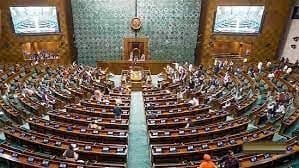
"A unicameral legislature simplifies the law-making process with a single chamber, while a bicameral legislature enriches it through dual deliberation, ensuring a balance of diverse perspectives and thorough scrutiny." |
Historical Background
- The Government of India Act of 1919, which formed the Rajya Sabha in 1921, began India's shift from unicameral to bicameral legislature.
- The Simon Commission in 1927 was split on its practicality, citing complexity and cost as reasons.
- Then, in 1935, the Government of India Act established bicameral legislatures in each of India's provinces.
What is a Unicameral Legislature?
- When there is only one house in a parliamentary system to perform all of the legislature's activities, such as enacting laws, passing a budget, overseeing administration, debating developmental plans, international relations, national plans, and so on, this is referred to as a Unicameral legislature or Unicameralism.
- It is a type of legislature in which the state/law of a country is made and implemented by only one chamber (one central entity).
- The following are some countries with unicameral national legislatures:
- Iran
- Norway
- Sweden
- Hungary
- Indian states are the best examples of unicameral state legislatures. There are 24 Indian states (Including 2 UTs, Delhi and Puducherry) with a unicameral structure out of 28 states and 8 UTs.
What is a Bicameral Legislature?
- The bicameral legislature, or bicameralism, refers to a country's legislative body, which consists of two different chambers, the Upper House and the Lower House, which share powers.
- Its major goal is to guarantee that all sectors or segments of society are fairly represented in Parliament.
- It is a two-house legislative body. India is one such example, with two houses at the national level as well as in six of the country's 28 states.
- The function of administering and enforcing legislation is shared between the two houses in a bicameral legislature.
- The Indian Parliament is divided into two houses at the national level:
- Lok Sabha is a legislative body of India (Lower House)
- Rajya Sabha is a legislative body of India (Upper House)
- Six of the 28 state legislatures are divided into two chambers:
- Legislative Assembly (Vidhan Sabha)
- Legislative Council (Vidhan Parishad)
- The six states with bicameral legislatures are as follows:
- Andhra Pradesh
- Bihar
- Karnataka
- Maharashtra
- Telangana
- Uttar Pradesh
Constitutional Provisions
Article 79
- Article 79 of the Constitution specifies the structure of parliament.
- The President and the two houses, the Lower House or House of People and the Upper House or Council of States, are included in the Parliament.
Article 168
- According to Article 168 of the Indian Constitution, a state can have both a unicameral (It should be Legislative Assembly) and bicameral legislature (Legislative Council and Legislative Assembly).
- Every State, according to Article 168 of the Indian Constitution, must have a legislature that includes the Governor.
Differences between Unicameral and Bicameral Legislature
| Difference | Unicameral | Bicameral |
|---|---|---|
| Number of House | One | Two |
| Sharing of Power | Concentrated in one house | Shared between two houses |
| System of Government | Unitary system | Federal system |
| Decision-Making | Flexible and efficient as bills are introduced and passed in only a single house | Time-Consuming as both the houses have to pass the bill hence, their approval is a tedious task |
| Deadlock | Since only one house is present a deadlock is unlikely | Common as the two houses can disagree on a bill hence, a deadlock appears which is sorted with the help of joint sitting |
| Members | Elected/Nominated | Elected/Nominated |
| Countries | Unicameral legislature is ideal for smaller nations. Ex: Sweden | Bicameral legislature is best for larger countries that require authority to be divided at the federal and state levels. Ex: India |
Merits and Demerits of Unicameral Legislature
| Merits | Demerits |
|---|---|
|
|
Merits and Demerits of Bicameral Legislature
| Merits | Demerits |
|---|---|
|
|
Conclusion
The unicameral legislature is common in nations where the bicameral legislature is not required, and the key advantage is that lawmaking is simple. Many nations throughout the world have established a bicameral legislature in order to provide all socioeconomic groups and sectors a voice. Despite the fact that some states have established a bicameral legislature, the Legislative Council's legislative powers pale in comparison to its equivalent at the centre, the RajyaSabha. There must be productive debates in order to envision more powers for the legislative council and for it to serve its genuine purpose rather than just as a back door for defeated candidates.
| Other Relevant Links | |
|---|---|
| Indian Polity UPSC Notes | Parliamentary System |
| Federal System | Centre-State Relations |
| Inter-State Relations | Emergency Provisions |
| Indian Parliament | State Legislature |
FAQs
Question: What is a unicameral legislature?
Answer: A unicameral legislature is a legislative body with a single chamber or house, responsible for making and passing laws. Countries with a unicameral system typically have simpler legislative processes, as all legislative functions are concentrated in one house.
Question: What is a bicameral legislature?
Answer: A bicameral legislature consists of two separate chambers or houses, often known as the Upper House and Lower House. In India, for example, the Parliament is bicameral, consisting of the Rajya Sabha (Council of States) and the Lok Sabha (House of the People). This system allows for a more thorough review and discussion of legislation.
Question: What are the advantages of a bicameral legislature?
Answer: A bicameral legislature offers several advantages, including greater checks and balances, more thorough scrutiny of bills, and representation of different interests (e.g., regional interests in the Upper House). It prevents hasty legislation and provides a platform for more detailed debates.
Question: How does the Indian Parliament function as a bicameral legislature?
Answer: The Indian Parliament is bicameral, comprising the Rajya Sabha (Upper House) and the Lok Sabha (Lower House). The Lok Sabha represents the people and is directly elected, while the Rajya Sabha represents states and union territories, with members elected by state legislative assemblies. Bills must be approved by both houses to become law, ensuring balanced representation and scrutiny.
Question: What are the main differences between a unicameral and bicameral legislature?
Answer: The main difference is that a unicameral legislature has one house, while a bicameral legislature has two. Bicameral systems typically provide more checks and balances, wider representation, and detailed scrutiny of legislation, while unicameral systems are simpler, faster, and cost-effective in legislative processes.
MCQs
- A unicameral legislature consists of:
A) Two chambers
B) One chamber
C) A council of ministers only
D) Three separate divisions
Answer: (B) See the Explanation
A unicameral legislature has a single legislative body responsible for making and passing laws.
- The Indian Parliament is an example of:
A) A unicameral legislature
B) A bicameral legislature
C) An executive body
D) A judicial system
Answer: (B) See the Explanation
The Indian Parliament has two houses: the Rajya Sabha (Upper House) and the Lok Sabha (Lower House).
- One key advantage of a bicameral legislature is:
A) Faster law-making process
B) No need for debates
C) Greater checks and balances in legislation
D) Less representation of regional interests
Answer: (C) See the Explanation
Bicameral legislatures provide thorough scrutiny and checks on legislative processes.
- The Rajya Sabha represents:
A) Directly elected representatives from constituencies
B) States and union territories in India
C) Executive officials only
D) Local bodies only
Answer: (B) See the Explanation
The Rajya Sabha represents the interests of states and union territories.
- Which of the following is a feature of a unicameral legislature?
A) Two houses
B) Simpler legislative process
C) Complex structure with multiple chambers
D) Equal representation of all regions
Answer: (B) See the Explanation
A unicameral system has a single chamber, leading to a simpler legislative process.
GS Mains Questions and Model Answers
Q1: Compare and contrast the unicameral and bicameral systems of legislature with examples.
Answer: Unicameral and bicameral legislatures differ in structure, representation, and legislative processes. A unicameral legislature consists of one house, making the law-making process simpler, faster, and cost-effective. Countries like Norway and New Zealand have unicameral systems. In contrast, a bicameral legislature has two houses, often with different functions and powers, providing checks and balances, greater representation, and detailed legislative scrutiny. Examples include the Indian Parliament, which has the Rajya Sabha (Upper House) representing states and the Lok Sabha (Lower House) representing the people. While unicameral systems offer efficiency, bicameral systems ensure wider representation and more comprehensive review of legislation.
Q2: Discuss the advantages and challenges of a bicameral legislature in a parliamentary democracy like India.
Answer: A bicameral legislature in India offers several advantages, including checks and balances, broader representation of regional and state interests through the Rajya Sabha, and more comprehensive scrutiny of bills. It prevents hasty decisions and ensures that laws are thoroughly debated before enactment. However, challenges include potential delays in legislation due to differing opinions between the two houses, increased costs of maintaining two chambers, and occasional deadlocks over critical issues. Balancing efficiency with thorough scrutiny is key to maximizing the effectiveness of a bicameral legislature in a parliamentary democracy.
Q3: Explain how the Rajya Sabha and Lok Sabha function together to ensure legislative balance in India’s bicameral system.
Answer: The Rajya Sabha (Upper House) and Lok Sabha (Lower House) work together in India's bicameral parliamentary system to ensure legislative balance. The Lok Sabha, directly elected by the people, represents popular will and initiates most bills, including money bills. The Rajya Sabha, representing states and union territories, reviews and suggests amendments to bills passed by the Lok Sabha, ensuring regional interests are considered. Both houses must approve a bill for it to become law, except in the case of money bills, where the Rajya Sabha's role is limited. This collaboration ensures a thorough legislative process, balanced representation, and comprehensive review of proposed laws.
Previous Year Questions on Unicameral and Bicameral legislature
1. UPSC CSE 2020
Question: Evaluate the effectiveness of the bicameral system in maintaining checks and balances within the Indian Parliament.
Answer: The bicameral system in the Indian Parliament, comprising the Rajya Sabha and the Lok Sabha, effectively maintains checks and balances by providing two levels of legislative scrutiny. The Lok Sabha represents the people and initiates most legislation, while the Rajya Sabha represents states and ensures regional concerns are addressed. This dual structure prevents the concentration of power, promotes detailed discussion of bills, and allows for amendments and review. However, disagreements between the two houses can delay legislation. Despite occasional challenges, the system promotes balanced governance and prevents hasty decision-making, reflecting India's federal structure and democratic values.
2. UPSC CSE 2019
Question: Discuss the relevance of unicameral and bicameral legislatures in the context of federal and unitary states.
Answer: Unicameral and bicameral legislatures have distinct roles in federal and unitary states. Unicameral legislatures, with a single legislative body, are common in unitary states where centralized governance and simpler legislative processes are preferred. They offer efficiency, lower costs, and faster law-making. In federal states, bicameral legislatures are more common to ensure balanced representation of regions or states. The bicameral system, such as in India and the United States, allows for greater scrutiny of legislation and representation of diverse regional interests, maintaining a balance of power between the central and state governments. Each system is relevant based on the country's governance structure and need for representation.
*email: contactus@prepp.in
Download the PREPP App and attempt FREE IAS Exam Mock Tests and get complete study material!

Full Test - 04: UPSC CSE Prelims CSAT (Paper-II)
Full Test - 03: UPSC CSE Prelims CSAT (Paper-II)
UPSC CSE Prelims 2026 GS Paper 1 Question Paper (24-May-2026)
UPSC CSE Prelims 2026 CSAT Paper 2 Question Paper (24-May-2026)

17 February 2025 | The Hindu Must Read Articles | Current Affairs

16 February 2026 | The Hindu Must Read Articles | Current Affairs

13 February 2026 | The Hindu Must Read Articles | Current Affairs









Comments