Fazl Ali Commission (States Reorganization Commission) - Indian Polity Notes
Fazl Ali Commission also called the States Reorganization Commission was set up to investigate whether states can be reorganised on the basis of the linguistic basis. The Commission's introduction was mainly due to the formation of a separate state called Andhra Pradesh purely on a linguistic basis. Other regions also started demanding the formation of separate states based on linguistic factors.
|
Table of Contents |
Historical Background
- The establishment of the state of Andhra Pradesh heightened demand from other regions for the establishment of linguistically distinct states.
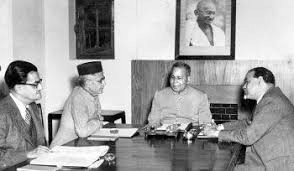
- This compelled the Government of India to appoint a three-member State Reorganisation Commission, chaired by Fazl Ali, in December 1953, to re-examine the entire issue.
- K.M. Panikkar and H.N. Kunzru were its other two members.
- This commission would look into "objectively and dispassionately the question of reorganizing the States of the Indian Union in order to promote the welfare of each constituent unit as well as the nation as a whole."
|
"By aligning state boundaries with linguistic lines, India embraced its multifaceted identity, ensuring that each language and culture received the recognition and respect it deserved." |
Recommendations
- It submitted its report in September 1955 and widely accepted language as the basis for state reorganization.
- It identified four major factors that should be considered in any scheme of state reorganization:
- Preservation and strengthening of the unity and security of the country.
- Linguistic and cultural homogeneity.
- Financial, economic, and administrative considerations.
- Planning and promotion of the welfare of the people in each state as well as of the nation as a whole.
- The Fazl Ali Commission suggested the abolition of the four-fold classification of states and territories under the original Constitution and the creation of 16 states and 3 centrally administered territories.
- It also recommended that the institution of Rajapramukh and special agreements with former princely states should be abolished.
- It also recommended that the general control by the government of India as per Article 371 should be repealed.
Significance
- It rejected the 'one language, one state' theory.
- Its position was that India's unity should be the primary consideration in any redrawing of the country's political units.
- The Indian government accepted these recommendations with minor changes.
- The State Reorganisation Act of 1956 and the 7th Constitutional Amendment Act of 1956 abolished the distinction between Part A and Part B states, as well as Part C states.
- Some were merged with neighboring states, while others were designated as union territories.
- As a result, on November 1, 1956, 14 states and six union territories were formed.
Conclusion
- The Fazl Ali Commission's recommendations were accepted by the Indian government with minor changes.
- As a result, the State Reorganization Act of 1956 was passed by Parliament to implement the commission's recommendations.
FAQs
Q1: What was the Fazl Ali Commission?
Answer: The Fazl Ali Commission was a commission established by the Indian government in 1953 to recommend the reorganization of states based on linguistic lines.
Q2: Who chaired the Fazl Ali Commission?
Answer: The commission was chaired by Fazl Ali, a former judge of the Supreme Court of India.
Q3: What were the recommendations of the Fazl Ali Commission?
Answer: The Fazl Ali Commission recommended the reorganization of Indian states primarily based on language, while also considering administrative convenience and preserving India's unity.
Q4: What was the significance of the Fazl Ali Commission’s recommendations?
Answer: The Fazl Ali Commission’s recommendations led to the formation of several new states in India, including Andhra Pradesh, and marked a significant step in the linguistic reorganization of Indian states.
Q5: How did the Fazl Ali Commission impact Indian federalism?
Answer: The reorganization of states based on language strengthened the federal structure of India, ensuring better representation for linguistic communities while maintaining national unity.
MCQs
- In which year was the Fazl Ali Commission established?
a) 1947
b) 1953
c) 1960
d) 1956
Answer: (B) See the Explanation
The Fazl Ali Commission was set up in 1953 to recommend the reorganization of states based on linguistic lines, following demands from various linguistic communities.
- Who chaired the Fazl Ali Commission?
a) Jawaharlal Nehru
b) Sardar Patel
c) Fazl Ali
d) Dr. Rajendra Prasad
Answer: (C) See the Explanation
The Fazl Ali Commission was chaired by Fazl Ali, a former Supreme Court judge, and was tasked with studying the reorganization of Indian states.
- Which state was the first to be formed on a linguistic basis following the Fazl Ali Commission's recommendations?
a) Gujarat
b) Andhra Pradesh
c) Maharashtra
d) Punjab
Answer: (B) See the Explanation
Andhra Pradesh was the first state to be formed on linguistic lines, following the recommendations of the Fazl Ali Commission in 1953, after a prolonged movement demanding a Telugu-speaking state.
- What was one of the key criteria for the reorganization of states according to the Fazl Ali Commission?
a) Ethnicity
b) Religion
c) Language
d) Caste
Answer: (C) See the Explanation
The primary criterion for the reorganization of states, as recommended by the Fazl Ali Commission, was language, although administrative convenience and national unity were also considered.
- Which of the following was NOT a recommendation of the Fazl Ali Commission?
a) Formation of linguistic states
b) Abolition of the distinction between Part A, B, C, and D states
c) Creation of a separate state for each religion
d) Administrative efficiency as a factor in state reorganization
Answer: (C) See the Explanation
The Fazl Ali Commission recommended the formation of states on linguistic lines, not based on religion. Its goal was to promote administrative efficiency while ensuring the representation of linguistic communities.
GS Mains Questions and Model Answers
Q1. Discuss the role of the Fazl Ali Commission in the linguistic reorganization of Indian states.
Answer: The Fazl Ali Commission, established in 1953, played a pivotal role in the linguistic reorganization of Indian states. It was tasked with addressing demands for the creation of states based on linguistic identity, which had gained momentum in post-independence India. The commission, chaired by Fazl Ali, recommended the reorganization of states primarily based on language, while also considering administrative convenience and national unity. This led to the creation of states such as Andhra Pradesh, which was the first linguistic state. The commission’s recommendations helped to reduce regional tensions and provided a more cohesive administrative structure for India's federal system. It also set a precedent for future reorganizations, contributing to the strengthening of Indian federalism.
Q2. How did the recommendations of the Fazl Ali Commission impact the federal structure of India?
Answer: The recommendations of the Fazl Ali Commission had a significant impact on India's federal structure by creating states based on linguistic identity, which allowed for better representation of linguistic communities. This reorganization promoted a sense of identity and cultural pride among these communities, reducing tensions that had arisen from linguistic disparities. At the same time, the commission's emphasis on maintaining national unity ensured that the new states functioned within the framework of India's federal system. This balance between linguistic representation and national unity helped stabilize India's political landscape and strengthened its federal structure by making the states more linguistically homogeneous and administratively efficient.
Q3. Evaluate the significance of the Fazl Ali Commission’s report in shaping modern Indian politics.
Answer: The Fazl Ali Commission’s report is a landmark in Indian political history as it laid the foundation for the linguistic reorganization of states. The creation of states based on linguistic identity addressed the long-standing demands of various linguistic communities for greater political representation. This not only quelled regional discontent but also allowed for more effective administration, as states became more homogeneous in terms of language. The report’s recommendations also influenced modern Indian politics by shaping state boundaries that exist to this day. The commission ensured that the federal structure was maintained, with a strong emphasis on national unity, while also promoting cultural and linguistic diversity. This model of reorganization has influenced subsequent demands for the creation of new states in India.
Previous Year Questions on Fazal ali committee
1. UPSC CSE Mains 2017
Question. How did the recommendations of the Fazl Ali Commission influence the reorganization of Indian states in 1956?
Answer: The Fazl Ali Commission, established in 1953, recommended the reorganization of Indian states primarily on the basis of language, a move that reshaped the political landscape of India. The commission’s report led to the States Reorganisation Act of 1956, which reorganized the country’s states along linguistic lines, leading to the abolition of the old classification of states into Part A, B, C, and D. The most significant outcome of the commission’s recommendations was the creation of Andhra Pradesh, the first state formed specifically for Telugu speakers. Other states soon followed, based on linguistic identities, such as Maharashtra, Gujarat, Kerala, and Karnataka. The reorganization addressed regional demands for linguistic representation while maintaining national unity. It also laid the foundation for a more balanced federal structure, where linguistic and cultural identities were preserved within the framework of a united India. This reorganization helped stabilize the political climate by reducing linguistic tensions and providing for more cohesive state governance.
2. UPSC CSE Mains 2018
Question. Discuss the rationale behind the creation of linguistic states in India, with reference to the Fazl Ali Commission’s report.
Answer: The creation of linguistic states in India, based on the recommendations of the Fazl Ali Commission, was driven by the need to address demands for linguistic representation in the governance of newly independent India. Post-independence, many linguistic groups felt marginalized within the existing administrative boundaries, leading to calls for states where the dominant language of the people would also be the language of the state’s administration. The commission’s report acknowledged that language was an essential marker of cultural identity and played a crucial role in fostering unity and efficient governance within states. The commission, however, also balanced these demands with the need to maintain the unity of the Indian Union, recommending the reorganization of states in a way that promoted both linguistic representation and administrative efficiency. This led to the creation of states like Andhra Pradesh, which addressed the concerns of Telugu speakers, and set the stage for further reorganization on linguistic lines. The reorganization also facilitated better governance, as people in each state could communicate in their native languages, thus fostering a more inclusive political and administrative environment.
*email: contactus@prepp.in
Download the PREPP App and attempt FREE IAS Exam Mock Tests and get complete study material!

Full Test - 04: UPSC CSE Prelims CSAT (Paper-II)
Full Test - 03: UPSC CSE Prelims CSAT (Paper-II)
UPSC CSE Prelims 2026 GS Paper 1 Question Paper (24-May-2026)
UPSC CSE Prelims 2026 CSAT Paper 2 Question Paper (24-May-2026)

17 February 2025 | The Hindu Must Read Articles | Current Affairs

16 February 2026 | The Hindu Must Read Articles | Current Affairs

13 February 2026 | The Hindu Must Read Articles | Current Affairs









Comments