Virtue Ethics - Ethics Notes
Virtue ethics is a general word for moral philosophy ideas that emphasise the significance of character and virtue rather than fulfilling one's duty or acting in order to get positive results. Virtue ethics is concerned not only with the rightness or wrongness of particular actions, but also with the qualities and behaviours that a decent person will strive towards. It's a helpful concept since people are typically more interested in judging the character of another person than the goodness or badness of a specific deed.
This article explains Virtue ethics that is important for UPSC IAS exam preparation.
Table of Contents
Virtue Ethics - Concept
- Aristotle and other ancient Greeks established the theory of virtue ethics. It is the desire to comprehend and live a morally upright life.
- This character-based morality approach claims that goodness is acquired via practice.
- A person develops an honourable and moral character through practising being honest, brave, just, and generous, among other qualities.
- Aristotle believes that through cultivating virtuous habits, people are more likely to make the correct decision when presented with ethical quandaries.
- Virtue ethics teaches us what it means to be a virtuous person. Furthermore, it provides guidance for living life without providing explicit guidelines for resolving ethical quandaries.
- Individuals are good if they possess particular virtues (great characteristics) rather than adhering to certain rules or regulations.
- Deontology is the polar opposite of virtue ethics, in which morality is based on fulfilling one's obligation to follow the rules or obey the law.
- The ancient Greeks believed that a virtue (aret) was essential to pleasure and human satisfaction.
- Socrates emphasised that virtue is knowledge, and that each individual must maximise their innate potential.
| Other Relevant Links | |
|---|---|
| Ethical Ideals in Life | Kantianism |
| Stoicism | Moral subjectivism |
| Cultural relativism | Sceptical doctrines |
| Utilitarianism | Epicureanism |
| Psychological egosim | Socrates |
| Western Moral Thinkers | Plato |
Virtue Ethics - Principles
- Virtue ethics teaches:
- An activity is only right if it is something that a virtuous person would do in the same situation.
- A virtuous person is one who acts in a virtuous manner.
- If a person "possesses and lives the virtues," they act virtuously.
- A virtue is a moral quality that a person must have in order to live properly.
- Most virtue theorists would also argue that the virtuous person acts virtuously as a result of logical reasoning (rather than, say, instinct).
Virtue Ethics - Significance
- Longevity or Constancy: Most virtue ethics ideas are inspired by Aristotle, who stated that a virtuous person possesses perfect character attributes throughout their lives.
- A virtuous person, for example, is someone who is nice in many circumstances throughout his or her life because that is his or her character, not because he or she wants to maximise utility, obtain favours, or just perform his or her duty.
- It assists a person in analysing and sustaining one's character regardless of the existence of specified regulations.
- It inevitably causes a person to contribute to society without the need for rules and sanctions.
- Following virtue ethics allows a person to acquire and practise virtues such as honesty, integrity, transparency, and so on, as well as live and be decent.
- Modesty: encourages a person to do his or her duty with maximum humility and simplicity, especially for government workers, keeping them from displaying arrogance.
- Temperance: the discipline of self-control, which results in the avoidance of avoidable disputes and clashes in general.
- Inherent nature: They make us better people since our drive to do good comes from inside and is not contingent on the outcome of the activity.
- For example, if a person discovers an unethical behaviour by his or her organisation, he or she will not be forced to choose between actual wellbeing and loyalty to his or her organisation in order to advance in the firm.
- As a matter of honesty, the individual will take the necessary steps to expose the unethical behaviour.
- Inculcation of qualities: According to virtue ethics, many feminine attributes, such as loving and nurturing, are equally vital for an individual's healthy development.
- Virtue ethics is person-centred rather than action-centred, concentrating on the virtue or moral character of the person doing the activity rather than ethical obligations and norms or the consequences of specific actions.
- Virtue ethics considers not just the rightness or wrongness of particular actions, but also the qualities and behaviours that a decent person should aspire towards.
- As a result, virtue ethics is concerned with a person's entire life rather than single incidents or behaviours. A decent person is someone who lives virtuously - someone who has the virtues and practises them.
Virtue Ethics - Criticism
- Some argue that virtue ethics is too imprecise in terms of directing behaviours.
- They argue that its concepts aren't detailed enough to assist us in overcoming complex ethical quandaries.
- Some individuals believe that virtue ethics breeds moral narcissism,' in which we are concerned with our own ethical character to the exclusion of everyone and everything else.
- Although it does give basic information on how to be a decent person, it does not provide explicit counsel on what to do in moral quandaries.
- Presumably, a completely virtuous person would know what to do, and we may consider them an appropriate role model to guide us.
- There is no widespread consensus on what the virtues are, and any list of virtues may be related to the society in which it is compiled.
Virtue Ethics - In Indian Philosophy
- Virtue Ethics has always been an inherently ethically responsible way of life taught by numerous leaders and philosophers of India, accepted and spread in diverse methods, from early champions like Lord Buddha and Chanakya to modern thinkers like Swami Vivekananda, Mahatma Gandhi, and others.
- Mahatma Gandhi and his ethical attitude in the Indian Freedom Struggle: Gandhi thought that men could never achieve the completeness of heavenly attributes as human beings.
- Nonetheless, they must endeavour with all their can to uphold the principles of truth, love, nonviolence, tolerance, fearlessness, generosity, and service to humanity.
- Men must defend their rights, regardless of the personal repercussions. He exhorted Satyagrahis to embrace these values.
- He saw the Indian battle for freedom to be a legitimate struggle for national and individual sovereignty.
- Selfless devotion to humanity: Gandhi held that all humans are equal and that there are no disparities between us. He advocated for the interconnectedness of life and humanity, as seen by his altruistic efforts for untouchables (calling them Harijans).
Aristotle - Western Moral Thinker
- Aristotle was a Greek philosopher and polymath who lived between 384 and 322 BC.
- His papers include a wide range of subjects, such as physics, biology, zoology, and philosophy.
- He provided the groundwork for the future Aristotelian tradition as the founder of the Peripatetic school of philosophy at Athens' Lyceum.
- Aristotle's ethics is known as "virtue ethics" because it emphasises character development and the acquisition of particular traits such as courage, justice, temperance, compassion, and prudence rather than the moral weight of obligations or responsibilities.
- Some people are born with weaker wills than others, according to Aristotle; for these people, escaping in a conflict may actually be good (the extremes being to get slaughtered or commit suicide).
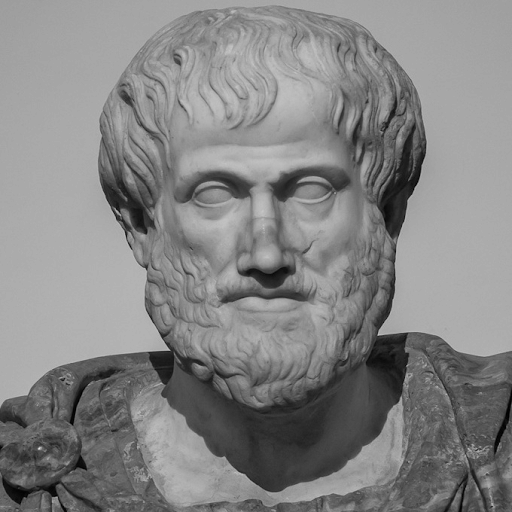
Aristotle
Conclusion
Though virtue ethics has its own set of criticisms, such as self-centeredness, lack of pragmatism, and a lack of constitutionally directed principles, the continual self-awareness, self-development, and knowledge building that it fosters cannot be disregarded. Emotional intelligence, combined with practicality when necessary, will constitute a wholesome mix for an individual's growth and enable her/him to contribute significantly to society.
| Other Relevant Links | |
|---|---|
| Challenges To Ethics and Moral Accountability | Gandhian Ethics |
| Aspects of Morals | Definition of Ethics |
| Post Aristotelian Philosophers | Ethical Ideas in Indian Philosophical Tradition |
| Lessons From The Lives Of Great Indian Leaders, Reformers And Administration | Moral Thinkers of the Twentieth Century |
FAQs
What is Virtue Ethics?
Answer: Virtue ethics is an ethical theory that emphasizes the role of character and virtues in moral philosophy rather than rules or consequences. It suggests that moral behavior arises from the cultivation of good character traits, such as honesty, courage, and compassion, and that these virtues should guide our actions.
Who is the primary philosopher associated with Virtue Ethics?
Answer: Virtue ethics is most famously associated with the ancient Greek philosopher Aristotle. His work, Nicomachean Ethics, outlines the concept of eudaimonia (flourishing) as the ultimate goal of human life, achieved through the development of virtuous character traits.
What are the main principles of Virtue Ethics?
Answer: The main principles of virtue ethics are the cultivation of virtues, the importance of character over actions, and the pursuit of eudaimonia (human flourishing or well-being). It focuses on developing good habits and traits over time that lead to a morally good life.
How does Virtue Ethics differ from deontological and consequentialist theories?
Answer: Unlike deontological ethics, which focuses on rules and duties, or consequentialism, which focuses on the outcomes of actions, virtue ethics emphasizes the importance of the moral agent’s character and intentions. Virtue ethics asks "What kind of person should I be?" rather than "What should I do?"
What role does practical wisdom (phronesis) play in Virtue Ethics?
Answer: In virtue ethics, practical wisdom (phronesis) is crucial as it is the ability to make the right decisions in complex situations. It is not just about knowing what is good but also about applying that knowledge in specific contexts to act virtuously.
MCQs
- Which philosopher is most closely associated with Virtue Ethics?
A) Immanuel Kant
B) Aristotle
C) John Stuart Mill
D) Friedrich Nietzsche
Answer: (B) See the Explanation
Aristotle is the philosopher most closely associated with virtue ethics, particularly through his work Nicomachean Ethics.
- What is the main focus of Virtue Ethics?
A) Following moral rules
B) Maximizing happiness
C) Developing good character traits
D) Achieving the greatest good for the greatest number
Answer: (C) See the Explanation
Virtue ethics emphasizes cultivating virtues and good character traits rather than adhering to rules or focusing on consequences.
- What is 'eudaimonia' in Aristotle’s Virtue Ethics?
A) The principle of duty
B) Human flourishing or well-being
C) The greatest happiness
D) The elimination of suffering
Answer: (B) See the Explanation
Eudaimonia is the state of flourishing or well-being, considered the ultimate goal of life in Aristotle’s virtue ethics.
- Which of the following is a key component of practical wisdom (phronesis) in Virtue Ethics?
A) Following universal moral laws
B) Making decisions based on the outcomes
C) Applying moral knowledge in specific situations
D) Acting according to duty
Answer: (C) See the Explanation
Practical wisdom (phronesis) is the ability to apply moral knowledge in real-life situations, making wise and virtuous decisions.
- How does Virtue Ethics differ from Consequentialism?
A) Virtue Ethics focuses on the outcome of actions, while Consequentialism focuses on the character of the agent
B) Virtue Ethics focuses on the character of the agent, while Consequentialism focuses on the outcomes of actions
C) Virtue Ethics is concerned only with societal rules, while Consequentialism is about individual happiness
D) There is no difference; both theories are the same
Answer: (B) See the Explanation
Virtue ethics emphasizes the moral character and virtues of the individual, while consequentialism focuses on the outcomes or consequences of actions.
GS Mains Questions and Model Answers
Q1: Explain the concept of Virtue Ethics and its significance in modern ethical discussions.
Answer: Virtue ethics is an ethical theory that emphasizes the development of good character traits, or virtues, as the foundation for moral behavior. Unlike deontological ethics, which focuses on rules and duties, or consequentialism, which is concerned with the outcomes of actions, virtue ethics focuses on the character and intentions of the moral agent. The significance of virtue ethics in modern ethical discussions lies in its emphasis on the importance of moral character and the cultivation of virtues such as honesty, courage, compassion, and wisdom. In today’s complex and diverse society, where moral dilemmas often require nuanced judgment, virtue ethics provides a framework for individuals to navigate ethical issues by fostering good habits and practical wisdom. It offers a holistic approach to ethics that goes beyond rules or consequences and focuses on living a morally excellent life.
Q2: Analyze the strengths and weaknesses of Virtue Ethics in ethical decision-making.
Answer: Strengths: Virtue ethics emphasizes the importance of character and moral virtues, making it a more personalized and holistic approach to ethics. By focusing on becoming a good person rather than merely following rules or focusing on outcomes, it encourages moral development over time. It also provides flexibility in ethical decision-making by considering the context and the agent’s intentions, offering a more adaptable approach to real-world moral challenges.
Weaknesses: A major critique of virtue ethics is its lack of clear guidelines for action in specific situations. Unlike deontological ethics, which offers clear rules, or consequentialism, which measures actions by their outcomes, virtue ethics relies heavily on the judgment of the individual. This can lead to subjective interpretations of what constitutes virtuous behavior. Additionally, the theory does not always provide solutions to complex moral dilemmas where conflicting virtues may arise, making it difficult to apply in some real-life scenarios.
Q3: Discuss how Virtue Ethics contributes to the understanding of moral education and character development.
Answer: Virtue ethics plays a crucial role in moral education by emphasizing the development of good character traits and habits over time. According to virtue ethics, moral education is not just about teaching rules but about shaping the individual into someone who can make virtuous decisions in various contexts. The focus is on developing practical wisdom (phronesis), which allows individuals to discern the right course of action in different situations based on their understanding of virtue. Through continuous practice and self-reflection, individuals can cultivate virtues such as honesty, courage, empathy, and justice, which are essential for living a morally good life. This approach to moral education encourages personal growth, emotional intelligence, and ethical awareness, helping individuals contribute positively to society.
Previous Year Questions on Virtue Ethics
1. UPSC CSE 2017
Question: "Discuss the theory of Virtue Ethics and evaluate its application in contemporary moral dilemmas."
Answer: Virtue ethics, primarily associated with Aristotle, focuses on the development of good character traits that guide individuals to live morally. Unlike other ethical theories that prioritize rules or consequences, virtue ethics emphasizes becoming a virtuous person over time. In contemporary moral dilemmas, virtue ethics offers a flexible approach, focusing on the intentions and character of the individual. It encourages practical wisdom in making ethical decisions, but its application can be challenging in situations where virtues conflict or where specific actions are unclear.
2. UPSC CSE 2020
Question: "Critically examine the strengths and limitations of Virtue Ethics in addressing modern ethical challenges."
Answer: Virtue ethics emphasizes moral character and the development of virtues such as courage, honesty, and empathy. One strength of virtue ethics is its emphasis on personal growth and moral development, encouraging individuals to strive for eudaimonia, or human flourishing. However, it faces criticism for lacking clear action-guidance in specific situations and for its subjective nature, as different cultures or individuals may have varying conceptions of what constitutes a virtue. In addressing modern ethical challenges, virtue ethics offers a broad framework but may struggle to provide definitive answers when competing virtues or actions are at stake.
Download the PREPP App and attempt FREE IAS Exam Mock Tests and get complete study material!

Full Test - 04: UPSC CSE Prelims CSAT (Paper-II)
Full Test - 03: UPSC CSE Prelims CSAT (Paper-II)
UPSC CSE Prelims 2026 GS Paper 1 Question Paper (24-May-2026)
UPSC CSE Prelims 2026 CSAT Paper 2 Question Paper (24-May-2026)

17 February 2025 | The Hindu Must Read Articles | Current Affairs

16 February 2026 | The Hindu Must Read Articles | Current Affairs

13 February 2026 | The Hindu Must Read Articles | Current Affairs









Comments