Socrates - Western Moral Thinkers - Ethics Notes
Socrates (469-399 BC) was a Greek philosopher from Athens who is often regarded as the founder of Western philosophy and one of the earliest moral philosophers of the ethical school of thought. Unlike most Pre-Socratic philosophers, who were more concerned with determining how the universe functioned, Socrates was more concerned with how people should act, making him possibly the first important philosopher of Ethics. Plato (427-347 BC) was the most renowned student of Socrates.
This article will explain Socrates (469-399 BC) which will be helpful in Ethics preparation for the UPSC Civil service Mains exam.
Table of Contents
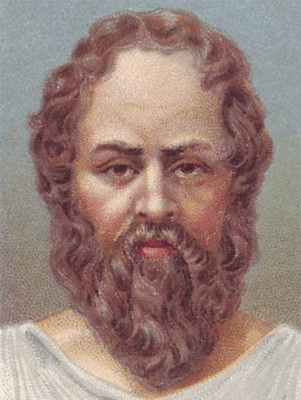
Socrates (469-399 BC)
Socrates (469-399 BC)
- Socrates lived during the period known as the Golden Age of Athens.
- Socrates was the son of sculptor Sophronicus and midwife Phaenarete.
- In his childhood, he studied music, gymnastics, and grammar (all traditional fields of study for a young Greek) and followed in his father's footsteps as a sculptor.
- Despite only being known to us via other people's narratives, he is regarded as one of the founders of Western Philosophy (most notably the dialogues of his student Plato).
- He claimed that his duty in 480 BC was to make the people of Athens see their moral illiteracy.
- Some see him as the polar antithesis of his day's Sophists, who claimed to have knowledge that they could impart to others (sometimes for a charge), arguing instead that knowledge should be pursued for its own sake, even if one could never truly grasp it.
- Whatever way his ideas were taken, it becomes apparent that Socrates' principal focus was on how to live a decent and ethical life.
| Other Relevant Links | |
|---|---|
| Ethical Ideals in Life | Aspects of Morals |
| Definition of Ethics | Moral subjectivism |
| Cultural relativism | Sceptical doctrines |
| Challenges To Ethics and Moral Accountability | Character in Ethics |
| Pyschological egosim | Plato |
| Western Moral Thinkers | Aristotle |
Contributions of Socrates
Human Realm
- Prior to Socrates, philosophy was largely concerned with metaphysical, religious, or scientific issues. Socrates was the first to give philosophy and ethics a practical and political focus.
- He contended that the primary emphasis of philosophical investigation should be on the Human domain.
Dialogue
- Socrates felt that "dialogue," or meaningful interactions with people about topics like justice, righteousness, and virtue, was the greatest approach to investigate the virtues and ethical behaviour.
- This style of extensive talks is known as "dialectic," often known as the Socratic Method, and it has largely supplanted solitary contemplation.
- It was the conversation that impacted Athenians' students and young and served as the foundation for contemporary philosophy, science, ethics, social theory, and other subjects.
Virtue
- Socrates connected knowledge with virtue, which leads to ethical behaviour.
- According to him, the only life worth living is one that has been exhaustively investigated.
- He sought ideals and acts worthy of living by, establishing an ethical foundation upon which judgements should be made.
- Socrates was a staunch believer that knowledge and comprehension of virtue, or "the good," were sufficient for happiness.
- Knowledge of the good was nearly comparable to enlightenment to him. He felt that if people were completely aware of the worth of life, they would never choose to do something harmful or unpleasant.
Believer in the immortality of the soul
- Socrates believed in the immortality of the soul and was convinced that the gods had chosen him as a divine emissary to persuade the people of Athens that their moral values were flawed and that they should be more concerned with the "welfare of their souls" rather than their families, careers, and political responsibilities.
Conflicting promise
- In the situation of conflicting promises, the promise with the higher moral worth should be followed.
- For example, India's 2018-20 budget promised double-digit growth, yet its constitution also pledges social nature. Thus, throughout the Pandemic era, the wellbeing of the people was prioritised over economic goals.
Ideal life
- An ideal life should emphasise self-development, particularly the pursuit of kindness, virtue, justice, honesty, and friendship.
- Because of his ideal ideals, an individual appreciates characteristics such as love, friendship, courage, and truth considerably more than others.
Socrates - Dialectical method of inquiry
- Socrates' dialectical method of inquiry, which he called "elenchus" (roughly, "cross-examination") but which has come to be known as the Socratic Method or Socratic Debate (though some commentators argue that Protagoras invented the "Socratic" method), is perhaps his most important and enduring single contribution to Western thought.
- The Socratic Method is a cooperative arguing debate between persons that is centred on asking and answering questions in order to foster critical thinking and pull out ideas and underlying assumptions.
- The following are the key components of the Socratic Method:
- As a dialectic approach, the Socratic Method employs questions to probe pupils' values, principles, and beliefs.
- The Socratic Method focuses on moral education, or how to conduct one's life.
How Socratic Method (of teaching) can be used to instill value ethics?
- Through education, the Socratic Method may be utilised to instil value ethics in children and young people.
- The approach was one of the first documented instances of learning by inquiry, and it is the source of today's Inquiry Based Learning.
- Socratic Inquiry is not, in essence, standard or conventional teaching. In actuality, it does not require a teacher, but rather a leader.
- The Socratic Inquiry leader is not an information merchant, filling his people's minds with rote learning, facts, and truths.
- There are no speeches or rote memorising either.
- It is a collaborative discourse between the leader and the students, and both are accountable for moving the conversation forward through questions.
- The "teacher," or conversation leader, asks probing questions in an attempt to disclose the values and ideas that frame and support the participants' thoughts and utterances.
- The people also ask questions, both of the teacher and of one another. The investigation is participatory, and the instructor is both a participant and a facilitator of the discussion.
- Furthermore, this inquiry is open-ended, with no predetermined argument or conclusion to which the instructor seeks to guide the pupils.
Important Quotes of Socrates
- Understanding a question is half an answer.
- Education is the kindling of a flame, not the filling of a vessel.
- There is only one good, knowledge, and one evil, ignorance.
- I cannot teach anybody anything. I can only make them think.
- Be kind, for everyone you meet is fighting a hard battle.
- Strong minds discuss ideas, average minds discuss events, weak minds discuss people.
Conclusion
Socrates' views impacted many of the major philosophical movements and schools that followed him, notably the Platonism of his chief disciple Plato (and the Neo-Platonism and Aristotelianism that resulted from it). His philosophy of austerity paired with piety and morality (which Plato and Aristotle mostly overlooked) became fundamental to later systems like Cynicism and Stoicism.
| Other Relevant Links | |
|---|---|
| Post Aristotelian Philosophers | Gandhian Ethics |
| Epicureanism | Stoicism |
| Utilitarianism | Ethical Ideas in Indian Philosophical Tradition |
| Lessons From The Lives Of Great Indian Leaders, Reformers And Administration | Moral Thinkers of the Twentieth Century |
FAQs
Question: Who was Socrates and why is he significant in Western philosophy?
Answer: Socrates was a classical Greek philosopher credited as one of the founders of Western philosophy. He is significant for his contributions to ethics and epistemology, particularly his method of inquiry known as the Socratic Method, which involves asking probing questions to stimulate critical thinking and illuminate ideas. His focus on ethics and virtue, alongside his belief that knowledge is key to a virtuous life, has profoundly influenced Western moral thought.
Question: What is the Socratic Method?
Answer: The Socratic Method is a form of dialectical questioning that aims to stimulate critical thinking and illuminate ideas. Socrates would engage his interlocutors in conversations where he would ask a series of questions, leading them to discover answers themselves and to challenge their assumptions. This method not only promotes deep understanding but also encourages self-reflection and the pursuit of knowledge.
Question: What were Socrates' views on morality and ethics?
Answer: Socrates believed that morality is intrinsically linked to knowledge and that true knowledge leads to virtuous behavior. He argued that individuals act wrongly not out of malice but due to ignorance. His ethical philosophy emphasized the importance of self-examination, virtue, and the idea that "the unexamined life is not worth living." He maintained that understanding what is good is essential to living a good life.
Question: How did Socrates' life and death impact philosophical thought?
Answer: Socrates' life and subsequent execution had a profound impact on philosophical thought, highlighting the tensions between the individual and societal norms. His commitment to seeking truth and his refusal to abandon his principles led to his trial and death, which sparked discussions on ethics, justice, and the role of the philosopher in society. His martyrdom for the pursuit of knowledge and moral integrity inspired later philosophers, particularly his student Plato, to further develop philosophical inquiry and ethical theory.
Question: What legacy did Socrates leave behind for future generations?
Answer: Socrates left a rich legacy for future generations, particularly through the writings of his students, most notably Plato. His emphasis on questioning and dialogue as methods for understanding complex moral issues laid the foundation for critical thinking in Western education. The Socratic Method continues to be used in modern pedagogy, legal practices, and psychotherapy. His ideas about ethics, virtue, and the examined life remain central themes in contemporary moral philosophy and discussions about the nature of knowledge.
MCQs
1. What is the primary focus of the Socratic Method?
A) Historical analysis
B) Dialectical questioning
C) Mathematical proof
D) Scientific experimentation
Answer: (B) See the Explanation
Explanation: The Socratic Method focuses on dialectical questioning to stimulate critical thinking and uncover underlying assumptions.
2. Socrates is most known for his contributions to which field of philosophy?
A) Aesthetics
B) Metaphysics
C) Ethics
D) Logic
Answer: (C) See the Explanation
Explanation: Socrates is best known for his contributions to ethics, particularly regarding virtue and moral philosophy.
3. Which statement best reflects Socrates' belief about knowledge?
A) Knowledge is static and unchanging.
B) Knowledge is essential for virtue.
C) Knowledge is only for the elite.
D) Knowledge is irrelevant to living well.
Answer: (B) See the Explanation
Explanation: Socrates believed that knowledge is essential for virtue and that true understanding leads to moral behavior.
4. What was the ultimate fate of Socrates due to his philosophical beliefs?
A) He was celebrated as a hero.
B) He was exiled from Athens.
C) He was executed.
D) He became a wealthy philosopher.
Answer: (C) See the Explanation
Explanation: Socrates was executed for allegedly corrupting the youth of Athens and impiety, which underscored the conflict between his philosophical pursuits and societal norms.
5. Which of the following philosophers was a student of Socrates?
A) Aristotle
B) Plato
C) Epicurus
D) Zeno
Answer: (B) See the Explanation
Explanation: Plato was a student of Socrates and played a significant role in preserving and disseminating Socratic ideas through his writings.
GS Mains Questions and Model Answers
Q1: Discuss the impact of Socratic philosophy on Western moral thought.
Answer: Socratic philosophy has profoundly influenced Western moral thought by introducing the concept of ethical inquiry through dialogue and questioning. Socrates emphasized the importance of virtue and knowledge, suggesting that true understanding leads to moral behavior. His method of questioning challenged individuals to think critically about their beliefs, encouraging self-reflection and personal growth. This approach laid the groundwork for subsequent philosophical traditions, including those developed by Plato and Aristotle, and continues to resonate in contemporary ethical discussions. Socratic ideas about the examined life and moral responsibility have become central tenets in various fields, including ethics, law, and education.
Q2: Evaluate the significance of the Socratic Method in modern education and its relevance today.
Answer: The Socratic Method remains highly significant in modern education as it promotes critical thinking and active learning. By encouraging students to engage in dialogue, ask questions, and explore complex issues, the Socratic Method fosters an environment where learners can develop their reasoning skills and articulate their thoughts. This method is particularly relevant in today's educational landscape, where rote learning is often criticized. The emphasis on inquiry-based learning aligns with contemporary pedagogical approaches that prioritize understanding and application over memorization. As society faces complex moral and ethical dilemmas, the ability to think critically and engage in thoughtful discourse becomes increasingly important, highlighting the enduring legacy of Socratic teachings in modern education.
Q3: Analyze Socrates' views on morality and their implications for contemporary ethical theories.
Answer: Socrates' views on morality, particularly his belief that knowledge is intrinsically linked to virtue, have significant implications for contemporary ethical theories. He posited that individuals act wrongly out of ignorance rather than malice, suggesting that moral education is vital for fostering ethical behavior. This perspective informs modern virtue ethics, which emphasizes character development and moral understanding as foundations for ethical living. Socrates’ insistence on self-examination and the pursuit of knowledge has inspired various ethical frameworks that prioritize personal integrity and accountability. His legacy prompts ongoing discussions about the role of knowledge in moral decision-making, emphasizing that a deeper understanding of ethical principles is essential for navigating contemporary moral challenges.
Previous Year Questions on Socrates
1. UPSC CSE Prelims 2021:
Question: Which philosophical method is attributed to Socrates?
A) Deductive reasoning
B) Dialectical questioning
C) Inductive reasoning
D) Empirical observation
Answer: (B)
Explanation: The method attributed to Socrates is dialectical questioning, known as the Socratic Method, which encourages critical thinking through dialogue.
2. UPSC CSE Mains 2020 (GS Paper 1):
Question: "Evaluate the role of Socratic thought in the development of Western ethical philosophy."
Answer: Socratic thought plays a foundational role in the development of Western ethical philosophy by establishing the practice of critical inquiry into moral concepts. Socrates' emphasis on virtue, self-knowledge, and the importance of living an examined life laid the groundwork for subsequent philosophical explorations by Plato and Aristotle. His dialectical approach encouraged the examination of beliefs and assumptions, leading to a more profound understanding of ethics. This legacy continues to influence contemporary discussions on morality and ethics, highlighting the enduring significance of Socratic philosophy in shaping moral thought throughout history.
Download the PREPP App and attempt FREE IAS Exam Mock Tests and get complete study material!

Full Test - 04: UPSC CSE Prelims CSAT (Paper-II)
Full Test - 03: UPSC CSE Prelims CSAT (Paper-II)
UPSC CSE Prelims 2026 GS Paper 1 Question Paper (24-May-2026)
UPSC CSE Prelims 2026 CSAT Paper 2 Question Paper (24-May-2026)

17 February 2025 | The Hindu Must Read Articles | Current Affairs

16 February 2026 | The Hindu Must Read Articles | Current Affairs

13 February 2026 | The Hindu Must Read Articles | Current Affairs









Comments