Aristotle - Western Moral Thinkers - Ethics Notes
Aristotle was an Ancient Greek philosopher and polymath who lived from 384 to 322 BC. His articles cover a wide range of topics, including physics, biology, zoology, philosophy, and so on. As the founder of the Peripatetic school of philosophy at Athens' Lyceum, he laid the framework for the subsequent Aristotelian tradition, which laid the groundwork for the creation of modern science. Aristotle, known as the "Father of Political Science”.
This article will explain Aristotle which will be helpful in Ethics preparation for the UPSC Civil service Mains exam.
Table of Contents
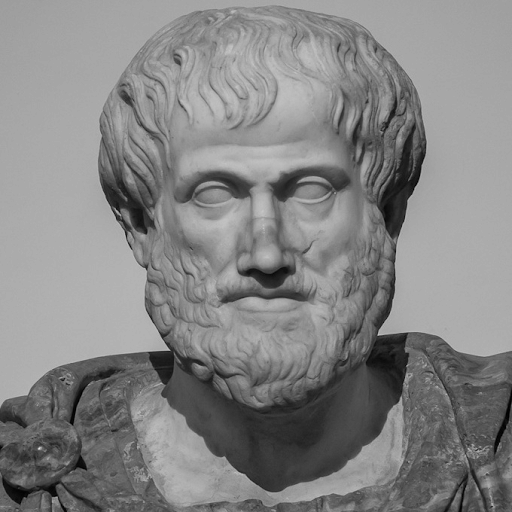
Aristotle
Aristotle (384-322 BC)
- Aristotle was born in 384 BCE in Stagira, Greece, near the Macedonian border.
- He was an outstanding student who graduated early and was hired on the faculty to teach rhetoric and conversation.
- Aristotle appears to have anticipated taking over the Academy following Plato's death, and when that role was handed to Plato's nephew Speusippus, Aristotle left Athens to undertake experiments and study on his own in the Greek Archipelago.
- Aristotle was the first to divide human knowledge into discrete fields like mathematics, biology, and ethics.
- Some of these categories, such as the species-genus system taught in biology classrooms, are still in use today.
- He was the first to establish a formal method of reasoning in which an argument's validity is decided by its structure rather than its substance.
- Along with his instructor Plato, he was a major supporter of a liberal arts education, which emphasises the education of the full person, including moral character, rather than simply learning a set of skills.
- This approach of education, according to Aristotle, is required if we are to develop a society of both happy and productive individuals.
| Other Relevant Links | |
|---|---|
| Ethical Ideals in Life | Aspects of Morals |
| Definition of Ethics | Moral subjectivism |
| Cultural relativism | Sceptical doctrines |
| Challenges To Ethics and Moral Accountability | Character in Ethics |
| Pyschological egosim | Plato |
| Socrates | Western Moral Thinkers |
Aristotle - Father of Political Science
- He not only laid the groundwork for political science, but also made substantial contributions to its development.
- "Politics," "Ethics," and "Rhetoric" are only a few of his writings that address issues of law, equality, fairness, and so on.
- Political science, according to Aristotle, is a master science. He regards political science as a master-art because, unlike other disciplines that serve as a means to a goal, political science is concerned with the purposes of human existence in and of itself.
- As a result, Aristotle saw political science as a goal in itself rather than a means to an end.
- His point of view proves that political science trumps all other sciences. It describes his "Hierarchy of Ends," meaning that each discipline of knowledge is only a means to an aim of living a pleasant life. It is worth noting here that Greek philosophers and their political views have one thing in common.
- They think that the state exists for the purpose of life and continues to exist for the sake of a happy life.
- Aristotle shares this viewpoint and is hence thought to see politics as superior to other disciplines.
Aristotle - Virtue Ethics
- Aristotle's ethics is frequently referred to as "virtue ethics" since it focuses on character development and the acquisition of specific qualities such as bravery, justice, temperance, compassion, and prudence rather than the moral weight of duties or responsibilities.
- According to Aristotle, some people are born with weaker wills than others; for these people, fleeing in war may actually be advantageous (the extremes being to get slaughtered or commit suicide).
- Aristotle's explanation's flexibility: as soon as he begins to put down certain moral principles, he relaxes them to allow for the variety and contingency of different temperaments.
- Aristotle, like Plato, equated the virtuous character with a healthy physique.
- According to the dominant medical thought of the time, health in the body consists of an adequate balance of the opposing characteristics of hot, cold, dry, and wet.
- The physician's objective is to achieve a suitable balance among these aspects by providing the right workout and food regimen, which will, of course, change for each individual.
Aristotle - View on State
- According to Aristotle, the state is natural. He considers the state to be an essential prerequisite for all humans.
- He, like Plato, does not distinguish between state and society and thinks both to be necessary for a decent existence.
- Thus, the State, in his opinion, is an essential condition of a happy existence.
- Because no human being can exist in solitude, a man and a woman form a home. When a family spreads, a village is established, and when several such villages are formed, a state is formed.
- Human beings can satisfy their requirements as soon as a state is founded and society is organised.
- The existence of the state is as vital and natural as the presence of a family or community for the same reason.
- Most human connections, however, are defective and serve to fulfil one or a few aspects of the ideal life, but this is not true for a state.
- He saw the state as capable of meeting all or most aspects of a decent existence.
- He believes that the only difference between an animal and a human being is that a human being has the desire and feeling of living a decent life. What this means is that humans differ from animals only when they live in a state.
- It is the same desire to live a decent life that causes the construction of a state to arise naturally.
Aristotle - View on Man
- According to Aristotle, man is a political animal. This parallel is noteworthy because it understands man not only as a social animal but also as a political person.
- Aristotle employs the same notion of the good life to support his view of man as a political person.
- He claims that because all living things occur in groups, they may be classified as social animals.
- However, it is entirely up to human beings to strive for a decent and qualitative existence.
- Human contentment does not end with survival; the ongoing desire to live a decent life makes them political creatures by default.
Aristotle - State and its relation with Man
- Aristotle is well-known for his statement that state comes before man.
- In chronological order, a guy appears before the state. Nonetheless, because it is the state that makes human beings capable of meeting their wants and achieving the goal of a happy life, the state is given precedence over the man.
- Aristotle establishes a link between organ and organism.
- Each organ of a living organism has a distinct purpose, and each person has varied obligations in society.
- The body is made up of several organs that perform various activities, and the body maintains harmony in its operation.
- Similarly, the state secures the communion of distinct people, but the division of labour provides social collaboration and concord.
Aristotle - Classification of Government
- If it is the rule of one, it is either Monarchy or a Kingship in its ideal form of governance, or despotism or Tyranny in its warped form.
- If the rule is by Few, it is Aristocracy in its perfect form or Oligarchy in its distorted form.
- If the ruling is by Many, the best form of governance would be Polity or a constitutional government, and, curiously, Democracy in a twisted form.
- According to Aristotle, no type of government would be stable if there were no proper balances on a ruler's authority.
- Power and virtue, he argues, cannot coexist.
- He has shown the cycle of government transition throughout time. When there is no check on the monarch's authority, kingship, a natural form of governance, devolves into tyranny.
- Tyranny sparks a rebellion or a revolution by a few people who form an aristocracy.
- Aristocracy can degenerate into oligarchy, the warped form. Over time, an increasing number of people fight against oligarchy and replace it with polity.
- Polity deteriorates further in a democracy when the numerous rulers begin to seek their own self-interest.
- In the end, a single virtuous individual forms a monarchy, and the evolution of ideal form and corrupted form continues in a cyclical motion.
Conclusion
Aristotle's suggestion of a wise blend of aristocracy and what is sometimes called Polity or, at other times, Democracy illustrates his conviction in the Golden Mean formula. As a result, the competent, wealthy, and educated would reign, but regular folks would keep the aristocracy in check by ratifying their judgements. Aristotle's formula is sometimes referred to as Constitutional Democracy in current times.
| Other Relevant Links | |
|---|---|
| Post Aristotelian Philosophers | Gandhian Ethics |
| Epicureanism | Stoicism |
| Utilitarianism | Ethical Ideas in Indian Philosophical Tradition |
| Lessons From The Lives Of Great Indian Leaders, Reformers And Administration | Moral Thinkers of the Twentieth Century |
FAQs
Question. Who was Aristotle?
Answer: Aristotle (384–322 BCE) was a Greek philosopher and polymath, a student of Plato, and tutor to Alexander the Great. He is one of the most influential figures in Western philosophy, particularly in ethics, politics, and metaphysics.
Question. What is Aristotle's concept of virtue ethics?
Answer: Aristotle's virtue ethics focuses on the development of character and virtues, emphasizing that moral behavior stems from a virtuous character. He believed that virtues lie between extremes, a concept known as the "Golden Mean."
Question. What is the 'Golden Mean' in Aristotle’s philosophy?
Answer: The "Golden Mean" is the idea that virtue is the balance between two extremes of excess and deficiency. For example, courage is the mean between rashness (excess) and cowardice (deficiency).
Question. How does Aristotle define happiness (eudaimonia)?
Answer: Aristotle defines happiness as the ultimate goal of human life, achieved through rational activity and the cultivation of virtues. For him, happiness is not momentary pleasure but a state of flourishing and living a life of purpose.
Question. Why is Aristotle considered a foundational thinker in ethics?
Answer: Aristotle’s emphasis on character, practical wisdom, and the pursuit of a good life has made his ideas central to ethical thought. His virtue ethics continues to influence modern debates on morality and character development.
MCQs
- What is the central concept of Aristotle’s ethics?
A) Duty and obligation
B) Virtue and character
C) Social contract
D) Universal laws
Answer: (B) See the Explanation
Aristotle’s ethics focuses on developing virtues and building a moral character as the foundation for ethical behavior.
- What does Aristotle mean by 'eudaimonia'?
A) Material wealth
B) Happiness or flourishing
C) Divine intervention
D) Social approval
Answer: (B) See the Explanation
Eudaimonia refers to the ultimate goal of human life, characterized by living virtuously and fulfilling one’s purpose.
- Which concept in Aristotle’s ethics explains the balance between extremes?
A) Hedonism
B) Utilitarianism
C) Golden Mean
D) Deontology
Answer: (C) See the Explanation
The Golden Mean is Aristotle’s idea that virtue lies in the balance between two extremes—excess and deficiency.
- What role does reason play in Aristotle’s ethics?
A) It is unnecessary for moral actions.
B) It governs the pursuit of virtues.
C) It only applies to scientific inquiry.
D) It focuses on emotional satisfaction.
Answer: (B) See the Explanation
Aristotle emphasized that rationality is essential for cultivating virtues and making moral decisions.
- Who was Aristotle’s teacher?
A) Socrates
B) Plato
C) Zeno
D) Epicurus
Answer: (B) See the Explanation
Aristotle studied under Plato at the Academy and later developed his own philosophical ideas.
GS Mains Questions and Model Answers
Q1. Discuss Aristotle's concept of the Golden Mean and its relevance to ethics.
Answer: Aristotle’s concept of the Golden Mean emphasizes that virtue lies in moderation, avoiding extremes of excess and deficiency. For example, courage is the mean between rashness and cowardice. This balance ensures moral actions are neither too extreme nor insufficient. The Golden Mean highlights the importance of practical wisdom (phronesis) in determining the right course of action. Its relevance in ethics lies in promoting a balanced and rational approach to decision-making, fostering character development, and encouraging individuals to lead a life of harmony and purpose.
Q2. Analyze Aristotle’s idea of happiness (eudaimonia) as the ultimate goal of human life.
Answer: Aristotle views happiness, or eudaimonia, as the ultimate purpose of human existence, achieved through rational activity and the cultivation of virtues. Unlike transient pleasures, happiness is a state of flourishing where individuals fulfill their potential and live in accordance with reason. For Aristotle, happiness is both an end in itself and the highest good, reflecting a life of moral and intellectual excellence. This idea remains influential in modern ethics, guiding debates on the nature of well-being and the pursuit of a meaningful life.
Q3. Evaluate the importance of Aristotle’s virtue ethics in contemporary moral philosophy.
Answer: Aristotle’s virtue ethics, centered on character development and the cultivation of virtues, has significant relevance in contemporary moral philosophy. Unlike deontological or utilitarian approaches, which focus on rules or outcomes, virtue ethics emphasizes the moral agent’s character and motivations. It provides a framework for addressing complex ethical dilemmas by promoting practical wisdom and contextual decision-making. In today’s world, where ethical issues often involve competing values, Aristotle’s focus on balance, reason, and character offers a nuanced and adaptable approach to moral decision-making.
Previous Year Questions on Aristotle
1. UPSC CSE (IAS) Prelims 2020
Question: What is the significance of Aristotle’s Golden Mean in ethical philosophy?
Answer: Aristotle’s Golden Mean is central to his virtue ethics, advocating for moderation between extremes of excess and deficiency. This principle ensures balanced moral behavior, emphasizing practical wisdom (phronesis) to determine the appropriate action in varying circumstances. The concept encourages individuals to cultivate virtues like courage, temperance, and justice, fostering personal growth and societal harmony.
2. UPSC CSE (IAS) Mains 2018
Question: Analyze the influence of Aristotle’s concept of eudaimonia on modern ethical theories.
Answer: Aristotle’s concept of eudaimonia, or flourishing, has profoundly influenced modern ethical theories. By defining happiness as living in accordance with reason and virtue, Aristotle laid the foundation for understanding well-being as more than mere pleasure. Modern virtue ethics, which draws heavily from his ideas, emphasizes character development and moral excellence. Eudaimonia also informs debates on sustainable development and human rights, linking individual flourishing to collective well-being. Aristotle’s holistic view of happiness continues to shape contemporary discussions on ethics and human fulfillment.
Download the PREPP App and attempt FREE IAS Exam Mock Tests and get complete study material!

Full Test - 04: UPSC CSE Prelims CSAT (Paper-II)
Full Test - 03: UPSC CSE Prelims CSAT (Paper-II)
UPSC CSE Prelims 2026 GS Paper 1 Question Paper (24-May-2026)
UPSC CSE Prelims 2026 CSAT Paper 2 Question Paper (24-May-2026)

17 February 2025 | The Hindu Must Read Articles | Current Affairs

16 February 2026 | The Hindu Must Read Articles | Current Affairs

13 February 2026 | The Hindu Must Read Articles | Current Affairs









Comments