Kantianism - Ethics Notes
Kantianism is a philosophical framework that highlights moral duty and rationality as the basis for ethical decision-making. Developed by the renowned German philosopher Immanuel Kant, this ethical theory provides a unique perspective on moral principles and the universal nature of human obligations. Kantianism focuses on the intrinsic worth and dignity of every individual, advocating for actions guided by moral duty rather than personal interests or consequences. In this article, we will delve into the core tenets of Kantianism, examine its principles, and explore its ongoing impact in contemporary ethical discourse which is useful for Ethics, Integrity And Aptitude GS -IV Paper of UPSC Mains Exam.
Table of Contents
Kantianism - Concept
At its core, Kantianism asserts that actions should be guided by moral principles and universal moral laws rather than personal desires or consequences. The key concepts of Kantianism include:
The Categorical Imperative:
Central to Kantianism is the concept of the categorical imperative, which serves as the fundamental principle for moral decision-making. According to Kant, an action is morally right if it can be universally applied without contradiction. In essence, individuals should act in a manner they would wish to become a universal law, treating others as ends in themselves rather than means to an end. This principle underscores the importance of moral consistency and fairness, guiding us to make choices that uphold the dignity and autonomy of all individuals involved.
Autonomy and Rationality:
Kantianism places significant emphasis on human autonomy and rationality. Kant believed that individuals possess the capacity for rational thought and moral agency, enabling them to discern right from wrong through reason alone. Unlike consequentialist ethical theories that prioritise outcomes or the pursuit of happiness, Kantianism highlights the intrinsic value of human beings and their ability to act autonomously based on moral duty. Rationality, for Kant, is the guiding force that enables us to transcend personal desires and emotions, enabling us to make ethical decisions that align with universal moral principles.
Good Will and Moral Worth:
According to Kant, the moral worth of an action lies in the intention behind it rather than the consequences. He argued that an action driven by a good will - a will motivated by a sense of duty and respect for moral principles - is inherently moral, irrespective of the outcomes. In other words, performing an action out of a sense of duty rather than self-interest or external rewards is what gives it moral worth. Kantianism rejects moral relativism and subjective notions of morality, asserting that the ethical value of an action stems from the moral intention behind it.
The Kingdom of Ends:
Kant envisioned a society governed by what he referred to as the "kingdom of ends." This concept implies that individuals should treat others as ends in themselves, respecting their autonomy and intrinsic worth. In this ideal society, each person is recognized as a rational being capable of making moral choices. By promoting the idea of a community guided by mutual respect and universal moral principles, Kantianism emphasises the importance of fostering a just and equitable society.
| Other Relevant Links | |
|---|---|
| Ethical Ideals in Life | Virtue ethics |
| Stoicism | Moral subjectivism |
| Cultural relativism | Sceptical doctrines |
| Utilitarianism | Epicureanism |
| Psychological egosim | Socrates |
| Western Moral Thinkers | Plato |
Examples of Kantianism in practical ethical situations can help illustrate how the philosophy is applied. Here are a few scenarios:
|
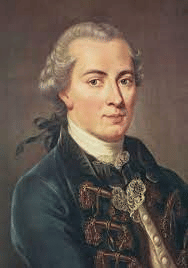
Immanuel Kant (1724-1804)
Immanuel Kant (1724-1804) |
Conclusion
Kantianism offers a robust ethical framework centred around moral duty, rationality, and the intrinsic worth of each individual. Its focus on the categorical imperative, autonomy, and the intention behind actions presents a compelling perspective on ethical decision-making. Kantianism's enduring influence is evident in contemporary ethical debates, providing valuable insights into the moral fabric of our society. By engaging with Kantian principles, individuals can gain a deeper understanding of their moral obligations and contribute to the creation of a more just and ethical world.
| Other Relevant Links | |
|---|---|
| Challenges To Ethics and Moral Accountability | Gandhian Ethics |
| Aspects of Morals | Definition of Ethics |
| Post Aristotelian Philosophers | Ethical Ideas in Indian Philosophical Tradition |
| Lessons From The Lives Of Great Indian Leaders, Reformers And Administration | Moral Thinkers of the Twentieth Century |
FAQs
Question: What is Kantian ethics?
Answer: Kantian ethics is an ethical theory proposed by the German philosopher Immanuel Kant. It is based on the principle that morality is grounded in rationality and that individuals should act according to universal moral laws. The central idea is the **categorical imperative**, a principle that commands individuals to act in a way that their actions could be made into a universal law for everyone to follow. Kant believed that morality is not dependent on outcomes or personal desires but on duties and principles that apply universally.
Question: What is the "categorical imperative" in Kantian ethics?
Answer: The categorical imperative is a fundamental concept in Kantian ethics. It is a rule that mandates individuals to act only according to maxims (principles) that they would want to become universal laws. In other words, one should act only in ways that could be consistently willed as a universal rule without contradiction. Kant formulated the categorical imperative in several ways, including the **formula of universality** and the **formula of humanity**, which require individuals to treat others as ends in themselves, not merely as means to an end.
Question: How does Kant's ethical theory differ from consequentialism?
Answer: Kant's ethical theory differs from consequentialism in that it focuses on the intentions behind actions rather than their outcomes. While consequentialist theories, such as utilitarianism, judge actions based on their results (the greatest good for the greatest number), Kantian ethics emphasizes the inherent moral worth of actions themselves. According to Kant, actions are morally right if they are performed out of duty and in accordance with the categorical imperative, regardless of the consequences.
Question: What role does autonomy play in Kantian ethics?
Answer: Autonomy is a crucial element in Kantian ethics. Kant believed that true moral actions must be freely chosen by rational agents who act out of respect for the moral law, not due to external influences or desires. Autonomy, in Kant's view, is the ability to legislate one's own moral law according to the principles of reason. This makes individuals morally responsible for their actions, as they must freely choose to act in accordance with duty and universal moral laws.
Question: How does Kantian ethics address the issue of moral dilemmas?
Answer: Kantian ethics tends to be rigid when it comes to moral dilemmas because it emphasizes the absolute nature of moral duties. In a situation where duties seem to conflict, Kant’s framework does not allow for exceptions or prioritizing one duty over another. According to Kant, the moral law is universal and cannot be compromised. However, Kant’s followers and later ethicists have attempted to adapt Kantian ethics to handle such dilemmas by refining the application of the categorical imperative or by proposing a hierarchy of duties.
MCQs
1. Which of the following is a key feature of Kantian ethics?
A) Consequentialism
B) Moral relativism
C) Categorical imperative
D) Utilitarianism
Answer: (C) See the Explanation
Explanation: The key feature of Kantian ethics is the **categorical imperative**, which dictates that individuals should act only according to principles that they would want to become universal laws.
2. According to Kant, an action is morally right if it is performed out of:
A) Consequences
B) Duty
C) Personal interest
D) Desire for happiness
Answer: (B) See the Explanation
Explanation: According to Kant, an action is morally right if it is performed out of duty and in accordance with the categorical imperative, regardless of personal interest or the outcome.
3. What is the formula of humanity in Kantian ethics?
A) Treat others as ends in themselves, not merely as means
B) Do the greatest good for the greatest number
C) Follow the law of nature
D) Act in self-interest
Answer: (A) See the Explanation
Explanation: The formula of humanity, a part of Kant’s categorical imperative, states that individuals should treat others as ends in themselves, and not merely as tools or means for achieving personal goals.
4. How does Kant's concept of autonomy influence his ethical theory?
A) By allowing individuals to make decisions based on personal desires
B) By making individuals act according to universal laws of reason
C) By encouraging moral relativism
D) By promoting utilitarianism
Answer: (B) See the Explanation
Explanation: Kant's concept of autonomy emphasizes the ability of rational individuals to make moral decisions based on universal laws of reason, rather than being influenced by external forces or personal desires.
5. Which of the following does NOT align with Kantian ethics?
A) Universal moral laws
B) Treating individuals as ends in themselves
C) Moral actions based on outcomes
D) Acting from a sense of duty
Answer: (C) See the Explanation
Explanation: Kantian ethics focuses on duty and universal moral laws, not on the consequences of actions. Moral actions in Kantian ethics are determined by adherence to duty, not by outcomes.
GS Mains Questions and Model Answers
Q1: Discuss the core principles of Kantian ethics and how they apply to moral decision-making.
Answer: Kantian ethics is based on the notion that morality is not dependent on the consequences of actions but on the intentions and duties behind them. The core principle is the **categorical imperative**, which requires individuals to act according to maxims that could be made into universal laws. This approach emphasizes treating others with respect and dignity, as ends in themselves, and not as mere means to an end. In moral decision-making, Kantian ethics insists that actions must be done out of duty, not based on personal desires or the potential for rewards. The ethical focus is on consistency, fairness, and rationality, providing a clear framework for determining right and wrong regardless of external circumstances.
Q2: How does Kantian ethics address conflicts between moral duties?
Answer: Kantian ethics can be rigid when it comes to moral dilemmas because it prioritizes adherence to universal moral laws. If two duties conflict, Kant's framework typically does not allow for a flexible resolution, as each duty is seen as equally binding. This has led to critiques of Kant's theory, particularly in complex real-world situations. However, some Kantian scholars suggest that a hierarchy of duties could be used to resolve such conflicts, with more fundamental duties taking precedence over less crucial ones. While Kantian ethics maintains that moral principles must be followed unconditionally, resolving conflicts often requires a deeper understanding of the specific context and the relative importance of each duty.
Q3: Explain how Kantian ethics applies to contemporary ethical issues such as euthanasia or capital punishment.
Answer: Kantian ethics offers a clear approach to contemporary ethical issues by emphasizing respect for individuals as autonomous agents. In the case of euthanasia, Kant's ethics would likely oppose it, as it involves ending a person's life and using them as a means to an end (relieving suffering), which violates the principle of treating individuals as ends in themselves. Similarly, Kantian ethics would argue against capital punishment, as it treats individuals as mere means to societal ends (deterrence or punishment) rather than respecting their inherent dignity and autonomy. Kant’s theory stresses that moral actions must be guided by duties that respect human dignity, which makes practices like euthanasia and capital punishment problematic from a Kantian perspective.
Previous Year Questions on Kantian Ethics
1. UPSC CSE Prelims 2021:
Question: Which of the following is central to Kantian ethics?
A) Utilitarian calculation
B) Categorical imperative
C) Moral relativism
D) Maximum happiness principle
Answer: (B)
Explanation: The **categorical imperative** is central to Kantian ethics. It dictates that individuals should act only according to maxims that could be universalized without contradiction.
2. UPSC CSE Mains 2019 (GS Paper 4):
Question: Evaluate the application of Kantian ethics in resolving contemporary ethical dilemmas like abortion and euthanasia.
Answer: Kantian ethics emphasizes that moral actions are guided by universal principles and duties, not by the consequences. When applied to issues like abortion and euthanasia, Kant’s framework would likely oppose these practices, as they involve treating individuals as means to an end (e.g., relief from suffering) rather than respecting their intrinsic value. According to Kant, moral duties, such as the duty to preserve life, must be upheld unconditionally, regardless of outcomes. Therefore, both abortion and euthanasia conflict with Kant's principle of respecting human dignity and autonomy.
Download the PREPP App and attempt FREE IAS Exam Mock Tests and get complete study material!

Full Test - 04: UPSC CSE Prelims CSAT (Paper-II)
Full Test - 03: UPSC CSE Prelims CSAT (Paper-II)
UPSC CSE Prelims 2026 GS Paper 1 Question Paper (24-May-2026)
UPSC CSE Prelims 2026 CSAT Paper 2 Question Paper (24-May-2026)

17 February 2025 | The Hindu Must Read Articles | Current Affairs

16 February 2026 | The Hindu Must Read Articles | Current Affairs

13 February 2026 | The Hindu Must Read Articles | Current Affairs









Comments