Supreme Court of India - Indian Polity Notes
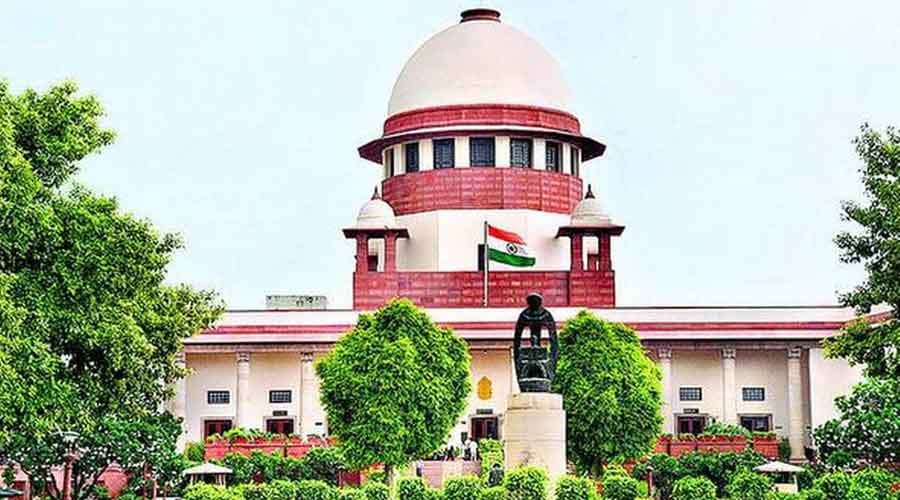
Supreme Court of India is the apex judicial body under the Constitution of India. It is established under Article 124 of the Constitution. It is the ultimate interpreter of the Constitution as well as the highest court of appeal. Articles 124 to 147 in Part V of the Constitution deal with the organisation, independence, jurisdiction, powers, procedures etc of the Supreme Court. Supreme Court of India is an extremely important topic under the Indian Polity and Governance Syllabus of the UPSC examination.
| To Read update on this topic: |
Table of Contents
- Supreme Court - Historical Background
- Supreme Court- Constitutional Provisions
- Composition and Appointment
- Evolution of Collegium System
- Qualifications, Oath and Salaries
- Seat of Supreme Court
- Tenure of Judges of the Supreme Court
- Impeachment of Judges of the Supreme Court
- Independence of the Supreme Court
- Supreme Court - Jurisdiction and Power
- Court of Record
- Power of Judicial Review
- Constitutional interpretation
- Conclusion
- FAQs
- MCQs
Supreme Court - Historical Background
- The Regulating Act of 1773 marked the beginning of judicial reforms in India. It established a Supreme Court in Calcutta, primarily to oversee the administration of justice in the Bengal Presidency.
- The India High Courts Act of 1861 established High Courts in different provinces and eliminated the Supreme Courts in Calcutta, Madras, and Bombay, as well as the Sadar Adalats in Presidency towns.
- Federal Court of India was established in India in 1937 under the provisions of the Government of India Act 1935, with original, appellate and advisory jurisdiction.
- Supreme Court of India succeeded the Federal Court under the Government of India Act 1935.
- After its inauguration on January 28, 1950, the Supreme Court commenced its sittings in a part of the Parliament House. The Court moved into the present building in 1958.
|
“All the rights secured to the citizens under the Constitution are worth nothing, and a mere bubble, except guaranteed to them by an independent and virtuous Judiciary.” |
Supreme Court- Constitutional Provisions
| Article 124 | Establishes the Supreme Court of India consisting of a Chief Justice of India (CJI) and other judges appointed by the President. |
| Article 125 | Determines the salaries of Supreme Court judges, including the CJI, to be charged on the Consolidated Fund of India. |
| Article 126 | Empower the President to appoint the most senior judge of the Supreme Court as acting Chief Justice in the CJI's absence. |
| Article 127 | Allows the CJI to appoint qualified persons as ad hoc judges in case of vacancies or lack of quorum. |
| Article 128 | Permits the CJI to request retired judges to sit and act as judges of the Supreme Court. |
| Article 129 | Declares the Supreme Court a court of record and empowers it to punish for contempt of itself. |
| Article 130 | States that the Supreme Court shall sit in Delhi or other places appointed by the CJI with the President's approval. |
| Article 131 | Grants the Supreme Court original jurisdiction in disputes between the Government of India and one or more States, or between States. |
| Article 132 | Deals with Appellate Jurisdiction of the Supreme Court in appeals from high courts in certain cases. |
| Article 133 | Deals with Appellate Jurisdiction of the Supreme Court from High Court in Civil Cases. |
| Article 134 | Deals with Appellate Jurisdiction of the Supreme Court from High Court in Criminal Cases. |
| Article 135 | Jurisdiction and powers of the federal court under existing laws to be exercisable by the Supreme Court. |
| Article 136 | Jurisdiction of Supreme Court to entertain by special leave to appeal. |
| Article 137 | Review of judgments or orders by the Supreme Court |
| Article 138 | Enlargement of the jurisdiction of the Supreme Court. |
| Article 139 | Conferment on the Supreme Court of powers to issue certain writs. |
| Article 140 | Deals with the Ancillary powers of the Supreme Court. |
| Article 141 | Law declared by the Supreme Court shall be binding on all courts within the territory of India. |
| Article 142 | Enforcement of decrees and orders of Supreme Court and orders as to discovery, etc. |
| Article 143 | Power of President to consult the Supreme Court. |
| Article 144 | Civil and judicial authorities to act in aid of the Supreme Court |
| Article 145 | Rules of Court. |
| Article 146 | Officers and servants and the expenses of the Supreme Court. |
| Article 147 | Provision for the interpretation of the Constitution |
Composition and Appointment
- The Supreme Court consists of 34 judges (one chief justice and thirty-three other judges). In 2019, the centre notified an increase in the number of Supreme Court judges from 31 to 34, including the Chief Justice of India as per the Supreme Court ( number of Judges) Amendment Act, 2019.
- The judges of the Supreme Court are appointed by the president. The chief justice is appointed by the President after consultation with such judges of the Supreme Court and the high courts as deems necessary.
- The consultation with the chief justice is obligatory in the case of the appointment of a judge other than the Chief Justice.
Evolution of Collegium System
| First Judges Case (1982) |
|
| Second Judges Case (1993) |
|
| Third Judges Case (1998) |
|
| Fourth Judges Case (2015) |
|
Qualifications, Oath and Salaries
Qualifications of Judges
- Should be a Citizen of India.
- Should have been a Judge of a High Court for at least five years or have been an advocate of a High Court for at least 10 years or should be a distinguished Jurist in the opinion of the President.
- No minimum age has been prescribed by the Constitution for appointment as a judge of the Supreme Court.
Oath or Affirmation
- Oath to the judges of the Supreme Court is prescribed by the President or some person appointed by him.
Salaries and Allowances
- The salaries, allowances, leave and pension of the judges of the Supreme Court are determined from time to time by the Parliament.
- They can not be varied to their disadvantage after their appointment except during a financial emergency.
- The retired Chief Justice and judges are entitled to 50% per cent of their last drawn salaries as monthly pension.
Seat of Supreme Court
- The Supreme Court's seat is designated under the Constitution as Delhi. It also authorises the chief justice of India to appoint other place or places as seat of the Supreme Court.
- This provision is just optional, not mandatory. This means that no court has the authority to direct the President or the Chief Justice to appoint any other place as a seat of the Supreme Court.
Tenure of Judges of the Supreme Court
The Constitution has not fixed the tenure of a judge of the Supreme Court. However has made the following three provisions in this regard
- Holds office until he attains the age of 65 years.
- Can resign his office by writing to the President.
- Can be removed from his office by the President on the recommendation of a Parliament.
Impeachment of Judges of the Supreme Court
- The Constitution has not prescribed any specific provision regarding the removal of Judges.
- The Judges (Inquiry) Act, 1968 regulates the procedure relating to the removal of a judge of the Supreme Court by the process of impeachment.
- The president can issue the removal order only after an address by Parliament has been presented to him in the same session for such removal.
- The address must be supported by a special majority of each House of the Parliament.
- The grounds of removal are proved misbehaviour or incapacity.
- A removal motion is to be signed by 100 members in the case of Lok Sabha or 50 members in the case of Rajya Sabha.
- If it is admitted, then the Speaker /Chairman is to constitute a three-member committee to investigate into charges.
- The committee consists of a Chief Justice or a judge of the Supreme Court, a chief justice of a high court and a distinguished jurist.
- If the committee finds the judge to be guilty of misbehaviour or suffering from incapacity, the House can take up the consideration of the motion.
- After the motion is passed by each House of Parliament by a special majority, an address is presented to the President for the removal of a judge.
- Finally, the President passes the order of removal.
Independence of the Supreme Court
The Supreme Court has been assigned a very significant role like the federal court, guarantor of Fundamental Rights and guardian of the Constitution. Therefore Constitution has made many provisions to ensure the judiciary’s independence. They are mentioned below.
- Mode of Appointment: The judges of the Supreme Court are appointed in consultation with the members of the judiciary itself. It curtails the absolute discretion of the executive as well as ensures that the judicial appointments are not based on any political considerations.
- Security of tenure: The judges of the SC are given security of tenure. They can be removed only by a presidential order on grounds of proven misbehaviour and/or incapacity by an elaborate procedure of impeachment.
- Salaries and allowances: Salaries and allowances of the judges of the Supreme Court are determined by the Parliament. They can not be changed to their disadvantage after their appointment. Salaries, pensions, allowances and expenses of the Supreme Court are charged on the Consolidated Fund of India.
- Powers and Jurisdiction: The jurisdiction of the Supreme Court can not be curtailed by the Parliament. However, the Parliament can extend the same. The SC has the power to punish any person for its contempt, as per Article 129.
- Ban on Practise after Retirement: It ensures that they do not favour anyone in the hope of future favour.
Supreme Court - Jurisdiction and Power
The Constitution has conferred a very extensive and vast jurisdiction on the Supreme Court.
Original Jurisdiction
- As a Federal Court, the Supreme Court decides the disputes between different states.
- Between the Centre and one or more States.
- Between the Centre and any State or states on one side and one or more other States on the other.
- Between two or more States.
- In case of federal disputes, the Supreme Court has exclusive and original jurisdiction.
- However, a dispute between the citizen and the Centre or state can not be entertained under it.
Writ Jurisdiction
The Supreme Court has been assigned the role of guarantor and defender of the Fundamental Rights. The Supreme Court is empowered to issue writs such as habeas corpus, mandamus, prohibition, quo warranto, and certiorari to enforce these rights.
In this regard, the Supreme Court has original jurisdiction however the writ jurisdiction of the Supreme Court is not exclusive and it is concurrent to the high court's jurisdiction.
Appellate Jurisdiction
Supreme Court is primarily a court of appeal and hears appeals against the judgements of the lower courts.
- Civil Appeals: The Supreme Court hears appeals in civil cases from any High Court or a tribunal in the territory of India. These cases could involve disputes related to property, contracts, torts, family matters, etc.
- Criminal Appeals: The Supreme Court hears appeals in criminal cases from any High Court or a tribunal in the territory of India. These cases typically involve criminal offences such as murder, theft, fraud, etc.
- Special Leave Petitions (SLPs): This is a unique feature of the Indian legal system where the Supreme Court has the discretion to grant special leave to appeal against any judgment or order in any case or matter passed by any court or tribunal in the country. This means that parties dissatisfied with a judgment of any court or tribunal can approach the Supreme Court seeking special permission to appeal.
- Constitutional Matters: The Supreme Court hears appeals on constitutional matters, including disputes involving the interpretation of the Constitution of India. These cases are often of significant importance as they deal with the fundamental law of the land.
Advisory Jurisdiction
- The Constitution authorises the President to seek the opinion of the Supreme Court in the two categories of matters under Article 143.
- On any question of law or fact of public importance which has arisen or which is likely to arise.
- On any disputes arising out of any pre-constitution treaty, agreement,sanad or other similar instruments.
- In the first case, the Supreme Court may refuse to tender the opinion to the President but in the second case, the Supreme Court must tender the opinion to the President.
- In both cases, the opinion is not binding on the President.
Court of Record
As a Court of Record, the Supreme Court has two powers:
- The judgements, proceedings and acts of the Supreme Court are recorded for perpetual memory and testimony. These records are admitted to be of evidentiary value and cannot be questioned when produced before any court. They are recognised as legal precedents and legal references.
- It has the power to punish for contempt of court, either with simple imprisonment for a term up to six months or with a fine or with both.
Power of Judicial Review
- Judicial review is the power of the Supreme Court to examine the constitutionality of the laws and executive orders of both the Central and state government.
- If any provision found violative of the Constitution,it can be declared as unconstitutional by the Supreme Court.
Constitutional interpretation
- Every constitutional decision relies on the court's interpretation of what the Constitution means, why it exists in the form it does, and, most importantly, what injustices it is intended to address.
- The courts apply a number of principles while interpreting the Constitution.
- Doctrine of Severability
- Doctrine of Waiver
- Doctrine of Eclipse
- Doctrine of Colourable Legislation
- Doctrine of Implied Powers
- Doctrine of Incidental and Ancillary Powers
Conclusion
The Supreme Court has delivered numerous landmark judgments that have had far-reaching implications on various aspects of Indian society, including but not limited to, civil rights, social justice, environmental protection, and governmental accountability. Despite its esteemed position, the Supreme Court has faced challenges and criticisms, including concerns about judicial overreach, delays in justice delivery, and allegations of corruption or bias among some members of the judiciary.
FAQs
Q1: What is the role of the Supreme Court in India?
Answer: The Supreme Court of India is the apex judicial authority responsible for ensuring the rule of law and constitutional supremacy. It acts as the final interpreter of the Constitution.
Q2: What is the composition of the Supreme Court?
Answer: The Supreme Court currently consists of the Chief Justice of India (CJI) and a maximum of 33 other judges, as specified by law.
Q3: What is the significance of judicial review by the Supreme Court?
Answer: Judicial review empowers the Supreme Court to assess the constitutionality of laws and government actions, ensuring they align with the Constitution.
Q4: How does the Supreme Court exercise its original jurisdiction?
Answer: Under original jurisdiction, the Supreme Court resolves disputes between states or between the Centre and states directly, bypassing lower courts.
Q5: What are the powers of the Supreme Court under Article 32?
Answer: Article 32 grants the Supreme Court the authority to issue writs for the enforcement of fundamental rights, acting as the guarantor of individual liberties.
MCQs
- Which article provides the Supreme Court with the power to enforce fundamental rights?
A) Article 226
B) Article 32
C) Article 141
D) Article 143
Answer: (B) See the Explanation
- Who appoints the judges of the Supreme Court?
A) Prime Minister
B) President
C) Chief Justice of India
D) Parliament
Answer: (B) See the Explanation
- What is the retirement age of a Supreme Court judge?
A) 60 years
B) 62 years
C) 65 years
D) 70 years
Answer: (C) See the Explanation
- Which of the following cases fall under the Supreme Court's original jurisdiction?
A) Criminal cases
B) Disputes between two states
C) Civil cases
D) Appeals against High Court decisions
Answer: (B) See the Explanation
- What is the meaning of "judicial review"?
A) Appointment of judges
B) Review of judicial performance
C) Power to declare laws unconstitutional
D) Review of government schemes
Answer: (C) See the Explanation
GS Mains Questions and Model Answers
Q1. Discuss the significance of the Supreme Court's power of judicial review in maintaining the supremacy of the Constitution.
Answer: The Supreme Court's power of judicial review is crucial in safeguarding the supremacy of the Constitution. Through judicial review, the Court examines whether laws and executive actions align with the Constitution, ensuring that no law violates fundamental rights or exceeds constitutional limits. This mechanism serves as a check on the powers of the legislature and the executive, promoting the rule of law. Judicial review also strengthens democracy by protecting citizens' rights against arbitrary state actions. Notable cases like Kesavananda Bharati v. State of Kerala have reinforced the importance of judicial review in upholding the basic structure of the Constitution.
Q2. Explain the role of the Supreme Court in resolving federal disputes in India.
Answer: The Supreme Court plays a pivotal role in maintaining the federal structure by exercising original jurisdiction over disputes between states or between the Centre and states under Article 131. By resolving intergovernmental conflicts, it ensures smooth functioning within the federal framework. The Court’s decisions foster cooperation between the Centre and states, ensuring that both operate within their constitutional boundaries. This helps in preventing conflicts from escalating, thus preserving national unity and stability. The Supreme Court acts as a neutral arbitrator, reinforcing the principle of cooperative federalism in India.
Q3. Analyze the role of the Supreme Court in safeguarding fundamental rights through Article 32.
Answer: Article 32 of the Indian Constitution empowers the Supreme Court to issue writs for the enforcement of fundamental rights, providing individuals with direct access to the highest judicial authority. This provision positions the Supreme Court as the guardian of fundamental rights, ensuring that any violation of these rights is promptly addressed. Citizens can seek remedies like habeas corpus, mandamus, prohibition, certiorari, and quo warranto through the Court. Article 32 is considered the "heart and soul" of the Constitution, as described by Dr. B.R. Ambedkar. It ensures that fundamental rights are not just theoretical but enforceable, empowering citizens to challenge state actions that infringe on their liberties.
Previous Year Questions on Supreme Court
1. UPSC CSE 2020
Question. How does the Supreme Court contribute to maintaining the federal balance in India?
Answer: The Supreme Court plays a critical role in maintaining the federal balance by adjudicating disputes between the Centre and states or among states under Article 131. As the final interpreter of the Constitution, it ensures that both the Union and state governments function within their constitutional mandates, preventing encroachments into each other’s jurisdictions. The Court’s judgments in cases like State of West Bengal v. Union of India have underscored the importance of cooperative federalism. It also provides clarity on the division of powers, helping to resolve conflicts that arise in the functioning of a federal system. This judicial intervention is essential for maintaining harmony within the federal structure.
2. UPSC CSE 2021
Question. Explain the importance of Article 32 in the enforcement of fundamental rights in India.
Answer: Article 32 is a cornerstone of the Indian Constitution, providing citizens with the right to approach the Supreme Court for the enforcement of their fundamental rights. Described as the "heart and soul" of the Constitution by Dr. B.R. Ambedkar, this article ensures that fundamental rights are not just theoretical but actionable. Through Article 32, the Supreme Court can issue writs like habeas corpus, mandamus, prohibition, certiorari, and quo warranto to address rights violations. This provision empowers citizens to challenge unconstitutional actions by the state, promoting accountability and safeguarding individual liberties. Article 32 strengthens the legal framework for the protection of fundamental rights, ensuring that they remain effective instruments of justice.
*email: contactus@prepp.in
Download the PREPP App and attempt FREE IAS Exam Mock Tests and get complete study material!

Full Test - 04: UPSC CSE Prelims CSAT (Paper-II)
Full Test - 03: UPSC CSE Prelims CSAT (Paper-II)
UPSC CSE Prelims 2026 GS Paper 1 Question Paper (24-May-2026)
UPSC CSE Prelims 2026 CSAT Paper 2 Question Paper (24-May-2026)

17 February 2025 | The Hindu Must Read Articles | Current Affairs

16 February 2026 | The Hindu Must Read Articles | Current Affairs

13 February 2026 | The Hindu Must Read Articles | Current Affairs









Comments