High Court - Indian Polity Notes
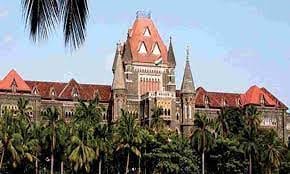
High Court occupies the top position in the judicial administration of a state. In the integrated judicial system, the high court operates below the Supreme Court but above the subordinate courts. Articles 214 to 231 in Part VI of the Constitution deal with the organisation, independence, jurisdiction, powers, and procedures of the high courts. There are total 25 High courts in India. The UPSC Indian Polity and Governance Syllabus includes High Court which is described in this article.
Table of Contents
- High Courts - Historical Background
- High Courts - Constitutional Provisions
- Strength of a High Courts
- Appointment of High Court Judges
- Cases Regarding the Appointment of Judges of the High Court
- Qualifications, Oath and Salaries
- Tenure of Judges of the High Court
- Impeachment of Judges of the High Court
- Transfer of Judges
- Independence of the High Court
- Jurisdiction and Powers of the High Courts
- How many High Courts are there in India?
- Conclusion
- FAQs
- MCQs

High Courts - Historical Background
- The institution of High courts originated in India in 1862 when high courts were set up at Calcutta, Madras, and Bombay under the Indian High Courts Act 1861.
- In 1966, a fourth high court was established at Allahabad.
- In the course of time ,each province came to have its own high court.
- After 1950, a high court existing in a province became the high court for the corresponding state.
- The Constitution has prescribed a high court for each state, but the Seventh Amendment Act of 1956 authorised the Parliament to establish a common high court for two or more states or for two or more states and a union territory.
High Courts - Constitutional Provisions
| Article 214 | Deals with the establishment of High Courts. |
| Article 215 | Deals with the High Court's jurisdiction and Court of record. |
| Article 216 | Deals with the constitution of High Courts |
| Article 217 | Deals with the appointment and conditions of the office of a Judge of a High Court. |
| Article 218 | Deals with the application of certain provisions relating to Supreme Court to High Courts. (Articles 124 to 147). |
| Article 219 | Deals with the Oath or affirmation by Judges of High Courts. |
| Article 220 | Deals with the restriction on practice after being a permanent Judge. |
| Article 221 | Deals with the salaries and allowances of Judges. |
| Article 222 | Deals with the transfer of Judges from one High Court to another. |
| Article 223 | Deals with the appointment of acting Chief Justice. |
| Article 224 | Deals with the appointment of additional and acting Judges. |
| Article 224 A | Appointment of retired Judges at sittings of High Courts. |
| Article 225 | Deals with the jurisdiction of existing High Courts. |
| Article 226 | Deals with the power of High Courts to issue certain writs. |
| Article 227 | Deals with the power of superintendence over all courts by the High Court. |
| Article 228 | Deals with the transfer of certain cases to the High Court. |
| Article 229 | Deals with officers and servants and the expenses of High Courts. |
| Article 230 | Deals with the extension of jurisdiction of High Courts to Union territories. |
| Article 231 | Deals with the establishment of one High Court for two or more States. |
Strength of a High Courts
- Every high court consists of the Chief Justice and such other judges as the President may think necessary from time to time.
- Therefore, the Constitution does not specify the strength of the high court and leaves it to the discretion of the President.
- Therefore, the strength of the high court is decided by the President from time to time depending upon its workload.
|
“The bedrock of our democracy is the rule of law and that means we have to have an independent judiciary, judges who can make decisions independent of the political winds that are blowing” |
Appointment of High Court Judges
- The Judges of a High Court are appointed by the President.
- Chief Justice of the High Court is appointed by the President after consultation with the Chief Justice of India and the governor of the state concerned.
- For appointing the judges of High Courts other than the Chief Justice, judges of the concerned high court are also consulted. In the case of a common high court for two or more states, governors of all the states concerned are consulted by the President.
Cases Regarding the Appointment of Judges of the High Court
| Second Judges Case (1993) | Supreme Court ruled that no appointment of a judge of the high court can be made unless it is in conformity with the opinion of the Chief Justice of India. |
| Third Judges Case (1998) | Supreme Court ruled that in case of the appointment of the high court judges , the chief justice of India should consult a collegium of two seniormost judges of the Supreme Court. |
| Fourth Judges Case (2015) | By Fourth Judges Case (1998), SC struck down NJAC and as a result, the earlier collegium system became operational again. |
Qualifications, Oath and Salaries
Qualifications of Judges
- Should be a Citizen of India.
- Should have held a judicial office in the territory of India for ten years or
- Should have been an advocate of a High Court for 10 years.
- No minimum age has been prescribed by the Constitution for appointment as a judge of the Supreme Court.
- Unlike the Supreme Court, Constitution has not made any provisions for the appointment of a distinguished Jurist as a judge of the high court.
Oath or Affirmation
- Oath to the judges of the Supreme Court is prescribed by the governor or some person appointed by him.
Salaries and Allowances
- The salaries, allowances, leave and pension of the judges of a high court are determined from time to time by the Parliament.
- They can not be varied to their disadvantage after their appointment except during a financial emergency.
- The retired Chief Justice and judges are entitled to 50% per cent of their last drawn salaries as monthly pension.
Tenure of Judges of the High Court
The Constitution has not fixed the tenure of a judge of the high court. However has made the following three provisions in this regard
- Holds office until he attains the age of 62 years.
- Can resign his office by writing to the President.
- Can be removed from his office by the President on the recommendation of a Parliament.
- Need to vacate office when he/she is appointed as a judge of the Supreme Court or when transferred to another high court.
Impeachment of Judges of the High Court
- The Constitution has not prescribed any specific provision regarding the removal of Judges.
- The Judges (Inquiry) Act, 1968 regulates the procedure relating to the removal of a judge of the high court by the process of impeachment.
- The president can issue the removal order only after an address by Parliament has been presented to him in the same session for such removal.
- The address must be supported by a special majority of each House of the Parliament.
- The grounds of removal are proved misbehaviour or incapacity.
- A removal motion is to be signed by 100 members in the case of Lok Sabha or 50 members in the case of Rajya Sabha.
- If it is admitted, then the Speaker /Chairman is to constitute a three-member committee to investigate into charges.
- The committee consists of a Chief Justice or a judge of the Supreme Court, a chief justice of a high court and a distinguished jurist.
- If the committee finds the judge to be guilty of misbehaviour or suffering from incapacity, the House can take up the consideration of the motion.
- After the motion is passed by each House of Parliament by a special majority, an address is presented to the President for the removal of a judge.
- Finally, the President passes the order of removal. It implies that the procedure for the removal of judges of a high court is the same as that for a judge of the Supreme Court.
Transfer of Judges
- Article 222 of the Constitution deals with the provision for the transfer of a Judge (including Chief Justice) from one High Court to any other High Court.
- President can transfer a judge from one high court to another after consulting the Chief Justice of India.
- On transfer, he/she is entitled to receive compensatory allowances as determined by the Parliament in addition to salary.
- In 1977, the Supreme Court ruled that the transfer of high court judges should be an exceptional measure and not by way of punishment.
- In 1994, the Supreme Court held that judicial review is necessary to check arbitrariness in the transfer of judges, but only the judge who is transferred can challenge it.
- In the Third Judges Case (1998), the Supreme Court ruled that in case of the transfer of the high court judges, the chief justice of India should consult a collegium of four seniormost judges of the Supreme Court, chief justice of the two high courts (court from which the judge being transferred and the receiving court)
Independence of the High Court
Independent of the judiciary is essential to ensure fair and unbiased adjudication of disputes and upholding the rule of law. Therefore Constitution has made many provisions to safeguard and ensure the independent and impartial functioning of the High Court. They are mentioned below.
- Mode of Appointment: The judges of the High Court are appointed in consultation with the members of the judiciary itself. It curtails the absolute discretion of the executive as well as ensures that the judicial appointments are not based on any political considerations.
- Security of tenure: The judges of the SC are given security of tenure. They can be removed only by a presidential order on grounds of proven misbehaviour and/or incapacity by an elaborate procedure of impeachment.
- Salaries and allowances: Salaries and allowances of the judges of the Supreme Court are determined by the Parliament. They can not be changed to their disadvantage after their appointment. Salaries, pensions, allowances and expenses of the High Court are charged on the consolidated fund of the state.
- Powers and Jurisdiction: The jurisdiction of the High Court specified in the Constitution can not be curtailed by the Parliament as well as the State Legislature. However, the Parliament and State Legislature can extend the same.
- Ban on Practise after Retirement: The retired permanent judges of the High Court are prohibited from pleading or acting in any court or before any authority in India except the Supreme Court and other high courts. It ensures that they do not favour anyone in the hope of future favour.
Jurisdiction and Powers of the High Courts:
Like the Supreme Court, the high court has been vested with quite extensive and effective powers. It is the highest court of appeal in the state. It is the protector of the Fundamental Rights of the citizens. It is vested with the power to interpret the Constitution. It also performs supervisory and consultative roles.
a) Original Jurisdiction
- It means the power of a high court to hear disputes in the first instance, not by way of appeal.
- It extends to the following matters
- Matters of admiralty and contempt of court.
- Regarding revenue matters
- Disputes relating to the election of members of Parliament and the State Legislature
- Enforcement of Fundamental Rights of Citizens
- Cases ordered to be transferred from the subordinate courts involving the interpretation of the Constitution to its own file.
- High Courts of Calcutta, Bombay, Madras and Delhi have original civil jurisdiction in cases of higher value.
- Before 1973, the Calcutta, Bombay, and Madras High Courts also had original criminal jurisdiction. It was fully abolished by the Criminal Procedure Code 1973.
b) Writ Jurisdiction
- Article 226 of the Constitution empowers a high court to issue writs for the enforcement of Fundamental Rights and ordinary legal rights.
- High court is empowered to issue writs such as habeas corpus, mandamus, prohibition, quo warranto, and certiorari to enforce these rights.
- The high court can issue writs to any person, authority and government not only within its territorial jurisdiction but also outside the territorial jurisdiction if the cause of action arises within its territorial jurisdiction.
- In Chandra Kumar Case 1997, the Supreme Court ruled that the writ jurisdiction of both high court and the Supreme Court constitute a part of the basic structure of the constitution.
c) Appellate Jurisdiction
- A High Court is primarily a court of appeal. It hears appeals in civil and criminal matters. The appellate jurisdiction of the high court is wider than its original jurisdiction.
Civil Matters:
- High Courts have appellate jurisdiction in civil matters, including appeals from judgments, orders, or decrees passed by subordinate civil courts.
- Second appeals from the orders and the judgements of the district court or other subordinate courts lie directly to the high court on both questions of law and fact.
- Appeals from the decision of the administrative and other tribunals lie to the division bench of the high court.
Criminal matters:
- Appeals from the judgements of sessions court and additional session courts lie to the High Court if the sentence is one of imprisonment for more than seven years.
d) Supervisory jurisdiction
- A high court has the power to supervise all courts and tribunals operating within its territorial jurisdiction (except military courts or tribunals).
- It covers not just administrative but also judicial superintendence.
e) Court of Record
As a Court of Record, a high court has two powers:
- The judgements, proceedings and acts of the high court are recorded for perpetual memory and testimony. These records are admitted to be of evidentiary value and cannot be questioned when produced before any court. They are recognised as legal precedents and legal references.
- It has the power to punish for contempt of court, either with simple imprisonment for a term up to six months or with a fine or with both.
- As a court of record, a high court also has the power to review and correct its own judgements or orders or decisions even though no specific power of review is conferred on it by the Constitution.
f) Power of Judicial Review
- The High Court has the power to review the constitutionality of both central and state government legislative and executive orders.
- Although the term "judicial review" is not included in our constitution, Articles 13 and 226 expressly grant the High Court this power.
- If any provision is found violative of the Constitution, it can be declared as unconstitutional by the high court.
- 42nd Constitutional Amendment Act of 1976 curtailed the power of a high court to review any central law. However, the 43rd Constitutional Amendment Act of 1977 restored the original position.
g)Control over Subordinate Courts
- The high court has administrative control and other powers over the Subordinate Courts
- It is consulted by the governor in the matters of appointment, posting and promotion of district judges and appointment of persons to the judicial service of the state.
- It deals with matters of postings, promotion, grant of leave, transfer of member of judicial service of the state.
- It can withdraw a case pending before any subordinate court if it involves the substantial question of law that requires interpretation of the Constitution.
- Its law is binding on all subordinate courts functioning within its territorial jurisdiction.
How many High Courts are there in India?
There are total 25 High courts in India
| Court | Year of Establishment | Territorial Jurisdiction | Seat |
|---|---|---|---|
| Allahabad | 1866 | Uttar Pradesh | Prayagraj |
| Andhra Pradesh | 2019 | Andhra Pradesh | Amaravati |
| Bombay | 1962 | Goa, Dadra and Nagar Haveli and Daman and Diu, Maharashtra | Mumbai |
| Calcutta | 1862 | Andaman and Nicobar Islands, West Bengal | Kolkata |
| Chhattisgarh | 2000 | Chhattisgarh | Bilaspur |
| Delhi | 1966 | Delhi | Delhi |
| Guwahati | 1948 | Arunachal Pradesh, Assam, Mizoram, Nagaland | Guwahati |
| Gujarat | 1960 | Gujarat | Ahmedabad |
| Himachal Pradesh | 1971 | Himachal Pradesh | Simla |
| Jammu & Kashmir | 1928 | Jammu & Kashmir and Ladakh | Srinagar and Jammu |
| Jharkhand | 2000 | Jharkhand | Ranchi |
| Karnataka | 1884 | Karnataka | Bengaluru |
| Kerala | 1956 | Kerala and Lakshadweep | Kochi |
| Madhya Pradesh | 1956 | Madhya Pradesh | Jabalpur |
| Madras | 1862 | Tamil Nadu, Puducherry | Chennai |
| Manipur | 2013 | Manipur | Imphal |
| Meghalaya | 2013 | Meghalaya | Shillong |
| Orissa | 1948 | Odisha | Cuttack |
| Patna | 1916 | Bihar | Patna |
| Punjab and Haryana | 1875 | Chandigarh, Haryana, Punjab | Chandigarh, |
| Rajasthan | 1949 | Rajasthan | Jodhpur |
| Sikkim | 1975 | Sikkim | Gangtok |
| Telangana | 1954 | Telangana | Hyderabad |
| Tripura | 2013 | Tripura | Agartala |
| Uttarakhand | 2000 | Uttarakhand | Nainital |
Conclusion
High Court holds immense significance in ensuring access to justice within a legal system. As the apex judicial body, it plays a pivotal role in resolving complex legal disputes, interpreting laws, and upholding constitutional rights. By providing a forum for individuals to seek redress for grievances and have their cases heard, the High Court serves as a crucial avenue for accessing justice.
FAQs
Q1: What is the structure of the High Court in India?
Answer: The High Court in India is the highest judicial forum and final court of appeal at the state level. It consists of a Chief Justice and several other judges, whose number is determined by the President of India. High Courts have original, appellate, and revisional jurisdiction and are responsible for overseeing the functioning of subordinate courts.
Q2: What is the appointment process for High Court judges?
Answer: High Court judges are appointed by the President of India, based on the recommendations of the Chief Justice of the High Court and, in some cases, the Chief Justice of India. The process is governed by Articles 217 and 222 of the Indian Constitution, which outline the qualifications and procedures for appointment.
Q3: What are the primary jurisdictions of the High Court?
Answer: The High Court exercises original jurisdiction in matters such as civil and criminal cases, appellate jurisdiction to hear appeals from lower courts, and supervisory jurisdiction over subordinate courts. Additionally, it has the power to issue writs for enforcing fundamental rights under Article 226 of the Constitution.
Q4: What is the power of judicial review exercised by High Courts?
Answer: High Courts in India have the power of judicial review, allowing them to invalidate laws and executive actions that violate the Constitution. This power ensures the protection of fundamental rights and maintains the rule of law, enabling High Courts to assess the legality and constitutionality of government actions.
Q5: How does the High Court ensure access to justice?
Answer: The High Court ensures access to justice through various measures, including legal aid services, public interest litigations (PILs), and expedited hearing processes for urgent matters. It plays a crucial role in safeguarding the rights of individuals and providing a platform for justice delivery in the state.
MCQs
- Who appoints the judges of the High Court in India?
A) Chief Minister
B) Prime Minister
C) President of India
D) Chief Justice of India
Answer: (C) See the Explanation
- Which Article of the Indian Constitution grants the High Court the power to issue writs?
A) Article 226
B) Article 32
C) Article 14
D) Article 21
Answer: (A) See the Explanation
- What type of jurisdiction does the High Court NOT possess?
A) Original Jurisdiction
B) Appellate Jurisdiction
C) Advisory Jurisdiction
D) Revisional Jurisdiction
Answer: (C) See the Explanation
- How many High Courts are there currently in India?
A) 18
B) 21
C) 25
D) 30
Answer: (B) See the Explanation
- The concept of judicial review allows High Courts to:
A) Create laws
B) Review executive decisions
C) Appoint judges
D) Enforce laws directly
Answer: (B) See the Explanation
GS Mains Questions and Model Answers
Q1. Discuss the significance of the High Court in maintaining the rule of law in India.
Answer: The High Court plays a pivotal role in maintaining the rule of law in India by serving as the highest judicial authority at the state level. Its significance is manifested in several key functions, including the interpretation of laws, protection of fundamental rights, and oversight of subordinate courts. Through its power of judicial review, the High Court ensures that executive actions and legislative measures conform to the Constitution, thereby safeguarding citizens' rights against arbitrary state actions. Furthermore, the High Court's ability to issue writs under Article 226 empowers it to address grievances and provide effective remedies to individuals. This function reinforces the principle of accountability within the governance framework. Additionally, the High Court's appellate jurisdiction allows it to correct errors and provide justice in cases arising from lower courts, fostering public confidence in the judiciary. Overall, the High Court’s active engagement in upholding legal principles and addressing injustices underscores its crucial role in preserving the rule of law and promoting justice in society.
Q2. Analyze the challenges faced by the High Courts in India.
Answer: The High Courts in India face several challenges that impede their functioning and the delivery of justice. One significant challenge is the backlog of cases, which results in prolonged delays in judicial proceedings. The increasing number of cases filed in High Courts, coupled with a limited number of judges, creates pressure on the judicial system, leading to justice being delayed. Another challenge is the complexity of legal procedures, which can be daunting for litigants, particularly those from disadvantaged backgrounds. This complexity may hinder access to justice, as many individuals may lack the necessary legal knowledge or resources to navigate the system. Additionally, the High Courts often encounter issues related to inadequate infrastructure and technology, impacting their efficiency in managing cases. Furthermore, the increasing politicization of the judiciary and external pressures can also affect the independence of High Courts, raising concerns about impartiality and fairness. Addressing these challenges requires comprehensive reforms aimed at enhancing judicial efficiency, improving access to justice, and ensuring the autonomy of the judiciary.
Q3. Evaluate the role of High Courts in upholding fundamental rights in India.
Answer: High Courts play a crucial role in upholding fundamental rights in India, acting as guardians of the Constitution and ensuring that individuals can seek redress for violations of their rights. Through their power to issue writs under Article 226, High Courts can address grievances related to the infringement of fundamental rights by the state or its agencies. This mechanism allows citizens to challenge arbitrary actions, thereby reinforcing the principle of accountability in governance. High Courts also engage in public interest litigation (PIL), which enables individuals or groups to seek judicial intervention on behalf of those who cannot represent themselves. This has been instrumental in addressing social injustices and advocating for the rights of marginalized communities. Moreover, the interpretative role of High Courts in expanding the scope of fundamental rights has contributed to the evolution of constitutional jurisprudence in India. By adjudicating cases that set precedents, High Courts have helped shape the legal landscape and safeguard individual freedoms. Overall, the proactive stance of High Courts in protecting fundamental rights is essential for maintaining the democratic fabric of the nation and ensuring justice for all citizens.
Previous Year Questions on High Court
1. UPSC CSE 2020
Question. "Examine the powers and functions of the High Court in the context of the Indian legal system."
Answer: The powers and functions of the High Court are integral to the Indian legal system, serving as the highest judicial authority at the state level. High Courts possess original jurisdiction in civil and criminal matters, enabling them to hear cases directly. Their appellate jurisdiction allows them to review decisions made by lower courts, ensuring consistency in the application of law. Additionally, High Courts have the power to issue writs under Article 226, providing a crucial mechanism for individuals to seek judicial relief against violations of fundamental rights. The supervisory jurisdiction exercised by High Courts over subordinate courts helps maintain the integrity of the judicial system and promotes uniformity in legal interpretation. Furthermore, the High Court's role in adjudicating matters of constitutional importance underscores its position as a guardian of the Constitution. This multifaceted function not only reinforces the rule of law but also enhances public confidence in the judiciary, making the High Court a cornerstone of justice in India.
2. UPSC CSE 2021
Question. "Discuss the significance of the High Court in protecting the rights of citizens in India."
Answer: The High Court holds significant importance in protecting the rights of citizens in India, primarily through its role as a guardian of the Constitution and its power to enforce fundamental rights. The High Court can issue writs under Article 226, allowing individuals to seek redress against violations of their rights by the state or its entities. This judicial mechanism is essential for addressing grievances related to arbitrary actions and ensuring that the rule of law prevails. Additionally, the High Court actively engages in public interest litigation (PIL), which empowers citizens to bring issues of social injustice and rights violations to the forefront, particularly for marginalized communities. By adjudicating such matters, the High Court not only provides relief to individuals but also contributes to the broader discourse on human rights and social equity. Furthermore, the interpretative function of the High Court has led to the expansion of fundamental rights, ensuring that the legal framework adapts to contemporary societal needs. Overall, the High Court's proactive involvement in safeguarding citizen rights is vital for maintaining democracy and ensuring justice in India.
*email: contactus@prepp.in
Download the PREPP App and attempt FREE IAS Exam Mock Tests and get complete study material!

Full Test - 04: UPSC CSE Prelims CSAT (Paper-II)
Full Test - 03: UPSC CSE Prelims CSAT (Paper-II)
UPSC CSE Prelims 2026 GS Paper 1 Question Paper (24-May-2026)
UPSC CSE Prelims 2026 CSAT Paper 2 Question Paper (24-May-2026)

17 February 2025 | The Hindu Must Read Articles | Current Affairs

16 February 2026 | The Hindu Must Read Articles | Current Affairs

13 February 2026 | The Hindu Must Read Articles | Current Affairs









Comments