Procedure for Amending Constitution (Article 368) - Indian Polity Notes
Procedure for amending the Constitution has been mentioned in Article 368(Part XX). It deals with the powers of the Parliament to amend the Constitution. However, the Parliament can not amend those provisions which form the ‘basic structure of the Constitution’. The concept of "basic structure" was established by the Supreme Court in the Kesavananda Bharati case (1973). This article explains the Procedure for Amending Constitution which is important for UPSC IAS exam preparation.
|
Table of Contents |

Amendment of The Constitution - Key Concepts
- The Indian Constitution, like any other written constitution, allows for revision in order to adapt to changing situations and demands.
- However, the method for amending it is neither as simple as in the United Kingdom nor as onerous as in the United States.
- In other words, the Indian Constitution is a mixture of both flexibility and rigidity.
- The Idea of amending the constitution has been borrowed from the Constitution of South Africa.
- The procedure for amendment is detailed under Article 368 in Part XX of the Constitution.
- It provides that the Parliament, in exercising its constituent authority, may alter any provision of the Constitution by adding, modifying, or repealing it in line with the method established for that purpose.
- However, the sections that comprise the Constitution's ‘basic structure’ cannot be amended by Parliament. The Supreme Court decided on this in the Kesavananda Bharati case (1973)
- Article 368 in itself has been amended by the Parliament through 24th Amendment Act, 1971 and 42nd Amendment Act, 1976.
|
Article 368(Part XX) deals with the powers of the Parliament to amend the Constitution and its procedure.
|
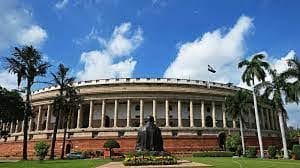
Procedure for Amending Indian Constitution
The procedure for the amendment of the Constitution as laid down in Article 368 is as follows:
- A constitutional amendment bill can only be initiated by the introduction of a bill in either House of Parliament, not in state legislatures.
- The bill can be introduced by either a minister or a private member, and no prior permission of the president is required.
- The bill must be passed by each house with special majority, that is a majority of the total membership of the House and a majority of two-thirds of the members present and voting.
- The bill must be passed separately by each House. There is no provision for a joint sitting for the consideration and passing of the bill if the two Houses disagree.
- If the bill aims to change federal provisions of the Constitution, it must also be ratified by the legislatures of half of the states by a simple majority, that is, a majority of members of the house present and voting.
- The president must give his assent to the bill.He can neither withhold his assent nor return the bill for reconsideration of the Parliament.
- After the President’s assent, the bill becomes the Act and the Constitution is altered in line with the Act's terms.
Ways To Amend The Constitution
There are three ways of amending the constitution:
- Amendment by simple majority.
- Amendment by special majority.
- Special majority with ratification by the state legislature.
Amendment by simple majority
- There are a good number of articles in the constitution that are of transitory nature. Though they can be changed by the Parliament by a simple majority. By simple majority is meant, a simple majority of the members present and voting i.e., more than 50%. The following provision of the constitution also fall under the same category:
- Formation of new states, changes in the names and boundaries of the states.
- Admission or establishment of new States.
- Quorum for the transaction of business in Parliament.
- Delimitation of constituencies.
- Creation or abolition of the legislative council in the States by the Parliament.
- Salaries and allowances of President, Vice-President, Judges of Supreme Court and High Courts.
- Power, privileges, and immunities of members of Parliament.
- Acquisition and termination of citizenship.
Amendment By Special Majority
- An amendment of the constitution may be initiated only by the introduction of the bill for the purpose in either House of Parliament.
- When a bill is passed in each House by a majority of not less than 2/3rd of the members of that house present and voting.
- The following provision of the constitution fall under the same category:
- Fundamental Rights
- Directive Principles of State Policy
- All other provisions not covered by first and third categories.
Special Majority With Ratification By The State Legislature
- Provisions related to the federal structure of the polity can be amended by a special majority with ratification by half of states with a simple majority.
- There is no time limit described for states to give consent,the moment half of the states give their consent,the formality is completed.
- Following provisions fall in this category
- Election of President and its manner.(Article 54 & 55).
- Extent of executive power of the Union and the State (Article 73 and 162).
- Distribution of legislative powers between the Union and the states.
- Lists in the 7th Schedule.
- Provision pertaining to the Supreme Court (Part V- Chapter 4).
- Provision pertaining to the High Courts (Part VI- Chapter 5).
- Representation of State in the Parliament (Articles 80 & 81)
- Provision dealing with the amendment of the Constitution (Article 368) itself.
Salient Features Of Amendment Procedure
- Our constitution vests constituent power upon the ordinary legislature of the Union, i.e. Parliament and there is no separate body for amending the constitution as exists in some other countries.
- Introduction of Bill for the amendment of the Constitution can be introduced only in Parliament not in State Legislature.
- To introduce a constitution amendment bill in the parliament, no prior permission of the President is required.
- Both houses of Parliament must pass it separately.
- In the final state, constitution amendment bill is presented to the President for his assent which the president cannot refuse.
- This has been established by the 24th Amendment Act, 1971 which by substituting the words "shall give his assent' in Clause (2) of the Article 368, has taken away the President's power to veto a bill for amendment of the constitution.
- But there is no time limit within which the President must give his assent.
- The Supreme Court ruled in the Keshavnanda Bharati case that parliament cannot change the Constitution's "Basic structure."
The Indian Constitution's Amendability
- The concept of the Basic Structure of the Constitution is nowhere explicitly mentioned in the Constitution. It is a judicial innovation and was given its shape by the Supreme Court in Kesavananda Bharati vs. State of Kerala case (1973).
Procedure for Amending Constitution - Criticism
- There is no provision for a special body to change the Constitution, such as a Constitutional Convention (as in the United States) or a Constitutional Assembly.
- Parliament has the authority to make constitutional amendments. As a result, unlike in the USA, state legislatures cannot initiate any bill or proposal to modify the Constitution, except in one case: adopting a resolution urging the Parliament to create or abolish legislative councils in the states. In this case, too, the Parliament can either adopt or reject the resolution, or it can do nothing.
- The Parliament alone can amend the majority of the Constitution, either by a special majority or by a simple majority. Only in a few situations is the assent of state legislatures necessary, and even then, only half of them, whereas in the United States, it is three-fourths of the states.
- The Constitution does not specify when state legislatures must accept or reject an amendment that has been offered to them. It is also silent on whether or not states can revoke their permission after giving it.
- If there is a deadlock over the passage of a constitutional amendment bill, there is no provision for a joint sitting of both Houses of Parliament. In the event of an ordinary measure, however, a provision is created for a joint sitting. In the case of an ordinary bill, however, a provision is created for a joint sitting.
- The amendment procedure is similar to that of legislative process except those provisions which need a special majority.
Conclusion
Despite these shortcomings, the method for Amending the Constitution has shown to be straightforward and easy to implement, and it has met the changing demands and situations. The method is not so adaptable that the ruling parties may modify it at their leisure. It is also not so inflexible as to be incapable of adapting to changing demands. It, as K.C. Wheare correctly stated, "strikes a reasonable balance between flexibility and stiffness."
FAQs
Q1: What is the procedure for amending the Indian Constitution?
Answer: The Indian Constitution can be amended by Parliament through different procedures based on the type of amendment. The most common methods include: (1) simple majority for some provisions, (2) a special majority (two-thirds majority of members present and voting in each House of Parliament), and (3) special majority along with ratification by at least half of the State Legislatures for amendments affecting federal provisions.
Q2: What are the three types of amendments in the Indian Constitution?
Answer: The three types of amendments to the Indian Constitution include: (1) Amendments requiring a simple majority of Parliament; (2) Amendments requiring a special majority in both Houses of Parliament; and (3) Amendments requiring a special majority in Parliament and ratification by half of the State Legislatures.
Q3: Can the basic structure of the Constitution be amended?
Answer: No, the basic structure of the Constitution cannot be amended. This principle was established by the Supreme Court in the landmark Kesavananda Bharati case (1973). The court ruled that while Parliament has wide powers to amend the Constitution, it cannot alter the basic structure.
Q4: How many articles of the Indian Constitution have been amended so far?
Answer: As of now, the Indian Constitution has been amended 105 times since its adoption in 1950. These amendments have addressed various provisions related to fundamental rights, federal structure, and electoral reforms, among others.
Q5: Which body can propose an amendment to the Indian Constitution?
Answer: An amendment to the Indian Constitution can be proposed by either House of Parliament (the Lok Sabha or the Rajya Sabha). The proposal can be initiated by the government or any individual Member of Parliament (MP).
MCQs
- Which case introduced the concept of the "basic structure doctrine" in India?
a) Golaknath Case
b) Minerva Mills Case
c) Kesavananda Bharati Case
d) Shankari Prasad Case
Answer: (C) See the Explanation
- Which of the following amendments require ratification by at least half of the State Legislatures?
a) Amendment related to Fundamental Rights
b) Amendment to provisions related to the judiciary
c) Amendment affecting the election of the President
d) Amendment regarding the official language
Answer: (C) See the Explanation
- What is the minimum majority required in both Houses of Parliament for amending provisions that affect the federal structure?
a) Simple majority
b) Special majority
c) Special majority with State ratification
d) Absolute majority
Answer: (C) See the Explanation
- Which article of the Indian Constitution deals with the power of Parliament to amend the Constitution?
a) Article 324
b) Article 368
c) Article 370
d) Article 352
Answer: (B) See the Explanation
- What kind of majority is required to pass amendments relating to the Constitution’s federal provisions?
a) Simple majority
b) Two-thirds majority
c) Special majority and ratification by at least half of the State Legislatures
d) None of the above
Answer: (C) See the Explanation
GS Mains Questions and Model Answers
Q1: Discuss the various methods of amending the Indian Constitution and highlight the significance of Article 368.
Answer: The Indian Constitution provides for three methods of amendment under Article 368. First, some amendments can be passed by a simple majority in both Houses of Parliament, which is typically used for procedural changes. Second, a special majority, which requires two-thirds of the members present and voting, is used for more substantial amendments, such as those affecting fundamental rights or the judiciary. Finally, certain amendments require a special majority along with ratification by at least half of the State Legislatures; this applies to amendments affecting federal provisions like the distribution of powers between the Union and the States or the election of the President. Article 368 is significant as it allows for the flexibility to adapt the Constitution to changing circumstances while safeguarding its core principles. This process ensures a balance between flexibility and rigidity, which has allowed the Constitution to evolve over time while maintaining its basic structure.
Q2: Explain the concept of the "basic structure doctrine" and its impact on constitutional amendments in India.
Answer: The "basic structure doctrine" is a judicial principle established by the Supreme Court in the Kesavananda Bharati Case (1973), which limits the power of Parliament to amend the Constitution. According to this doctrine, while Parliament can amend most parts of the Constitution, it cannot alter its "basic structure." The basic structure includes elements like the supremacy of the Constitution, the rule of law, the independence of the judiciary, and the fundamental rights of citizens. This doctrine has had a profound impact on constitutional amendments, ensuring that the core values and principles of the Constitution remain inviolable. It acts as a safeguard against arbitrary changes by the legislature and ensures that the democratic and federal nature of the Constitution is preserved. The doctrine has been invoked in several landmark cases, such as the Minerva Mills case and the Golaknath case, to protect the Constitution’s core principles.
Q3: Analyze the role of State Legislatures in the process of constitutional amendments in India.
Answer: State Legislatures play a crucial role in the amendment process for certain provisions of the Indian Constitution that affect the federal structure. For amendments that alter the distribution of powers between the Union and the States, affect the representation of States in Parliament, or change provisions related to the election of the President, the amendment must be ratified by at least half of the State Legislatures in addition to being passed by Parliament with a special majority. This requirement ensures that States have a say in decisions that directly impact their powers and autonomy, reinforcing the federal nature of India’s polity. The involvement of State Legislatures in the amendment process is a key feature of cooperative federalism, promoting a balance of power between the central and state governments. However, the limited scope of amendments requiring State ratification has sometimes led to debates about the need for greater involvement of States in constitutional amendments, especially on issues of shared governance.
Previous Year Questions on Procedure for Amending Constitution
1. UPSC CSE 2017
Question: Explain the significance of the Kesavananda Bharati judgment in relation to constitutional amendments.
Answer: The Kesavananda Bharati judgment (1973) is one of the most significant rulings in the history of Indian constitutional law. In this landmark case, the Supreme Court established the "basic structure doctrine," which holds that while Parliament has the power to amend the Constitution under Article 368, it cannot alter the basic structure of the Constitution. The judgment clarified that Parliament’s amending power is not absolute and that certain core principles, such as the supremacy of the Constitution, the rule of law, judicial review, and the protection of fundamental rights, cannot be amended. This judgment acted as a check on the legislative authority of Parliament, ensuring that the essence of the Constitution is preserved. The doctrine has since been used to strike down several amendments that sought to undermine the core values of the Constitution, thus playing a crucial role in safeguarding India’s democratic and constitutional framework.
2. UPSC CSE 2019
Question: Discuss the significance of Article 368 of the Indian Constitution and its role in the amendment process.
Answer: Article 368 of the Indian Constitution outlines the procedure for amending the Constitution. It provides Parliament with the authority to amend the Constitution while stipulating different procedures based on the nature of the amendment. Simple amendments can be made with a simple majority in both Houses of Parliament, while more significant amendments require a special majority (two-thirds of the members present and voting). Amendments affecting the federal structure or state-related provisions must be ratified by at least half of the State Legislatures. Article 368 ensures that the Constitution can be amended to meet the changing needs of society, while also protecting key principles through the requirement of special majorities and state ratification for important provisions. The inclusion of checks, such as the basic structure doctrine, further ensures that amendments do not erode the fundamental values of the Constitution. Thus, Article 368 plays a crucial role in maintaining a balance between flexibility and rigidity in the Constitution.
*email: contactus@prepp.in
Download the PREPP App and attempt FREE IAS Exam Mock Tests and get complete study material!

Full Test - 04: UPSC CSE Prelims CSAT (Paper-II)
Full Test - 03: UPSC CSE Prelims CSAT (Paper-II)
UPSC CSE Prelims 2026 GS Paper 1 Question Paper (24-May-2026)
UPSC CSE Prelims 2026 CSAT Paper 2 Question Paper (24-May-2026)

17 February 2025 | The Hindu Must Read Articles | Current Affairs

16 February 2026 | The Hindu Must Read Articles | Current Affairs

13 February 2026 | The Hindu Must Read Articles | Current Affairs









Comments