Minor Committees of the Constituent Assembly - Indian Polity Notes
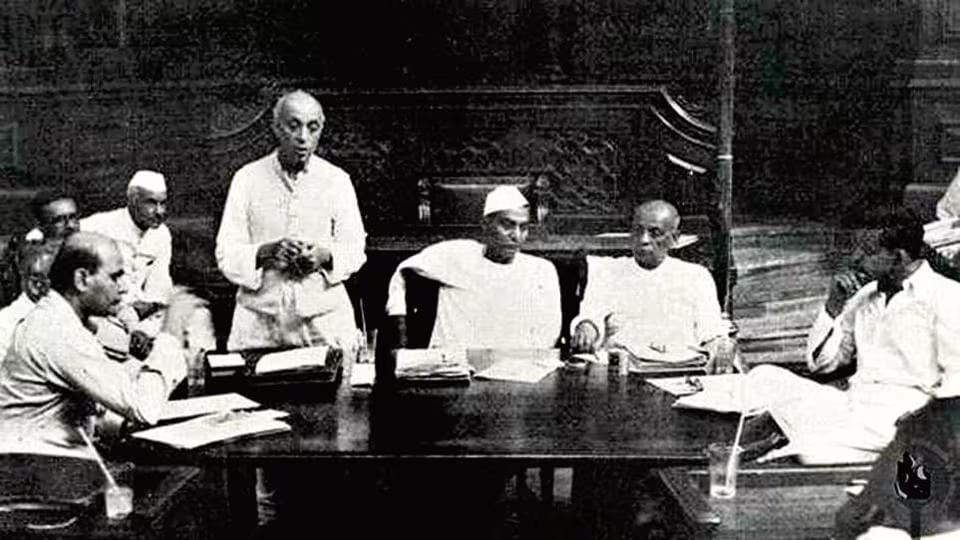
There were around 13 minor committees of the Constituent Assembly. The Constituent Assembly was set up to frame a new Constitution for India. A number of committees were constituted to tackle various areas of the constitution-making process.
|
Table of Contents |
Minor Committees of the Constituent Assembly – Name & Their Chairman
| Committee | Chairman |
|---|---|
| Committee on the Functions of the Constituent Assembly | G.V. Mavalankar |
| Order of Business Committee | Dr. K.M. Munshi |
| House Committee | B. Pattabhi Sitaramayya |
| Ad-hoc Committee on the National Flag | Dr. Rajendra Prasad |
| Special Committee to Examine the Draft Constitution | Jawaharlal Nehru |
| Credentials Committee | Alladi Krishnaswamy Ayyar |
| Finance and Staff Committee | Dr. Rajendra Prasad |
| Press Gallery Committee | Usha Nath Sen |
| Committee on Chief Commissioners’ Provinces | B. Pattabhi Sitaramayya |
| Commission on Linguistic Provinces | S.K. Dar |
| Expert Committee on Financial Provisions | Nalini Ranjan Sarkar |
| Ad-hoc Committee on the Supreme Court | S. Varadachari |
| Ad-hoc Committee on Citizenship | S Varadachari |
Conclusion
Constitutional committees play a pivotal role in shaping the fundamental framework of a nation, ensuring that its governance adheres to the principles of justice, equality, and the protection of individual rights.
|
“ Constituent Assembly committees shaped the constitution of independent India with thorough and collaborative deliberation." |
FAQs
Question: What are Lok Adalats?
Answer: Lok Adalats, or "People's Courts," are alternative dispute resolution mechanisms established in India to provide a faster and more cost-effective way to resolve legal disputes. They aim to ensure access to justice for all, particularly for the underprivileged and marginalized sections of society. Lok Adalats are presided over by a panel of judges or legal experts, and they facilitate amicable settlements between parties without the need for a formal trial.
Question: What types of cases can be resolved in Lok Adalats?
Answer: Lok Adalats can resolve a wide range of civil and criminal cases, including family disputes, property disputes, cheque bouncing cases, and matters related to labor and consumer issues. However, cases that have already been taken up by the court and are pending trial may not be referred to Lok Adalats, as they primarily deal with disputes that are mutually agreed upon by the parties involved.
Question: What are the benefits of using Lok Adalats?
Answer: The benefits of using Lok Adalats include: 1. Speed - Cases are resolved quickly, often on the same day. 2. Cost-effective - There are no court fees, making it financially accessible. 3. Simplicity - The process is less formal than traditional courts, making it user-friendly. 4. Confidentiality - Proceedings are private, which can encourage more open dialogue between parties. 5. Settlement-oriented - Lok Adalats focus on amicable resolutions rather than punitive measures, promoting reconciliation.
Question: How are Lok Adalats organized?
Answer: Lok Adalats are organized by the National Legal Services Authority (NALSA) at the national level, and by state legal services authorities at the state level. They conduct regular sessions in various locations, including courts, community centers, and educational institutions, to ensure that people have access to these services. Awareness campaigns are also conducted to educate the public about Lok Adalats and their benefits.
Question: What role does the judiciary play in Lok Adalats?
Answer: The judiciary plays a crucial role in Lok Adalats by providing the judges or legal experts who preside over the proceedings. These judges facilitate discussions, guide parties through the negotiation process, and ensure that any settlement reached is fair and just. The involvement of the judiciary helps maintain the integrity of the process and ensures adherence to legal principles.
MCQs
1. What is the primary objective of Lok Adalats?
A) To conduct formal trials
B) To provide an alternative dispute resolution mechanism
C) To enforce judicial decisions
D) To issue criminal penalties
Answer: (B) See the Explanation
Explanation: The primary objective of Lok Adalats is to provide an alternative dispute resolution mechanism that is faster and more cost-effective than traditional court proceedings.
2. Who can preside over Lok Adalats?
A) Only retired judges
B) Legal experts and judges
C) Any citizen
D) Government officials
Answer: (B) See the Explanation
Explanation: Lok Adalats are presided over by a panel that may include judges and legal experts who facilitate the resolution of disputes.
3. What types of disputes are commonly resolved in Lok Adalats?
A) Only civil cases
B) Only criminal cases
C) Civil and criminal cases
D) None of the above
Answer: (C) See the Explanation
Explanation: Lok Adalats can resolve a variety of disputes, including both civil and criminal cases, depending on the nature of the disagreement.
4. Which authority organizes Lok Adalats at the national level?
A) Supreme Court
B) High Court
C) National Legal Services Authority (NALSA)
D) Ministry of Law
Answer: (C) See the Explanation
Explanation: The National Legal Services Authority (NALSA) is responsible for organizing Lok Adalats at the national level.
5. What is a significant advantage of Lok Adalats compared to regular courts?
A) Longer proceedings
B) Higher costs
C) Focus on punitive measures
D) Faster resolution of disputes
Answer: (D) See the Explanation
Explanation: A significant advantage of Lok Adalats is their ability to provide a faster resolution of disputes compared to regular court proceedings.
GS Mains Questions and Model Answers
Q1: Evaluate the significance of Lok Adalats in enhancing access to justice in India.
Answer: Lok Adalats play a crucial role in enhancing access to justice in India by providing an alternative dispute resolution mechanism that is both efficient and cost-effective. They cater to the needs of marginalized and economically disadvantaged groups who may otherwise face barriers to accessing the formal judicial system. By facilitating quick and amicable settlements, Lok Adalats reduce the burden on traditional courts, which are often overcrowded and slow-moving. The informal setting of Lok Adalats encourages participation and engagement from all parties involved, promoting a sense of community in resolving disputes. Furthermore, Lok Adalats contribute to the overall goal of legal empowerment, making the justice system more accessible and user-friendly for the common citizen.
Q2: Discuss the challenges faced by Lok Adalats in India.
Answer: Despite their effectiveness, Lok Adalats face several challenges in India, including limited public awareness and understanding of their functions. Many individuals remain unaware of the benefits of using Lok Adalats, leading to underutilization of this alternative dispute resolution mechanism. Additionally, the lack of trained mediators and legal professionals can hinder the effectiveness of proceedings, impacting the quality of settlements reached. Another challenge is ensuring the enforceability of decisions made in Lok Adalats, as not all agreements may hold legal weight. Addressing these challenges requires targeted awareness campaigns, training programs for mediators, and a legislative framework to strengthen the authority of Lok Adalat decisions.
Q3: Analyze the impact of Lok Adalats on the traditional judicial system in India.
Answer: Lok Adalats have had a significant impact on the traditional judicial system in India by alleviating the backlog of cases in courts and providing an efficient alternative for dispute resolution. By offering a quicker and less formal means of settling disputes, Lok Adalats help reduce the pressure on the judiciary, allowing judges to focus on more complex cases that require formal adjudication. Moreover, the emphasis on amicable settlements in Lok Adalats fosters a culture of collaboration and negotiation, which can lead to more sustainable resolutions for parties involved. As Lok Adalats gain popularity and credibility, they are likely to continue shaping the landscape of dispute resolution in India, promoting a more efficient and accessible legal system for all.
Previous Year Questions on Lok Adalats
1. UPSC CSE Prelims 2021:
Question: Which of the following statements about Lok Adalats is incorrect?
A) They are conducted by legal services authorities.
B) They can resolve both civil and criminal cases.
C) There are court fees involved.
D) They aim to promote amicable settlements.
Answer: (C)
Explanation: Lok Adalats do not involve court fees, making them a cost-effective alternative for dispute resolution.
2. UPSC CSE Mains 2020 (GS Paper 3):
Question: "Discuss the importance of Lok Adalats in the Indian judicial system."
Answer: Lok Adalats are significant in the Indian judicial system as they help in reducing the burden on formal courts by providing an alternative mechanism for dispute resolution. They are particularly beneficial for those who may not have the means to access traditional judicial processes. By focusing on settlement rather than adversarial proceedings, Lok Adalats foster a collaborative approach to justice, promoting harmony within communities and ensuring that disputes are resolved amicably.
*email: contactus@prepp.in
Download the PREPP App and attempt FREE IAS Exam Mock Tests and get complete study material!

Full Test - 04: UPSC CSE Prelims CSAT (Paper-II)
Full Test - 03: UPSC CSE Prelims CSAT (Paper-II)
UPSC CSE Prelims 2026 GS Paper 1 Question Paper (24-May-2026)
UPSC CSE Prelims 2026 CSAT Paper 2 Question Paper (24-May-2026)

17 February 2025 | The Hindu Must Read Articles | Current Affairs

16 February 2026 | The Hindu Must Read Articles | Current Affairs

13 February 2026 | The Hindu Must Read Articles | Current Affairs









Comments