Committees of Constituent Assembly - Indian Polity Notes
Indian Constituent Assembly formed a number of committees to handle various aspects of the constitution-making process. The Constituent Assembly of India selected 22 committees to deal with various constitutional issues. Eight of them were important committees, while the others were small committees. The UPSC Indian Polity and Governance Syllabus includes Committees of Constituent Assembly which is described in this article.
|
Table of Contents |

Committees of Constituent Assembly - Historical Background
- The Constituent Assembly, which was constituted in 1946 in line with the cabinet mission plan, drafted the Indian Constitution.
- The Constituent Assembly was formally established as a fully independent legislature after India attained independence in 1947.
- The Constituent Assembly formed many committees to develop India's constitution including the drafting committee, to prepare the Constitution.
- The Provincial Commissioners Committee, the Financial Relations Committee, the Union Power Committee on Fundamental and Minority Rights, and the Advisory Committee on Tribal Areas are the key committees constituted.
- The committees produced an accepted report, which was used to form a drafting committee led by Dr. B.R. Ambedkar, who was a legal member of the Indian government at the time.
- The drafting committee's job was to provide a legal framework for including the decision in the reports of the other committees.
|
“ Constituent Assembly committees shaped the constitution of independent India with thorough and collaborative deliberation."
|
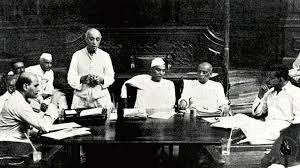
Committees of the Constituent Assembly
- The Constituent Assembly worked with the help of a large number of committees and subcommittees. Committees are of two types: those that deal with procedural matters and those that are of material importance.
- The most important committee is the Drafting Committee. Dr. Ambedkar is the Chairman of the Drafting Committee.
- The Constituent Assembly appointed 22 committees to deal with various tasks in the preparation of the constitution, of these, 8 are Main Committees and other Subcommittees.
Major Committees
- Union Power Committee – Jawaharlal Nehru
- Union Constitution Committee – Jawaharlal Nehru
- Provincial Constitution Committee – Sardar Patel
- Drafting Committee – Dr. B.R. Ambedkar
- Advisory Committee on Fundamental Rights, Minorities and Tribal and Excluded Areas - Sardar Patel. This committee had the following sub-committees:
- Fundamental Rights Sub-Committee – J.B. Kripalani
- Minorities Sub-Committee – H.C. Mukherjee
- North-East Frontier Tribal Areas and Assam Excluded & Partially Excluded Areas Sub-Committee – Gopinath Bardoloi
- Excluded and Partially Excluded Areas (Other than those in Assam) Sub-Committee – A.V. Thakkar
- Rules of Procedure Committee – Dr. Rajendra Prasad
- States Committee (Committee for Negotiating with States) – Jawaharlal Nehru
- Steering Committee – Dr. Rajendra Prasad
Minor Committees
- Committee on the Functions of the Constituent Assembly – G.V. Mavalankar
- Order of Business Committee – Dr. K.M. Munshi
- House Committee – B. Pattabhi Sitaramayya
- Ad-hoc Committee on the National Flag – Dr. Rajendra Prasad
- Special Committee to Examine the Draft Constitution – Jawaharlal Nehru
- Credentials Committee – Alladi Krishnaswamy Ayyar
- Finance and Staff Committee – Dr. Rajendra Prasad
- Press Gallery Committee – Usha Nath Sen
- Committee to Examine the Effect of Indian Independence Act of 1947
- Committee on Chief Commissioners’ Provinces – B. Pattabhi Sitaramayya
- Commission on Linguistic Provinces – S.K. Dar
- Expert Committee on Financial Provisions – Nalini Ranjan Sarkar
- Ad-hoc Committee on the Supreme Court – S. Varadachari
- Ad-hoc Committee on citizenship – S Varadachari
Drafting Committee
- The Drafting Commission was established by the Constitutional Council on August 29, 1947, chaired by Dr. B. Ambedkar, to prepare the drafting of the constitution.
- It has seven members. The drafting committee is the most important body, as it is entrusted with the final task of drafting a new constitution based on reports submitted by other committees.
- The first draft was published in February 1948 and the citizens of India had eight months to discuss the draft and propose amendments.
- In response to comments and suggestions from the public, the committee prepared a second draft, which was published in October of the same year.
- The committee reviewed and revised the reports several times until a satisfactory draft was received
Seven members of the Drafting Committee:
- Dr. B.R. Ambedkar (Chairman)
- Gopalaswamy Ayyangar
- Alladi Krishnaswamy Ayyar
- Dr. K.M. Munshi
- Syed Mohammad Saadullah Madhava Rau (He replaced B.L. Mitter who resigned due to ill-health)
- T. Krishnamachari (He replaced D.P. Khaitan who died in 1948)
Conclusion
Constitutional committees play a pivotal role in shaping the fundamental framework of a nation, ensuring that its governance adheres to the principles of justice, equality, and the protection of individual rights.
FAQs
Question: What was the purpose of the Constituent Assembly in India?
Answer: The Constituent Assembly of India was established with the primary objective of drafting the Constitution for independent India. Formed in 1946, it aimed to create a democratic framework that would ensure justice, liberty, equality, and fraternity among all citizens. The Assembly was tasked with considering the diverse interests of various communities and regions, making provisions for fundamental rights, governance structures, and the separation of powers, thereby laying down the foundation for India's democratic and secular state.
Question: How many committees were formed within the Constituent Assembly?
Answer: The Constituent Assembly established several committees to address various aspects of the Constitution's drafting process. A total of 22 committees were formed, each focusing on specific issues such as fundamental rights, the union and its territory, and the structure of the government. Notably, the drafting committee, chaired by Dr. B.R. Ambedkar, was pivotal in compiling the Constitution, incorporating inputs from various other committees and ensuring a comprehensive legal framework for the country.
Question: Who chaired the Drafting Committee of the Constituent Assembly?
Answer: Dr. B.R. Ambedkar, an eminent social reformer and politician, chaired the Drafting Committee of the Constituent Assembly. His leadership was instrumental in shaping the Constitution, and he is often referred to as the 'Father of the Indian Constitution.' Dr. Ambedkar's commitment to social justice and equality profoundly influenced the fundamental rights and provisions included in the Constitution, ensuring that it reflected the aspirations of all sections of society.
Question: What were some key committees of the Constituent Assembly and their roles?
Answer: Key committees of the Constituent Assembly included the Fundamental Rights Committee, which focused on ensuring the protection of individual rights; the Union Powers Committee, which addressed the distribution of powers between the Centre and the states; and the Steering Committee, which coordinated the work of various committees. These committees played crucial roles in discussing and debating various provisions, ensuring a comprehensive and inclusive Constitution that addressed the diverse needs of India's population.
Question: When was the Constitution of India adopted, and what was its significance?
Answer: The Constitution of India was adopted on January 26, 1950. This date holds immense significance as it marked the transition of India into a sovereign democratic republic, replacing the Government of India Act of 1935. The adoption of the Constitution symbolized the culmination of a long struggle for independence and the establishment of a legal framework to govern the nation. It enshrined fundamental rights, directive principles, and the framework for governance, thus laying the groundwork for India's democratic ethos and political stability.
MCQs
1. Who was the chairman of the Drafting Committee of the Indian Constitution?
A) Mahatma Gandhi
B) Jawaharlal Nehru
C) B.R. Ambedkar
D) Sardar Patel
Answer: (C) See the Explanation
Explanation: B.R. Ambedkar served as the chairman of the Drafting Committee of the Indian Constitution. His expertise and vision were crucial in shaping the legal framework that governs India today.
2. What was one of the main functions of the Constituent Assembly?
A) Conducting elections
B) Drafting the Constitution
C) Implementing laws
D) Forming the Cabinet
Answer: (B) See the Explanation
Explanation: The primary function of the Constituent Assembly was to draft the Constitution of India, establishing the framework for governance and defining the rights and responsibilities of citizens.
3. How many total committees were formed in the Constituent Assembly?
A) 15
B) 22
C) 30
D) 12
Answer: (B) See the Explanation
Explanation: A total of 22 committees were formed within the Constituent Assembly to address various aspects of the Constitution's drafting process, each focusing on specific issues related to governance and rights.
4. What was the primary focus of the Fundamental Rights Committee?
A) Distribution of powers
B) Protection of individual rights
C) Taxation policies
D) Election procedures
Answer: (B) See the Explanation
Explanation: The Fundamental Rights Committee focused on ensuring the protection of individual rights and liberties, which were essential for establishing a just and equitable society in the Constitution.
5. When was the Indian Constitution officially adopted?
A) August 15, 1947
B) January 26, 1950
C) March 15, 1951
D) November 26, 1949
Answer: (B) See the Explanation
Explanation: The Indian Constitution was officially adopted on January 26, 1950, marking the date when India became a sovereign democratic republic.
GS Mains Questions and Model Answers
Q1: Analyze the role of the Constituent Assembly in the making of the Indian Constitution. What were its key contributions?
Answer: The Constituent Assembly of India played a pivotal role in formulating the Indian Constitution, which serves as the foundational legal document of the nation. Comprising elected representatives from various regions and communities, the Assembly worked diligently from 1946 to 1950 to address the diverse needs of the population. One of its key contributions was the establishment of a comprehensive framework that enshrined fundamental rights and directive principles, ensuring justice and equality for all citizens. The drafting committee, led by Dr. B.R. Ambedkar, synthesized inputs from various other committees, which focused on issues like governance, rights, and federal structure. The Assembly's deliberations incorporated lessons from various constitutions worldwide, promoting a democratic and inclusive approach. Ultimately, the Assembly's work laid the groundwork for India’s identity as a secular, democratic republic, embodying the aspirations of its people.
Q2: Discuss the significance of the Drafting Committee of the Constituent Assembly. How did its decisions shape the Constitution?
Answer: The Drafting Committee of the Constituent Assembly, chaired by Dr. B.R. Ambedkar, was crucial in shaping the Indian Constitution. Its significance lies in its role as the primary body responsible for converting the broad discussions and recommendations of various committees into a coherent legal document. The committee meticulously examined diverse perspectives on governance, rights, and responsibilities, ensuring that the Constitution reflected the values and aspirations of a pluralistic society. One of its landmark decisions was the inclusion of a comprehensive list of fundamental rights, aimed at safeguarding individual freedoms and promoting social justice. The committee also emphasized the importance of federalism, ensuring a balance of power between the central and state governments. The decisions made by the Drafting Committee not only established the framework for governance but also enshrined principles of justice, liberty, and equality, making the Constitution a living document that continues to guide India's democratic journey.
Q3: Evaluate the challenges faced by the Constituent Assembly during the drafting of the Constitution. How did it overcome these challenges?
Answer: The Constituent Assembly faced several challenges while drafting the Constitution, including regional disparities, communal tensions, and the need for consensus among diverse political factions. One of the significant challenges was ensuring representation for various communities and interest groups, which required extensive deliberations and negotiations. To overcome these hurdles, the Assembly established multiple committees to address specific issues, allowing for focused discussions and recommendations. Additionally, the leadership of figures like Dr. B.R. Ambedkar was instrumental in fostering dialogue and understanding among members. The Assembly also adopted a pragmatic approach, learning from the experiences of other nations and incorporating best practices into the Indian context. By promoting a spirit of collaboration and compromise, the Constituent Assembly successfully navigated these challenges, culminating in a Constitution that reflects the aspirations and diversity of the Indian populace.
Previous Year Questions on Committees of the Constituent Assembly
1. UPSC CSE Prelims 2021:
Question: Which committee of the Constituent Assembly was responsible for drafting the Constitution?
A) Fundamental Rights Committee
B) Drafting Committee
C) Union Powers Committee
D) State Reorganization Committee
Answer: (B)
Explanation: The Drafting Committee was responsible for drafting the Indian Constitution, synthesizing inputs from various committees and ensuring a comprehensive legal framework for governance.
2. UPSC CSE Mains 2019 (GS Paper 1):
Question: Examine the contribution of the Constituent Assembly to the establishment of a democratic framework in India. Discuss its key features.
Answer: The Constituent Assembly made substantial contributions to establishing a democratic framework in India by formulating a Constitution that embodies democratic principles and values. Key features include the establishment of universal adult franchise, which ensures that every citizen has the right to vote, thereby promoting inclusivity in governance. The Assembly enshrined fundamental rights that protect individual liberties and promote social justice, emphasizing equality and non-discrimination. The federal structure delineates the distribution of powers between the Centre and states, ensuring local representation and governance. The Constitution also integrates provisions for a parliamentary system, which fosters accountability and responsiveness from elected representatives. Through these features, the Constituent Assembly laid the groundwork for a vibrant democracy that respects diversity and upholds the rule of law.
*email: contactus@prepp.in
Download the PREPP App and attempt FREE IAS Exam Mock Tests and get complete study material!

Live Test : UPSC CSE Prelims CSAT (Paper-II) (Oct 20 - 23)
Full Test - 04: UPSC CSE Prelims CSAT (Paper-II)
Full Test - 03: UPSC CSE Prelims CSAT (Paper-II)
UPSC CSE Prelims 2026 GS Paper 1 Question Paper (24-May-2026)
UPSC CSE Prelims 2026 CSAT Paper 2 Question Paper (24-May-2026)

17 February 2025 | The Hindu Must Read Articles | Current Affairs

16 February 2026 | The Hindu Must Read Articles | Current Affairs

13 February 2026 | The Hindu Must Read Articles | Current Affairs









Comments