Objectives Resolution: Making of the Indian Constitution - Indian Polity Notes
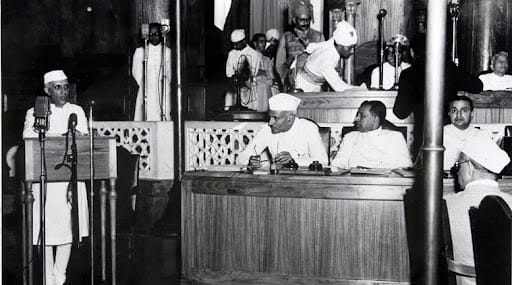
‘Objective Resolution’ was moved by Pandit Jawaharlal Nehru on December 13, 1946, which provided the guiding principles for making of the Constitution and ultimately took the form of the Preamble of the Constitution of India. It reflects the aspirations and values of the Indians. It was a moral commitment expressed by makers of the Constitution towards our key values - equality, liberty, democracy, etc. The UPSC Indian Polity and Governance Syllabus includes Objectives Resolution: Making of the Indian Constitution which is described in this article.
|
Table of Contents |

Objectives Resolution - Historical Background
- Nehru introduced an Objectives Resolution (a resolution that outlined the Assembly's goals) in 1946 before the Constitution-making process began.
- The aims and principles that drove the creation of the Constitution were embodied in this resolution.
- The Objectives Resolution provided the foundation for India's Constitution, which institutionalized the essential values of equality, liberty, democracy, sovereignty, and cosmopolitan identity.
- This solidified the moral resolve to form a government that will carry out the many promises made by the nationalist movement to the Indian people.
- The Preamble to the Constitution is based on this resolution, which was overwhelmingly accepted on January 22, 1947.
- The essential framework of our Constitution is included in the preamble's goals. It emphasizes the Indian constitution's key ideas and philosophy. It is regarded as the Constitution's soul.
|
Objectives Resolution of 1946, reflects the aspirations and values of the Indians.
|
Constituents the Objectives resolution
- India is an independent, sovereign, republic.
- India shall be a Union of erstwhile British Indian territories, Indian States, and other parts outside British India and the Indian States as are willing to be a part of the Union.
- Territories forming the Union shall be autonomous units and exercise all powers and functions of the Government and administration, except those assigned to or vested in the Union.
- All powers and authority of sovereign and independent India and its Constitution shall flow from the people.
- All people of India shall be guaranteed and secured social, economic, and political justice; equality of status and opportunities and equality before the law; and fundamental freedoms – of speech, expression, belief, faith, worship, vocation, association and action – subject to law and public morality.
- The minorities, backward and tribal areas, depressed and other backward classes shall be provided adequate safeguards.
- The territorial integrity of the Republic and its sovereign rights on land, sea, and air shall be maintained according to justice and law of civilized nations.
- The land would make a full and willing contribution to the promotion of world peace and the welfare of mankind.
Reasons/Intentions behind the adoption of the objectives resolution
Jawaharlal Nehru’s prolonged speech in the Constituent Assembly gives many insights regarding the intent and reasons behind moving such a resolution. Based on that speech, some of the major reasons can be summarised as below:
- India is a diverse country, hence it was necessary to show glimpses of the new constitution to the people of India so that it would encourage them for full participation in the country's new polity.
- It only seeks to show how leaders shall lead India to achieve the objectives laid down in the resolution.
- Jawaharlal Nehru believed that the resolution should be the guiding force for constitution-makers.
- Being a legal statute the language of the new constitution would necessarily be technical, hence the resolution was intended to explain the spirit of it. As Nehru said: “Laws are made of words but this Resolution is something higher than the law”.
- The resolution was the wish and hope for framing an inclusive constitution for all sections of Indian society.
- It was obviously not binding on the makers of the constitution, however, it was an appeal to their conscience to consider the core values of Indian society.
- It was an attempt to give a live message to Indian people and the world, about the character of independant, modern and new India.
Conclusion
The 1946 Objectives Resolution expresses the Indians' ambitions and beliefs.It was a moral commitment made by the constitution's authors to our core ideals of equality, liberty, and democracy, among others.The resolution expressed the desire and hope for an inclusive constitution that would benefit all segments of Indian society.The resolution, according to Jawaharlal Nehru, should be the guiding force for constitution builders. It was certainly not binding on the founding fathers, but it was an appeal to their conscience.
FAQs
Question: What is the Objectives Resolution?
Answer: The Objectives Resolution was a statement of principles and aspirations for an independent India, introduced by Jawaharlal Nehru in the Constituent Assembly on December 13, 1946. It laid the groundwork for the Indian Constitution and outlined the ideals of sovereignty, democracy, justice, and equality.
Question: Why is the Objectives Resolution important in the making of the Indian Constitution?
Answer: The Objectives Resolution served as the foundation for the drafting of the Indian Constitution. Its principles were later incorporated into the Preamble of the Constitution, making it a guiding document for the nation's future governance.
Question: Who introduced the Objectives Resolution in the Constituent Assembly?
Answer: The Objectives Resolution was introduced by Jawaharlal Nehru on December 13, 1946, in the Constituent Assembly.
Question: How did the Objectives Resolution influence the Preamble of the Indian Constitution?
Answer: The key principles of the Objectives Resolution, such as sovereignty, justice, equality, and democracy, were incorporated into the Preamble of the Indian Constitution, reflecting the aspirations of the Indian people.
Question: What were the core values emphasized in the Objectives Resolution?
Answer: The core values of the Objectives Resolution include sovereignty, democracy, secularism, justice, equality, and the protection of fundamental rights for all citizens.
MCQs
1. Who moved the Objectives Resolution in the Constituent Assembly?
A. Mahatma Gandhi
B. B. R. Ambedkar
C. Jawaharlal Nehru
D. Sardar Vallabhbhai Patel
Answer: (C) See the Explanation
Jawaharlal Nehru moved the Objectives Resolution in the Constituent Assembly on December 13, 1946, which outlined the guiding principles for India's future Constitution.
2. What was the primary purpose of the Objectives Resolution?
A. To draft the Indian Penal Code
B. To define the relationship between India and the British Crown
C. To lay down the guiding principles for the Indian Constitution
D. To propose economic reforms in independent India
Answer: (C) See the Explanation
The Objectives Resolution was introduced to lay down the guiding principles for the drafting of the Indian Constitution, focusing on sovereignty, democracy, justice, and equality.
3. Which of the following principles was NOT part of the Objectives Resolution?
A. Secularism
B. Monarchy
C. Sovereignty of the people
D. Fundamental rights
Answer: (B) See the Explanation
The Objectives Resolution emphasized democratic values and the sovereignty of the people. Monarchy was not a part of the vision for independent India.
4. When was the Objectives Resolution adopted by the Constituent Assembly?
A. January 26, 1950
B. August 15, 1947
C. January 22, 1947
D. December 13, 1946
Answer: (C) See the Explanation
The Objectives Resolution was adopted by the Constituent Assembly on January 22, 1947, after it was introduced by Jawaharlal Nehru on December 13, 1946.
5. Which aspect of governance was emphasized in the Objectives Resolution?
A. Absolute power to the executive
B. A representative democratic government
C. Preference to one religion over others
D. Concentration of power in the judiciary
Answer: (B) See the Explanation
The Objectives Resolution emphasized the establishment of a representative democratic government that would be based on the will of the people.
GS Mains Questions and Model Answers
1. Discuss the significance of the Objectives Resolution in the making of the Indian Constitution.
Answer: The Objectives Resolution, introduced by Jawaharlal Nehru in the Constituent Assembly on December 13, 1946, was a crucial milestone in the making of the Indian Constitution. It outlined the fundamental principles that would guide the drafting of the Constitution and reflected the aspirations of the Indian people for a sovereign, democratic, and just nation. The resolution emphasized key values such as sovereignty of the people, democracy, justice, equality, and fundamental rights. These principles were later incorporated into the Preamble of the Indian Constitution, shaping its core philosophy. The adoption of the Objectives Resolution marked India’s formal commitment to creating a Constitution that would ensure equal opportunities, protect individual freedoms, and uphold democratic governance.
2. How did the Objectives Resolution influence the drafting of the Preamble to the Indian Constitution?
Answer: The Objectives Resolution significantly influenced the drafting of the Preamble to the Indian Constitution by providing the foundational ideals and values that were later enshrined in the Preamble. The resolution emphasized the sovereignty of the people, the need for a democratic form of government, the guarantee of fundamental rights, and the importance of social, economic, and political justice. These principles became the cornerstone of the Preamble, which begins with the words, "We, the people of India," reflecting the commitment to sovereignty, justice, equality, liberty, and fraternity. The influence of the Objectives Resolution ensured that the Preamble would encapsulate the core aspirations of the Indian people and guide the functioning of the state.
3. Analyze the role of Jawaharlal Nehru in introducing and advocating for the Objectives Resolution in the Constituent Assembly.
Answer: Jawaharlal Nehru played a pivotal role in introducing and advocating for the Objectives Resolution in the Constituent Assembly. As the leader of the Assembly and a prominent figure in the Indian freedom struggle, Nehru presented the resolution on December 13, 1946, outlining the principles that would guide the drafting of the Constitution. His leadership and vision were instrumental in securing the unanimous adoption of the resolution on January 22, 1947. Nehru’s advocacy for the values of sovereignty, democracy, secularism, and social justice shaped the future direction of India’s Constitution. His ability to articulate the aspirations of a newly independent India ensured that the resolution laid the foundation for a democratic and inclusive Constitution.
Previous Year Questions on the Objectives Resolution
1. UPSC CSE Prelims 2019
Question: The Objectives Resolution, introduced in the Constituent Assembly, laid down which of the following principles for the Indian Constitution?
A. Monarchy and aristocracy
B. Sovereignty, democracy, and justice
C. Economic reforms and taxation
D. Preferential treatment to a single religion
Answer: B
Explanation: The Objectives Resolution laid down the principles of sovereignty, democracy, and justice, which were later incorporated into the Preamble of the Indian Constitution.
2. UPSC CSE Mains 2018 (GS Paper 2)
Question: "The Objectives Resolution laid the foundation for the Indian Constitution by outlining the aspirations of the Indian people." Discuss the significance of the Objectives Resolution in the context of India's Constitution-making process.
Answer: The Objectives Resolution, introduced by Jawaharlal Nehru in 1946, was a key document in the making of the Indian Constitution. It outlined the aspirations of the Indian people for a sovereign, democratic, and just nation, where the government would derive its authority
from the will of the people. The resolution called for the protection of fundamental rights, social, economic, and political justice, and equal opportunities for all citizens. It emphasized the values of secularism and the importance of representative democracy. The principles of the Objectives Resolution were later incorporated into the Preamble of the Constitution, shaping its core philosophy and ensuring that the Constitution would reflect the aspirations of a newly independent India.
*email: contactus@prepp.in
Download the PREPP App and attempt FREE IAS Exam Mock Tests and get complete study material!

Full Test - 04: UPSC CSE Prelims CSAT (Paper-II)
Full Test - 03: UPSC CSE Prelims CSAT (Paper-II)
UPSC CSE Prelims 2026 GS Paper 1 Question Paper (24-May-2026)
UPSC CSE Prelims 2026 CSAT Paper 2 Question Paper (24-May-2026)

17 February 2025 | The Hindu Must Read Articles | Current Affairs

16 February 2026 | The Hindu Must Read Articles | Current Affairs

13 February 2026 | The Hindu Must Read Articles | Current Affairs









Comments