Major Committees of the Constituent Assembly - Indian Polity Notes
The Constituent Assembly formed a number of committees to handle various aspects of the constitution-making process. Eight of them were important committees, while the rest were small committees. Union Powers Committee, Provincial Constitution Committee, Drafting Committee,Rules of Procedure Committee are some of the important Committees of the Constituent Assembly.
|
Table of Contents |
Major Committees of the constituent Assembly – Names & Their Chairman
- Union Powers Committee - Jawaharlal Nehru
- Union Constitution Committee -Jawaharlal Nehru
- Provincial Constitution Committee -Sardar Patel
- Drafting Committee - Dr. B.R. Ambedkar
- Advisory Committee on Fundamental Rights, Minorities and Tribal and Excluded Areas - Sardar Patel. This committee had the following five sub-committees:
- Fundamental Rights Sub-Committee - J.B. Kripalani
- Minorities Sub-Committee - H.C. Mukherjee
- North-East Frontier Tribal Areas and Assam Excluded & Partially Excluded Areas Sub-Committee -Gopinath Bardoloi
- Excluded and Partially Excluded Areas (other than those in Assam) Sub-Committee - A.V. Thakkar
- North-West Frontier Tribal Areas Sub-Committee8a
- Rules of Procedure Committee - Dr. Rajendra Prasad
- States Committee (Committee for Negotiating with States) - Jawaharlal Nehru
- Steering Committee - Dr. Rajendra Prasad
|
" Committees of the Constituent Assembly were the architects of our democratic foundation, sculpting principles into provisions, and shaping ideals into the bedrock of our nation's governance.”
|
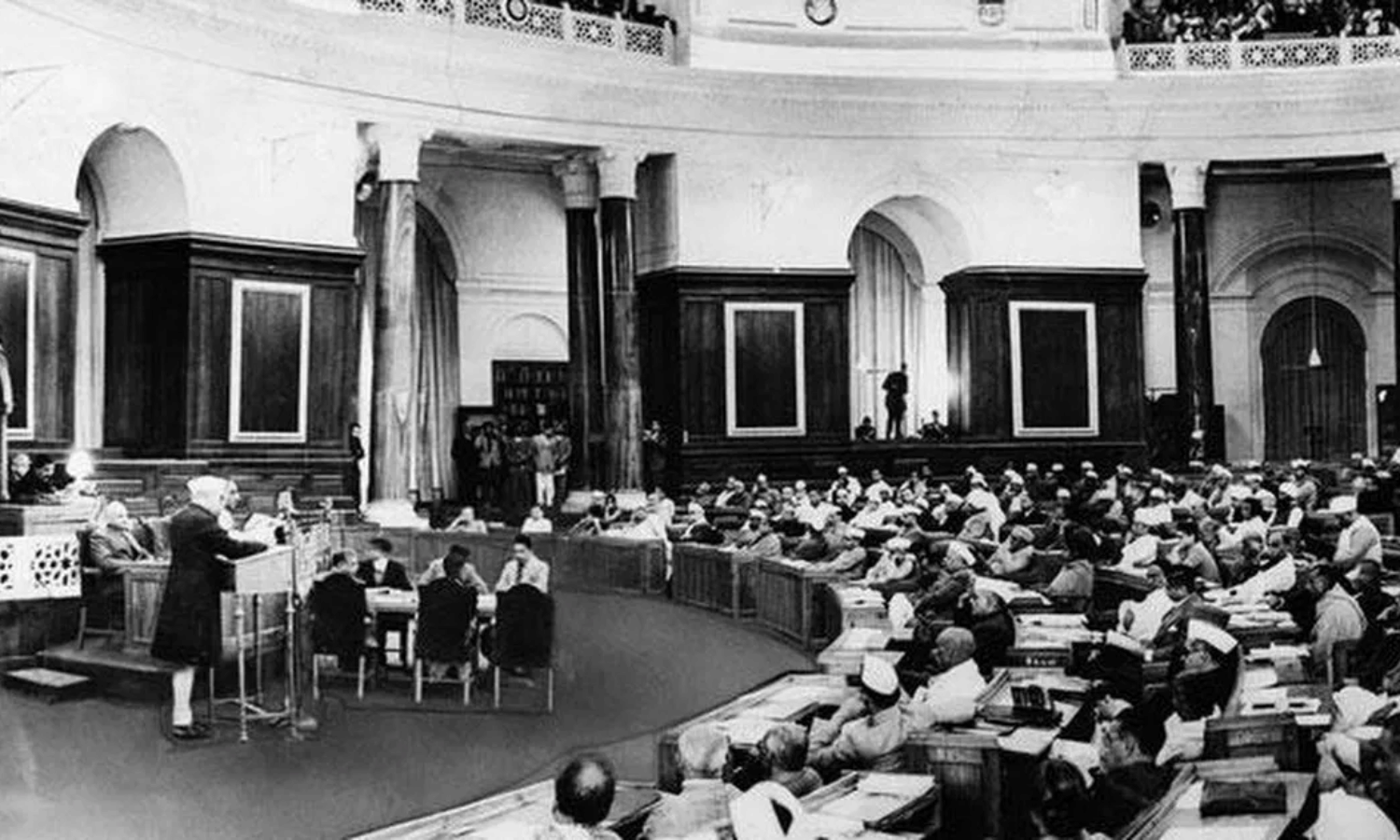
Drafting Committee Of The Constitution Assembly
- Following India's independence, the Constituent Assembly constituted by resolution a drafting committee to study the draft text of the Indian Constitution supplied by the Constitutional Advisor.
- This gave effect to prior Assembly resolutions and included any items that were additional or required to be included in such a constitution.
- They were also meant to bring to the Assembly the committee's amended constitutional drafts .
- Drafting Committee Consists of Seven Members. They were:
- Dr B R Ambedkar (Chairman)
- N Gopalaswamy Ayyangar
- Alladi Krishnaswamy Ayyar
- Dr K M Munshi
- Syed Mohammad Saadullah
- N Madhava Rau (He replaced B L Mitter who resigned due to ill-health)
- T T Krishnamachari (He replaced D P Khaitan who died in 1948)
Conclusion
Constitutional committees play a pivotal role in shaping the fundamental framework of a nation, ensuring that its governance adheres to the principles of justice, equality, and the protection of individual rights.
FAQs
Question. What was the role of the Constituent Assembly of India?
Answer: The Constituent Assembly of India was tasked with drafting the Constitution of India. It was formed in 1946 and consisted of elected representatives from British India and princely states. The Assembly worked to lay down the legal and institutional framework of the newly independent nation. Apart from drafting the Constitution, it also decided on fundamental rights, the structure of the government, and other important issues related to the governance of the country. The Assembly played a pivotal role in shaping the democratic and federal structure of India.
Question. What were the key committees of the Constituent Assembly?
Answer: The Constituent Assembly of India had several important committees that worked on different aspects of the Constitution. The key committees include:
- Drafting Committee: Headed by Dr. B.R. Ambedkar, this committee was responsible for drafting the final version of the Constitution.
- Union Constitution Committee: This committee dealt with the structure of the Indian Union, its distribution of powers, and the relationship between the Center and the states.
- Fundamental Rights Committee: It was tasked with preparing the draft of the Fundamental Rights, which form the core of the Constitution.
- Rules of Procedure Committee: This committee formulated the rules for the functioning of the Constituent Assembly.
- Minorities Sub-Committee: This committee dealt with the protection of the rights of minorities, including religious and linguistic minorities, under the new Constitution.
Question. What was the significance of the Drafting Committee of the Constituent Assembly?
Answer: The Drafting Committee was the most significant committee in the Constituent Assembly, as it was responsible for framing the final draft of the Indian Constitution. The committee was headed by Dr. B.R. Ambedkar, who is regarded as the chief architect of the Constitution. The committee meticulously crafted the text of the Constitution, deliberating on each provision and ensuring that it reflected the aspirations and needs of a diverse, independent India. The Drafting Committee's work resulted in the adoption of the Constitution of India on 26th November 1949.
Question. How did the Union Constitution Committee contribute to the formation of India’s Constitution?
Answer: The Union Constitution Committee played a crucial role in deciding the structure of the Indian Union. It focused on the relationship between the Center and the States, which was a contentious issue due to India’s diverse geographical, linguistic, and cultural divisions. The committee was instrumental in shaping the federal structure of India, which balanced powers between the Union and States. The committee also deliberated on issues such as the division of legislative, executive, and financial powers, which were eventually incorporated into the Seventh Schedule of the Indian Constitution.
Question. What were the contributions of the Minorities Sub-Committee?
Answer: The Minorities Sub-Committee of the Constituent Assembly played a key role in ensuring the protection of the rights of minorities in independent India. The committee discussed the issues faced by religious, linguistic, and other social minorities, emphasizing the importance of safeguarding their rights within the new democratic framework. The committee’s work led to the inclusion of provisions in the Constitution to protect the cultural, educational, and religious rights of minorities. The Article 29 and Article 30 of the Indian Constitution, which provide for the protection of the interests of minorities, are the result of this committee's deliberations.
MCQs
- Who was the chairman of the Drafting Committee of the Constituent Assembly?
a) Jawaharlal Nehru
b) Sardar Patel
c) Dr. B.R. Ambedkar
d) Maulana Azad
Answer: (C) See the Explanation
Dr. B.R. Ambedkar was the chairman of the Drafting Committee of the Constituent Assembly and is regarded as the principal architect of the Indian Constitution.
- Which committee of the Constituent Assembly was responsible for preparing the draft of the Fundamental Rights?
a) Drafting Committee
b) Union Constitution Committee
c) Fundamental Rights Committee
d) Minorities Sub-Committee
Answer: (C) See the Explanation
The Fundamental Rights Committee was tasked with preparing the draft of the Fundamental Rights, which form a crucial part of the Indian Constitution.
- What was the focus of the Union Constitution Committee?
a) Drafting of the Fundamental Rights
b) Protection of minorities' rights
c) Structure of the Indian Union and the distribution of powers
d) Formulation of the rules for the Constituent Assembly
Answer: (C) See the Explanation
The Union Constitution Committee focused on determining the structure of the Indian Union, the relationship between the Center and States, and the distribution of powers, which is reflected in the Seventh Schedule of the Constitution.
- Which of the following committees of the Constituent Assembly was headed by Dr. B.R. Ambedkar?
a) Rules of Procedure Committee
b) Minorities Sub-Committee
c) Drafting Committee
d) Union Constitution Committee
Answer: (C) See the Explanation
Dr. B.R. Ambedkar chaired the Drafting Committee, which was responsible for preparing the final draft of the Indian Constitution.
- The Minorities Sub-Committee of the Constituent Assembly focused on:
a) Economic reforms
b) The protection of the rights of minorities
c) National defense issues
d) Educational policies
Answer: (B) See the Explanation
The Minorities Sub-Committee focused on ensuring the protection of religious, linguistic, and other minority rights in the Indian Constitution.
GS Mains Questions and Model Answers
Q1: Discuss the role of the Drafting Committee in the framing of the Indian Constitution and its significance in shaping India’s legal and political system.
Answer: The Drafting Committee played a pivotal role in the formation of the Indian Constitution. Headed by Dr. B.R. Ambedkar, the committee was tasked with framing the final draft of the Constitution after deliberations on various aspects of governance, rights, and duties. The committee's significance lies in its careful balancing of the diverse needs of India, a country with varied regions, cultures, and religious communities. The committee worked meticulously on each provision, from individual rights to the structure of government, ensuring that it was suitable for an independent and democratic India. The provisions of fundamental rights, directive principles of state policy, and the federal structure of governance are largely a product of the committee’s deliberations. The Drafting Committee's work formed the backbone of India's legal and political system, making the Constitution a foundational document that guides the country's democracy, ensuring the protection of individual rights while maintaining unity and diversity.
Q2: Explain the contribution of the Union Constitution Committee to the formation of the Indian Constitution.
Answer: The Union Constitution Committee made significant contributions to the creation of India’s federal structure. This committee was primarily responsible for determining the relationship between the Union (Central Government) and States, and deciding on the division of powers, which is detailed in the Seventh Schedule of the Constitution. It outlined the distribution of legislative, executive, and financial powers between the Union and the States. The committee’s work was crucial in establishing a federal system with a strong Centre, ensuring that while the States had autonomy, the Union could maintain control over critical areas like defense, foreign affairs, and national security. Additionally, the committee worked on other important aspects such as the structure of the Union executive, the establishment of the Rajya Sabha (Council of States), and the Lok Sabha (House of the People). The committee’s efforts helped establish a balanced framework for governance, accommodating India’s diverse needs.
Q3: What was the role of the Minorities Sub-Committee in the Constituent Assembly?
Answer: The Minorities Sub-Committee of the Constituent Assembly played a critical role in ensuring that the Indian Constitution protected the rights of religious, linguistic, and other social minorities. The committee was tasked with addressing the concerns of minorities regarding their protection under the new democratic system. It discussed various provisions related to education, culture, language, and religious practices that were necessary to safeguard minority interests. As a result of the committee’s recommendations, provisions such as Article 29 and Article 30 were included in the Constitution, guaranteeing the protection of cultural and educational rights for minorities. The committee’s work ensured that the Constitution would foster a pluralistic society where all citizens, regardless of their minority status, could enjoy equal rights and freedoms. The Minorities Sub-Committee’s contribution was instrumental in promoting social harmony and inclusiveness in the Indian polity.
Previous Year Questions on Major Committees of the Constituent Assembly
1. UPSC CSE 2020
Question: "Discuss the role of the Drafting Committee in the framing of the Indian Constitution."
Answer: The Drafting Committee, headed by Dr. B.R. Ambedkar, played a pivotal role in shaping the Indian Constitution. Its primary responsibility was to draft the Constitution after extensive discussions on various aspects of governance, rights, and duties. The committee worked carefully on each provision to create a document that balanced the diverse needs of an independent India. The provisions on fundamental rights, directive principles of state policy, and the structure of government were significantly influenced by the committee's deliberations. The Drafting Committee's work ensured that the Indian Constitution became a comprehensive framework for governance, ensuring democracy, protecting individual freedoms, and maintaining unity in diversity.
2. UPSC CSE 2019
Question: "How did the Union Constitution Committee contribute to the framing of the Indian Constitution?"
Answer: The Union Constitution Committee played a vital role in the creation of India’s federal system. The committee was responsible for determining the relationship between the Centre and the States and outlining the division of powers, which became part of the Seventh Schedule of the Constitution. The committee helped to define the structure of the Union executive, including the roles of the President, Council of Ministers, and Prime Minister, and established the Rajya Sabha and Lok Sabha. The committee’s recommendations were crucial in shaping a strong Centre with sufficient power to maintain national unity while providing autonomy to the States. The committee’s work was instrumental in designing the federal framework of the Indian Constitution.
*email: contactus@prepp.in
Download the PREPP App and attempt FREE IAS Exam Mock Tests and get complete study material!

Full Test - 04: UPSC CSE Prelims CSAT (Paper-II)
Full Test - 03: UPSC CSE Prelims CSAT (Paper-II)
UPSC CSE Prelims 2026 GS Paper 1 Question Paper (24-May-2026)
UPSC CSE Prelims 2026 CSAT Paper 2 Question Paper (24-May-2026)

17 February 2025 | The Hindu Must Read Articles | Current Affairs

16 February 2026 | The Hindu Must Read Articles | Current Affairs

13 February 2026 | The Hindu Must Read Articles | Current Affairs









Comments