Kindness, Forgiveness, Self-Control And Good Temper, Fortitude and Cowardice, Empathy, Altruism, Truthfulness - Ethical Qualities - Ethics Notes
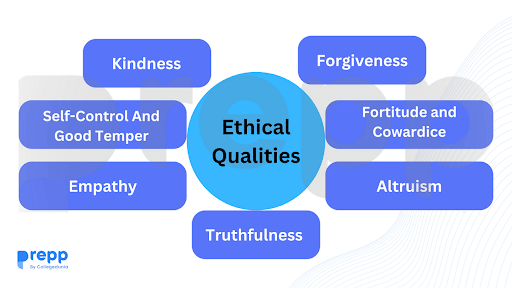
Ethical qualities are personal characteristics and virtues that guide the individual in making ethical judgements and engaging in morally upright behaviour. Ethical qualities, also known as moral qualities. Kindness, Forgiveness, Self-Control And Good Temper, Fortitude and Cowardice, Empathy, Altruism, Truthfulness are some of the ethical qualities. These qualities serve as guiding principles for individuals to conduct in line with ethical norms and ideals. This article will explain Ethical Qualities which will be helpful in Ethics preparation for the UPSC Civil service Mains exam.
Table of Contents
Ethical Qualities - Kindness
- Kindness is commonly defined as the quality of being kind, thoughtful, and generous.
- Kindness is a moral virtue that manifests itself in situations that necessitate an ethical response, generally when the individual feels sympathetic or empathetic towards another person.
- A kind person respects the feelings of others, attempts to help them, and avoids harmful behaviours also has attributes such as affection, empathy, and giving to others.
|
Examples
|
| Other Relevant Links | |
|---|---|
| Ethical Ideals in Life | Kantianism |
| Stoicism | Moral subjectivism |
| Cultural relativism | Sceptical doctrines |
| Utilitarianism | Epicureanism |
| Psychological egosim | Socrates |
| Western Moral Thinkers | Plato |
Ethical Qualities - Forgiveness
- Forgiveness is viewed as an ethical attribute since it entails making a conscious decision to let go of resentment, wrath, or the desire for vengeance towards someone who has mistreated us.
- It is an act of kindness and understanding, even in the face of damage or injustice.
- Forgiveness is acknowledging our worth - that we did not deserve to be hurt and that the other person should not have wronged us.
- Some philosophers claim that self-respect is fundamental to how we think about forgiveness.
- Excusing someone for their wrongdoing or ceasing to harbour resentment against them are actions that constitute forgiveness.
- From an individual to a global level, the value of apologising and forgiving becomes clear.
Examples
|
Ethical Qualities - Self-Control And Good Temper
- Self-control and Good temper are two ethical attributes highly prized in a variety of philosophical and ethical systems.
- Self-control, also known as self-discipline or self-restraint, is the capacity to manage and rule one's ideas, emotions, and behaviours. It entails exerting control over one's wants, urges, and behaviours in order to behave in line with one's ideals and principles.
- Good temper, often known as patience or equanimity, refers to the ability to remain cool, controlled, and even-tempered under difficult or stressful conditions.
Ethical Qualities - Fortitude and Cowardice
- Fortitude, often known as bravery or moral strength, is a valuable ethical attribute that people can have.
- It is the capacity to handle obstacles, adversity, or challenging conditions with resilience and drive while adhering to one's ideals and convictions.
- It is a critical ethical characteristic that enables people to withstand hardship, maintain their ideals, and act with bravery and resilience in difficult situations.
- It helps with personal integrity, moral leadership, and the pursuit of the greater good.
- Individuals who want to live ethical lives and make significant contributions to their communities and society as a whole must cultivate fortitude.
- Cowardice, sometimes considered the polar opposite of fortitude, is defined as a lack of bravery or a tendency to avoid or shrink from difficulties, dangers, or tough situations.
- While cowardice is not commonly seen as a desirable ethical quality, its importance in the context of ethical behaviour is worth investigating.
Ethical Qualities - Empathy
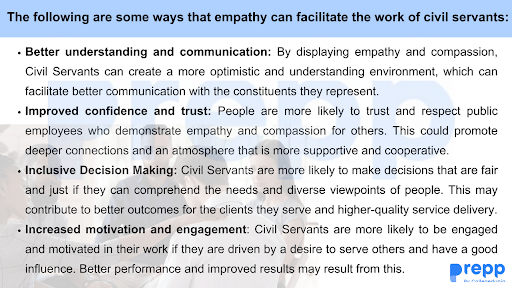
- Empathy is the ability to put oneself "in their shoes" by comprehending or feeling what another person is going through from that person's point of view, or by understanding their perspective and reality.
- It serves as the foundation for respectful relationships, ethical decision-making, and the pursuit of social justice.
- Individuals who practise empathy contribute to a more compassionate and ethical community that cherishes the well-being and dignity of everyone.
Ethical Qualities - Altruism
- Altruism is a moral quality characterised by selfless concern for the well-being and welfare of others.
- It entails acting in ways that prioritise the needs and interests of others over one's own, with no expectation of recompense.
- It promotes acts of kindness, compassion, and sacrifice, establishing a feeling of community and contributing to the greater good.
- Individuals who practise altruism have the capacity to inspire good change, build relationships, and offer personal fulfilment and satisfaction.
Governance & Altruism
|
Ethical Qualities - Truthfulness
- Truthfulness is a fundamental ethical quality that entails honesty, integrity, and a dedication to stating the truth.
- It entails being honest in one's words, actions, and intentions.
- It promotes trust, responsibility, transparency, and respect in interactions and relationships.
- It is essential for ethical decision-making, credibility building, and personal progress. Embracing truthfulness fosters an honest, fair, and real culture in individuals and society.
- Example: Consider a person who attends a social function and engages in a conversation with a group of friends. During the debate, a contentious issue arises, and several points of view are expressed. One individual who values truthfulness conveys their honest viewpoint, even if it varies from the majority or contradicts common ideas.
Other Ethical Qualities
- Integrity: Integrity is an ethical quality that involves the consistency and honesty of one's behaviours, attitudes, and ideals.
- It entails being genuine to oneself while keeping high moral and ethical standards.
- It serves as the foundation for trust, credibility, and ethical leadership.
- Acting with integrity not only promotes personal growth and relationships, but it also has a larger social influence by establishing an ethical and integrity culture.
- Morality: Morality is defined as the principles, values, and standards that influence human behaviour in determining what is good and wrong.
- It is a set of ideas and principles that regulate ethical behaviour and decision-making.
- It is essential for personal behaviour, societal cohesiveness, and the development of moral character.
- Morality has an important role in promoting individual and community well-being, creating society standards, and encouraging ethical accountability.
- Accountability and Transparency: Accountability and transparency are important ethical qualities that foster openness, accountability, and integrity in a variety of circumstances, including personal, organisational, and governmental settings.
- They improve trust, credibility, and ethical behaviour at the individual, organisational, and society levels.
- Accountability and Transparency are critical for personal and professional development, effective governance, stakeholder involvement, and the development of trust within communities and organisations.
- Objectivity: Objectivity is an ethical attribute that relates to the capacity to approach events, judgements, and conclusions without bias, prejudice, or favouritism.
- It entails being objective, fair, and basing one's decisions on evidence, facts, and logic.
- It has a substantial impact on decision-making, professionalism, dispute resolution, and information quality.
- Objectivity promotes ethical behaviour, trust, and the pursuit of reasonable, fair, and responsible acts and judgements.
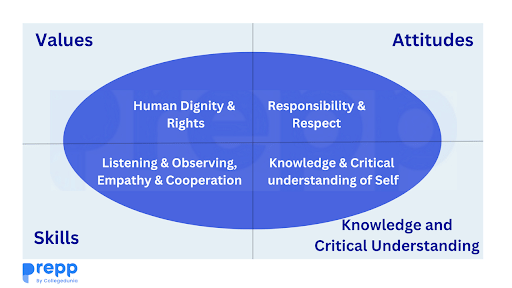
- Respect: Respect is an ethical quality that entails acknowledging the intrinsic value, dignity, and rights of persons, communities, and ideas.
- It is the act of considering, esteeming, and honouring oneself and others.
- It is critical for developing meaningful connections, establishing societal peace, and preserving human dignity.
Conclusion
Ethical qualities are features or attributes that reflect a person's moral ideals and govern their behaviour and decision-making. These ethical traits lay the groundwork for ethical behaviour and contribute to personal development, meaningful relationships, and a just and caring community. They help people make ethical decisions and live their lives in line with their beliefs and ideals.
| Other Relevant Links | |
|---|---|
| Challenges To Ethics and Moral Accountability | Gandhian Ethics |
| Aspects of Morals | Definition of Ethics |
| Post Aristotelian Philosophers | Ethical Ideas in Indian Philosophical Tradition |
| Lessons From The Lives Of Great Indian Leaders, Reformers And Administration | Moral Thinkers of the Twentieth Century |
FAQs
Question: What is the role of kindness in ethical behavior?
Answer: Kindness plays a crucial role in ethical behavior as it promotes understanding, compassion, and support in interpersonal relationships. It encourages individuals to act selflessly, fostering a positive environment that contributes to societal well-being. Kindness is also a fundamental value in many ethical systems.
Question: How does forgiveness contribute to emotional well-being?
Answer: Forgiveness allows individuals to release anger and resentment, leading to emotional healing. It enhances mental peace and contributes to personal growth by freeing individuals from the burden of grudges. Forgiveness fosters empathy, helping to rebuild relationships and promote a culture of reconciliation.
Question: How does self-control influence ethical decision-making?
Answer: Self-control is integral to ethical decision-making as it helps individuals resist impulsive actions that may harm others. It promotes thoughtful deliberation, ensuring that decisions align with moral principles and long-term goals. Self-discipline strengthens one's ability to act with integrity and fairness in difficult situations.
Question: What is the relationship between good temper and ethical behavior?
Answer: A good temper helps in maintaining emotional stability, which is essential for ethical behavior. It allows individuals to handle conflicts calmly and make rational decisions. Good temper fosters respect in interpersonal interactions, ensuring that ethical conduct is maintained even in challenging circumstances.
Question: How does fortitude contribute to moral resilience?
Answer: Fortitude is the strength of mind that enables individuals to withstand adversity and remain committed to ethical values. It fosters perseverance in the face of moral challenges and helps individuals stay true to their principles even under pressure. Fortitude is essential for maintaining integrity and courage in difficult situations.
MCQs
1. Which of the following is an essential quality for ethical behavior?
A) Kindness
B) Apathy
C) Impulsiveness
D) Aggression
Answer: (A) See the Explanation
Explanation: Kindness is considered an essential quality for ethical behavior as it fosters empathy, cooperation, and mutual respect in relationships. It encourages individuals to act in the best interest of others, leading to a harmonious and just society.
2. How does self-control contribute to ethical behavior?
A) It encourages immediate gratification.
B) It helps avoid making impulsive decisions that may harm others.
C) It promotes selfishness.
D) It prevents emotional expression.
Answer: (B) See the Explanation
Explanation: Self-control prevents individuals from making hasty decisions driven by emotions, allowing them to think critically and act in accordance with ethical principles. It ensures that decisions are made with consideration for the well-being of others and the long-term consequences.
3. Which ethical quality helps individuals build stronger relationships?
A) Good temper
B) Cowardice
C) Indifference
D) Hypocrisy
Answer: (A) See the Explanation
Explanation: A good temper is essential for building strong and lasting relationships. It allows individuals to interact calmly, resolve conflicts amicably, and communicate effectively. People with good temper are more likely to maintain positive and respectful connections, which contribute to their overall ethical conduct.
4. What does fortitude enable individuals to do?
A) Avoid confrontation
B) Resist all forms of challenges
C) Remain committed to ethical values in difficult circumstances
D) Surrender to adversity
Answer: (C) See the Explanation
Explanation: Fortitude allows individuals to remain steadfast and committed to their ethical principles despite facing challenges or adversity. It helps them act with courage and integrity, even in situations that test their resolve.
5. Which of the following qualities is directly associated with empathy?
A) Compassion
B) Indifference
C) Aggression
D) Conceit
Answer: (A) See the Explanation
Explanation: Empathy is closely tied to compassion, as it involves understanding and sharing the feelings of others. Compassion drives individuals to respond with care and support, ensuring that ethical principles are maintained in their interactions.
GS Mains Questions and Model Answers
Q1: Discuss the significance of kindness and forgiveness in fostering social harmony and ethical behavior in society.
Answer: Kindness and forgiveness are pivotal in establishing a society based on mutual respect, understanding, and cooperation. Kindness promotes compassion, leading to stronger relationships and collective well-being. Forgiveness allows individuals to let go of grudges, fostering emotional healing and the restoration of peace. Both qualities contribute to ethical conduct by facilitating empathy, reducing conflicts, and ensuring that individuals act in a manner that benefits the larger community.
Q2: How does self-control contribute to the development of ethical leadership and decision-making in contemporary societies?
Answer: Self-control is an essential trait for ethical leadership, as it enables leaders to resist impulsive reactions and make thoughtful, reasoned decisions. Leaders with self-control are better equipped to prioritize long-term benefits over short-term gratification, ensuring that their actions align with moral principles and the greater good. This quality fosters respect and trust, as it demonstrates that decisions are made with consideration for all stakeholders, including the vulnerable and marginalized.
Q3: How can fortitude help individuals in overcoming moral dilemmas while maintaining ethical integrity?
Answer: Fortitude provides individuals with the mental and emotional strength to persevere through moral dilemmas, remaining steadfast in their ethical convictions. It allows individuals to confront difficult situations without compromising on their values. Whether in the face of peer pressure, societal expectations, or personal sacrifice, fortitude enables individuals to make morally sound decisions, even when doing so requires courage and resilience.
Previous Year Questions on Ethical Qualities
UPSC CSE 2018
Question: “Examine the role of kindness, forgiveness, and empathy in ethical decision-making. How can these values help resolve conflicts in a diverse society?”
Answer: Kindness, forgiveness, and empathy are key to ethical decision-making as they foster understanding, reduce prejudices, and promote reconciliation. In a diverse society, these values help individuals navigate differences and find common ground. They encourage respect for others' viewpoints and facilitate peaceful coexistence by resolving conflicts through dialogue and mutual respect.
UPSC CSE 2020
Question: “Discuss how self-control and good temper influence moral leadership in contemporary democratic societies.”
Answer: Self-control and good temper are crucial for moral leadership, especially in democratic societies where leaders are expected to be role models. Self-control enables leaders to make impartial decisions without yielding to emotions, while a good temper ensures that they interact respectfully with others. Both qualities help in diffusing tensions, promoting rational discourse, and fostering a culture of ethical governance.
Download the PREPP App and attempt FREE IAS Exam Mock Tests and get complete study material!
UPSC IAS : CSAT - Mini Live Test

Live Test : UPSC CSE Prelims CSAT (Paper-II) (Sep 20 - 23)
Full Test - 03: UPSC CSE Prelims CSAT (Paper-II)
Full Test - 02: UPSC CSE Prelims CSAT (Paper-II)
UPSC CSE Prelims 2026 GS Paper 1 Question Paper (24-May-2026)
UPSC CSE Prelims 2026 CSAT Paper 2 Question Paper (24-May-2026)

17 February 2025 | The Hindu Must Read Articles | Current Affairs

16 February 2026 | The Hindu Must Read Articles | Current Affairs

13 February 2026 | The Hindu Must Read Articles | Current Affairs









Comments