Tap Root System - Agriculture Notes
Taproots are one of three major types of root systems found in plants, the other two being adventitious and fibrous. It is a primary root that tapers vertically downwards to form the center from which subsidiary rootlets branch. This root mass develops from the embryo's radicle and consists of the taproot, secondary root, tertiary root, and rootlets. This article will explain to you the Tap root system which will be helpful in preparing the Agriculture Syllabus for the UPSC Civil Service exam.
|
Table of Contents |
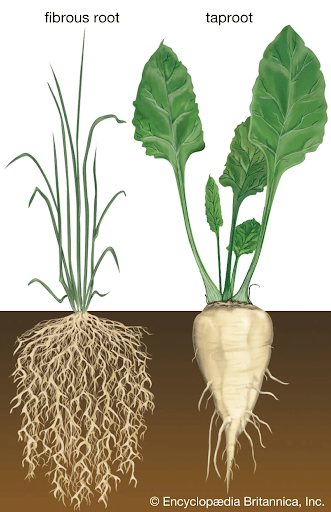
Taproot vs Fibrous Root
What is a Tap Root System?
- Taproot is the primary root system main root that grows vertically downwards.
- Most dicotyledonous plants, such as dandelions, produce taproots, and some of the roots, such as carrots and beets, are edible and specialised for food storage.
- Taproot is nearly straight, thicker, and taper in size; roots grow directly downwards in the taproot system.
- A taproot system is made up of one thick, cylindrical main root known as the primary root.
- Secondary and tertiary roots are formed by branching off from the primary roots.
- The taproot system is very different from the adventitious root system or the fibrous root system, but some plants that germinate as taproot plants will develop branching root structures.
- Some rely on the main root for storage and may keep the dominant taproot for centuries.
- Taproot System Examples: Turnip, Parsnip, Beetroot, Carrot, Radish
- Taproot weeds: Common milkweed, Dandelion,
- Taproot trees: Pines, Firs, Oaks, Jamun tree, Elms
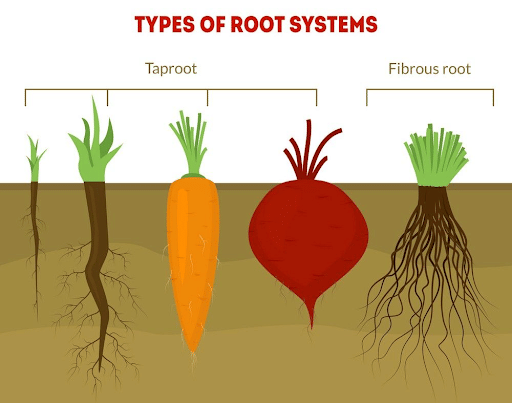
Taproot System
Tap Root System - Structure
- The primary root of a taproot system is a thick, cylindrical main root.
- Secondary and tertiary roots are small roots that branch off from the primary root.
- A rootlet is a thin hair-like structure found at the tip of the tertiary root. Rootlets are required for soil water absorption.
- This type of root system is usually well-established and difficult to eradicate.
- Taproots grow in acropetal succession, which means that younger roots grow closer to the growing end of the taproot and older roots grow closer to the stem's base.
- Any true root will have four regions: the root cap, meristematic activity (cell division), elongation (which lengthens the root as it grows), and maturation (root hairs are formed).
- As the cells mature into different types of primary tissues, the maturation region is also known as the differentiation region.
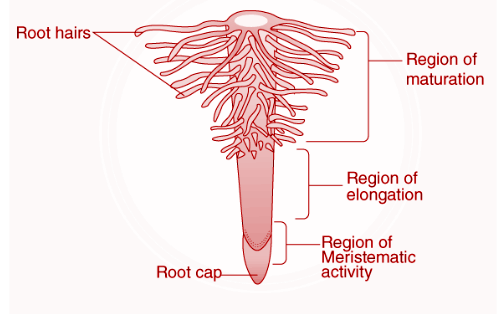
Tap Root Structure
Tap Root System - Development
- The root of the embryonic radicle is the first thing to emerge from the seed after it has germinated. This primary root is referred to as the taproot system.
- A plant with a taproot system has smaller lateral roots known as secondary roots that commonly emerge from the main taproot.
- Tertiary roots are even smaller lateral roots produced by secondary roots.
- These lateral roots contribute to a larger surface area for water and mineral absorption.
- The architecture of the taproot is also influenced by soil characteristics; for example, deep and rich soils promote the development of vertical taproots in many oak species such as Quercus Kelloggii.
- Furthermore, the clay soil encourages the growth of multiple taproots.
Modification of Tap Roots
Roots are essential for soil absorption of water, minerals, and salts. In some cases, the structure of the roots is altered to supply nutrients and water to different parts of the plant and to perform additional functions. To maintain the physiological and mechanical integrity of the plants, the roots are modified. The taproots are modified as follows:
Storage of Food
- Taproots that can store food are referred to as 'storage roots.' These roots have been modified so that they can store food prepared by the plants within them.
- This food is later utilized by the plant for nutritional purposes during adverse environmental conditions.
- As a result, it is also known as reserve food. Humans typically benefit from storage roots.
- Carrot, sweet potato, radish, and other root vegetables are common in our diet.
- The cells of the primary taproot or main root swell and begin to accumulate food particles in storage roots. Such roots appear fleshy or swollen as a result of food accumulation.
- The secondary or tertiary roots, on the other hand, remain thin.
- In some plants, the food is stored in the hypocotyl (the embryonic region between the cotyledon and the radicle).
- Based on their structure, storage roots are classified into the following types:
- Conical
- Fusiform
- Napiform
- Tuberous
- Conical - The primary root of this type of storage taproot begins to swell from the base of the stem and gradually shrinks towards the root's apex.
- This type of root has one swollen end and one tapered end. This fleshy taproot looks like a cone.
- Throughout the length of the conical fleshy taproot, many thread-like secondary and tertiary roots emerge. Example: Carrot.
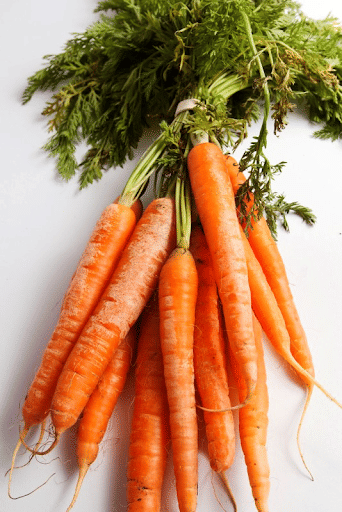
Conical Storage Root - Carrot
- Fusiform - The primary root of this type of storage taproot is tapered at both ends, the ends being the base of the stem and the apex of the root.
- It resembles a spindle, thickest in the middle and narrowest at the ends.
- Tapering occurs at only one end of conical roots, whereas tapering occurs at both ends of fusiform roots. Example: Indian Radish
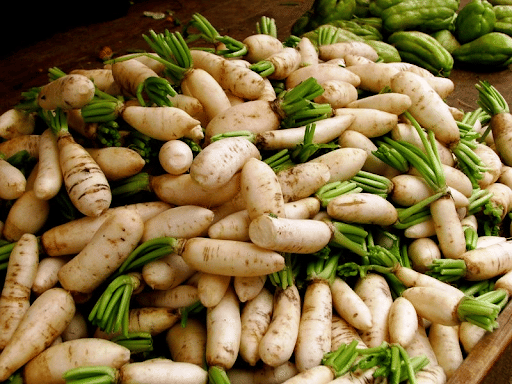
Fusiform Storage Root - Indian Radish
- Napiform - This fleshy root is very thick at the stem's base and resembles a sphere. The taproot swells from the base of the stem and does not subside gradually. The taproot tapers at the root's base.
- Example: Turnip (Brassica rapa) - The hypocotyl is the swollen part of the turnip. The taproot grows at the tapered end of the turnip, along with secondary and tertiary roots.
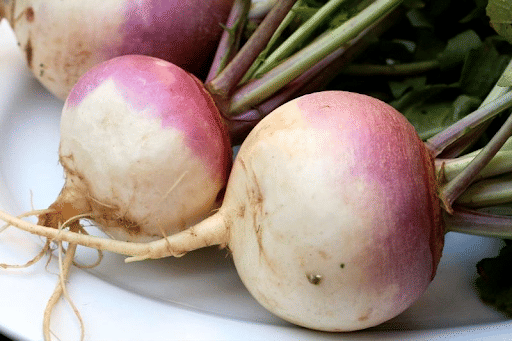
Napiform Storage Root - Turnip
- Tuberous - These are the storage taproots that do not take on any specific shape. A tuberous root is an expanded fleshy root that has been modified to store food.
- Examples include: Mirabilis jalapa (Four O’ Clock plant), Trichosanthes (Vern. Parwal), Echinocystis lobata, Cassava

Tuberous Storage Root
Nodulated Roots
- Taproots that have nodulated roots are irregularly swollen.
- The primary, secondary, and tertiary roots become swollen and are referred to as 'root nodules' or 'tubercles.'
- These root nodules are made up of millions of nitrogen-fixing Rhizobium bacteria.
- Because atmospheric nitrogen cannot be directly utilised by plants, the Rhizobium present in root nodules assists in converting this nitrogen into a form that can be easily utilised.
- They collect free nitrogen from the atmosphere and convert it into organic nitrogen compounds, a process known as "nitrogen fixation."
- Leguminous plants absorb some nitrogen through their roots. The bacteria fix nitrogen in exchange for food and shelter.
- Example of leguminous plants containing root nodules are - Pea (Pisum Sativum), Gram (Cicer arietinum), Groundnut (Peanut, Arachis hypogea), Methi (Medicago falcate), Soya Bean (Glycine max)
- Example of non-leguminous plants containing root nodules are - Parasponia, Actinorhizal plants such as alder and bayberry
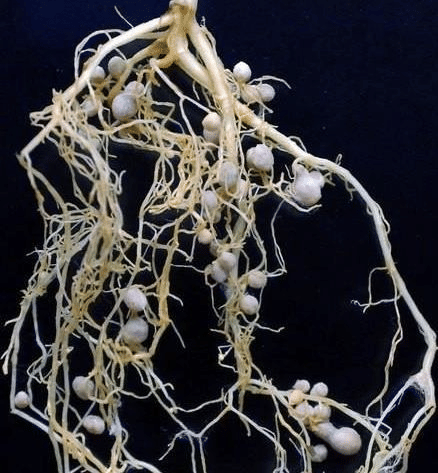
Root Nodules
Pneumatophores
- Pneumatophores are aerial taproots that emerge from the soil and assist the plant in breathing. As a result, they are referred to as respiratory roots.
- They are found in plants that grow in mangroves or swamps. The mangrove soil is clayey and sticky, preventing air from passing through. As a result, the roots of such plants emerge from the soil to breathe.
- Vertical growth is characteristic of pneumatophores. They exhibit a negative geotropism.
- The surface of the root contains small pore-like structures known as lenticels or pneumathodes that aid in gas exchange.
- Cork covers the remaining surface of the root.
- Examples - Avicennia germinans ( The black mangrove), Sonneratia, Heritiera (Vern. Sundri), Bald cypresses
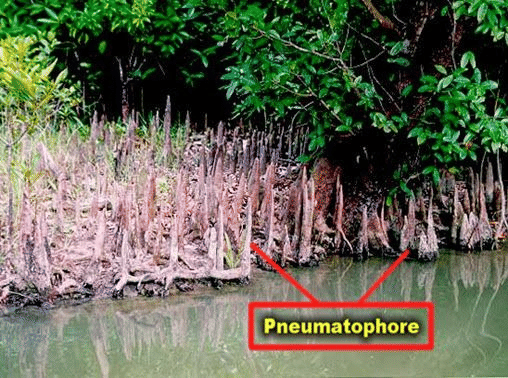
Pneumatophores
Benefits of Plants with Taproot Systems
- Plants with a taproot system are extremely drought tolerant.
- In dry climates, desert plants can send roots down more than 75 feet in search of water.
- It also stores food reserves, making them more self-sufficient and resilient.
- Improved soil mineral extraction penetration.
- It acts as a repository for nutrients and minerals.
- Taproot trees and plants have a stronger hold on the soil and are less susceptible to extractions.
Taproot System - Drawbacks
- It is so deep in the soil that digging and lifting a taproot plant can be difficult. Dandelions in the yard are an example.
- Trees or plants perish during the translocation of plants with taproots.
- Taproots cannot regrow after being cut, whereas other roots can.
Conclusion
Taproot system grows from the radicle and continues as the primary root (tap root), which produces lateral roots. They provide very strong anchorage because they can penetrate very deep into the soil. It is dicots' primary root system. The taproot system is distinct from the adventitious root system and the fibrous root system, but some taproot plants develop branching root structures.
FAQs
Question. What is a tap root system?
Answer: A tap root system is a type of root structure in plants where the main root grows thicker and deeper into the soil, while smaller lateral roots branch off from it. This system allows the plant to access water and nutrients from deeper layers of the soil.
Question. Which plants have a tap root system?
Answer: Many plants, especially dicots, exhibit a tap root system. Examples include carrot, beetroot, radish, and oak trees. These plants rely on the deep penetration of the primary root to anchor the plant and gather resources from deeper soil layers.
Question. What are the advantages of a tap root system?
Answer: The main advantage of a tap root system is its ability to access water and nutrients from deep within the soil, especially during dry periods. This deep root system also helps the plant withstand strong winds by providing better anchorage, and it allows the plant to grow larger and stronger.
Question. How does a tap root system benefit agriculture?
Answer: In agriculture, plants with tap roots, like carrots and radishes, are important for soil aeration and improving water absorption. These roots can break up compacted soil layers, allowing for better root growth in other plants and improving overall soil structure.
Question. What challenges can arise with the tap root system in crops?
Answer: While the tap root system has many benefits, it can also lead to challenges. For example, crops with deep tap roots may be more vulnerable to damage during harvest, as the roots can be tough to remove. Additionally, if the soil is not deep enough or is poorly aerated, these plants may not thrive.
MCQs
- Which of the following plants typically has a tap root system?
A) Tomato
B) Carrot
C) Wheat
D) Rice
Answer: (B) See the Explanation
Carrot is a typical example of a plant with a tap root system, where the primary root grows deeply into the soil.
- What is a primary advantage of the tap root system in plants?
A) It helps the plant spread out horizontally.
B) It allows the plant to access deep water sources.
C) It helps the plant produce more flowers.
D) It reduces competition for nutrients.
Answer: (B) See the Explanation
The tap root system is especially beneficial in dry conditions as it enables plants to access water and nutrients from deeper layers of soil.
- Which of the following is NOT an advantage of the tap root system?
A) Better water and nutrient absorption from deep soil.
B) Increased anchorage in the soil.
C) Helps the plant spread out horizontally.
D) It improves soil aeration.
Answer: (C) See the Explanation
The tap root system grows deep into the soil, rather than spreading out horizontally like fibrous roots.
- Which crop would most benefit from a tap root system?
A) Rice
B) Wheat
C) Sunflower
D) Radish
Answer: (D) See the Explanation
Radish, like other root vegetables, benefits from a tap root system, allowing it to grow a large and edible root that is essential for its commercial value.
- What is a major disadvantage of plants with a tap root system in agriculture?
A) The roots are difficult to harvest.
B) They require less water.
C) They grow too slowly.
D) They require less space.
Answer: (A) See the Explanation
Harvesting crops with a tap root system, like carrots or radishes, can be challenging because the main root is deeply anchored in the soil.
GS Mains Questions and Model Answers
Q1: Explain the structure and function of the tap root system in plants and its importance in agriculture.
Answer: The tap root system consists of a large, central primary root that grows deep into the soil, with smaller lateral roots branching off. The primary root is responsible for anchoring the plant firmly to the ground and accessing water and nutrients from deeper layers of soil. This system is commonly seen in dicot plants such as carrots, beets, and oak trees.
- In agriculture: The tap root system has significant benefits. It enables the plant to access water and nutrients that may be unavailable to other plants with shallower root systems, especially in dry or arid conditions. This makes crops with tap roots ideal for regions with irregular rainfall or drought-prone areas.
- Soil Aeration: The deep root system also improves soil aeration and prevents soil erosion by binding the soil together. Additionally, crops like carrots, radishes, and turnips are cultivated for their edible tap roots, which store nutrients, making them vital for human consumption.
However, there are challenges, such as difficulty in harvesting deep-rooted crops and the potential for damage to the plant if the soil is too compact or shallow. Thus, proper soil management and careful planting are necessary to fully harness the benefits of a tap root system.
Q2: Discuss the role of tap root systems in improving soil structure and plant health.
Answer: Tap root systems play a crucial role in improving soil structure and plant health. As the primary root grows deeper into the soil, it creates channels that allow for better water infiltration, which is especially beneficial in compacted soils. These channels help prevent water runoff and promote deeper water penetration, ensuring that moisture reaches the plant’s roots, even in times of drought.
- Breaking Compact Soil: Furthermore, the deep penetration of tap roots breaks up hard soil layers, improving soil aeration and reducing the risk of waterlogging. This makes it easier for other plants to grow in the same soil, as the roots of surrounding plants are less likely to become entangled in compacted soil.
- Improved Nutrient Absorption: Additionally, tap roots help in the process of nutrient absorption, drawing minerals from deeper layers of soil that may not be accessible to plants with fibrous root systems.
The presence of a well-developed tap root system also reduces soil erosion, as the roots anchor the soil and prevent it from being washed away by rain or wind. In this way, tap root systems contribute to soil fertility, healthy plant growth, and the overall stability of the environment.
Q3: What challenges do agricultural systems face when using crops with a tap root system, and how can these challenges be mitigated?
Answer: Crops with a tap root system, while offering numerous benefits, also pose certain challenges to agricultural systems. One of the primary difficulties is the harvesting process. Deep-rooted crops, such as carrots, beets, and radishes, require careful handling during harvest, as the roots are often deeply embedded in the soil. The process of digging up the roots can be labor-intensive and may cause damage to the crops if not done properly.
- Soil Requirements: Another challenge is that plants with tap roots require deep, well-drained soil for optimal growth. In regions with shallow or compacted soil, these plants may struggle to establish deep roots, leading to stunted growth and reduced crop yield.
- Water Needs: Additionally, the high water requirements of tap-rooted crops can be problematic in areas with limited irrigation resources, particularly in drought-prone regions.
To mitigate these challenges, farmers can implement practices such as soil aeration, proper irrigation management, and crop rotation to ensure that the soil remains suitable for growing tap-rooted crops. Mechanized harvesting techniques, along with the use of deep-plowing tools, can also make the harvest process more efficient. Through these strategies, farmers can optimize the benefits of crops with tap root systems while minimizing potential drawbacks.
Previous Year Questions on Tap root system
1. UPSC CSE 2023
Question: How does the tap root system help plants in accessing water and nutrients in drought-prone areas?
Answer: The tap root system allows plants to access water and nutrients from deeper layers of the soil that are typically out of reach for plants with shallower root systems. In drought-prone areas, this deep root structure is crucial for ensuring that the plant can survive dry spells by reaching water that is stored deeper underground, making it more resilient to seasonal variations in rainfall.
2. UPSC CSE 2022
Question: Explain the role of tap root systems in soil conservation and improving soil health.
Answer: Tap root systems play a vital role in soil conservation by preventing erosion. As the primary root grows deep into the soil, it helps bind the soil particles together, reducing the risk of soil loss during rainfall or wind. Additionally, the deep penetration of the roots breaks up compacted layers of soil, improving aeration, water infiltration, and nutrient absorption, thus enhancing the overall health and fertility of the soil.
Download the PREPP App and attempt FREE IAS Exam Mock Tests and get complete study material!

Live Test : UPSC CSE Prelims CSAT (Paper-II) (Oct 08 - 11)
Full Test - 04: UPSC CSE Prelims CSAT (Paper-II)
Full Test - 03: UPSC CSE Prelims CSAT (Paper-II)
UPSC CSE Prelims 2026 GS Paper 1 Question Paper (24-May-2026)
UPSC CSE Prelims 2026 CSAT Paper 2 Question Paper (24-May-2026)

17 February 2025 | The Hindu Must Read Articles | Current Affairs

16 February 2026 | The Hindu Must Read Articles | Current Affairs

13 February 2026 | The Hindu Must Read Articles | Current Affairs









Comments