Fibrous Root System - Agriculture Notes
Fibrous roots are those that grow from the base of a stem or from the nodes of a horizontal stem (like grasses). Fibrous roots can be found in monocotyledonous plants. The primary root in this root system is short lived. The fibrous root system is formed by a cluster of slender, fiber-like roots emerging from the base of the radicle and plumule. They have few branches, are shallow, and spread horizontally, so they cannot provide strong anchorage. The fibrous root system is the primary root system of monocots such as maize, grasses, and wheat. This article will explain to you about the Fibrous Root System which will be helpful in preparing the Agriculture Syllabus for the UPSC Civil Service exam.
|
Table of Contents |
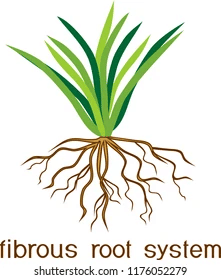
Fibrous Root System
What is the Fibrous Root System?
- Fibrous roots are extrinsic roots that are slim, exceptionally stretched, and concentrated near the soil's surface.
- They support the plant with a dense network of fine roots. These plants are generally effective at preventing disintegration.
- Fibrous roots are bushy roots from which thin, moderately branching roots grow.
- Rice, wheat, maize, marigold, banana, and all monocotyledons have fibrous root systems.
- Fibrous roots, like taproot systems, begin as a single main root. These primary roots are short-lived, and as the plant grows, they are replaced by a large number of fibre-like roots that emerge from the base of the stem.
- Fibrous roots, such as those of palm trees, spread like a mat in the soil.
- The roots of the fibrous root system are morphologically similar to the roots of the taproot system, which produces a thin, short root from a single, thick root.
- Except for the radicle, these are roots that grow from any part of the plant. They can be either aerial or underground.
- They can sprout from a node (money plant, bamboo), a stem cutting (rose), a tree branch (banyan), or the base of a stem (fibrous roots in monocots).
- A few examples of plants with fibrous root systems: Rosemary, grass, and coconut palm.
Types of Fibrous Root Systems
Fibrous Root System typically takes the following forms:
- Fleshy Fibrous Roots
- Stilt Roots
- Reproductive Roots
Fleshy Fibrous Roots
- The fleshy roots of the fibrous root system, like the storage roots of the taproot system, accumulate food and become fleshy and swollen.
- The cells of the fibrous root system have been modified so that they can accumulate and store the food prepared by the plants.
- When the food is packed, these cells swell, and the entire root appears swollen.
- The stored food is later used as a source of nutrition by the plants during adverse conditions.
- The fleshy root system is further classified into three types:
- Tuberous Roots: These roots are found singly and resemble a taproot. These swollen roots do not take on any specific shape.
- Tuberous roots, also known as storage roots, are lateral roots that have grown larger.
- These roots' cells have been modified so that they can store food within them. Sweet potato (Ipomoea batatas) is an example
- Fasciculated Roots: These are the tuberous roots that grow in clusters. The cells of fasciculated roots, like those of tuberous roots, have been modified so that they can store food.
- As a result, the only distinction between tuberous roots and fasciculated roots is that tuberous roots appear singly, whereas fasciculated roots appear in clusters. Dahlia is an example.
- Annulated Roots: These are swollen roots with ring-like structures on the surface. It appears to be discs stacked one on top of the other. As a result, they are referred to as annulled.
- Ipecac (Cephaelis ipecacuanha) is an example.
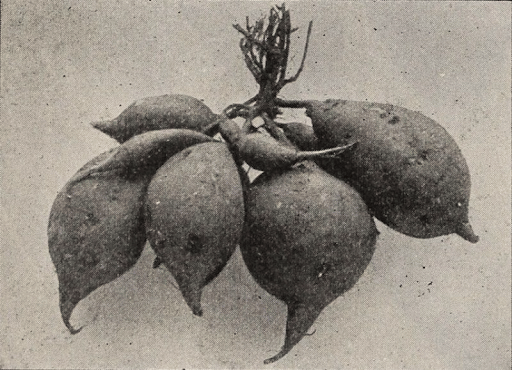
Fleshy Fibrous Roots
Stilt Roots
- These roots grow from the stem's basal node and are short but thick.
- They grow in an obliquely downward direction and penetrate the soil.
- Once rooted in the soil, they form fibrous roots that firmly hold the soil in place to support the long and narrow unbranched stem, similar to how ropes support a pole or tent.
- These roots improve mineral salt and water absorption.
- Examples: Sugarcane (Saccharum officinarum), Maize (Zea mays), Pennisetum, and Sorghum (Sorghum bicolor) have whorls of stilt roots.
- Screwpine (Pandanus odoratissimus) has stilt roots that emerge from the lower surface of the oblique stem and provide support.
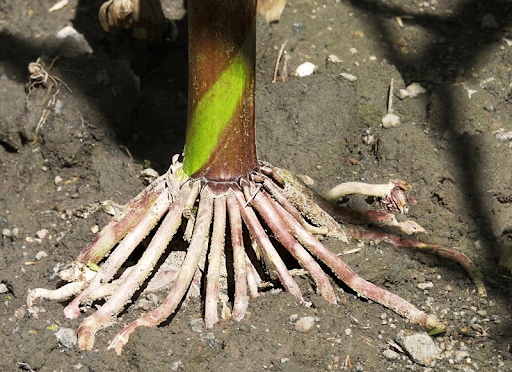
Stilt Roots
Reproductive Roots
- These fleshy fibrous roots form buds. Under favourable conditions, these buds develop into new plants.
- As a result, reproductive roots are roots that contain buds that aid in the formation of a whole new plant.
- Examples: The sweet potato (Ipomoea batatas), Dahlia

Reproductive Roots
Functions of Fibrous Roots System
- The fibrous root is a thin network of branching roots of roughly equal diameter that emerge from the base of the stem rather than the radical of the seed.
- Fibrous roots are more adaptable for soil anchorage than tap roots because they stay shallower in the soil.
- When the tree has reached full development, these systems appear as a tangle of roots.
- They absorb soil water and dissolved minerals.
- They have the ability to store food as reserve material.
- They can also produce growth regulators.
- They provide anchorage by keeping the plant firmly attached to the soil.
Conclusion
Fibrous roots, such as grasses, grow from the base of a stem or the nodes of a horizontal stem. Fibrous roots are bushy roots that give way to thin, moderately branching roots. Fibrous root systems are found in rice, wheat, maize, marigold, banana, and all monocotyledons. Fibrous root systems, like taproot systems, start with a single main root. These primary roots are short-lived and are replaced as the plant grows by a large number of fiber-like roots that emerge from the stem's base.
FAQs
Q1: What is a fibrous root system?
Answer: A fibrous root system is a type of root structure found in certain plants where many thin roots arise from the base of the stem, rather than a single primary root. The roots in this system are of similar size and form a dense network that anchors the plant firmly in the soil and helps absorb water and nutrients. This root system is characteristic of monocot plants, such as grasses, wheat, and rice.
Q2: What are the main features of a fibrous root system?
Answer: The main features of a fibrous root system include:
- Multiple roots: Numerous thin roots emerge from the base of the stem, forming a dense, mat-like structure.
- Lack of a primary root: Unlike the tap root system, which has a dominant central root, the fibrous system lacks a main root.
- Shallow spread: The fibrous root system is generally shallow, spreading out in the top layer of the soil.
- Efficient nutrient absorption: The dense network of roots allows for the efficient absorption of water and nutrients from the soil.
Q3: How does the fibrous root system benefit plants?
Answer: The fibrous root system offers several benefits to plants, including:
- Enhanced soil stability: The extensive root network helps prevent soil erosion by holding the soil together.
- Efficient nutrient absorption: The system’s large number of roots enables the plant to absorb a wide range of nutrients from a broader area in the soil.
- Better water absorption: The fibrous roots are adept at absorbing water from the upper layers of the soil, which is especially beneficial in shallow or nutrient-poor soils.
- Quick establishment: Plants with a fibrous root system establish quickly and can survive in challenging environments due to their efficient water and nutrient uptake.
Q4: What types of plants have a fibrous root system?
Answer: Fibrous root systems are typically found in monocot plants, such as:
- Grasses (e.g., wheat, rice, and corn)
- Onions
- Lilies
- Garlic
- Bamboo
These plants benefit from the fibrous root system due to their need for a widespread, shallow root network that supports rapid growth and nutrient acquisition.
Q5: How does a fibrous root system differ from a tap root system?
Answer: A fibrous root system consists of numerous thin roots emerging from the base of the stem, whereas a tap root system has a central, dominant root that grows deep into the soil with smaller lateral roots branching off it. The fibrous root system is more widespread and shallow, making it effective for plants that need quick access to water and nutrients in the topsoil. In contrast, the tap root system is deeper and more suited for plants that require stability and access to water in deeper layers of soil.
MCQs
- Which of the following plants has a fibrous root system?
a) Carrot
b) Mango
c) Wheat
d) Sunflower
Answer: (C) See the Explanation
- What is the primary characteristic of a fibrous root system?
a) A dominant central root with lateral branches
b) Multiple thin roots emerging from the stem base
c) Roots growing deep into the soil
d) Single thick root growing deep into the soil
Answer: (B) See the Explanation
- In which type of plants is a fibrous root system commonly found?
a) Dicot plants
b) Woody plants
c) Monocot plants
d) Aquatic plants
Answer: (C) See the Explanation
- What is one major benefit of a fibrous root system for plants?
a) Increased root depth
b) Efficient absorption of water and nutrients
c) Ability to grow in dry soil
d) Formation of large primary roots
Answer: (B) See the Explanation
- How does a fibrous root system help prevent soil erosion?
a) By forming deep roots
b) By creating a dense mat of roots that holds soil together
c) By absorbing excess water from the soil
d) By forming a thick central root
Answer: (B) See the Explanation
GS Mains Questions and Model Answers
Q1: Explain the advantages of the fibrous root system in agricultural plants.
Answer: The fibrous root system offers several advantages, particularly for agricultural plants. This type of root system provides an extensive and shallow network of roots that aids in the efficient absorption of water and nutrients from the top layers of the soil. This is especially important for crops like wheat, rice, and corn, which thrive in the shallow soil layers where the fibrous roots can access nutrients quickly.
One of the primary benefits of the fibrous root system is its ability to prevent soil erosion. The dense network of roots binds the soil particles together, reducing the risk of erosion during heavy rains or wind. This is particularly valuable in agricultural fields, where soil erosion can lead to the loss of topsoil, essential for crop growth.
Additionally, fibrous roots allow for the efficient recycling of nutrients within the soil. By spreading across a wide area, they are able to capture nutrients more effectively than deep-rooted plants. This is particularly important in agricultural systems where soil fertility needs to be maintained for continuous cropping.
Q2: Compare the fibrous root system with the tap root system and discuss the benefits of each.
Answer: The fibrous root system and the tap root system are two distinct types of root structures found in plants, each with its own benefits.
Fibrous Root System: In the fibrous root system, multiple thin roots emerge from the base of the stem, forming a dense network. This system is typically found in monocot plants like grasses, wheat, and rice. The fibrous root system offers several advantages:
- Shallow spread: It is spread out in the upper layers of soil, allowing for quick access to water and nutrients in the topsoil, which is crucial for plants in areas with limited water availability.
- Prevention of soil erosion: The extensive root network binds the soil together, helping prevent soil erosion by stabilizing the soil surface.
- Rapid establishment: Plants with a fibrous root system can establish themselves quickly, which is beneficial for crops that need to grow rapidly.
Tap Root System: In contrast, the tap root system has a primary root that grows deep into the soil with smaller lateral roots branching out. This system is common in dicot plants like carrots, beets, and dandelions. The tap root system offers its own set of advantages:
- Deep water access: The deep central root allows the plant to access water from deeper soil layers, making it advantageous in dry or drought-prone areas.
- Stability: The central tap root provides strong anchorage to the plant, making it more stable in the soil, particularly useful in large trees or shrubs.
- Storage of nutrients: The tap root can store nutrients and water, helping the plant survive during dry spells.
Both systems are advantageous in different contexts. The fibrous root system is ideal for plants that require rapid growth, efficient nutrient uptake from the upper soil layers, and the ability to prevent soil erosion. On the other hand, the tap root system is beneficial for plants that need to access deeper water reserves, store nutrients, and maintain stability in the soil.
Q3: Discuss how soil conditions affect the development of the fibrous root system in plants.
Answer: Soil conditions play a crucial role in the development of the fibrous root system in plants. Several factors in the soil environment influence how effectively the fibrous root system develops:
Soil texture: The texture of the soil determines how well the fibrous roots can penetrate and spread. Loamy soils with a balanced mixture of sand, silt, and clay are ideal for fibrous root development, as they allow for good root penetration while retaining moisture and nutrients. In contrast, clay soils, which are dense and compact, may hinder root growth, while sandy soils, which drain too quickly, may not retain enough moisture for the fibrous roots to thrive.
Soil fertility: The availability of nutrients in the soil influences the growth of fibrous roots. Nutrient-rich soils promote the healthy development of the root system, providing the necessary minerals for root and plant growth. In soils with poor fertility, the fibrous roots may struggle to establish themselves and may not be able to absorb sufficient nutrients.
Soil moisture: Adequate moisture is essential for the development of fibrous roots. Dry soils or those prone to drought stress may limit the ability of fibrous roots to spread and absorb water effectively. In such conditions, the root system may become shallow, limiting the plant's access to deeper water resources.
Soil pH: The pH level of the soil affects the availability of essential nutrients for the plant. A neutral to slightly acidic pH is optimal for most plants with a fibrous root system. If the soil is too acidic or too alkaline, it can impede nutrient uptake and hinder the growth of fibrous roots.
Compaction: Soil compaction can significantly limit the development of the fibrous root system. Compacted soils create physical barriers for the roots, restricting their spread and reducing water and nutrient uptake. Proper soil aeration and practices like tilling or mulching can help alleviate soil compaction and promote healthier root growth.
Previous Year Questions on Fibrous Root System
1. UPSC CSE 2020
Question: Discuss the advantages of a fibrous root system in agricultural plants and explain how soil conditions influence its development.
Answer: The fibrous root system offers several advantages to agricultural plants, including efficient nutrient and water absorption, prevention of soil erosion, and rapid establishment of plants. This system is well-suited for crops that grow quickly and require access to water and nutrients in the upper layers of the soil. The dense network of roots in a fibrous root system helps anchor the plant and stabilize the soil, reducing the risk of erosion during heavy rainfall.
Soil conditions such as texture, fertility, moisture, and compaction play a critical role in the development of the fibrous root system. Loamy soils with good moisture retention and adequate nutrients are ideal for the growth of fibrous roots. Poor soil fertility, compacted soils, or inadequate moisture can hinder the development of the root system, limiting plant growth.
2. UPSC CSE 2018
Question: What is the role of the fibrous root system in preventing soil erosion and improving soil health?
Answer: The fibrous root system plays a vital role in preventing soil erosion by forming a dense network of roots that bind the soil together, providing stability to the soil surface. This is particularly important in agricultural lands, where crops with fibrous roots, such as grasses, prevent the topsoil from being washed away during heavy rains or windstorms. The shallow and widespread root system ensures that the soil remains anchored, reducing the impact of soil erosion.
Additionally, the fibrous root system improves soil health by promoting the infiltration of water and increasing the organic matter content in the soil. As the roots decay, they contribute to the formation of humus, which enhances the soil’s structure and fertility. The network of roots also promotes the growth of beneficial microorganisms in the soil, further improving soil health and nutrient cycling.
Download the PREPP App and attempt FREE IAS Exam Mock Tests and get complete study material!

Full Test - 04: UPSC CSE Prelims CSAT (Paper-II)
Full Test - 03: UPSC CSE Prelims CSAT (Paper-II)
UPSC CSE Prelims 2026 GS Paper 1 Question Paper (24-May-2026)
UPSC CSE Prelims 2026 CSAT Paper 2 Question Paper (24-May-2026)

17 February 2025 | The Hindu Must Read Articles | Current Affairs

16 February 2026 | The Hindu Must Read Articles | Current Affairs

13 February 2026 | The Hindu Must Read Articles | Current Affairs









Comments