Supremacy of the Constitution – Indian Polity Notes
The Indian Constitution was made the supreme law of the land by the founding fathers of the Constitution. The concept of a "king who can do no wrong" does not apply to Indian democracy. All state functions are governed by the Constitution and are subject to it. This supremacy is granted by the will of the people.
|
Table of Contents |
What is Supremacy of the Constitution?
- The Constitution is the highest (or supreme) law of the land.
- The laws passed by the Centre and the states must be consistent with its provisions.
- Otherwise, they can be declared invalid by the Supreme Court or the lower courts using their judicial review powers.
- As a result, the organs of government (legislative, executive, and judicial) at both levels must operate within the boundaries established by the Constitution.
- If the supremacy of the Constitution is compared to the supremacy of Parliament, the supremacy of the Constitution will always have the upper hand.
- Power is always accompanied by accountability; otherwise, unchecked power leads to arbitrariness.
| Other Relevant Links | |
|---|---|
| Bicameralism | Dual Polity |
| Written Constitution | Division of Powers |
| Rigid Constitution | Independent Judiciary |
|
"The Indian Constitution gracefully navigates a unique balance, allowing growth without the extremes of rigidity or flexibility." |
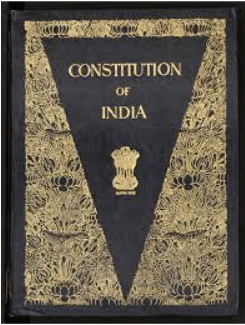
Supremacy of the Constitution in India
- India has a written Constitution and is a democratic country.
- The rule of law is the foundation of the country's governance, and all administrative structures are expected to follow it in both letter and spirit.
- Constitutionalism is expected to be a natural corollary to governance in India.
- However, India's experience with the governance process has been mixed.
- On the one hand, we have excellent administrative structures in place to oversee even the most minute details related to welfare maximization, but on the other hand, it has only resulted in excessive bureaucracy and, eventually, alienation of the rulers from the ruled.
Comparison with Other Major Constitutions of World
- American constitutionalism has been defined as a set of ideas, attitudes, and patterns of behavior that elucidate the principle that government authority derives from the people and is limited by a body of fundamental law.
- State constitutionalism has a rich tradition that provides a broader understanding of constitutionalism in the United States.
- The United Kingdom's Constitution is not codified, making it impossible for the Judiciary to keep a check and balance on Parliament's actions.
Conclusion
The legal supremacy of the Constitution is required for the federal system to exist. Legislative, executive, or judicial authority derives from the constitution, whether it is of central or state government.
FAQs
Question: What is meant by the supremacy of the Constitution?
Answer: The supremacy of the Constitution means that it is the highest legal authority in a country. All laws, policies, and actions of the government must conform to the Constitution. Any law or action that is inconsistent with the Constitution is declared invalid by courts.
Question: How does judicial review uphold the supremacy of the Constitution?
Answer: Judicial review allows the courts, especially the Supreme Court, to interpret and ensure that all legislative and executive actions conform to the Constitution. It helps maintain the supremacy of the Constitution by invalidating unconstitutional laws and actions.
Question: What is the role of the Kesavananda Bharati case in constitutional supremacy?
Answer: The Kesavananda Bharati case (1973) established the Basic Structure Doctrine, which ensures that the fundamental framework of the Constitution cannot be altered by amendments. This doctrine preserves the supremacy of the Constitution by limiting the amending power of Parliament.
Question: How does the Constitution of India balance rigidity and flexibility?
Answer: The Indian Constitution strikes a balance between rigidity and flexibility by allowing amendments through a variety of procedures (simple majority, special majority, and ratification by states). This ensures adaptability without compromising the basic structure of the Constitution.
Question: What is the significance of Part XX of the Indian Constitution?
Answer: Part XX of the Indian Constitution outlines the procedure for amending the Constitution. Article 368 empowers Parliament to amend the Constitution, but the Basic Structure Doctrine ensures that core principles like democracy, federalism, and judicial independence are protected.
MCQs
1. Which part of the Constitution deals with the supremacy of the Constitution and its amendments?
A) Part IX
B) Part XIV
C) Part XX
D) Part XVIII
Answer: (C) See the Explanation
Explanation: Part XX of the Indian Constitution, under Article 368, outlines the provisions related to the amendment of the Constitution, reinforcing its supremacy.
2. Which Supreme Court case established the Basic Structure Doctrine?
A) Golaknath case
B) Kesavananda Bharati case
C) Shankari Prasad case
D) Minerva Mills case
Answer: (B) See the Explanation
Explanation: The Kesavananda Bharati case (1973) introduced the Basic Structure Doctrine, limiting Parliament's power to amend essential features of the Constitution.
3. Which Article in the Indian Constitution grants Parliament the power to amend the Constitution?
A) Article 343
B) Article 356
C) Article 368
D) Article 370
Answer: (C) See the Explanation
Explanation: Article 368 empowers Parliament to amend the Constitution. However, amendments must respect the Basic Structure Doctrine as laid down by the judiciary.
4. What is the significance of judicial review in the Indian Constitution?
A) It allows laws to be passed without parliamentary approval.
B) It enables the executive to override legislative decisions.
C) It ensures that all laws conform to the Constitution.
D) It limits the power of the judiciary.
Answer: (C) See the Explanation
Explanation: Judicial review ensures the supremacy of the Constitution by allowing the courts to invalidate laws and actions that conflict with constitutional provisions.
5. Which principle limits Parliament's power to amend the Constitution?
A) Doctrine of Precedent
B) Principle of Federalism
C) Doctrine of Basic Structure
D) Rule of Law
Answer: (C) See the Explanation
Explanation: The Doctrine of Basic Structure, established in the Kesavananda Bharati case, limits Parliament's power to amend the essential features of the Constitution, thereby protecting its supremacy.
GS Mains Questions and Answers
Q1: Discuss the significance of the Basic Structure Doctrine in safeguarding the supremacy of the Indian Constitution.
Answer: The Basic Structure Doctrine, established by the Supreme Court in the Kesavananda Bharati case (1973), ensures that Parliament cannot amend the essential features of the Constitution. This doctrine protects core principles such as democracy, federalism, and judicial review. By preventing excessive changes, it upholds the supremacy of the Constitution while allowing necessary amendments for its adaptability.
Q2: Evaluate the role of judicial review in maintaining constitutional supremacy in India.
Answer: Judicial review is a critical mechanism for maintaining the supremacy of the Constitution. By allowing courts to invalidate laws that contravene constitutional provisions, it acts as a check on the legislative and executive branches. The judiciary ensures that the rule of law prevails and that individual rights are protected against arbitrary actions.
Q3: Analyze the balance between flexibility and rigidity in the Indian Constitution and its impact on constitutional supremacy.
Answer: The Indian Constitution strikes a balance between flexibility and rigidity through its amendment process. While some provisions require a special majority, others involve ratification by states. This system allows the Constitution to evolve with time while ensuring that its basic structure remains intact, thus safeguarding its supremacy. The Kesavananda Bharati case reinforced this balance by introducing the Basic Structure Doctrine.
Previous Year Questions
1. UPSC CSE Prelims 2019:
Question: Which article of the Indian Constitution grants Parliament the power to amend the Constitution?
A) Article 343
B) Article 356
C) Article 368
D) Article 370
Answer: (C)
Explanation: Article 368 provides the power to amend the Constitution, while judicial interpretations like the Basic Structure Doctrine place restrictions on amending fundamental features.
2. UPSC CSE Mains 2020 (GS Paper 2):
Question: What is the significance of the Kesavananda Bharati case in shaping the doctrine of the basic structure of the Indian Constitution?
Answer: The Kesavananda Bharati case (1973) is one of the most significant cases in Indian constitutional history. The Supreme Court ruled that while Parliament has wide powers to amend the Constitution, it cannot alter its basic structure. This landmark decision created a safeguard for the Constitution's essential features, ensuring that changes do not affect its core values like democracy, secularism, and the rule of law.
*email: contactus@prepp.in
Download the PREPP App and attempt FREE IAS Exam Mock Tests and get complete study material!

Live Test : UPSC CSE Prelims CSAT (Paper-II) (Oct 20 - 23)
Full Test - 04: UPSC CSE Prelims CSAT (Paper-II)
Full Test - 03: UPSC CSE Prelims CSAT (Paper-II)
UPSC CSE Prelims 2026 GS Paper 1 Question Paper (24-May-2026)
UPSC CSE Prelims 2026 CSAT Paper 2 Question Paper (24-May-2026)

17 February 2025 | The Hindu Must Read Articles | Current Affairs

16 February 2026 | The Hindu Must Read Articles | Current Affairs

13 February 2026 | The Hindu Must Read Articles | Current Affairs









Comments