Bicameralism – Indian Polity Notes
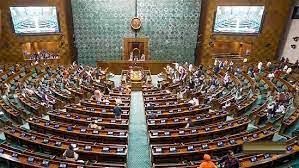
Bicameralism is a type of legislature that is divided into two separate assemblies or houses, known as a bicameral legislature. Bicameral legislatures are found in approximately 80 countries around the world. Unicameralism, in which all members discuss and vote as a single body, is distinct from bicameralism. In a bicameral legislature, the two chambers share responsibility for enacting and implementing legislation. The Indian Parliament is divided into two houses at the national level:
- Rajya Sabha (Upper House)
- Lok Sabha (Lower House)
This article will discuss the Bicameralism, which is important for UPSC IAS exam preparation
|
Table of Contents |
What Is Bicameralism?
- A bicameral legislature, which is distinguished by having two distinct assemblies, chambers, or houses, is one that practises bicameralism.
- The Constitution of India establishes a bicameral legislature with an Upper House (Rajya Sabha) and a Lower House (Lok Sabha).
- The Rajya Sabha represents the states of the Indian Federation, whereas the Lok Sabha represents the entire population of India.
- The Vidhan Sabha (Legislative Assembly) is the state equivalent of the Lok Sabha, and the Vidhan Parishad is the state equivalent of the Rajya Sabha (Legislative Council).
- The Upper House is considered important in the parliamentary system because only one-third of the seats are filled every two years, and it thus acts as a check on the Lower House's potential impetuousness.
- Six of the 28 state legislatures at the state level have two houses:
- Legislative Council (Vidhan Parishad)
- Legislative Assembly (Vidhan Sabha)
- The six states listed below have bicameral legislatures:
- Andhra Pradesh
- Bihar
- Karnataka
- Maharashtra
- Telangana
- Uttar Pradesh
| Other Relevant Links | |
|---|---|
| Independent Judiciary | Dual Polity |
| Written Constitution | Division of Powers |
| Supremacy of the Constitution | Rigid Constitution |
|
"A bicameral legislature enriches the law-making process through dual deliberation, ensuring a balance of diverse perspectives and thorough scrutiny." |
Bicameralism – Historical Background
- The Montague Chelmsford Reforms proposals in India included the first mention of a Second Chamber.
- According to the Government of India Act of 1919, the Indian Legislature shall consist of the Governor-General and the two chambers, namely the Council of State and the House of Assembly.
- The Council's term was set at five years.
- However, under the Government of India Act of 1935, the Council of State was made a permanent body that could not be dissolved.
- The members were supposed to serve for nine years, with one-third of them retiring every three years.
- However, the scheme envisioned for the Second Chamber under the Government of India Act, 1935, never materialized because the Act's provisions pertaining to the federal structure were never implemented.
- As a result, the Second Chamber established by the Government of India Act of 1919 continued to function until 1947.
- The structure and composition of the legislative institutions provided in previous enactments did not provide a viable foundation on which the Legislature of independent India under the new Constitution could be devised.
- The Constituent Assembly was forced to consider this matter without any guidance from the past.
Bicameralism – Constitutional Provisions
- According to Article 169, Parliament may create or abolish the second chamber in a State by law if the Legislative Assembly of that State passes a resolution to that effect with a special majority.
- Members of the Legislative Council are not directly elected by the people.
- According to the constitution, the council will be elected on the basis of the following proportion.
- One-third of the members are chosen from district boards, municipalities and other local authorities.
- One-twelfth of the members are elected by an electorate consisting of graduates of three years’ standing and residing within the States.
- One-twelfth from the Secondary School Teachers' Association.
- One-third of the members are elected by members of the legislative assembly.
- The remainder i.e., one-sixth of the members should be nominated by the Governor according to the established law.
- The total number of members of the Legislative Council cannot be more than one-third of the Legislative Assembly's members and cannot be less than 40.
- It will always be an indirectly elected house, with members chosen using proportional representation and the "single transferable voting system."
Bicameralism – Need
- The Rajya Sabha (despite being a weaker chamber) is responsible for maintaining federal equilibrium by safeguarding state interests against undue interference from the Centre.
- It has been argued that a bicameral system is preferable to avoid hasty and harsh legislation, limit democracy, and ensure deliberation.
- The lower house is mostly made up of elected representatives, but the upper house allows experts to participate in law-making.
- The upper house has the authority to introduce a bill of critical public importance that is not chosen by the lower house.
- By rejecting a bill that is contrary to the public interest, the upper house can put moral pressure on the lower house.
- It provides more opportunities for people from various sections of society, such as teachers and graduates, to represent in the house.
- It improves the efficiency and transparency of the working system in India and its states by establishing a bicameral legislature.
Difference between Bicameralism and Unicameralism
| Bicameralism | Unicameralism |
|---|---|
| A Bicameral Legislature is a kind of governance in which the ability to pass legislation is divided between two independent chambers or assemblies. | A Unicameral Legislature is characterised by the fact that all of a state's legislative activities are performed in a single chamber. |
| In a Bicameral Legislature, an upper and lower house of parliament both have a share of the power to pass legislation. | A Unicameral Legislature concentrates legislative authority in a single body of parliament. |
| Because the two chambers of parliament have equal power, disagreements result in a stalemate, which is then handled by a joint session of both houses. | A stalemate in a Unicameral Legislature is highly rare because such a legislature can only pass legislation through one authority. |
| A Bicameral Legislature is a federal government with shared state authorities and duties between the federal government and the states. | It is a distinguishing feature of a unitary system of government in which all authority is vested in a single central agency. |
| For bigger nations that require a separation of jurisdiction between the federal and state levels, a Bicameral Legislature is desirable. | A Unicameral Legislature is preferred for smaller countries. |
Conclusion
Bicameral system fosters comprehensive debate and diverse perspectives, contributing to the robustness of India's democratic governance. Despite challenges, bicameralism remains integral to India's legislative framework, promoting accountability, federalism, and inclusivity.
FAQs
Question: What is bicameralism?
Answer: Bicameralism refers to a legislative system in which the legislature is divided into two separate chambers or houses. In India, the Parliament is bicameral, consisting of the Lok Sabha (House of the People) and the Rajya Sabha (Council of States).
Question: Why is bicameralism important in a democratic system?
Answer: Bicameralism ensures a system of checks and balances within the legislature. It allows for more thorough debate and scrutiny of laws, prevents hasty legislation, and represents different interests, such as regional or state concerns in the upper house (Rajya Sabha) and the people’s interests in the lower house (Lok Sabha).
Question: What is the difference between the Lok Sabha and the Rajya Sabha in India’s bicameral system?
Answer: The Lok Sabha is the directly elected house representing the people of India, with members serving for five years. The Rajya Sabha represents the states and union territories, and members are indirectly elected by the state legislative assemblies for six-year terms. The Rajya Sabha is a permanent body, with one-third of its members retiring every two years.
Question: Which countries follow a bicameral system of government?
Answer: Many countries, including India, the United States, the United Kingdom, Australia, and Canada, follow a bicameral system of government. Each country’s bicameral system is designed to meet its unique political and constitutional needs.
Question: Can Money Bills be introduced in the Rajya Sabha?
Answer: No, Money Bills can only be introduced in the Lok Sabha. The Rajya Sabha can suggest amendments to a Money Bill, but the Lok Sabha has the final authority to accept or reject those suggestions.
MCQs
- Which of the following countries follows a bicameral system of government?
a) China
b) India
c) Bangladesh
d) Sri Lanka
Answer: (B) See the Explanation
India follows a bicameral system with the Lok Sabha and Rajya Sabha forming the two houses of Parliament.
- Which of the following is a feature of a bicameral legislature?
a) A single chamber for all legislative work
b) Two chambers representing different constituencies
c) No distinction between the functions of the two houses
d) Legislation passed only by one house
Answer: (B) See the Explanation
A bicameral legislature consists of two separate chambers, typically representing different interests, such as regional/state interests in the upper house and the people's interests in the lower house.
- The Rajya Sabha in India is a permanent body, but how often do members retire?
a) Every five years
b) One-third retire every two years
c) Half retire every six years
d) All retire at the same time
Answer: (B) See the Explanation
The Rajya Sabha is a permanent body where one-third of the members retire every two years, and new members are elected for six-year terms.
- What is the role of the Rajya Sabha in the legislative process of a Money Bill?
a) It can amend the Money Bill
b) It can suggest amendments but cannot reject the bill
c) It has equal powers with the Lok Sabha regarding Money Bills
d) It can veto the Money Bill
Answer: (B) See the Explanation
The Rajya Sabha can only suggest amendments to a Money Bill, but the Lok Sabha is not bound to accept those suggestions. The Lok Sabha has the final authority on Money Bills.
- In which of the following systems does bicameralism play a critical role?
a) Presidential system
b) Unicameral system
c) Federal system
d) Theocratic system
Answer: (C) See the Explanation
In federal systems, bicameralism is often used to represent the interests of the states or provinces in the upper house and the people in the lower house, ensuring a balance of regional and national interests.
GS Mains Questions and Model Answers
Q1: Examine the role of the Rajya Sabha in India’s bicameral legislature. How does it contribute to the federal structure of the country?
Explanation: This question requires an examination of the Rajya Sabha’s role in the bicameral legislature. The answer should focus on how the Rajya Sabha represents the states and union territories, contributing to the federal structure by ensuring that regional interests are considered in national legislation. The answer should also discuss the Rajya Sabha’s functions, including reviewing and amending bills, and its role in protecting state autonomy in matters concerning federalism.
Q2: Discuss the importance of bicameralism in balancing the interests of different regions and communities in a diverse country like India.
Explanation: This question asks for an analysis of how bicameralism helps balance regional and national interests in a diverse country like India. The Lok Sabha represents the people, while the Rajya Sabha represents the states, providing a platform for addressing regional issues. The answer should explore how this division of representation helps in preventing the marginalization of smaller states and communities, ensuring that diverse voices are heard in the legislative process.
Q3: “Bicameralism is essential for a federal polity.” Critically analyze this statement in the Indian context.
Explanation: This question requires a critical analysis of the statement, focusing on how bicameralism supports federalism in India by representing both the people (Lok Sabha) and the states (Rajya Sabha). The answer should discuss the benefits of bicameralism in protecting state interests, promoting regional balance, and preventing the centralization of power. However, it should also consider the challenges, such as delays in passing legislation and potential conflicts between the two houses.
Previous Year Questions on Bicameralism
1. UPSC CSE 2018
Q1: Discuss the advantages and disadvantages of bicameralism in the Indian context.
Answer: Bicameralism in India provides a system of checks and balances in the legislative process. The Rajya Sabha, as the upper house, represents the interests of the states, while the Lok Sabha represents the people. This ensures that laws are thoroughly debated and scrutinized before they are passed. Bicameralism prevents hasty decision-making and provides an additional forum for representing regional issues. However, critics argue that the Rajya Sabha can sometimes delay essential legislation passed by the Lok Sabha, and its indirect election process may not always reflect public opinion.
2. UPSC CSE 2019
Q2: How does bicameralism enhance the principle of checks and balances in a democracy?
Answer: Bicameralism enhances the principle of checks and balances by dividing legislative power between two houses. In India, the Lok Sabha and Rajya Sabha have distinct functions, with the Rajya Sabha reviewing and revising bills passed by the Lok Sabha. This prevents the dominance of a single house and ensures that legislation is not passed hastily. The upper house can check the decisions of the lower house, especially on non-financial matters, thus promoting careful deliberation and balancing the interests of different regions and constituencies.
*email: contactus@prepp.in
Download the PREPP App and attempt FREE IAS Exam Mock Tests and get complete study material!
UPSC IAS : CSAT - Mini Live Test

Live Test : UPSC CSE Prelims CSAT (Paper-II) (Oct 20 - 23)
Full Test - 04: UPSC CSE Prelims CSAT (Paper-II)
Full Test - 03: UPSC CSE Prelims CSAT (Paper-II)
UPSC CSE Prelims 2026 GS Paper 1 Question Paper (24-May-2026)
UPSC CSE Prelims 2026 CSAT Paper 2 Question Paper (24-May-2026)

17 February 2025 | The Hindu Must Read Articles | Current Affairs

16 February 2026 | The Hindu Must Read Articles | Current Affairs

13 February 2026 | The Hindu Must Read Articles | Current Affairs









Comments