Sole Cropping - Agriculture Notes
The term "sole cropping" describes the practice of planting a single crop variety in a pure stand at a typical density. Farmers can have uniform harvests over their entire farm due to sole cropping. They can boost farm profitability by only planting the most lucrative crops and using the same seed, machinery, pest control, and growth techniques across their entire farm. This article will explain to you about Sole Cropping which will be helpful in preparing the Agriculture Syllabus for the UPSC Civil Service exam.
|
Table of Contents |
Sole Cropping
What is Sole Cropping?
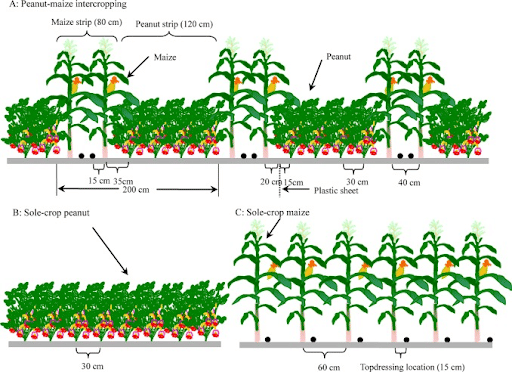
- When a single crop is grown repeatedly on the same piece of land, it is said to be sole cropping.
- Sole Cropping is the agricultural technique of producing a single crop year after year on the same ground without rotating through other crops or growing many crops on the same land, which is known as polyculture.
- Three widely produced crops that are frequently grown using sole cropping methods include corn, soybeans, and wheat.
|
|
|
|---|---|
| Multiple cropping | Monoculture |
| Triple cropping | Double cropping |
| Quadruple cropping | Mono cropping |
Sole Cropping - Benefits
- With increased food production, the farmers chose to grow the one crop that would yield the highest returns given their land and environment.
- Another advantage of sole cropping for farmers was the appearance of simplicity, which, at least initially, allowed them to save time and money.
- Focusing only on one crop resulted in reduced expenses for seeds, tools, fertilizer, and other supplies.
- Farmers didn't have to continuously look for new suppliers because sole cropping stayed largely constant over time.
Sole Cropping - Disadvantages
- Crop failure is an unavoidable part of farming. Not all plants thrive and produce a bountiful and profitable harvest every year for a variety of reasons that farmers cannot control (weather, pests, and disease).
- In a biodiverse ecosystem, a threat to one crop may not be a threat to others.
- When a field contains only one crop grown from genetically identical stock, every plant is equally vulnerable to threat.
- A pest population can easily jump from one plant to the next, especially if there are no other plant species in between and crops are planted close together for efficiency.
Sole Cropping - Environmental Impacts
- By reducing the land's capacity to hold soil and water, the practice of sole cropping increases the planet's susceptibility to the effects of climate change.
- Pesticide usage and sole cropping go hand in hand. But the most extensively used pesticides are rapidly losing their efficacy against pests and insects, creating a vicious cycle.
- Sole cropping jeopardizes the limited water supply.
- Nitrates, nitrites, and phosphates are contaminants introduced by fertilizers to other bodies of water as well as drinking water.
- The same elements are continuously added and depleted by one crop, resulting in less biologically varied, robust, and mineral-rich soil (and more dependence on external inputs such as chemical fertilizers).
- Sole culture can significantly increase soil erosion by reducing soil organic matter.
- As a result, the diversity and quantity of bacterial communities in soil decline, endangering the health of plants and ultimately the health of people who consume them.
Conclusion
Despite its advantages, sole cropping has numerous environmental impacts. However, sole cropping can never be understated especially in the tropics where small and marginal farmers prefer them the most.
|
|
|
|---|---|
| Agriculture Notes | Cropping |
| Cropping system | Mixed cropping |
| Sequential cropping | Cropping intensity |
| Intercropping | Ratoon cropping |
FAQs
Question: What is sole cropping in agriculture?
Answer: Sole cropping is a farming practice where a single crop is grown in a specific field during a particular growing season. Unlike mixed cropping, where two or more crops are grown together, sole cropping focuses on cultivating one type of crop, which allows farmers to focus resources on optimizing the yield of that specific crop. It is particularly useful when growing high-demand or high-value crops, and it helps streamline farming practices, machinery usage, and pest management. However, it may increase the risk of crop failure due to pests, diseases, or weather extremes.
Question: What are the advantages of sole cropping?
Answer: The advantages of sole cropping include: 1. Specialization: It allows for specialized farming techniques and management practices tailored to the needs of one crop. 2. Higher yield per acre: When managed well, sole cropping can result in higher yields of the chosen crop due to optimized soil and resource management. 3. Economic benefits: It may be more profitable for farmers cultivating high-value crops, as they can fully focus on maximizing that crop’s productivity. 4. Efficient pest control: With only one crop being grown, pest control strategies can be more effective and easier to implement.
Question: What are the disadvantages of sole cropping?
Answer: The disadvantages of sole cropping include: 1. Increased risk of crop failure: Sole cropping can be risky if pests, diseases, or adverse weather conditions impact the single crop grown. 2. Soil depletion: Growing the same crop continuously can deplete the soil of specific nutrients, leading to long-term soil health problems. 3. High dependency on one crop: Farmers are highly dependent on the market conditions of the specific crop, which can make them vulnerable to price fluctuations. 4. Less biodiversity: Sole cropping reduces biodiversity on farms, which can lead to ecological imbalances and less resilience to pests and diseases.
Question: How does sole cropping impact soil health?
Answer: Sole cropping can have a mixed impact on soil health: 1. Positive: When practiced with crop rotation, it can allow for proper nutrient management and improve soil conditions. For example, leguminous crops in sole cropping can enrich the soil with nitrogen. 2. Negative: However, continuously growing the same crop without rotation can lead to soil nutrient depletion. The constant extraction of the same nutrients by one crop reduces soil fertility, especially if the crop is nutrient-demanding. Soil management practices such as adding organic fertilizers and using crop rotation are critical to minimizing the negative impact on soil health.
Question: Which crops are commonly grown using sole cropping?
Answer: Several crops are commonly grown using the sole cropping method, especially those that require careful management and significant resources. Examples include: 1. Rice: Grown widely as a sole crop, particularly in regions with abundant water resources. 2. Wheat: Often grown in monoculture systems, especially in temperate climates. 3. Maize: Popular in regions where farmers aim for high production with specialized irrigation and care. 4. Cotton: A high-value crop often grown in sole cropping due to its specific climate and soil needs. 5. Sugarcane: This crop requires specific conditions, and farmers often prefer growing it alone to optimize production and quality.
MCQs
1. What is the main characteristic of sole cropping?
A) Multiple crops are grown together
B) A single crop is grown on a piece of land
C) Crops are grown with high inter-cropping density
D) No crop is grown during the season
Answer: (B) See the Explanation
Explanation: Sole cropping is characterized by the cultivation of a single crop on a specific field during a season, focusing resources on optimizing that particular crop.
2. What is a major disadvantage of sole cropping?
A) It promotes biodiversity
B) It leads to higher yields in all cases
C) It increases the risk of crop failure
D) It improves soil health
Answer: (C) See the Explanation
Explanation: One of the major disadvantages of sole cropping is the increased risk of crop failure due to pests, diseases, or adverse weather conditions, as it depends entirely on a single crop.
3. How does soil health get affected by sole cropping?
A) It enriches the soil with diverse nutrients
B) It increases soil fertility by rotating crops
C) It leads to soil nutrient depletion if the same crop is grown repeatedly
D) It has no impact on soil health
Answer: (C) See the Explanation
Explanation: Sole cropping can deplete the soil of specific nutrients, especially if the same crop is grown continuously, as it reduces soil diversity and hinders nutrient replenishment.
4. Which of the following crops is most commonly grown through sole cropping?
A) Rice
B) Mixed vegetables
C) Groundnut and maize together
D) Legumes
Answer: (A) See the Explanation
Explanation: Rice is commonly grown using sole cropping due to its specific water and soil requirements that make it difficult to grow alongside other crops effectively.
5. What is one of the key benefits of sole cropping?
A) It reduces the need for fertilizers
B) It allows for specialized management of a single crop
C) It increases crop diversity
D) It reduces irrigation needs
Answer: (B) See the Explanation
Explanation: Sole cropping allows for specialized management techniques that can optimize resources such as irrigation, pest control, and fertilization for the chosen crop, which can lead to higher yields in some cases.
GS Mains Questions and Model Answers
Q1: Discuss the pros and cons of sole cropping in agriculture. How does it compare to mixed cropping?
Answer: Sole cropping involves growing a single crop in a field, which allows for specialized management and increased yield of the selected crop. The key advantages of sole cropping include higher yields, focused pest control, and efficient use of resources. However, it also has its downsides, such as increased risk of crop failure due to pests or diseases, soil nutrient depletion, and lack of biodiversity. In comparison, mixed cropping involves growing two or more crops in the same field, which helps spread risk, improves soil fertility, and promotes biodiversity. While mixed cropping may reduce the yield of any single crop, it offers greater resilience against market fluctuations and environmental stresses.
Q2: What are the economic implications of sole cropping on a farmer’s income and soil health?
Answer: Sole cropping can potentially provide higher short-term yields of a single crop, which may result in increased income if the crop is high-value or in demand. However, over time, continuous cultivation of the same crop on the same land can lead to soil nutrient depletion, reducing the long-term productivity of the soil. This can lead to the need for costly fertilizers and soil amendments, which can offset short-term income gains. In addition, relying on a single crop increases the financial risk for farmers, especially if the market price for that crop drops or a pest infestation damages the crop.
Q3: How does sole cropping affect food security in India? Discuss both its positive and negative impacts.
Answer: Sole cropping can have both positive and negative effects on food security in India. On the positive side, it allows farmers to focus on high-demand crops, potentially boosting food production and availability of specific commodities. For example, growing rice or wheat through sole cropping can contribute significantly to the national food supply. However, the risks associated with sole cropping, such as crop failure due to disease, pests, or climate change, can negatively impact food security. Additionally, soil degradation resulting from long-term sole cropping without proper nutrient management can affect the sustainability of food production. Diversified farming systems, like mixed cropping, can help mitigate these risks and ensure more stable food supplies in the long run.
Previous Year Questions on Sole Cropping
1. UPSC CSE Prelims 2020:
Question: Sole cropping involves:
A) Growing a single crop in a given season
B) Growing multiple crops in a given season
C) Growing crops in rotation
D) Growing legumes and cereals together
Answer: (A)
Explanation: Sole cropping involves the practice of growing a single crop in a field during a season, which is distinct from mixed or intercropping.
2. UPSC CSE Mains 2021 (GS Paper 3):
Question: "Evaluate the role of sole cropping in the Indian agricultural system. Discuss the challenges and opportunities it presents."
Answer: Sole cropping plays a significant role in India's agricultural system, especially for high-value crops like rice, cotton, and wheat. It allows for the specialization of farming practices and increased efficiency in resource use. However, the practice also has challenges, including the risk of crop failure, soil depletion, and lack of resilience against market volatility. Opportunities lie in improving soil management practices and introducing crop rotation to mitigate these challenges. Policies aimed at supporting farmers who practice sole cropping, through better irrigation systems and market stabilization, can help maximize the benefits of this approach.
Download the PREPP App and attempt FREE IAS Exam Mock Tests and get complete study material!

Full Test - 04: UPSC CSE Prelims CSAT (Paper-II)
Full Test - 03: UPSC CSE Prelims CSAT (Paper-II)
UPSC CSE Prelims 2026 GS Paper 1 Question Paper (24-May-2026)
UPSC CSE Prelims 2026 CSAT Paper 2 Question Paper (24-May-2026)

17 February 2025 | The Hindu Must Read Articles | Current Affairs

16 February 2026 | The Hindu Must Read Articles | Current Affairs

13 February 2026 | The Hindu Must Read Articles | Current Affairs









Comments