Monoculture - Agriculture Notes
Monoculture refers to the agricultural practice of growing only one type of plant, animal, or crop in a field or farming system at a time. Monoculture crops have allowed farmers to boost efficiency in planting, managing, and harvesting, mostly through facilitating the use of machines in these processes. However, growing the same species year after year under a continuous monoculture system can accelerate the development and spread of pests and diseases in a crop that is sensitive to them. This article will explain to you about Monoculture which will help prepare the Agriculture Syllabus for the UPSC Civil Service exam.
|
Table of Contents |
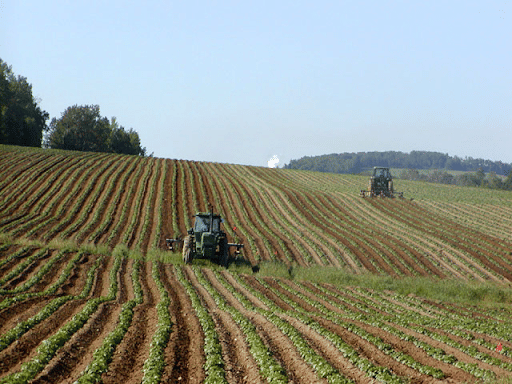
A monoculture field
What is Monoculture?
- Monoculture farming is a type of agriculture in which only one type of crop is grown at a time on a specific field.
- A polyculture system, on the other hand, assumes that a field is sown with two or more crops at the same time.
- It should be noted that the concept of monoculture does not only apply to crops, but also to farm animals: it entails breeding only one species of animal on a given farm, whether it is dairy cows, sheep, pigs, chickens, or anything else.
- It is important to note when discussing monoculture crops that even if a different culture is planted on a given field plot each year, the concept of growing a single crop on one field at a time is still referred to as "monoculture."
- Monoculture has been applied to both industrial and organic farming, enhancing planting and harvesting efficiency and bringing down costs for farmers.
- One example is cultivating only beans or maize for the duration of the planting season. However, it also raises the possibility of contracting infections and pests.
- In terms of modern agriculture, monoculture promotes crop specialization because it includes producing just one crop on most or all of the available land.
|
|
|
|---|---|
| Multiple cropping | Double cropping |
| Triple cropping | Quadruple cropping |
| Sole cropping | Mono cropping |
Monoculture - Advantages
Simplicity
- Monoculture crops are easier to cultivate than polyculture crops.
- Monoculture farming is relatively simple because growing only one type of crop requires less effort, knowledge, and resources than cultivating a variety of plants.
- Monoculture planting, for example, necessitates less machinery for soil preparation and harvesting, whereas growing multiple crops at once necessitates a variety of machines. The same is true for pest control and irrigation.
- With a specific plant species in consideration, it emphasizes soil preparation, watering, and the use of chemicals as necessary.
- As a result, the fields are highly specialized to produce the highest yields possible from the particular crop.
- Since there are no other plants, choices about the treatment of pests and diseases are likewise taken without taking this into account.
- Additionally, monocultures promote uniformity during harvest since it is simple to gather the plant's beneficial components using simple methods, which would otherwise be detrimental if the crop shared a field with another crop.
Higher Yields and Lower Costs
- Some crops, such as cereals, are thought to yield better when sown and grown as monocultures, that is, without other crops adjacent to them on a field.
- However, such yield maximization with monoculture planting is only possible with a yearly rotation of at least two different crops on the given farmland.
- Each plant in a monoculture farm experiences the same uniform planting, care, and harvesting procedures. Consequently, it leads to increased yields and lowers costs.
- The process of birth, development, and maturity is the same for both animals and cattle.
- When the animals reach maturity, the technique also delivers good returns and lower costs for the farmer.
Lowers the Need for Extra Land
- A smaller quantity of new space is only required to grow food because the plants, in particular, employ synthetic fertilizers.
- The same fertilization mechanisms would be needed for the animals at the same time.
Efficient for Farmers
- When one specific crop is grown simultaneously, only one method of harvesting is required. For the farmer, it is effective and more profitable.
- The greatest crops for a field can be grown there despite challenging environmental factors including drought, wind, and short growing seasons, favoring the crop and lowering yield risks.
- In large fields, this type of agriculture is frequently used to cultivate wheat, vegetables, barley, or rare types of fruit.
Use of New Technologies
- When growing monoculture crops, agrarians have more time and financial resources to refer to new agricultural technologies that will help them maximise their agricultural performance.
- Drones, ground sensors, and satellite-derived data are among the most recent technological solutions available to farmers.
- Satellite tools, which are used for complex monitoring of specific fields and management of all stages of sowing and growing crops on them, are one of the most innovative and comprehensive technologies in this field.
Monoculture - Disadvantages
Destroys Soil Nutrients
- The soil naturally holds nutrients and serves other purposes.
- Due to the practice of only growing or raising one type of crop or animal breed, respectively, monoculture eliminates all such functions.
- Due to the absence of crop diversification, which encourages insect and soil microbe biodiversity, there aren't many different species of insects and soil microorganisms.
- Additionally, it implies that there are no plant kinds that can organically enrich the soil with nutrients. Additionally, it destroys microbes on the land, compromising its integrity.
Results in the Use of Harmful Chemicals
- Farmers must use artificial products to replace the nutrients lost when the nutrients in the soil are removed, such as using vast quantities of herbicides, fertilizers, bactericides, and insecticides.
- These synthetic chemicals are used to stop harmful weeds, germs, and insects from further harming their crops.
- Unfortunately, the chemicals persist in crops intended for human consumption, entering the food chain and perhaps having a negative impact on health due to bioaccumulation.
Pollutes Groundwater
- The compounds continue to exist in the soil even after the plant is harvested.
- They cannot be converted into organic matter by soil microorganisms since they are inorganic.
- They permeate the earth and eventually contaminate groundwater supplies, changing ecosystems that may be located far from the point of usage.
- The diversity and vitality of nearby ecosystems may be destroyed, harmed, or diminished over time as a result of the pollutants.
Affects and Alters the Natural Ecosystem
- One of the most serious issues with monoculture farming is the loss of biological diversity.
- A diverse range of specific plants, animals, and insects in a given environment aids in the control of pests, crop diseases, and other negative manifestations caused by disruption of the natural balance of soils on monoculture farmlands.
- As a result of the excessive usage of such inorganic chemicals, organisms are forced to adapt and build up resistance to synthetic herbicides and insecticides.
- Natural ecosystems continue to suffer negative effects as more and more inorganic substances are added to the soil.
Impact on Pollinators
- Monoculture farming also has a negative impact on bees and other pollinators, which are important participants in the natural reproductive cycle.
- The increased use of pesticides, herbicides, and other chemical substances in monoculture farming, ostensibly to maintain crop growth and fertility of "impoverished" soils, harms and often kills pollinating insects.
- Furthermore, in the case of a monoculture planting system, there are many single-plant fields that stretch for miles and miles in all directions.
- Pollinators in such a situation face a homogeneous food territory and suffer from deficiencies as a result of their diet's lack of diversity.
- A lack of biodiversity in bees' and other pollinators' natural habitats results in a lack of beneficial bacteria.
- A lack of the necessary microorganisms causes food in beehives to deteriorate much faster, resulting in food shortages for bees and a weakening of their immune systems.
Soil Degradation and Soil Erosion
- The health of the soil is also affected by the use of artificial fertilizers in monoculture farming.
- There is no longer any natural protection against wind or rain erosion of the soil after the crops are harvested. Additionally, topsoil is not renewed, primarily as a result of erosions.
- Together, these factors progressively degrade the soil, rendering it unfit for farming.
- Additionally, some people might be influenced to remove trees to acquire new agricultural lands, which would restart the destructive cycle.
Requires Lots of Water for Irrigation
- The topsoil loses components that would help it retain moisture because monoculture causes the topsoil cover to be taken all at once. In order to irrigate the crops, modern monoculture agricultural practices need a tremendous amount of water.
- The aquatic resources are being depleted by the rapid pumping of water from rivers, lakes, and water reservoirs.
- Additionally, it means that the inorganic chemicals that farmers inject into the soil and crops will have an impact on the water resources.
Uses Lot of Fossil Fuel Energy
- Sorting, packing and transporting the crops for sale all need a significant quantity of fossil fuel energy.
- Environmental degradation and climate change are significantly influenced by the energy needed, chemical fertilizers and pesticides, and other industrialized techniques of producing such foods.
- Additionally, it keeps endangering the ecosystem for the next generations.
Environmental Impact of Monoculture
- Crops are grown and harvested in most subsistence farming practises to feed a family or local community.
- However, in monoculture agriculture, the crop is produced for commercial purposes, lending an exploitative aspect to the entire process of using farmlands to grow monoculture crops.
- Farmers frequently employ inefficient practises in their monoculture farming.
- When the harvest is complete, it will be transported over long distances to a variety of destinations.
- Many of these destinations are international, which significantly increases the number of transportation miles.
- This mode of transportation (whether land vehicle or seagoing vessel) is heavily reliant on fossil fuels such as oil and gas, which are major contributors to pollution when combusted.
- The use of fossil fuels is also one of the primary contributors to the greenhouse effect in the atmosphere, which has been linked to global climate change caused by agricultural activities on the planet.
Monoculture - Mitigation and Alternatives
Crop Rotation
- The principal detrimental effects of monoculture on soils may be significantly reduced by alternating different crop kinds on a particular field called crop rotation.
- For instance, yearly crop rotation disrupts insect life cycles and helps to keep the soil's chemical composition more balanced.
- Crop rotation programs come in a variety of forms, and most farms choose the ones that best suit the local environmental circumstances.
Smart Use of Fertilizers
- The methods used currently to apply chemical fertilizers to fields, and in particular to monoculture crops, need to alter because doing so is particularly bad for ecosystems.
- Because there is no longer a requirement to apply the same amount of fertilizer to each acre of land, such a shift is now feasible thanks to modern technologies.
- Fertilizers may now be used more intelligently. A zoning feature in Crop Monitoring enables fertilizers to be applied effectively just where they are truly needed.
- The ability to see how well or poorly the plants are growing is made possible by the satellite monitoring of the field and the creation of a vegetation map.
Moderate Herbicides and Pesticides Use
- By using these artificial compounds much more moderately or even switching to organic herbicides and insecticides, the detrimental impacts of their excessive use in monoculture farming might be greatly reduced.
- Crop rotation, which helps to protect crops from pests and diseases naturally, can enhance the benefits of changing how these compounds are used in monoculture farming.
More Efficient Water Use
- Growing crops close to water bodies would be the answer in this case, as it would reduce the need for groundwater and the amount of water that is absorbed by the land during runoff.
- The main way to prevent this decrease is to choose rotative monoculture planting over monocropping.
Conclusion
Although monoculture has significant advantages for industrial agriculture, these advantages are ultimately outweighed by the method's negative effects on the environment. Therefore, adopting more intelligent agriculture methods and techniques is crucial. The ideal alternative to monocultures is a polyculture system, which involves a continuous alternation of different types of crops in the available farmlands.
|
|
|
|---|---|
| Agriculture Notes | Cropping |
| Cropping system | Mixed cropping |
| Sequential cropping | Cropping intensity |
| Intercropping | Ratoon cropping |
FAQs
Question. What is monoculture agriculture?
Answer: Monoculture agriculture refers to the practice of growing a single crop or plant species over a large area for multiple seasons. This approach is often used for commercial farming where high yields of one crop are desired. Monoculture is common in the cultivation of crops like wheat, corn, rice, and soybeans. While it allows for efficient farming and specialization, it can also lead to long-term environmental and economic challenges.
Question. What are the advantages of monoculture agriculture?
Answer: Monoculture agriculture has several advantages, including:
- Efficiency: Growing a single crop type allows for the use of specialized machinery, uniform planting, and harvesting processes, leading to increased efficiency.
- Higher Yields: Monoculture can result in higher yields per hectare, especially when growing high-demand crops in areas with ideal conditions.
- Economic Benefits: The large-scale production of a single crop can make it easier to meet market demands, leading to lower prices and stable supply for consumers.
- Simplified Management: With one type of crop, farmers can use targeted fertilizers, pesticides, and irrigation techniques, reducing the complexity of managing diverse crops.
Question. What are the disadvantages of monoculture agriculture?
Answer: Despite its efficiency, monoculture agriculture has significant drawbacks, including:
- Soil Depletion: Growing the same crop repeatedly can deplete soil nutrients, leading to a decline in soil fertility and the need for synthetic fertilizers.
- Increased Vulnerability to Pests and Diseases: Monoculture creates ideal conditions for pests and diseases to spread quickly since the crops are genetically similar and often lack natural resistance.
- Environmental Impact: Monoculture farming often leads to the destruction of biodiversity, as large areas of land are cleared to grow a single crop. It can also contribute to water pollution from the excessive use of fertilizers and pesticides.
- Economic Risks: If a monoculture crop faces a price decline or market fluctuation, farmers who rely solely on one crop may face significant financial losses.
Question. How does monoculture agriculture impact the environment?
Answer: Monoculture agriculture has several environmental impacts:
- Soil Erosion: Monoculture farming can increase the risk of soil erosion due to the lack of crop diversity, which reduces the stability of soil.
- Loss of Biodiversity: The large-scale cultivation of a single crop reduces natural habitats for other species, leading to a loss of biodiversity.
- Chemical Pollution: The widespread use of pesticides and fertilizers in monoculture farming can lead to contamination of nearby water bodies, affecting aquatic ecosystems.
- Water Usage: Monoculture crops, especially water-intensive ones like rice and cotton, can strain local water resources, leading to the depletion of groundwater.
Question. What are some alternatives to monoculture farming?
Answer: Alternatives to monoculture farming focus on increasing biodiversity and sustainability. These include:
- Polyculture: Growing multiple crops together in the same field to create a more diverse ecosystem and reduce the risk of pests and diseases.
- Agroforestry: Integrating trees and other plants with crops to improve soil fertility, water retention, and biodiversity.
- Crop Rotation: Rotating different crops on the same land to restore soil nutrients and reduce the buildup of pests and diseases.
- Organic Farming: Using natural methods to cultivate crops, avoiding synthetic fertilizers and pesticides, and promoting soil health and biodiversity.
MCQs
- Which of the following is a major disadvantage of monoculture farming?
A) Increased biodiversity
B) Soil depletion
C) Reduced pest problems
D) Higher crop diversity
Answer: (B) See the Explanation
One of the major disadvantages of monoculture farming is soil depletion as the repeated cultivation of the same crop exhausts soil nutrients over time.
- What is the primary advantage of monoculture farming?
A) Increased biodiversity
B) Lower yield per hectare
C) Efficiency in production
D) Reduced pesticide use
Answer: (C) See the Explanation
Monoculture farming allows for increased efficiency due to specialized machinery and uniform crop management, making it easier to plant, grow, and harvest large quantities of the same crop.
- Which of the following is a common crop grown in monoculture farming?
A) Mixed vegetables
B) Rice
C) Apples and oranges together
D) Mixed grains
Answer: (B) See the Explanation
Rice is one of the many crops commonly grown using monoculture farming due to its uniform growing conditions and high demand in global markets.
- Which farming practice reduces the negative environmental impacts of monoculture?
A) Polyculture
B) Intensive farming
C) Monoculture
D) Urban farming
Answer: (A) See the Explanation
Polyculture involves growing multiple crops together, which helps to improve soil health, reduce pest outbreaks, and promote biodiversity, unlike monoculture farming.
- How does monoculture farming affect pest management?
A) It makes pests harder to control
B) It makes crops immune to pests
C) It can increase vulnerability to pests
D) It eliminates the need for pesticides
Answer: (C) See the Explanation
Monoculture farming can increase vulnerability to pests because large areas of the same crop create a perfect environment for pests to spread, making pest management more challenging.
GS Mains Questions and Model Answers
Q1: Discuss the environmental and economic impacts of monoculture agriculture in India.
Answer: Monoculture agriculture in India has significant environmental and economic impacts. Environmentally, monoculture leads to soil depletion, as the continuous cultivation of a single crop exhausts essential nutrients in the soil, reducing its fertility over time. This often necessitates the use of chemical fertilizers, which can contribute to water pollution and negatively affect surrounding ecosystems. Additionally, monoculture farming leads to loss of biodiversity and makes crops more vulnerable to pests and diseases, leading to increased reliance on pesticides. Economically, while monoculture allows for increased production of a single crop, it also exposes farmers to market risks. For example, if the price of a monoculture crop falls or there is a poor harvest due to pest infestation, farmers face financial instability. Despite these challenges, monoculture farming continues in many parts of India due to its ability to generate high yields for market demands, particularly for staple crops like rice and wheat.
Q2: Evaluate the role of monoculture farming in India’s agricultural policy and its effects on sustainability.
Answer: Monoculture farming has played a significant role in shaping India’s agricultural policy, particularly since the Green Revolution in the 1960s. The policy focus was on increasing food production to ensure national food security, and monoculture farming of crops like wheat and rice became central to this effort. While monoculture has contributed to higher yields and greater food availability, it has also led to environmental degradation and unsustainable practices. The heavy reliance on chemical inputs such as fertilizers and pesticides has led to soil degradation, water scarcity, and pollution. Furthermore, monoculture farming reduces the resilience of the agricultural sector to climate change and pests. To address these issues, India’s agricultural policy is increasingly focusing on promoting sustainable farming practices like crop rotation, agroforestry, and organic farming. The challenge is to strike a balance between productivity and environmental sustainability, ensuring that agricultural practices meet the needs of both current and future generations.
Q3: What are the alternatives to monoculture farming, and how can they be integrated into India’s agricultural system?
Answer: Alternatives to monoculture farming, such as polyculture, agroforestry, and crop rotation, offer sustainable solutions to the environmental and economic challenges posed by monoculture. Polyculture, where multiple crops are grown together, helps in biodiversity conservation, improves soil health, and reduces the need for chemical inputs. Agroforestry, which integrates trees and shrubs with crops, can enhance soil fertility, improve water retention, and provide additional income sources through timber and fruit. Crop rotation helps restore soil nutrients and reduces the buildup of pests and diseases. Integrating these alternatives into India’s agricultural system requires policy support, financial incentives for farmers to shift from monoculture, and investments in research and education to promote these practices. Additionally, governments can support sustainable farming practices through subsidies for organic farming, training programs for farmers, and creating markets for diversified agricultural products.
Previous Year Questions on Monoculture
1. UPSC 2021
Question: Discuss the economic and environmental impact of monoculture farming in India and suggest alternatives to improve sustainability.
Answer: This question required a discussion of the economic and environmental impacts of monoculture farming in India, such as the depletion of soil nutrients, increased pest susceptibility, and market risks, along with suggestions for sustainable alternatives like polyculture and agroforestry.
2. UPSC 2019
Question: Evaluate the role of monoculture farming in India's agricultural development and its long-term implications for food security.
Answer: This question focused on monoculture farming's role in India's agricultural development, particularly during the Green Revolution, and its long-term implications for food security, highlighting issues like soil degradation, reliance on chemicals, and the need for sustainable farming practices.
Download the PREPP App and attempt FREE IAS Exam Mock Tests and get complete study material!

Full Test - 04: UPSC CSE Prelims CSAT (Paper-II)
Full Test - 03: UPSC CSE Prelims CSAT (Paper-II)
UPSC CSE Prelims 2026 GS Paper 1 Question Paper (24-May-2026)
UPSC CSE Prelims 2026 CSAT Paper 2 Question Paper (24-May-2026)

17 February 2025 | The Hindu Must Read Articles | Current Affairs

16 February 2026 | The Hindu Must Read Articles | Current Affairs

13 February 2026 | The Hindu Must Read Articles | Current Affairs









Comments