Intercropping - Agriculture Notes
Intercropping is a type of multiple cropping that involves growing two or more crops in close proximity. The most common goal of intercropping is to increase yield on a given plot of land by utilising resources that would otherwise go unused by a single crop. Planting a deep-rooted crop with a shallow-rooted crop, or a tall crop with a shorter crop that requires partial shade, are examples of intercropping strategies. There are numerous types of intercropping, all of which vary the temporal and spatial mixture to some extent: mixed intercropping, row cropping, relay cropping, and so on. This article will explain to you about Intercropping which will be helpful in preparing the Agriculture Syllabus for the UPSC Civil Service exam.
|
Table of Contents |
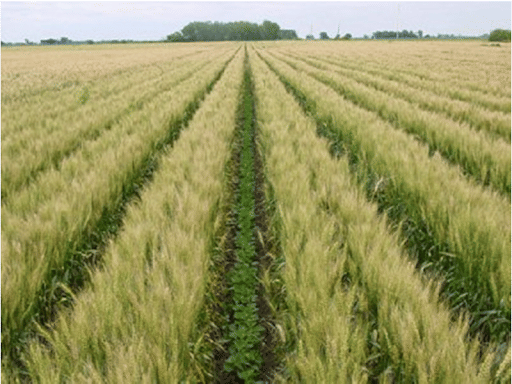
Intercropped Cereal with Soybean
What is Intercropping?
- Intercropping is a method of increasing agricultural productivity by planting two or more crops simultaneously on a specific plot of land in a specific row pattern.
- The primary goal of this type of cropping is to make use of the space between two rows of main crop and produce more grain per unit area.
- Small farmers who depend on rain for higher production are more likely to use it.
- This procedure has a specific row pattern, such as 1:1 or 1:2, which means that the primary crop is in the first row and the other crops are in the second or third row.
- These crops are blended in this technique despite having different nutrient needs. It guarantees the best possible use of the nutrients given.
- Additionally, it stops pests and diseases from spreading to every plant involved in a particular crop.
|
|
|
|---|---|
| Types of intercropping | Strip intercropping |
| Parallel cropping | Synergistic cropping |
| Multi storey cropping | Relay intercropping |
| Alley cropping | Mixed cropping |
Principles of Intercropping
- Crops grown in tandem should have complementary rather than competitive effects.
- The subsidiary crop should be of shorter duration and faster-growing habits to take advantage of the main crop's early slow-growing period, and it should be harvested when the main crop begins to grow.
- Agronomic practices for the component crops should be similar.
- Erect growing crops should be intercropped with cover crops such as pulses to reduce or control soil erosion and weed population. This also aids in reducing water evaporation from the soil's surface.
- The root depths of the component crops should be different so that they do not compete for nutrients, water, and root respiration.
- A standard plant population of the main crop should be maintained, whereas the plant population of subsidiary crops can be increased or decreased depending on the situation.
- Component crops infested with similar pest and disease pathogens and parasites should not be chosen.
- The planting method and management should be simple, less time-consuming, less cumbersome, economical, and profitable in order to be widely adopted.
Intercropping - Prerequisites
- Each crop needs enough space when two or more are growing together in order to increase cooperation and reduce competition.
- Although there may be some variation in the amount of temporal and spatial overlap between the two crops, both conditions must be satisfied for a cropping system to be considered an intercrop.
- Therefore, four factors must be taken into account:
- Spatial Arrangement: The appropriate spatial arrangement maximizes the complementarity between the component crops and improves the physiological effects of the intercropping system in a particular environment.
- However, in order for an intercropping arrangement to be favorable and be used by the farmer, it must meet several criteria.
- Density: Each crop in the mixture has its seeding rate reduced from its maximum rate in order to maximize plant density.
- Both crops wouldn't produce well if planted at full rates due to severe crowding.
- The crops will have a better chance of producing well within the mixture by having lower seeding rates for each.
- Maturity Dates: Intercrops with varied maturity dates or development phases are planted to take advantage of fluctuations in peak nutrient, water, and sunlight requirements.
- The competition between two crops is reduced when one crop matures before the other. Crops having various maturation dates can also help separate and delay the harvesting of grain commodities.
- Plant Architecture: Plant architecture is the practice of allowing one crop to receive sunlight that the other crops in the mix would not otherwise receive.
- A classic illustration would be a canopy of widely spaced corn plants growing over a ground cover of beans and pumpkins.
Intercropping - Types
Intercropping is defined by a specific arrangement of plants that serve as the foundation for its classification. Intercropping types include row, strip, parallel, synergistic, relay, multi-storey, alley, etc.
Strip Intercropping
- The term "strip cropping" refers to the practice of cropping different cultures in strips.
- To prevent soil erosion, it is a common practice on sloped terrain.
- Strip cropping in agriculture also applies to even terrains.
- The strips are sufficiently narrow to generate agronomic interactions between neighboring crops.
- Strip width is therefore essential to the design and operation of this cropping pattern. The strips are frequently changed from year to year.
- Basically, strip cropping agriculture is utilized to either enhance the growth of primary species or improve soil health.
*To know more about the topic, click this link Strip intercropping
Parallel Cropping
- Parallel cropping is the practice of growing crops that have different natural behaviors but no competition.
- An example of parallel cropping is wheat and mustard. After planting wheat, farmers typically broadcast mustard in the same field.
- It makes greater use of resources like light, nutrients, and moisture.
- The productivity of the system is hampered by inefficient moisture usage and competition between the various root systems of the crops cultivated together.
*To know more about the topic, click this link Parallel cropping
Synergistic Cropping
- Synergistic cropping is when two crops are grown on a unit area at the same time and produce more as a whole than they would if they were grown separately on a unit area basis.
- The concept of synergistic cropping first emerged in the 1980s.
- This technique is based on agronomic approaches primarily targeted at improving soil fertility.
- As a result, the overall health of the soil-microorganism-plant system is focused, rather than on production alone.
*To know more about the topic, click this link Synergistic cropping
Multi-storey Cropping
- Multi Storey Cropping is the process of cultivation of more than two crops at once on the same plot of land with varying heights.
- Examples: coconut, pepper, cocoa, and pineapple.
- The crops are cultivated together on the land, utilising land, water, and space in the most effective and inexpensive ways possible.
- Plantings having an overstory of trees or shrubs and an understory of specialised or agronomic crops or pastures are referred to as multi-story crops.
- There is enough space between trees to allow forage or crops in the understory to receive enough sunlight.
- Multi Storey cropping is sometimes known as "Forest Farming."
- Native forest tree canopies would be controlled to permit the cultivation of such crops or forage.
*To know more about the topic, click this link Multi storey cropping
Relay Intercropping
- Relay cropping is a type of cropping arrangement in which one crop is seeded into a standing second crop well before the second crop is harvested.
- Growing Rice-Cauliflower-Onion-Summer gourds is an example for relay intercropping.
- Relay cropping has the potential to resolve a number of conflicts, including inefficient use of available resources, disagreements over sowing time, fertiliser application, and soil degradation.
- Relay cropping is a complex set of resource-efficient technologies capable of improving soil quality, increasing net return, increasing land equivalent ratio, and controlling weed and pest infestation.
- Relay planting has less risk because it does not require relying just on one crop.
- Relay cropping is also known as overlapping cropping.
*To know more about the topic, click this link Relay intercropping
Alley Cropping
- Alley cropping is one of several practices that deal with trees and crops growing on the same plot of land.
- Alley cropping is a method of growing trees or shrubs and agricultural crops in alternate rows.
- Trees are frequently pruned to reduce the shading of agricultural crops. Alley cropping can help with nutrient cycling and erosion control as well.
- Alley cropping can thus be regarded as re-creating a savanna's structure in an agroforestry system with many canopy layers, including an overstory of nut trees, a mid-layer of fruiting small trees and shrubs, and a groundcover of annual crops or perennial grass groundcover.
*To know more about the topic, click this link Alley cropping
Row Intercropping
- Plants are arranged in rows in this case, as the name suggests. Cereals and legumes such as corn and beans are a common and beneficial combination.
- Row ratios can range from single to multiple rows.
- Row cropping provides additional nitrogen fixation by legumes in symbiosis with bacteria of the Rhizobium genus.
Temporal Intercropping
- The combined plants in this intercropping method require different maturing times.
- When the fast-growing plant is harvested, the slow-growing plant is given more room to grow.
Mixed Intercropping
- The practice of intercropping entails sowing different species (two or more) in the same terrain with no distinct arrangement in rows or in the same rows.
- In this case, the sowing and harvesting seasons coincide.
- Mixed cropping protects the primary culture from winds, frosts, droughts, and other extreme weather conditions.
Trap Cropping
- The intercropping technique, as the name implies, aids in pest trapping to protect the main culture. Among the most common trapping plants are mustard and marigold.
- The basic concept is to attract insects or fungi to the sacrificial secondary crops, protecting the cash crop.
- Blue Hubbard squash is said to be effective against squash bugs, squash vine borers, and spotted and striped cucumber beetles.
- Trap intercropping allows for pesticide savings by requiring no or only partial chemical application to trapping areas.
Guard Cropping
- Guard crops are thorny or tough plants that grow around cash crops or along field edges.
- Crop guards are used as barriers to keep the main species safe from winds and invasions.
- As a result, sorghum is grown next to cotton and safflower next to chickpea.
Repellant Intercropping
- Farmers use pest-repellant plants as a sustainable pest-management technique when using this intercropping method.
- It is based on the repellant effect of specific species, which protects the cash crop.
- The repellant keeps insects away from their host plant, as in the case of planting leeks to keep bean flies away from beans.
Push-Pull Cropping
- For the sake of the cash crop, the intercropping practise combines both trap and repellent plants.
- While trap species attract (or pull) pests, repellant species repel them. Growing Napier grass (to pull) and Desmodium legume (to push) to protect corn from stem boring corn larvae is an example of this technique.
Intercropping - Advantages
- Increased Profit: Even when the first crop is unsuccessful, secondary crops offer higher yields and guarantee profit.
- Ergonomic Usage of Land: Contrary to monocropping, when gaps between rows are left empty, planting species in between rows allows for a more efficient use of the soil.
- Protection of the Cash Crop: Intercropping serves a variety of purposes, including warding off or trapping pests, luring in beneficial insects, and providing shade from excessive sunlight or wind. Pest management lowers the number of chemicals used, saving money.
- Prevention of Soil Erosion and Crust: Particularly, the roots of plants in alley intercropping and between rows reduce erosion.
- Added Nutrients for the Main Crop: Because the leguminous family is recognized for fixing nitrogen, it supplies nitrogen to the nearby species.
- Reduced Need for Fertilizers: Intercropping cultures reduce the need to use synthetic fertilizers by improving soil fertility.
- Efficient Use of Natural Resources: More efficient use of natural resources like water and solar energy as they are distributed to secondary crops as well.
- Improved Weed Management: In intercropping, beneficial plants rather than weeds fill the empty spaces between the rows.
- Enhanced Biodiversity and Ecological Stability: The environment benefits from the increased growth of agricultural species.
Intercropping - Limitations
- Unsuitable for Mechanized Farming: Intercropping is not always suitable for a mechanized agricultural system.
- Time-consuming: It calls for more focus and, as a result, more intensive, skilled management.
- Labour Expenses: Planting, weeding, and harvesting are less efficient, which may increase labor expenses for these tasks.
- Requires Effective Planning: Effective planning is crucial and includes things like careful cultivar selection, appropriate spacing, etc.
- No Effective Reuse: A larger amount of fertilizer or irrigation water cannot be used effectively since the component crops respond differently to these inputs.
Differences Between Intercropping and Mixed Cropping
| Mixed Cropping | Intercropping |
|---|---|
| When two or even more crops are planted and grown simultaneously on the same piece of land, the practice is known as mixed cropping. | Contrarily, intercropping is a type of growing crop in which two different product types are grown and farmed on the same piece of land in a specific pattern. |
| The objective of mixed cropping is to reduce the possibility of crop failure. | The objective of intercropping is to boost the crop's production. |
| When mixed cropping is employed, the seeds are properly mixed and assimilated into the soil. | Contrarily, intercropping doesn't require any pre-seeding mixing. |
| In mixed cropping, the seeds are not sown in sequence. | In the case of intercropping, seeds are sown in several rows in a precise sequence. |
| In mixed cropping, crops compete with one another. | Contrarily, in intercropping, there is no competition between the crops. |
| Every crop has a similar life cycle and maturation period. | The length of the maturation period and the life cycle of each crop vary greatly. |
| In mixed cropping, the entire lot receives the same application of fertilizer, pesticide, and insecticide. | Contrarily, intercropping uses different insecticides and fertilizers for every harvest. |
*To know more about the topic, click this link Differences Between Intercropping and Mixed Cropping
Conclusion
Successful intercropping has many economic and environmental advantages over monocropping. By fostering symbiotic relationships between different crops, we can reduce our reliance on chemical inputs while still producing plenty of food. With varying degrees of effectiveness, intercropping has been used to lessen pest damage in agriculture. In a small-scale greenhouse, garden, and field tests, for instance, numerous trap crops successfully redirected pests away from focal crops, but only a small number of these plants have been demonstrated to lessen pest damage at larger commercial scales.
FAQs
Question: What is intercropping in agriculture?
Answer: Intercropping is an agricultural practice where two or more crops are grown together on the same piece of land, either simultaneously or in rotation. This practice is designed to maximize land use, increase biodiversity, and reduce the risk of crop failure. Intercropping can enhance productivity by making better use of resources such as light, water, and nutrients, and can also help in pest and disease management.
Question: What are the types of intercropping?
Answer: There are several types of intercropping, including:
- Row Intercropping: Two or more crops are planted in rows, with each crop occupying a specific row.
- Mixed Intercropping: Different crops are grown together without a defined pattern, usually in the same row.
- Strip Intercropping: Crops are planted in strips of alternate rows, often to maximize space and sunlight exposure.
- Relay Intercropping: One crop is planted before the first crop is harvested, allowing them to grow together at different stages.
Question: What are the benefits of intercropping?
Answer: Intercropping provides several benefits, such as:
- Diversified yield: By growing different crops, farmers can reduce the risk of crop failure due to pests, diseases, or adverse weather conditions.
- Improved resource utilization: Different crops can make use of different soil nutrients, sunlight, and water, leading to more efficient resource use.
- Weed suppression: The dense planting of different crops can suppress weed growth, reducing the need for chemical herbicides.
- Improved soil health: Certain crops can enhance soil fertility through nitrogen fixation or by preventing soil erosion.
Question: How does intercropping contribute to sustainable farming?
Answer: Intercropping contributes to sustainable farming by increasing biodiversity, improving soil fertility, and reducing the need for chemical fertilizers and pesticides. By growing multiple crops together, farmers can reduce dependency on monoculture, which is prone to pest attacks and soil depletion. Additionally, intercropping can help conserve soil moisture, prevent erosion, and improve overall ecosystem health, making farming more resilient to climate change and environmental stress.
Question: What are the challenges of intercropping?
Answer: Despite its advantages, intercropping also presents some challenges:
- Increased management complexity: Intercropping requires careful planning, monitoring, and management of different crop types, which may be labor-intensive.
- Potential for competition: Crops grown together may compete for water, nutrients, and sunlight, potentially reducing overall yields.
- Market limitations: Intercropped crops may not always meet market demand or processing requirements, especially if they are mixed in non-traditional ways.
MCQs
1. What is a major benefit of intercropping?
A) Decreased soil fertility
B) Increased marketability of crops
C) Enhanced pest and disease management
D) Decreased water usage
Answer: (C) See the Explanation
Explanation: Intercropping helps in pest and disease management by reducing the likelihood of pest outbreaks affecting all crops at once.
2. Which of the following is an example of mixed intercropping?
A) Planting wheat and barley in alternate rows
B) Planting maize, beans, and squash together in the same field
C) Planting cotton in strips between rows of corn
D) Planting soybeans after the harvest of maize
Answer: (B) See the Explanation
Explanation: Mixed intercropping involves growing multiple crops together in the same area without a specific row arrangement, such as planting maize, beans, and squash together.
3. What is the main advantage of strip intercropping?
A) Increased competition between crops
B) Efficient use of space and sunlight
C) Improved marketability of crops
D) Enhanced soil degradation
Answer: (B) See the Explanation
Explanation: Strip intercropping efficiently uses space and sunlight by planting crops in strips, allowing them to make the best use of the available resources.
4. How does intercropping contribute to sustainable agriculture?
A) By promoting monoculture
B) By increasing the need for chemical fertilizers
C) By improving soil health and reducing pest problems
D) By reducing crop diversity
Answer: (C) See the Explanation
Explanation: Intercropping contributes to sustainable agriculture by improving soil health, reducing dependency on chemical fertilizers, and minimizing pest problems.
5. What is one of the challenges of intercropping?
A) High labor and management costs
B) Increased chemical pesticide use
C) Decreased soil moisture retention
D) Reduced biodiversity
Answer: (A) See the Explanation
Explanation: Intercropping requires more careful management and planning, which can increase labor costs and complexity compared to monoculture farming.
GS Mains Questions and Model Answers
Q1: Discuss the role of intercropping in enhancing agricultural sustainability and food security.
Answer: Intercropping plays a key role in enhancing agricultural sustainability by promoting biodiversity, improving soil fertility, and reducing the dependency on chemical inputs. By growing multiple crops together, intercropping minimizes the risk of total crop failure due to pests, diseases, or climatic events. It also helps in optimizing the use of available resources such as water and nutrients. This diversification of crops contributes to better food security by increasing the variety of harvests, which makes food systems more resilient to disruptions in global supply chains or local environmental stresses.
Q2: How does intercropping contribute to integrated pest management (IPM)?
Answer: Intercropping can significantly enhance Integrated Pest Management (IPM) by disrupting the habitat for pests. Different crops grown together can confuse or repel pests that prefer specific plants, thus reducing pest outbreaks. For example, planting legumes alongside other crops like maize can attract beneficial insects that prey on pests. Additionally, some plants naturally repel pests due to their strong scents or chemical properties. By promoting diversity and natural pest control methods, intercropping reduces the need for synthetic pesticides, supporting more eco-friendly agricultural practices.
Q3: Evaluate the economic and environmental challenges of intercropping in smallholder farming.
Answer: While intercropping offers numerous economic and environmental benefits, it also presents challenges, especially for smallholder farmers. Economically, the practice requires more intensive management, higher labor input, and expertise to balance the needs of different crops. Furthermore, smallholder farmers may face difficulties in marketing intercropped produce, as mixed harvests can complicate logistics and sales. Environmentally, while intercropping can reduce pesticide use, it may increase competition for water and nutrients among crops, potentially reducing yields if not carefully managed. However, with the right knowledge and practices, the advantages of intercropping in terms of soil health, pest management, and diversification outweigh the challenges.
Previous Year Questions on Intercropping
1. UPSC CSE Prelims 2017:
Question: Intercropping in agriculture is aimed primarily at:
A) Increasing the use of chemical fertilizers
B) Maximizing land productivity and reducing risks
C) Reducing labor costs
D) Promoting monoculture farming
Answer: (B)
Explanation: Intercropping aims to maximize land productivity by growing multiple crops together, which helps in reducing risks such as crop failure due to pests, diseases, or climate change.
2. UPSC CSE Mains 2020 (GS Paper 3):
Question: Explain how intercropping can be integrated into sustainable agriculture to address food security challenges.
Answer: Intercropping can significantly contribute to sustainable agriculture by promoting biodiversity, improving soil health, and reducing the dependency on chemical inputs. By growing different crops together, farmers can increase food diversity and productivity, thereby reducing the risk of crop failure and improving food security. Intercropping can also mitigate environmental damage by reducing soil erosion, improving water retention, and decreasing the need for chemical fertilizers and pesticides.
Download the PREPP App and attempt FREE IAS Exam Mock Tests and get complete study material!

Full Test - 04: UPSC CSE Prelims CSAT (Paper-II)
Full Test - 03: UPSC CSE Prelims CSAT (Paper-II)
UPSC CSE Prelims 2026 GS Paper 1 Question Paper (24-May-2026)
UPSC CSE Prelims 2026 CSAT Paper 2 Question Paper (24-May-2026)

17 February 2025 | The Hindu Must Read Articles | Current Affairs

16 February 2026 | The Hindu Must Read Articles | Current Affairs

13 February 2026 | The Hindu Must Read Articles | Current Affairs









Comments