Parallel Cropping - Agriculture Notes
The practice of growing two crops in parallel rows on the same piece of land is known as parallel cropping. An example includes Mung or urd with maize and urd, mung or soybean with cotton. There is no nutritional competition between the two crops and no connection between them. They can offer their highest possible yield. They are both grown throughout the same growing season. This article will explain to you about Parallel Cropping which will be helpful in preparing the Agriculture Syllabus for the UPSC Civil Service exam.
|
Table of Contents |
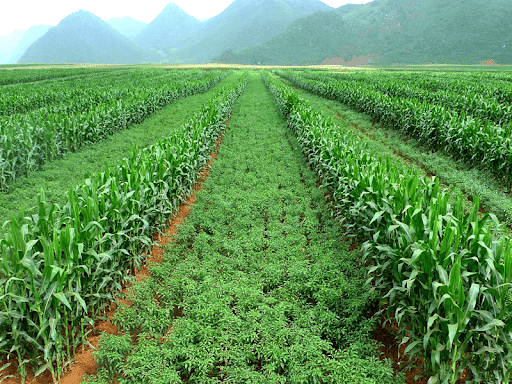
Parallel Cropping
What is Intercropping?
- Intercropping is a method of increasing agricultural productivity by planting two or more crops simultaneously on a specific plot of land in a specific row pattern.
- Small farmers who depend on rain for higher production are more likely to use it.
- This procedure has a specific row pattern, such as 1:1 or 1:2, which means that the primary crop is in the first row and the other crops are in the second or third row.
- These crops are blended in this technique despite having different nutrient needs. It guarantees the best possible use of the nutrients given.
- Additionally, it stops pests and diseases from spreading to every plant involved in a particular crop.
|
|
|
|---|---|
| Types of intercropping | Strip intercropping |
| Multi storey cropping | Synergistic cropping |
| Alley cropping | Relay intercropping |
What is Parallel Cropping?
- Parallel cropping is the practice of growing crops that have different natural behaviors but no competition.
- An example of parallel cropping is wheat and mustard. After planting wheat, farmers typically broadcast mustard in the same field.
- It makes greater use of resources like light, nutrients, and moisture.
- The productivity of the system is hampered by inefficient moisture usage and competition between the various root systems of the crops cultivated together.
Parallel Cropping - Advantages
- Utilization of resources (light, nutrients, and moisture) - If one crop doesn't yield, one can always rely on the yield of the other crop.
- This method facilitates soil fertility restoration and reduces soil erosion.
- Parallel Cropping results in improved soil fertility, health, enhanced water quality, and moisture retention in the soil.
Parallel Cropping - Disadvantages
- It is a time-consuming procedure.
- Although there isn't any competition between the crops, they could be vulnerable to various pests that could be challenging to manage.
- The possibility of two harvests arises from the possibility that the crops attain maturity at various periods.
Conclusion
Parallel Cropping makes farmlands available for use in the future by lowering soil erosion, protecting field fertility, and removing environmental pollution. Besides its sustainability, the practice of parallel cropping also increases the biodiversity of species.
FAQs
Question. What is Parallel Cropping?
Answer: Parallel cropping is an agricultural practice where two or more crops are grown simultaneously on the same piece of land, but in a way that does not interfere with each other’s growth. These crops typically belong to different growth cycles or root depths, which allows them to thrive without competing for nutrients, water, or light. The goal is to increase land productivity and crop yield by optimizing the use of available resources. Unlike traditional crop rotation, where crops are planted sequentially, parallel cropping involves planting multiple crops at once, often in adjacent rows or alternating spaces within the same field.
Question. What are the benefits of Parallel Cropping?
Answer: The benefits of parallel cropping include:
- Increased Land Productivity: By growing multiple crops on the same land at the same time, farmers can increase yield per unit of land.
- Better Resource Utilization: Different crops have different requirements, so growing them together can help utilize soil nutrients, water, and sunlight more efficiently.
- Reduced Risk of Crop Failure: If one crop fails due to unfavorable weather or pests, the other crop may still survive, reducing the risk of total crop loss.
- Improved Soil Health: Growing multiple crops with different root structures helps maintain soil structure and nutrient balance, reducing soil erosion and improving soil fertility.
- Diversification: Parallel cropping enables farmers to diversify their income by producing multiple crops simultaneously, reducing their reliance on a single crop.
Question. What types of crops are typically used in Parallel Cropping?
Answer: In parallel cropping, crops that have complementary growth habits or needs are chosen to avoid competition. Common combinations include:
- Legumes and Cereals: Legumes, like peas or beans, are often paired with cereal crops like wheat or maize. Legumes help fix nitrogen in the soil, which benefits the cereal crops.
- Vegetables and Grains: Crops like tomatoes or cabbages can be planted alongside grains like rice or corn, as they require different types of nutrients and water at different stages of growth.
- Root Crops and Leafy Vegetables: Carrots or potatoes (root crops) can be grown alongside spinach or lettuce (leafy vegetables) because their root systems occupy different layers of the soil.
- Perennial and Annual Crops: Perennial crops, such as fruit trees, can be planted with annual crops like beans or peas, which complete their cycle within a single year.
Question. How does Parallel Cropping contribute to sustainable agriculture?
Answer: Parallel cropping contributes to sustainable agriculture by promoting biodiversity and minimizing environmental impacts:
- Soil Health: The practice prevents soil depletion by ensuring that different crops utilize different nutrients, which helps in maintaining soil fertility.
- Reduced Pesticide Use: Diverse crops can act as natural pest deterrents, reducing the need for chemical pesticides and promoting integrated pest management.
- Water Conservation: By utilizing crops that have different water requirements, parallel cropping helps manage water resources more efficiently, especially in rain-fed agriculture.
- Climate Resilience: Diversified cropping systems are more resilient to climate change and extreme weather events, such as droughts or floods, as different crops can withstand different environmental stresses.
Question. What challenges are associated with Parallel Cropping?
Answer: While parallel cropping has many benefits, it also comes with some challenges:
- Complex Management: Managing multiple crops at once requires careful planning and knowledge of the growth cycles and requirements of each crop.
- Competition for Space: Crops may compete for sunlight, water, and nutrients, especially if they are not spaced properly or are not well-suited for concurrent growth.
- Higher Labor Requirements: Multiple crops may require more manpower for planting, maintenance, and harvesting, increasing labor costs and effort.
- Market Demand: Some crops grown together may not always be in demand at the same time, leading to potential market challenges and difficulties in selling produce.
MCQs
- What is the primary goal of parallel cropping?
A) Increase soil erosion
B) Improve crop yield and land productivity
C) Reduce crop diversity
D) Promote monoculture farming
Answer: (B) See the Explanation
Parallel cropping aims to improve crop yield by growing multiple crops simultaneously on the same piece of land.
- Which of the following is an example of a common crop combination used in parallel cropping?
A) Wheat and maize
B) Wheat and barley
C) Beans and maize
D) Wheat and rice
Answer: (C) See the Explanation
Beans (a legume) and maize (a cereal) are commonly grown together in parallel cropping, as beans help fix nitrogen in the soil, benefiting the maize crop.
- What is the main advantage of using parallel cropping in agriculture?
A) Reduces crop diversity
B) Increases water usage
C) Reduces risk of crop failure
D) Requires more pesticides
Answer: (C) See the Explanation
Parallel cropping reduces the risk of total crop failure by growing multiple crops, so if one fails, the others may still succeed.
- Which of the following is a key challenge in parallel cropping?
A) Simplified management
B) Higher labor requirements
C) Increased soil fertility
D) Better water distribution
Answer: (B) See the Explanation
Parallel cropping often requires more labor for planting, maintenance, and harvesting due to the complexity of managing multiple crops at once.
- How does parallel cropping promote sustainable agriculture?
A) By growing only one crop on a piece of land
B) By utilizing different resources efficiently and promoting biodiversity
C) By reducing crop rotation
D) By relying solely on chemical fertilizers
Answer: (B) See the Explanation
Parallel cropping promotes sustainable agriculture by optimizing the use of resources and increasing biodiversity in farming systems.
GS Mains Questions and Model Answers
Q1: Discuss the advantages and challenges of parallel cropping in the context of sustainable agriculture.
Answer: Parallel cropping offers numerous advantages for sustainable agriculture, including increased land productivity, efficient resource utilization, and reduced risk of crop failure. By growing multiple crops on the same land, farmers can enhance soil fertility, reduce the need for chemical fertilizers, and improve crop diversification, which contributes to long-term agricultural sustainability. Furthermore, parallel cropping can promote better water management and reduce pest outbreaks through crop diversification. However, the practice also presents some challenges, such as the complexity of managing multiple crops, higher labor costs, and the need for careful planning to avoid competition for space, nutrients, and water. Additionally, the market demand for these crops may fluctuate, posing risks for farmers who rely on diverse crops that may not always be in demand. Despite these challenges, parallel cropping, when done effectively, can contribute to more resilient and productive agricultural systems.
Q2: Evaluate the role of parallel cropping in improving food security in developing countries.
Answer: Parallel cropping plays a significant role in enhancing food security in developing countries by increasing crop yield per unit of land, improving soil health, and diversifying farmers' income sources. By growing multiple crops simultaneously, farmers can ensure that they produce a wider range of food, reducing the risk of crop failure and improving access to a variety of nutrients. This is especially important in developing countries, where climate change and unreliable rainfall patterns may affect crop yields. Additionally, parallel cropping helps maintain a diverse diet, as different crops can provide essential proteins, vitamins, and minerals. Furthermore, the practice helps sustain local economies by increasing farmers' resilience to economic shocks and providing additional sources of income from various crops. Although there are challenges such as labor intensiveness and market access, the benefits of food security and agricultural sustainability make parallel cropping an important strategy for improving food security in developing nations.
Q3: How can governments support the adoption of parallel cropping to ensure agricultural sustainability?
Answer: Governments can play a crucial role in supporting the adoption of parallel cropping by providing education, financial incentives, and policy frameworks that encourage sustainable farming practices. First, governments can educate farmers about the benefits and techniques of parallel cropping through agricultural extension services and training programs. This will help farmers understand how to manage multiple crops effectively and avoid the pitfalls of crop competition. Financial incentives such as subsidies or low-interest loans for purchasing seeds, tools, and irrigation equipment can reduce the initial costs of implementing parallel cropping systems. Additionally, governments can promote research to develop crop varieties that are well-suited for parallel cropping and ensure that markets exist for the diversified crops produced. Policies that support crop diversification, soil health programs, and water management practices will also ensure that parallel cropping contributes to long-term agricultural sustainability and food security.
Previous Year Questions on Parallel cropping
1. UPSC 2020
Question: Analyze the potential of parallel cropping in promoting sustainable agricultural practices in India.
Answer: This question requires an evaluation of how parallel cropping can contribute to sustainable agriculture in India, focusing on its benefits and challenges.
2. UPSC 2019
Question: How does parallel cropping help in improving food security in developing countries?
Answer: This question focuses on the role of parallel cropping in enhancing food security, especially in the context of developing countries where crop diversification is critical for resilience.
Download the PREPP App and attempt FREE IAS Exam Mock Tests and get complete study material!

Full Test - 04: UPSC CSE Prelims CSAT (Paper-II)
Full Test - 03: UPSC CSE Prelims CSAT (Paper-II)
UPSC CSE Prelims 2026 GS Paper 1 Question Paper (24-May-2026)
UPSC CSE Prelims 2026 CSAT Paper 2 Question Paper (24-May-2026)

17 February 2025 | The Hindu Must Read Articles | Current Affairs

16 February 2026 | The Hindu Must Read Articles | Current Affairs

13 February 2026 | The Hindu Must Read Articles | Current Affairs









Comments