Alley Cropping - Agriculture Notes
Alley Cropping, also known as Hedgerow Intercropping is the practice of growing agronomic or forage crops in or around rows of trees or bushes that are wide enough to act as alleyways (pathways). Corn being grown between a row of pecan trees is an excellent example of alley cropping. Alley cropping was primarily undertaken because of fast-growing, leguminous woody species' supposed ability to improve soil quality and their resistance to repeated cutting. This article will explain to you Alley Cropping which will be helpful in preparing the Agriculture Syllabus for the UPSC Civil Service exam.
|
Table of Contents |
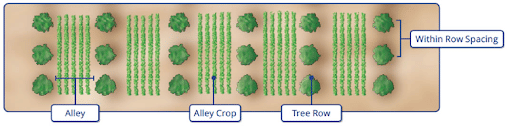
Alley Cropping
What is Intercropping?
- Intercropping is a method of increasing agricultural productivity by planting two or more crops simultaneously on a specific plot of land in a specific row pattern.
- Small farmers who depend on rain for higher production are more likely to use it.
- This procedure has a specific row pattern, such as 1:1 or 1:2, which means that the primary crop is in the first row and the other crops are in the second or third row.
- These crops are blended in this technique despite having different nutrient needs. It guarantees the best possible use of the nutrients given.
- Additionally, it stops pests and diseases from spreading to every plant involved in a particular crop.
|
|
|
|---|---|
| Types of intercropping | Strip intercropping |
| Multi storey cropping | Synergistic cropping |
| Parallel cropping | Relay intercropping |
What is Alley Cropping?
- Alley cropping is one of several practises that deal with trees and crops growing on the same plot of land.
- Alley cropping is a method of growing trees or shrubs and agricultural crops in alternate rows.
- Trees are frequently pruned to reduce shading of agricultural crops. Alley cropping can help with nutrient cycling and erosion control as well.
- Alley cropping can thus be regarded as re-creating a savanna's structure in an agroforestry system with many canopy layers, including an overstory of nut trees, a mid-layer of fruiting small trees and shrubs, and a groundcover of annual crops or perennial grass groundcover.
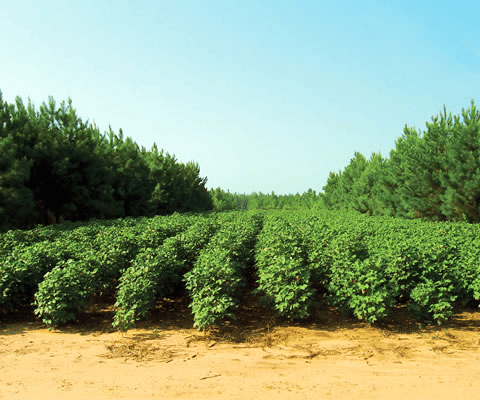
Alley Cropped System consisting of Pine Trees and Cotton
Alley Cropping - Objectives
- Alley cropping's primary goals are to harvest green, delectable fodder from hedgerows during the dry season and to produce a respectable amount of grain and Stover in the alleys during the rainy/cropping season.
- To improve water quality by reducing soil erosion when it is established in sloped regions.
- To enhance soil productivity through the addition of organic matter and the microclimate produced by the shadowing effect of the trees and crops. Plants are used to water more effectively because of the increased shade.
- To lessen the need for pesticides and fertilizers that are chemical. Without using fertilizers, weeds are more effectively managed, and the enhanced nutrient flow enhances soil fertility.
- To reduce nitrogen leaching and hence enhance water quality. Nitrogen that has leached out of the crop root zone is frequently captured by the deeper tree root systems.
- To encourage biodiversity and to make the best possible use of the land.
Alley Cropping - Features
- Alley cropping involves growing one or two rows of perennial trees or shrubs (ideally leguminous) at a small spacing to resemble hedges.
- In between the hedgerows, which are placed 4–8 m apart, crops are simultaneously produced.
- Alley cropping can range from basic systems, such as a yearly grain rotation between different types of timber trees, to complex, multilevel systems that can yield a wide variety of agricultural products.
- In tropical regions, alley cropping systems are simply known as intercropping.
- A vital feature of alley cropping, the availability of nutrients through the decomposing mulch, depends on the quantity, quality, and timing of the mulch application.
- Alley cropping has no apparent benefits when the ecological circumstances prevent the creation of substantial amounts of mulch (as is the case in the dry tropics).
- Systematic changes to alley cropping occur throughout time. As they expand, trees and shrubs have an impact on the field's nutritional, water, and light regimes.
- The interactions between the crops are what distinguish alley cropping from more typical monocropping systems.
Alley Cropping - Key Considerations
Harvest Time
- To avoid interfering with a possible harvest of woody crops, inter-row crop production must be properly scheduled.
- The majority of the time, this is prevented because crops are primarily cultivated during the early years of tree establishment or throughout the growing season when cropping operations are least disruptive.
Crop Marketing
- Before beginning a new crop, it is crucial to determine how and where the product will be marketed. A business budget with a cash flow plan is crucial to help with this.
- For smaller, niche markets like those for herbs, flowers, and specialty crops, this is very important and valuable.
Equipment Use
- The spacing between crop patterns should be sufficient to enable the safe handling of mechanical equipment (e.g., tractor, planter, and sprayer). This includes providing room for the tree crowns to expand.
- To prevent damage to machinery, crops, or trees, rows and alleyways should be set out to make the broadest machinery easier to operate.
Field Management
- The system should be set up to make the best possible use of nutrients, water, and light for both the intercrops and the woody plants.
- Especially during dry years, intense competition can impair crop and tree growth and yields.
- The right variety selection, location, and timing of planting and harvesting, as well as disking or cutting tree limbs or roots, can all help to lessen competition.
- For the first three to five years after establishing, weeds in the tree rows will need to be controlled.
Alley Cropping - Benefits
- Reduced Soil Erosion: Alley cropping, especially when implemented in sloped regions, can reduce erosion and enhance water quality.
- Improved Crop Performance: Trees and shrubs that produce more organic matter can improve soil fertility. Alley cropping also produces a microclimate because of the increased shade and decreased wind, which improves the efficiency with which plants use water.
- Reduced Use of Chemical Fertilizers and Pesticides: Without the use of fertilizers, weeds are better managed and greater nutrient flow enhances soil fertility.
- Minimized Nitrogen Leaching: The deeper root systems of trees frequently absorb nitrogen that has leached outside the cropped root zone. Keeping this leaching to a minimum enhances water quality.
- Promotion of Biodiversity: Planting a variety of plants increases the possible habitat for wildlife.
- Creation of Microclimate: Alley cropping produces a microclimate because of the increased shade and decreased wind and also improves the efficiency with which plants use water.
Alley Cropping - Limitations
- Alley cropping requires more intensive management including specialized equipment.
- It requires a marketing infrastructure for the tree products that could not be present in the local area.
- Trees can be an obstacle to crop cultivation if not carefully planned and designed.
- Trees compete with companion crops for sun and nutrients.
- Companion crops compete with trees for moisture and nutrients.
- Herbicide drift from crops may damage trees.
- More complex pesticide application.
- Changing the alley crop over time.
- Lower crop yields for some commodity crops.
Conclusion
Alley cropping is a sustainable agriculture practise in which trees or other perennial plants are planted in rows between crop rows. Alley cropping can improve soil health and provide additional benefits to crops while increasing crop yield. It is especially suitable for farmers who want to increase their overall farm productivity by cultivating several crops in the same field. Producers can gain a lot by growing a variety of crops adjacent to one another, including increased crop yields, favorable microclimate effects, and greater risk management.
FAQs
Question: What is Alley Cropping and how does it work?
Answer: Alley cropping is an agricultural practice that involves planting rows of trees or shrubs alongside rows of crops. The trees or shrubs, often nitrogen-fixing plants, act as windbreaks and help to reduce soil erosion. Alley cropping has the dual purpose of providing shade, protecting crops from harsh weather conditions, and enhancing soil fertility by enriching it with organic matter. This system also promotes biodiversity and can improve the overall productivity of the land by diversifying agricultural output.
Question: What are the benefits of Alley Cropping?
Answer: Alley cropping offers several benefits to both farmers and the environment:
- Soil Conservation: The trees or shrubs planted along the crop rows help reduce soil erosion by protecting the soil from wind and water runoff.
- Improved Soil Fertility: The nitrogen-fixing plants used in alley cropping can help improve soil fertility by adding organic matter and nutrients to the soil.
- Increased Biodiversity: Alley cropping promotes biodiversity by providing habitats for various species of plants and animals.
- Climate Resilience: The practice can increase the resilience of crops to extreme weather conditions, such as droughts or heavy rains, by providing shade and wind protection.
- Economic Benefits: It offers additional sources of income through the sale of timber, fruit, or other tree-based products.
Question: What types of trees are typically used in Alley Cropping?
Answer: The trees chosen for alley cropping are typically nitrogen-fixing species such as legumes, which have the ability to enhance soil fertility. Some commonly used trees include:
- Leucaena (Leucaena leucocephala): A fast-growing, nitrogen-fixing tree often used in tropical and subtropical regions.
- Gliricidia sepium: A multipurpose tree used for soil fertility enhancement and as a source of fodder and fuelwood.
- Acacia species: Known for their fast growth and nitrogen-fixing capabilities, these trees are commonly planted in alley cropping systems.
- Alnus species: These trees are also nitrogen fixers and are often used in temperate regions for alley cropping systems.
Question: How does Alley Cropping impact water management in agriculture?
Answer: Alley cropping can positively impact water management in several ways. The trees planted along the crop rows help reduce water runoff by acting as barriers, which allow water to be absorbed into the soil rather than flowing off the land. This process helps improve water retention in the soil, which is particularly beneficial in areas prone to drought. Additionally, the increased organic matter in the soil enhances its capacity to hold moisture, making it easier to manage water resources effectively and sustainably.
Question: What challenges are associated with Alley Cropping?
Answer: Despite its numerous benefits, alley cropping also faces certain challenges:
- Initial Investment: The establishment of alley cropping systems requires an initial investment in trees and infrastructure, which may not be affordable for all farmers.
- Space Constraints: The practice requires sufficient space between rows of crops to allow for the growth of trees, which may reduce the amount of land available for planting food crops.
- Management Complexity: Managing the growth and maintenance of both trees and crops can be complex, requiring careful planning and coordination to ensure both are productive.
- Market Demand: The economic viability of alley cropping also depends on the market demand for the products generated by the trees, such as timber or fruit.
MCQs
1. Which of the following is a benefit of Alley Cropping?
A) Increased soil erosion
B) Reduced biodiversity
C) Soil conservation
D) Decreased water retention
Answer: (C) See the Explanation
Explanation: Alley cropping helps conserve soil by reducing erosion, protecting the soil from wind and water runoff.
2. What type of trees are commonly used in Alley Cropping?
A) Hardwoods
B) Nitrogen-fixing trees
C) Fruit trees
D) Palm trees
Answer: (B) See the Explanation
Explanation: Nitrogen-fixing trees such as Leucaena and Gliricidia are commonly used in alley cropping systems to enhance soil fertility.
3. What is one of the main challenges of implementing Alley Cropping?
A) Excessive water use
B) Space constraints
C) Overproduction of crops
D) High rainfall
Answer: (B) See the Explanation
Explanation: Alley cropping requires adequate space for both crops and trees, which can limit the amount of land available for planting food crops.
4. How does Alley Cropping improve water retention?
A) By reducing evaporation
B) By allowing water to be absorbed into the soil
C) By increasing surface runoff
D) By providing water for irrigation
Answer: (B) See the Explanation
Explanation: The trees planted in alley cropping systems reduce water runoff and help water be absorbed into the soil, improving water retention.
5. What is the main ecological benefit of Alley Cropping?
A) It increases deforestation
B) It reduces soil erosion
C) It increases monoculture
D) It decreases biodiversity
Answer: (B) See the Explanation
Explanation: Alley cropping helps reduce soil erosion by acting as a natural barrier to wind and water runoff, protecting the soil from degradation.
GS Mains Questions and Model Answers
Q1: Evaluate the role of Alley Cropping in sustainable agricultural practices and its impact on soil health.
Answer: Alley cropping is a sustainable agricultural practice that enhances soil health by reducing soil erosion, improving nutrient cycling, and increasing biodiversity. The deep roots of trees planted in alley cropping systems help stabilize the soil, preventing erosion caused by wind and water. Furthermore, nitrogen-fixing trees enrich the soil with essential nutrients, improving its fertility and reducing the need for chemical fertilizers. By promoting biodiversity, alley cropping also enhances the resilience of agricultural systems to pests and diseases, making it an effective method for long-term sustainable farming.
Q2: Discuss the economic and environmental advantages of implementing Alley Cropping in developing countries.
Answer: Alley cropping offers both economic and environmental advantages, particularly in developing countries. Environmentally, it helps prevent soil erosion, improves water retention, and enhances soil fertility through nitrogen fixation. These benefits contribute to increased agricultural productivity over time. Economically, alley cropping can provide an additional source of income through the sale of tree products, such as timber, fruits, or fuelwood. Moreover, by improving land productivity and reducing the dependency on chemical inputs, alley cropping offers a cost-effective and sustainable solution for smallholder farmers in developing regions.
Q3: What are the challenges in the widespread adoption of Alley Cropping, and how can these challenges be addressed?
Answer: The widespread adoption of alley cropping faces several challenges, including the initial investment required for establishing tree plantations, space limitations for crop cultivation, and the complexity of managing both trees and crops. Additionally, farmers may face difficulty in accessing markets for tree products. To address these challenges, governments and NGOs can provide financial support, technical guidance, and incentives for adopting agroforestry practices. Training farmers in the efficient management of alley cropping systems and improving market access for tree products can help overcome barriers and encourage the adoption of this sustainable practice.
Previous Year Questions on Alley Cropping
1. UPSC CSE Prelims 2021:
Question: What is the primary environmental benefit of Alley Cropping?
A) Soil erosion prevention
B) Increase in soil temperature
C) Reduction of soil fertility
D) Increase in monoculture production
Answer: (A)
Explanation: Alley cropping primarily helps prevent soil erosion by acting as natural barriers against wind and water, stabilizing the soil.
2. UPSC CSE Mains 2019 (GS Paper 3):
Question: "Discuss the role of alley cropping in sustainable agriculture and its impact on soil conservation."
Answer: Alley cropping is a vital practice for sustainable agriculture. It helps reduce soil erosion, improve soil fertility through nitrogen fixation, and enhance biodiversity. These benefits contribute to long-term soil conservation and greater agricultural productivity. By promoting sustainable farming practices, alley cropping offers a promising solution to maintaining ecological balance while ensuring food security.
Download the PREPP App and attempt FREE IAS Exam Mock Tests and get complete study material!

Full Test - 04: UPSC CSE Prelims CSAT (Paper-II)
Full Test - 03: UPSC CSE Prelims CSAT (Paper-II)
UPSC CSE Prelims 2026 GS Paper 1 Question Paper (24-May-2026)
UPSC CSE Prelims 2026 CSAT Paper 2 Question Paper (24-May-2026)

17 February 2025 | The Hindu Must Read Articles | Current Affairs

16 February 2026 | The Hindu Must Read Articles | Current Affairs

13 February 2026 | The Hindu Must Read Articles | Current Affairs









Comments