Mixed Cropping - Agriculture Notes
Mixed cropping is the practice of growing two or more crops simultaneously on the same plot of land. If one of the crops fails, this reduces the risk and offers some protection. Growing wheat with gram is an example of mixed cropping. Crops are chosen such that they have diverse nutrient needs. This article will explain to you about Mixed Cropping which will help prepare the Agriculture Syllabus for the UPSC Civil Service exam.
|
Table of Contents |
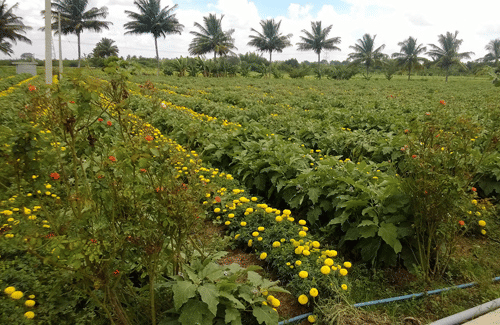
Mixed Cropping
What is Cropping?
- A crop is a plant that can be grown and harvested on a large scale for profit or subsistence.
- Most crops are grown in agriculture or aquaculture and the process of harvesting the crops is called cropping.
- Crops may include macroscopic fungus (such as mushrooms) and marine macroalgae (e.g. seaweed).
- The majority of crops are harvested for human consumption or as livestock fodder.
- Some crops are often gathered from the wild in a form of intensive gathering (e.g. ginseng, yohimbe, and eucommia).
|
|
|
|---|---|
| Sequential cropping | Cropping system |
| Intercropping | Ratoon cropping |
| Difference between intercropping and mixed cropping | Cropping intensity |
What is Mixed Cropping?
- Mixed cropping is a cropping technique in which two or more plants or crops are grown on the same plot of land or farm at the same time.
- Plant seeds are mixed before being sown. This technique is used to reduce the risk of total crop failure due to adverse weather conditions or a lack of rainfall.
- One crop may be the primary crop, while the others may be subsidiaries. Planting multiple crops at the same time is thought to save space in general because different crops in the same field ripen at different times.
- Furthermore, this technique helps restore soil fertility by allowing the remains of one plant to aid the growth of another, increasing overall yield.
- Crops for mixed cropping are chosen based on their water and nutrient requirements, as well as the time required to grow and ripen.
- Wheat and mustard, groundnut and sunflower, and other crop combinations are commonly used in mixed cropping.
Features of Mixed Cropping
- Mixed cropping is the cultivation of two or more crops intermingled without row arrangement.
- It is a common practise in the majority of India's dryland tracts.
- Different crop seeds are mixed in a specific proportion and sown.
- Crops are chosen based on compatibility factors like fertilizer requirements and maturation periods, among others.
- Mixed cropping includes the growing of wheat with millets or pulses.
- In dryland areas of India, seed sowing is often done using the broadcasting technique. It is a form of subsistence agriculture.
- For example, in rainfed conditions (with low rainfall), sorghum, bajra, and cowpea are mixed and broadcasted to avoid complete crop failures and to determine minimum yields.
- Its main goals are to reduce the likelihood of total crop failures and to meet the farmer's needs for food and fodder.
- The modern version of mixed cropping is intercropping.
Classic Example of Mixed Cropping
- The American three sisters: maize, beans, and cucurbits (squash and pumpkins), are a classic example of mixed cropping.
- The three sisters were domesticated at various times, but they were eventually combined to form an important component of Native American agriculture and cuisine.
- The Seneca and Iroquois tribes in the United States' northeast historically documented mixed cropping of the three sisters sometime after 1000 C.E.
- The technique entails planting all three seeds in the same hole.
- The maize provides a stalk for the beans to climb on, the beans are nutrient-rich to compensate for those lost by the maize, and the squash grows low to the ground to prevent weed growth and water evaporation from soil due to heat.
Mixed Cropping - Advantages
- Due to the fact that plants' needs for water and fertilizer differ from one another, this approach offers various benefits.
- Because their natural predators need multiple habitats to exist, pests are naturally regulated.
- It has been discovered that this method yields substantially more per hectare than monoculture.
- Mixed Cropping naturally enhances soil fertility and thereby contributes to the growth of soil microorganisms.
- The process has been successfully used to increase small farmer income and food production while decreasing the likelihood of total crop failure because even if one crop fails, others in the field may still produce.
- Mixed cropping also requires fewer nutrient inputs, such as fertilisers, pruning, pest control, and irrigation, and is thus often more cost-effective.
- Mixed cropping has been shown to provide a rich, biodiverse environment, promoting habitat and species richness for animals and beneficial insect species such as butterflies and bees.
Mixed Cropping - Disadvantages
- If the wrong combinations are employed, soil nutrients might be depleted significantly more quickly.
- Since the entire region is planted, using mechanical farming is challenging.
- Some crops may compete fiercely for resources like water, sunlight, and space.
- Since they always have food available to them, some insect pests may spread more widely.
Conclusion
Mixed cropping, which serves a number of purposes, is a typical practice in marginal agroecological conditions. They consist of increased total biomass output, decreased soil erosion, improved yield stability, and increased family food security. Additionally, the mixtures can be adaptably changed to suit various circumstances, such as the timing of the rainy season's arrival or the level of soil fertility in various fields.
FAQs
Q1: What is mixed cropping?
Answer: Mixed cropping is the agricultural practice of growing two or more crops simultaneously on the same piece of land to minimize the risk of crop failure and maximize resource use.
Q2: How does mixed cropping help in risk management?
Answer: In case one crop fails due to unfavorable conditions, the other crops can still provide yield, ensuring food security and income for farmers.
Q3: What are the key benefits of mixed cropping?
Answer: Mixed cropping helps improve soil fertility, reduce pest infestation, and ensure better use of nutrients, water, and sunlight.
Q4: What is the difference between mixed cropping and intercropping?
Answer: In mixed cropping, different crops are grown randomly, while in intercropping, crops are planted in a defined pattern or rows to ensure better management.
Q5: Which crops are commonly grown in mixed cropping systems?
Answer: Farmers often grow cereals with legumes (e.g., wheat with gram) or oilseeds with pulses to maintain soil fertility and reduce nutrient competition.
MCQs
- Which of the following best describes mixed cropping?
A) Growing one crop in multiple seasons
B) Growing two or more crops on the same land simultaneously
C) Rotating crops between seasons
D) Growing crops in a greenhouse environment
Answer: (B) See the Explanation
- What is one of the primary advantages of mixed cropping?
A) Increases the need for pesticides
B) Requires more water and fertilizers
C) Reduces the risk of crop failure
D) Simplifies crop management
Answer: (C) See the Explanation
- Which crop combination is suitable for mixed cropping to enhance soil fertility?
A) Wheat and rice
B) Maize and cotton
C) Wheat and gram
D) Sugarcane and tobacco
Answer: (C) See the Explanation
- In which agricultural practice are crops grown without a specific pattern?
A) Intercropping
B) Mixed cropping
C) Crop rotation
D) Hydroponics
Answer: (B) See the Explanation
- Which of the following is a key environmental benefit of mixed cropping?
A) Decreases soil erosion
B) Reduces water use
C) Increases dependence on fertilizers
D) Promotes monoculture
Answer: (A) See the Explanation
GS Mains Questions and Model Answers
Q1. Discuss the significance of mixed cropping in sustainable agriculture.
Answer: Mixed cropping plays a crucial role in sustainable agriculture by improving resource utilization and reducing risks. It ensures better soil fertility management, as different crops consume and replenish various nutrients. For example, leguminous crops grown with cereals fix nitrogen in the soil, reducing the need for synthetic fertilizers. Mixed cropping also mitigates pest attacks and diseases, as the diversity of crops breaks pest cycles. Additionally, it helps farmers achieve yield stability, as the failure of one crop does not lead to total loss. This system promotes eco-friendly farming, as it reduces dependence on chemicals, making it essential for sustainable agricultural practices.
Q2. How does mixed cropping improve soil health and fertility?
Answer: Mixed cropping enhances soil health by maintaining a balance of nutrients. Crops like legumes fix atmospheric nitrogen, enriching the soil with essential nutrients. Additionally, different crops have varying root structures, which help aerate the soil and improve water infiltration. This practice prevents soil depletion, as nutrients consumed by one crop may be replenished by another. Mixed cropping also reduces the need for chemical fertilizers, as the natural nutrient cycles are maintained. This system ensures long-term soil productivity, contributing to sustainable agriculture and environmental health.
Q3. Analyze the challenges and limitations of mixed cropping in India.
Answer: Although mixed cropping offers several benefits, it faces challenges in India. One major limitation is the difficulty in crop management, as different crops require distinct care and harvesting methods. The lack of mechanization tailored for mixed cropping systems adds to the labor intensity. Farmers also face challenges in marketability, as mixed yields complicate post-harvest processing and storage. Additionally, improper crop selection can lead to nutrient competition, reducing overall productivity. Despite these challenges, with better awareness and support from agricultural research, mixed cropping can become a sustainable solution for smallholder farmers in India.
Previous Year Questions Mixed cropping
1. UPSC CSE 2022
Quetsion. What are the benefits of mixed cropping for small and marginal farmers?
Answer: Mixed cropping offers several advantages for small and marginal farmers. It ensures income stability, as the risk of complete crop failure is minimized by growing multiple crops. This practice also optimizes resource use, as different crops make efficient use of water, nutrients, and sunlight. Additionally, growing legumes with cereals improves soil fertility, reducing the need for chemical inputs. Mixed cropping provides diverse produce, supporting food security for farmers’ families. Moreover, it reduces pest infestations and promotes eco-friendly farming practices, as farmers rely less on pesticides. These benefits make mixed cropping a viable strategy for enhancing the livelihoods of small farmers.
2. UPSC CSE 2023
Question. How does mixed cropping contribute to climate resilience in agriculture?
Answer: Mixed cropping enhances climate resilience by diversifying crop production and reducing the impact of unpredictable weather patterns. Different crops respond differently to environmental stress, ensuring that some yield even in adverse conditions. For example, if one crop fails due to drought, another drought-resistant crop can still provide output. Mixed cropping also helps conserve soil moisture, reducing the impact of water scarcity. Furthermore, the varied crop cover protects soil from erosion during heavy rainfall and extreme weather. These attributes make mixed cropping a sustainable agricultural practice that can withstand the uncertainties posed by climate change.
Download the PREPP App and attempt FREE IAS Exam Mock Tests and get complete study material!

Full Test - 04: UPSC CSE Prelims CSAT (Paper-II)
Full Test - 03: UPSC CSE Prelims CSAT (Paper-II)
UPSC CSE Prelims 2026 GS Paper 1 Question Paper (24-May-2026)
UPSC CSE Prelims 2026 CSAT Paper 2 Question Paper (24-May-2026)

17 February 2025 | The Hindu Must Read Articles | Current Affairs

16 February 2026 | The Hindu Must Read Articles | Current Affairs

13 February 2026 | The Hindu Must Read Articles | Current Affairs









Comments