President And Prime Minister of India - Indian Polity Notes
President and the Prime Minister hold distinct but complementary roles within the country's governance framework.The President is the head of the State while the Prime Minister is the head of the government.The UPSC Indian Polity and Governance Syllabus include Prime Ministers Relation with the President which is described in this article.
|
Table of Contents |
|
According to Article 74 of the Constitution,there shall be a council of ministers with the Prime Minister at the head to aid and advise the President who shall, in the exercise of his functions, act in accordance with such advice. |
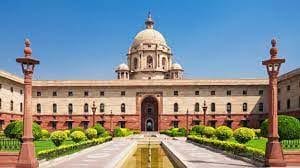
The President Of India
- The President of India is the head of state of the Republic of India.
- He/she is the formal head of the executive, legislature, and judiciary of India and is also the commander-in-chief of the Indian Armed Forces.
- Part V (Article 52-62) of the Constitution (The Union) under Chapter I (The Executive) lists out the qualification, election, and impeachment of the President.
The Prime Minister Of India
- Article 75 of the Indian Constitution mentions that there would be a Prime Minister of the country who would be appointed by the President.
- He/she is the people’s representative and the political head of India.
- He/she plays the role of a bridge between Parliament and the President.
Powers and Functions of the Prime Minister in Relation to the President
- The Prime Minister enjoys the following powers in relation to the President:
- He/she is the principal channel of communication between the President and the council of ministers. It is the duty of the prime minister:
- to communicate to the President all decisions of the council of the Ministers relating to the administration of the affairs of the union and the proposals for legislation.(Article 78)
- to furnish such information relating to the administration of Union affairs and proposals for legislation as the President may call for.(Article 78)
- If the President so requires, to submit for the consideration of the council of ministers any matter on which a decision has been taken by a minister but which has not been considered by the council.(Article 78)
- The PM advises the president with regard to the appointment of important officials like attorney general of India, Comptroller and Auditor General of India, chairman and members of the UPSC, election commissioners, chairman and members of the finance commission, and so on.
Prime Minister's Relationship With The President
The following provisions of the Constitution deal with the relationship between the President and the Prime Minister:
| Article 74 |
|
| Article 75 |
|
| Article 78 |
|
Conflicts Between President And Prime Minister In The Past
- The Tussle between Dr. Rajendra Prasad (first President of India) and Jawaharlal Nehru (first Prime Minister of India) over the Hindu Code Bill (1955-56).
- There was a rift between Giani Zail Singh (President of India between 1982 and 1987), and Rajiv Gandhi during Rajiv Gandhi’s Prime MInistership (1984-89), when for almost two years (1985-87), no Union minister officially called on the President, not even when summoned.
- The President used a pocket veto to refuse assent to the "Post Office (Amendment) Bill" in 1986 to show his opposition to the bill.
Conclusion
While the President of India holds ceremonial and symbolic functions with limited executive powers, the Prime Minister wields substantial authority and is responsible for the day-to-day governance of the country. Together, they form an integral part of India's democratic system, with distinct roles that contribute to the functioning of the government and the nation as a whole.
FAQs
Question: What is the relationship between the Prime Minister and the President of India?
Answer: The Prime Minister and the President of India share a constitutional relationship where the President is the ceremonial head of the state, while the Prime Minister is the head of government. The President acts on the advice of the Council of Ministers, led by the Prime Minister, in most matters, thereby ensuring the functioning of a parliamentary democracy.
Question: What role does the President play in appointing the Prime Minister?
Answer: The President of India appoints the Prime Minister, typically the leader of the majority party or coalition in the Lok Sabha (House of the People). In case of a hung parliament, the President may exercise discretion in choosing a leader who is likely to command a majority.
Question: How does the Prime Minister advise the President?
Answer: The Prime Minister serves as the principal advisor to the President and communicates the decisions of the Council of Ministers to the President. The President is constitutionally bound to act on this advice, except in cases where the President is given discretionary powers, such as in the appointment of the Prime Minister or dissolution of the Lok Sabha under specific circumstances.
Question: Can the President act independently without the Prime Minister's advice?
Answer: In general, the President must act on the advice of the Council of Ministers, headed by the Prime Minister, as stipulated by Article 74 of the Constitution. However, there are limited situations where the President can act independently, such as during a political crisis when no party has a clear majority or when using their discretionary powers in appointing a Prime Minister.
Question: What is the significance of the President's power to dissolve the Lok Sabha?
Answer: The President has the power to dissolve the Lok Sabha on the advice of the Prime Minister, typically at the end of the parliamentary term or when the government loses confidence and cannot prove its majority. This ensures political stability and adherence to democratic processes by enabling fresh elections.
MCQs
- The President of India appoints the Prime Minister based on:
A) Their own discretion only
B) Popular vote directly
C) Majority support in the Lok Sabha
D) The decision of the Rajya Sabha
Answer: (C) See the Explanation
The President appoints the Prime Minister, usually the leader of the party or coalition with a majority in the Lok Sabha.
- The Prime Minister of India serves as:
A) The head of state
B) The ceremonial leader of the country
C) The head of government and principal advisor to the President
D) The Chief Justice of India
Answer: (C) See the Explanation
The Prime Minister leads the government and advises the President on various matters.
- Under what circumstances can the President exercise discretion in appointing the Prime Minister?
A) During elections only
B) In case of a clear majority in Lok Sabha
C) In case of a hung parliament
D) When the Prime Minister resigns
Answer: (C) See the Explanation
The President may use discretion to appoint a leader likely to command a majority in the case of a hung parliament.
- The President must act on the advice of:
A) The Chief Justice of India
B) The Council of Ministers headed by the Prime Minister
C) The Speaker of the Lok Sabha
D) The Election Commission of India
Answer: (B) See the Explanation
Article 74 of the Constitution mandates that the President act on the advice of the Council of Ministers.
- Which Article of the Indian Constitution stipulates that the President must act on the advice of the Council of Ministers?
A) Article 51
B) Article 72
C) Article 74
D) Article 110
Answer: (C) See the Explanation
Article 74 requires the President to act on the advice of the Council of Ministers.
GS Mains Questions and Model Answers
Q1: Explain the constitutional relationship between the President and the Prime Minister of India.
Answer: The constitutional relationship between the President and the Prime Minister of India is defined by a parliamentary system in which the President serves as the ceremonial head of state, while the Prime Minister is the head of government and leads the Council of Ministers. The President acts on the advice of the Council of Ministers, as mandated by Article 74 of the Constitution. This ensures that executive power is exercised in a democratic manner, with the President's role being largely symbolic and guided by the Prime Minister and the elected government. However, the President retains certain discretionary powers, such as appointing the Prime Minister in a hung parliament or during political crises. This relationship maintains the balance of power and ensures effective governance.
Q2: Analyze the role of the Prime Minister as the chief advisor to the President.
Answer: As the chief advisor to the President, the Prime Minister plays a crucial role in shaping the executive actions of the government. The Prime Minister communicates decisions of the Council of Ministers to the President, ensuring that the President's constitutional role is carried out in accordance with the elected government's policies. This advisory role extends to areas such as legislative proposals, appointments, foreign policy, and national emergencies. By acting on the advice of the Prime Minister, the President maintains the democratic essence of the parliamentary system. The effectiveness of governance depends on this collaboration, which facilitates a smooth functioning of executive authority.
Q3: Discuss the significance of the President's power to dissolve the Lok Sabha on the advice of the Prime Minister.
Answer: The President's power to dissolve the Lok Sabha on the advice of the Prime Minister is significant for maintaining the democratic cycle and political stability in India. This power is exercised at the end of the parliamentary term or when the government loses the confidence of the house and cannot prove its majority. By dissolving the Lok Sabha, the President enables the initiation of fresh elections, allowing the people to elect a new government. This process ensures accountability of the government to the public and upholds democratic principles. It also prevents political deadlock, thereby facilitating a smooth transition of power when necessary.
Previous Year Questions on Prime Minister Relationship with president
1. UPSC CSE 2020
Question: Evaluate the role of the President in appointing the Prime Minister in the context of coalition politics.
Answer: The President plays a pivotal role in appointing the Prime Minister, especially in the context of coalition politics, where no single party may have a clear majority. In such situations, the President exercises discretionary power to appoint a leader who is likely to command the confidence of the Lok Sabha. This may involve consultations with various political parties and coalitions to ensure stability. The President's role in this regard is crucial for maintaining democratic governance and preventing political instability. By choosing a Prime Minister with the potential to form a majority government, the President helps uphold constitutional norms and effective administration.
2. UPSC CSE 2019
Question: Discuss the constitutional mechanism through which the President acts on the advice of the Council of Ministers.
Answer: The constitutional mechanism through which the President acts on the advice of the Council of Ministers is outlined in Article 74 of the Indian Constitution. According to this provision, the President must act in accordance with the advice of the Council of Ministers, headed by the Prime Minister. This ensures that executive authority is exercised by the elected representatives of the people, with the President serving as a constitutional head. The mechanism reinforces the parliamentary system, where the Prime Minister and Council of Ministers are accountable to the Lok Sabha. In cases of exceptional circumstances, such as political crises, the President may exercise limited discretion, but these instances are rare and guided by constitutional norms.
*email: contactus@prepp.in
Download the PREPP App and attempt FREE IAS Exam Mock Tests and get complete study material!

Full Test - 04: UPSC CSE Prelims CSAT (Paper-II)
Full Test - 03: UPSC CSE Prelims CSAT (Paper-II)
UPSC CSE Prelims 2026 GS Paper 1 Question Paper (24-May-2026)
UPSC CSE Prelims 2026 CSAT Paper 2 Question Paper (24-May-2026)

17 February 2025 | The Hindu Must Read Articles | Current Affairs

16 February 2026 | The Hindu Must Read Articles | Current Affairs

13 February 2026 | The Hindu Must Read Articles | Current Affairs









Comments