Perennial Crops - Agriculture Notes
Perennials are plants that live for more than two years. When they mature, they begin to bear flowers, fruits, and seeds, and the cycle continues for an extended period of time. They do not die after bearing fruit, but rather renew their parts season after season. Trees, along with a few shrubs, are classified as perennials. For example, tomatoes, ginger, banana, mango, coconut, palm, banyan, and so on. Perennial crops are particularly vulnerable to climate change due to their year-round exposure to changing weather conditions. In this article, we will discuss Perennial Crops which will be helpful for UPSC exam preparation.
|
Table of Contents |
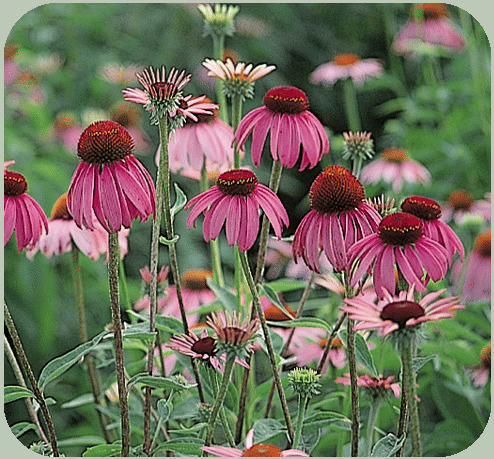
Perennial Purple Coneflower
What are Perennial Crops?
- Perennials grow stronger year after year. Annuals die when frost strikes or during the cold winter months, whereas perennials store up their energy and go dormant during the winter, waking up in spring.
- Perennial plants concentrate their growth below the soil surface for the first two years, digging deep into the ground to establish a dense, established root system that can withstand hard, frosty soil.
- This ensures long-term success, but it also means that most perennials don't waste their precious energy blooming in the first year. Blossoms won't appear until the second or third year.
- Hence, when starting a new garden, it is critical to plant annuals alongside perennials.
|
|
|
|---|---|
| Seasonal crops | Plantation Crops |
| Annual crops | Biennial crops |
Characteristics of Perennial Crops
- Perennial crops are typically thought to be more permanent, requiring several growth cycles before the fruit is produced.
- One of these plants' characteristics is their need for winter chilling before flowering the following spring.
- With rising winter temperatures, some perennial crops may not meet their chilling hour requirement, limiting flowering and, ultimately, fruit set.
- Warm winters may promote early bud and flower development, and late-season frost events will damage these flowers and fruit or nut formation.
- Perennial crops are valued for their total output as well as the quality of the harvested product, such as the size of a peach or apricot, the red blush on an apple, the oil content of olives, or the quality of wine produced from a specific vineyard.
- Because production areas have less flexibility in their location after establishment and because the production cycle is often measured in decades rather than single growing seasons, climate change will create interesting problems for production.
Examples of Perennial Crops
Woody Perennials
- Lavender, Sage, Artemisia, and Rosemary are examples of woody perennials.
- These woody shrubs and plants have a shorter lifespan, ranging from 2 to 15 years depending on growing conditions.
- The longer the plant survives, the better the conditions, the drier and sunnier it is.
- Less hardy varieties have a shorter lifespan.
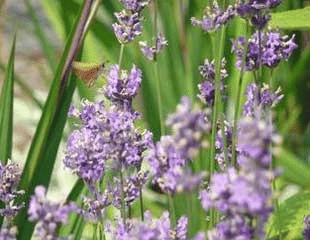
Perennial Woody Lavender
Herbaceous Perennials
- Herbaceous perennials can live for many years, even decades.
- They die back to bare soil and go dormant during the winter months.
- Herbaceous perennials, such as Delphiniums, Asters, Achillea, and Poppies, produce lovely, new growth in the spring and add colour to a summer border.
Herbaceous Perennial Hosta
Agapanthus
- Agapanthus are just one of many perennial plants that can be grown in the garden for many years (especially frost-hardy varieties).
- Surprisingly, there are both evergreen and herbaceous Agapanthus varieties, with the latter being the hardiest and long-lived.

Agapanthus
Some other common perennials include:
- Fruit trees
- Edible berries
- Oil palm
- Asparagus
- Rhubarb
- Chives
- Mint
- Oregano
- Kale
Benefits of Perennial Crops
- Erosion control: Because plant materials (stems, crowns, etc.) can remain in place all year, topsoil erosion caused by wind and rainfall/irrigation is reduced.
- Water-use efficiency: Because these crops are deeper and more fibrously rooted than their annual counterparts, they can hold onto soil moisture more efficiently while filtering pollutants travelling to groundwater sources.
- Nutrient cycling efficiency: Because perennials absorb nutrients more efficiently due to their extensive root systems, fewer nutrients must be supplemented, lowering production costs while reducing possible excess sources of fertilizer runoff.
- Light interception efficiency: Perennials' seasonal light interception efficiency, which is an important factor in plant productivity, improves with earlier canopy development and longer green leaf duration.
- Carbon sequestration: Because perennial grasses use a higher proportion of carbon to form root systems, more carbon is incorporated into soil organic matter, contributing to increases in soil organic carbon stocks.
Conclusion
Perennials are increasingly recognized for their importance in agricultural diversification, risk management, and mitigation. There are many novel ways perennials are being used in major farming systems around the world. These plants can survive multiple growing seasons. The top of the plant usually dies back each winter and regrows the following spring from the same root system. Many perennial plants retain their leaves all year and provide attractive borders and ground cover.
FAQs
Question: What are perennial crops?
Answer: Perennial crops are plants that live for more than two years and produce harvestable yields for several seasons without needing to be replanted. These crops have longer life cycles compared to annual crops and can continue producing food or other products year after year. Examples of perennial crops include fruit trees (e.g., apple, mango), nut trees (e.g., walnut), and certain vegetables like asparagus.
Question: How do perennial crops differ from annual crops?
Answer: The primary difference between perennial and annual crops lies in their growth cycle. Annual crops, such as wheat, rice, and maize, complete their entire life cycle in one year and must be replanted each season. In contrast, perennial crops grow year after year, producing multiple harvests from the same plant without replanting. This makes perennial crops more sustainable and cost-effective in the long term.
Question: What are the benefits of growing perennial crops?
Answer: Perennial crops offer several advantages:
- Sustainability: They require less input, such as water, fertilizer, and pesticides, as they don't need to be replanted annually.
- Soil health: Their deep roots help prevent soil erosion, improve soil structure, and enhance soil fertility.
- Economic benefits: Farmers save money on seed costs, labor, and machinery for planting and harvesting.
- Climate resilience: Perennials are often better suited to cope with changing weather patterns and climate extremes.
Question: Why are perennial crops important for sustainable agriculture?
Answer: Perennial crops play a crucial role in sustainable agriculture because they reduce the need for frequent replanting, lower soil disturbance, and improve biodiversity. Their deep root systems help in water conservation and prevent nutrient runoff. Additionally, perennial crops reduce the environmental impact of agriculture by lowering carbon emissions and minimizing the need for synthetic inputs like fertilizers and pesticides.
Question: What are some common examples of perennial crops?
Answer: Common examples of perennial crops include:
- Fruits: Apples, cherries, grapes, peaches, and bananas.
- Vegetables: Asparagus, rhubarb, and artichokes.
- Legumes: Clover and alfalfa.
- Herbs: Mint, rosemary, and thyme.
- Other crops: Perennial wheat, perennial rice, and perennial barley (under research for agricultural development).
MCQs
1. Which of the following is an example of a perennial crop?
A) Rice
B) Wheat
C) Asparagus
D) Maize
Answer: (C) See the Explanation
Explanation: Asparagus is an example of a perennial crop that continues to produce over several years without needing to be replanted.
2. What is the primary benefit of growing perennial crops over annual crops?
A) Higher yield
B) Reduced input requirements
C) Faster growth
D) Better flavor
Answer: (B) See the Explanation
Explanation: Perennial crops require fewer inputs, such as water, fertilizer, and pesticides, as they do not need to be replanted annually, making them more sustainable and cost-effective in the long term.
3. Perennial crops are particularly beneficial for which of the following reasons?
A) They grow faster than annual crops.
B) They help in soil conservation and reduce erosion.
C) They require less water than annual crops.
D) They are easier to harvest.
Answer: (B) See the Explanation
Explanation: Perennial crops help in soil conservation, prevent erosion, and contribute to better water retention due to their deep root systems.
4. Which of the following is NOT an example of a perennial crop?
A) Grapes
B) Mango
C) Corn
D) Apples
Answer: (C) See the Explanation
Explanation: Corn is an annual crop, while grapes, mangoes, and apples are examples of perennial crops that grow year after year.
5. Which of the following is a major disadvantage of perennial crops?
A) They require less water.
B) They often have lower yields than annual crops.
C) They require replanting every year.
D) They take longer to establish.
Answer: (D) See the Explanation
Explanation: Perennial crops generally take longer to establish compared to annual crops, which can be an initial disadvantage, but they are more cost-effective in the long run.
GS Mains Questions and Model Answers
Q1: Discuss the role of perennial crops in promoting sustainable agriculture and reducing environmental impact.
Answer: Perennial crops are a cornerstone of sustainable agriculture due to their ability to minimize soil disturbance, conserve water, and reduce the need for chemical inputs such as fertilizers and pesticides. Their deep root systems improve soil structure, enhance water retention, and reduce erosion, which is critical for long-term land productivity. Moreover, by reducing the need for annual planting and harvesting, perennial crops lower greenhouse gas emissions and energy consumption, making them an environmentally friendly option. The shift toward perennial agriculture is essential for addressing challenges such as climate change, soil degradation, and the depletion of natural resources.
Q2: What are the challenges associated with the adoption of perennial crops in agriculture?
Answer: Despite their numerous benefits, the adoption of perennial crops faces several challenges. One of the key issues is the longer time required for establishment compared to annual crops, which can delay returns for farmers. Additionally, perennial crops may have lower initial yields, making them less attractive to farmers focused on short-term profitability. The infrastructure for harvesting and processing perennial crops is also less developed than that for annual crops, which creates logistical challenges. Finally, there is a lack of widespread knowledge and research on the best farming practices for perennial crops, which can hinder their adoption, especially in regions with limited access to resources and technology.
Q3: Analyze the economic advantages of incorporating perennial crops into farming systems.
Answer: Incorporating perennial crops into farming systems offers significant economic advantages. First, perennial crops reduce input costs by eliminating the need for annual planting, reducing the cost of seeds, fertilizers, and labor. They also help in reducing soil erosion, which leads to improved land fertility and productivity over time. Furthermore, by improving water retention and reducing irrigation needs, perennial crops offer savings in water usage, which is particularly important in water-scarce areas. The long-term stability and lower maintenance requirements of perennial crops also lead to increased profitability over time. The initial investment may be higher, but over the years, perennial crops provide a more sustainable and cost-effective solution for farmers.
Previous Year Questions on Perennial Crops
1. UPSC CSE Prelims 2020:
Question: Perennial crops are different from annual crops because they:
A) Produce one harvest every year
B) Are harvested after a longer cycle
C) Require more water than annual crops
D) Are grown only in tropical regions
Answer: (B)
Explanation: Perennial crops are harvested after a longer cycle, as they live for more than two years and produce multiple harvests without needing to be replanted.
2. UPSC CSE Mains 2019 (GS Paper 3):
Question: Evaluate the potential of perennial crops in addressing the challenges of sustainable agriculture.
Answer: Perennial crops hold significant potential for sustainable agriculture due to their ability to reduce soil disturbance, conserve water, and reduce reliance on chemical inputs. Their deep root systems improve soil health and reduce erosion, which is critical in maintaining long-term agricultural productivity. Additionally, by reducing the need for replanting, perennial crops help to reduce labor and input costs, making them a more economical option for farmers. As global agricultural systems face challenges like climate change and water scarcity, perennial crops offer an eco-friendly and economically viable solution for sustainable farming.
Download the PREPP App and attempt FREE IAS Exam Mock Tests and get complete study material!

Full Test - 04: UPSC CSE Prelims CSAT (Paper-II)
Full Test - 03: UPSC CSE Prelims CSAT (Paper-II)
UPSC CSE Prelims 2026 CSAT Paper 2 Question Paper (24-May-2026)
UPSC CSE Prelims 2026 GS Paper 1 Question Paper (24-May-2026)

17 February 2025 | The Hindu Must Read Articles | Current Affairs

16 February 2026 | The Hindu Must Read Articles | Current Affairs

13 February 2026 | The Hindu Must Read Articles | Current Affairs









Comments